
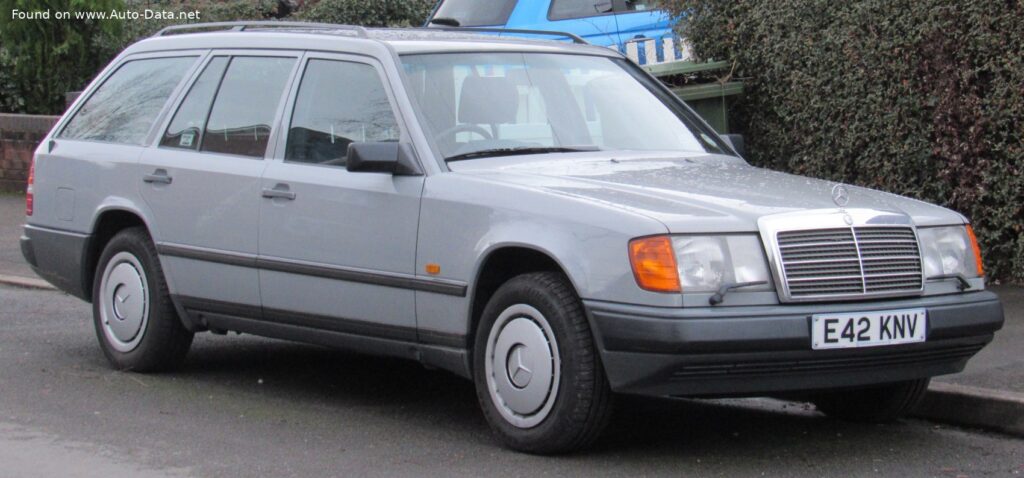
The Mercedes-Benz S124 200 TE: A Pillar of Practical Engineering
The Mercedes-Benz S124 200 TE, produced between 1988 and 1989, represents a significant chapter in the German automaker’s illustrious history, particularly within the highly acclaimed W124 generation. This specific model, a station wagon variant, was a cornerstone of the Mercedes-Benz lineup, embodying the brand’s commitment to durability, safety, and refined driving dynamics. While the W124 chassis itself was globally recognized for its “over-engineered” quality, the 200 TE variant, with its 122 horsepower, 2.0-liter engine, was primarily targeted at European markets where fuel efficiency and taxation favored smaller displacement powertrains. It served as an accessible entry point into the premium mid-size estate segment, offering the practicality of a wagon combined with the legendary Mercedes-Benz build quality and comfort.
The S124, the station wagon designation for the W124 series, was lauded for its exceptional cargo capacity, robust construction, and innovative suspension systems, making it a favorite among families and professionals alike. The 200 TE, despite being one of the less powerful options, still delivered the quintessential Mercedes-Benz experience, characterized by a smooth ride, excellent road manners, and an interior designed for long-distance comfort. Its production period was relatively brief, spanning just two years, as Mercedes-Benz continuously refined its engine offerings within the W124 platform. Nevertheless, the 200 TE left an indelible mark as a testament to practical luxury and enduring German engineering.
Engine and Performance of the Mercedes-Benz S124 200 TE
At the heart of the 1988-1989 Mercedes-Benz S124 200 TE lies the M 102 E 20 engine, an inline four-cylinder, naturally aspirated gasoline powerplant. This unit, designated M 102.963, featured a single overhead camshaft (SOHC) valvetrain with two valves per cylinder, a configuration known for its reliability and straightforward maintenance. With a displacement of 1996 cubic centimeters (121.8 cubic inches), this engine produced a respectable 122 horsepower at 5100 rpm, delivering its power smoothly and predictably. Torque output stood at 178 Newton-meters (131.29 lb.-ft.) at a relatively low 3500 rpm, providing adequate pulling power for daily driving and light hauling, a crucial aspect for a station wagon.
Power was delivered to the rear wheels via a four-speed manual transmission, a common setup for European models of this era, emphasizing driver engagement and control. The 200 TE achieved a 0 to 60 mph acceleration time of 11.8 seconds, with a top speed of 113.09 mph (182 km/h). While not a performance leader, these figures were more than sufficient for its intended role as a comfortable and capable family hauler. Fuel economy, a key consideration in its primary markets, was rated at 20.1 US mpg in urban driving and an impressive 32.2 US mpg on the highway, reflecting the engine’s efficient design and the vehicle’s aerodynamic profile for its time. The multi-port manifold injection system ensured precise fuel delivery, contributing to both performance and efficiency.
Design and Features
The Mercedes-Benz S124 200 TE inherits the timeless and functional design language of the W124 series. Its station wagon (estate) body type features five doors and comfortable seating for five occupants, with an emphasis on utility and interior space. The S124’s design, penned by Bruno Sacco, is characterized by clean lines, a robust stance, and a purposeful elegance that has aged remarkably well. Its exterior dimensions – a length of 187.6 inches, width of 68.5 inches, and height of 58.66 inches – provided a substantial road presence and a generously proportioned cabin and cargo area.
Inside, the S124 200 TE offered the hallmark Mercedes-Benz interior quality, featuring durable materials, ergonomic controls, and excellent visibility. While specific trim levels and optional features varied by market, standard equipment typically included power steering with a cone worm and recirculation ball system, ensuring precise and comfortable maneuvering. For its era, the S124 was at the forefront of automotive safety, featuring disc brakes on all four wheels and, notably, an Anti-lock Braking System (ABS) as a standard or widely available option. This was a significant safety innovation for the late 1980s, greatly enhancing vehicle control during emergency braking. The independent multi-link rear suspension, a Mercedes-Benz innovation, provided a superior blend of ride comfort and handling stability, distinguishing the S124 from many of its contemporaries.
Technical Specifications
| Category | Specification |
|---|---|
| General Information | |
| Brand | Mercedes-Benz |
| Model | W124 |
| Generation | S124 |
| Type (Engine) | 200 TE (122 Hp) |
| Start of Production | 1988 year |
| End of Production | 1989 year |
| Powertrain Architecture | Internal Combustion engine |
| Body type | Station wagon (estate) |
| Seats | 5 |
| Doors | 5 |
| Performance Specs | |
| Fuel consumption (economy) – urban | 11.7 l/100 km (20.1 US mpg) |
| Fuel consumption (economy) – extra urban | 7.3 l/100 km (32.2 US mpg) |
| Fuel Type | Petrol (Gasoline) |
| Acceleration 0 – 60 mph | 11.8 sec |
| Acceleration 0 – 100 km/h | 12.4 sec |
| Maximum speed | 182 km/h (113.09 mph) |
| Weight-to-power ratio | 11.6 kg/Hp (86.5 Hp/tonne) |
| Weight-to-torque ratio | 7.9 kg/Nm (126.2 Nm/tonne) |
| Engine Specs | |
| Power | 122 Hp @ 5100 rpm |
| Power per liter | 61.1 Hp/l |
| Torque | 178 Nm @ 3500 rpm (131.29 lb.-ft. @ 3500 rpm) |
| Engine layout | Front, Longitudinal |
| Engine Model/Code | M 102 E 20 / 102.963 |
| Engine displacement | 1996 cm3 (121.8 cu. in.) |
| Number of cylinders | 4 |
| Engine configuration | Inline |
| Cylinder Bore | 89 mm (3.5 in.) |
| Piston Stroke | 80.2 mm (3.16 in.) |
| Compression ratio | 9.1:1 |
| Number of valves per cylinder | 2 |
| Fuel injection system | Multi-port manifold injection |
| Engine aspiration | Naturally aspirated engine |
| Valvetrain | SOHC |
| Engine oil capacity | 5 l (5.28 US qt) |
| Coolant capacity | 8.5 l (8.98 US qt) |
| Space, Volume and Weights | |
| Kerb Weight | 1410 kg (3108.52 lbs) |
| Max. weight | 2030 kg (4475.38 lbs) |
| Max load | 620 kg (1366.87 lbs) |
| Fuel tank capacity | 72 l (19.02 US gal) |
| Dimensions | |
| Length | 4765 mm (187.6 in.) |
| Width | 1740 mm (68.5 in.) |
| Height | 1490 mm (58.66 in.) |
| Wheelbase | 2800 mm (110.24 in.) |
| Front track | 1497 mm (58.94 in.) |
| Rear (Back) track | 1488 mm (58.58 in.) |
| Drivetrain, Brakes and Suspension Specs | |
| Drivetrain Architecture | Internal combustion engine drives the rear wheels |
| Drive wheel | Rear wheel drive |
| Number of gears and type of gearbox | 4 gears, manual transmission |
| Front suspension | Wishbone |
| Rear suspension | Independent multi-link suspension |
| Front brakes | Disc |
| Rear brakes | Disc |
| Assisting systems | ABS (Anti-lock braking system) |
| Steering type | Cone worm with recirculation balls |
| Power steering | Hydraulic Steering |
| Tires size | Front: 195/65 R15, Rear: 195/65 R15 |
| Wheel rims size | Front: 6.5J x 15, Rear: 6.5J x 15 |
Legacy and Market Impact
The Mercedes-Benz S124, including the 200 TE variant, holds a revered place in automotive history, particularly in Europe, where its combination of practicality, durability, and prestige made it an incredibly popular choice. The entire W124 generation is often cited as the last truly “over-engineered” Mercedes-Benz, built to an uncompromising standard of quality that prioritized longevity and robustness over cost-cutting measures. This philosophy ensured that W124 models, including the S124 200 TE, were renowned for their exceptional reliability and the ability to accumulate hundreds of thousands of miles with proper maintenance, a characteristic that has cemented its status as a modern classic.
In its primary markets, the S124 200 TE competed against rivals such as the BMW 5 Series Touring (E34 generation) and the Audi 100 Avant (C3/C4 generations). While BMW offered a sportier driving experience and Audi championed its Quattro all-wheel-drive system, the Mercedes-Benz S124 carved its niche with unparalleled ride comfort, superior build quality, and a reputation for bulletproof reliability. The 200 TE, as an entry-level engine option for the S124, provided a more economical choice without sacrificing the core attributes of the W124 platform. It was particularly popular in countries where fuel prices and vehicle taxation favored smaller engines, making it a pragmatic yet aspirational choice for many buyers.
Today, the Mercedes-Benz S124 series is highly sought after by enthusiasts and collectors who appreciate its robust engineering, elegant design, and classic Mercedes-Benz driving experience. The 200 TE, while not as powerful as its six-cylinder siblings, is valued for its simplicity, fuel efficiency, and the authentic W124 ownership experience it offers. Its legacy is one of a supremely capable and enduring workhorse, a testament to a golden era of German automotive engineering where quality and longevity were paramount. The S124 200 TE remains a symbol of practical luxury, a vehicle that continues to perform admirably decades after its production, embodying the enduring appeal of a truly well-built automobile.
