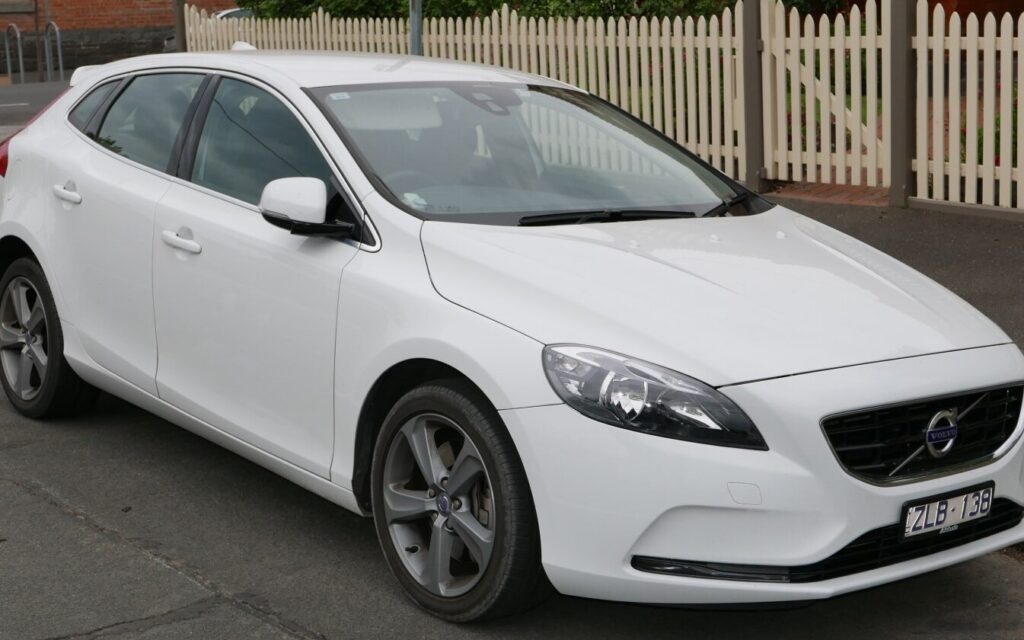
The Volvo V40 (facelift 2016) 2.0 D3 (150 Hp) Geartronic: A Premium European Compact
The Volvo V40, specifically the facelifted model introduced in 2016, represented Volvo’s strong contender in the highly competitive European premium compact hatchback segment. The variant under review, the Volvo V40 (facelift 2016) 2.0 D3 (150 Hp) Geartronic, showcased Volvo’s commitment to sophisticated design, advanced safety, and efficient powertrain options. While never officially sold in the United States, the V40 played a crucial role in strengthening Volvo’s presence across Europe and other international markets, offering a compelling alternative to established German rivals. This particular iteration, produced from 2016 to 2018, combined a robust diesel engine with a smooth automatic transmission, targeting discerning buyers who prioritized Scandinavian understated luxury, practicality, and a responsible environmental footprint.
As a five-door, five-seat hatchback, the V40 was designed to navigate urban environments with ease while offering sufficient comfort and utility for longer journeys. Its facelift brought subtle yet significant enhancements to its exterior styling and interior features, keeping it fresh against newer competitors. The focus remained on Volvo’s core values: human-centric design, comprehensive safety systems, and efficient, refined performance.
Engine & Performance: The Heart of the Volvo V40 (facelift 2016)
Powering the Volvo V40 (facelift 2016) 2.0 D3 (150 Hp) Geartronic is a modern 2.0-liter (1969 cm3 or 120.16 cu. in.) inline four-cylinder diesel engine, internally designated D4204T9. This engine is a testament to Volvo’s Drive-E powertrain philosophy, which emphasizes efficiency and strong torque delivery. Equipped with a turbocharger and intercooler, it produces a respectable 150 horsepower at 3750 revolutions per minute (rpm). More importantly for a diesel, it generates a substantial 320 Nm (236.02 lb.-ft.) of torque, available across a broad and usable range from 1750 to 3000 rpm. This torque profile ensures strong acceleration and effortless cruising, particularly beneficial for highway driving and overtaking maneuvers.
The D3 engine is paired with Volvo’s 6-speed Geartronic automatic transmission, a conventional torque converter automatic known for its smooth shifts and reliability. This combination allows the V40 to accelerate from 0 to 62 miles per hour (0-100 km/h) in 8.4 seconds, with an estimated 0-60 mph sprint in approximately 8 seconds. The top speed is rated at 130.49 mph (210 km/h), making it perfectly capable on European highways.
Fuel economy was a key selling point for this diesel variant. The V40 2.0 D3 Geartronic achieves an impressive combined fuel consumption of 4.0 liters per 100 kilometers, which translates to approximately 58.8 US miles per gallon. Urban consumption stands at 4.6 l/100 km (51.1 US mpg), while extra-urban driving yields an even more economical 3.7 l/100 km (63.6 US mpg). With CO2 emissions of just 104 g/km, the vehicle met the stringent Euro 6 emission standard, underscoring its environmental consciousness. The engine also features a particulate filter, crucial for reducing harmful emissions.
Design & Features of the Facelifted Volvo V40
The 2016 facelift brought a refreshed aesthetic to the Volvo V40, aligning its design cues with newer models in Volvo’s lineup, such as the XC90 and S90. The most noticeable change was the introduction of Volvo’s signature “Thor’s Hammer” LED daytime running lights, which gave the V40 a more contemporary and distinctive front fascia. The grille was updated with a new Volvo Iron Mark logo, and new wheel designs were introduced. The overall body type remained a sleek, five-door hatchback, blending practicality with a sporty, upscale appearance.
Inside, the V40 maintained its reputation for Scandinavian design purity, characterized by clean lines, high-quality materials, and ergonomic functionality. While not featuring the large tablet-style infotainment screens found in later Volvo models, the facelifted V40 offered a user-friendly Sensus Connect infotainment system with navigation, connectivity options, and a digital instrument cluster. Seating for five was standard, with comfortable and supportive seats upholstered in premium materials. The trunk space offered a practical 11.83 cubic feet (335 liters) with the rear seats up, expanding to a generous 52.97 cubic feet (1500 liters) when folded down, making it versatile for various cargo needs.
Safety, as always with Volvo, was paramount. The V40 was packed with a comprehensive suite of active and passive safety features. These included a robust chassis, multiple airbags, and a host of driver-assistance systems. While the provided data specifically mentions ABS (Anti-lock braking system), the V40 was also available with advanced features like City Safety (autonomous emergency braking), pedestrian detection, lane keeping aid, and blind spot information system (BLIS), depending on market and trim levels. The car’s front suspension utilized an independent McPherson strut setup with coil springs and an anti-roll bar, while the rear featured an independent coil spring design, contributing to a balanced ride and handling. Braking was handled by ventilated discs at the front and solid discs at the rear.
Technical Specifications
| Category | Specification | Value |
|---|---|---|
| General Information | ||
| Brand | Volvo | |
| Model | V40 | |
| Generation | V40 (facelift 2016) | |
| Type (Engine) | 2.0 D3 (150 Hp) Geartronic | |
| Start of production | 2016 year | |
| End of production | 2018 year | |
| Powertrain Architecture | Internal Combustion engine | |
| Body type | Hatchback | |
| Seats | 5 | |
| Doors | 5 | |
| Performance Specs | ||
| Fuel consumption (economy) – urban | 4.6 l/100 km | 51.1 US mpg |
| Fuel consumption (economy) – extra urban | 3.7 l/100 km | 63.6 US mpg |
| Fuel consumption (economy) – combined | 4.0 l/100 km | 58.8 US mpg |
| CO2 emissions | 104 g/km | |
| Fuel Type | Diesel | |
| Acceleration 0 – 60 mph | 8 seconds | |
| Acceleration 0 – 62 mph (0-100 km/h) | 8.4 seconds | |
| Maximum speed | 210 km/h | 130.49 mph |
| Emission standard | Euro 6 | |
| Weight-to-power ratio | 9.9 kg/Hp | 100.9 Hp/tonne |
| Weight-to-torque ratio | 4.6 kg/Nm | 215.3 Nm/tonne |
| Engine Specs | ||
| Power | 150 Hp | @ 3750 rpm |
| Power per liter | 76.2 Hp/l | |
| Torque | 320 Nm | 236.02 lb.-ft. @ 1750-3000 rpm |
| Engine layout | Front, Transverse | |
| Engine Model/Code | D4204T9 | |
| Engine displacement | 1969 cm3 | 2.0 liters (120.16 cu. in.) |
| Number of cylinders | 4 | |
| Engine configuration | Inline | |
| Cylinder Bore | 82 mm | 3.23 in. |
| Piston Stroke | 93.2 mm | 3.67 in. |
| Compression ratio | 16:1 | |
| Number of valves per cylinder | 4 | |
| Fuel injection system | Diesel Commonrail | |
| Engine aspiration | Turbocharger, Intercooler | |
| Engine oil capacity | 5.2 l | 5.49 US qt |
| Engine oil specification | Not specified | |
| Coolant capacity | 8 l | 8.45 US qt |
| Engine systems | Particulate filter | |
| Space, Volume and Weights | ||
| Kerb Weight | 1486 kg | 3276.07 lbs. |
| Max. weight | 1980 kg | 4365.15 lbs. |
| Max load | 494 kg | 1089.08 lbs. |
| Trunk (boot) space – minimum | 335 l | 11.83 cu. ft. |
| Trunk (boot) space – maximum | 1500 l | 52.97 cu. ft. |
| Fuel tank capacity | 62 l | 16.38 US gal |
| Max. roof load | 75 kg | 165.35 lbs. |
| Permitted trailer load with brakes (12%) | 1500 kg | 3306.93 lbs. |
| Dimensions | ||
| Length | 4369 mm | 172.01 in. |
| Width | 1783 mm | 70.2 in. |
| Width including mirrors | 2041 mm | 80.35 in. |
| Height | 1439 mm | 56.65 in. |
| Wheelbase | 2647 mm | 104.21 in. |
| Front track | 1559 mm | 61.38 in. |
| Rear (Back) track | 1546 mm | 60.87 in. |
| Ride height (ground clearance) | 133-144 mm | 5.24 – 5.67 in. |
| Drag coefficient (Cd) | 0.32 | |
| Minimum turning circle (turning diameter) | 10.8 m | 35.43 ft. |
| Drivetrain, Brakes and Suspension Specs | ||
| Drivetrain Architecture | The Internal combustion engine (ICE) drives the front wheels of the vehicle. | |
| Drive wheel | Front wheel drive | |
| Number of gears and type of gearbox | 6 gears, automatic transmission Geartronic | |
| Front suspension | Independent, type McPherson with coil spring and anti-roll bar | |
| Rear suspension | Independent coil spring | |
| Front brakes | Ventilated discs | |
| Rear brakes | Disc | |
| Assisting systems | ABS (Anti-lock braking system) | |
| Steering type | Steering rack and pinion | |
| Power steering | Electric Steering | |
Legacy & Market Impact
The Volvo V40 (facelift 2016) continued the model’s mission as Volvo’s entry into the premium compact segment, primarily in Europe and other select global markets. It carved out a niche for itself by offering a distinctively Scandinavian alternative to the dominant German trio: the Audi A3, BMW 1 Series, and Mercedes-Benz A-Class. While perhaps not as overtly sporty as a BMW or as tech-laden as some Audi models of its time, the V40 appealed to buyers who valued understated elegance, robust build quality, and, above all, Volvo’s legendary commitment to safety.
The 2.0 D3 Geartronic variant, in particular, was well-suited for the European market, where diesel engines were still highly favored for their fuel efficiency and strong low-end torque, especially for long-distance commuting. Its Euro 6 compliance meant it was a responsible choice in an era of increasing environmental scrutiny. The V40’s design, especially after the 2016 facelift with its “Thor’s Hammer” lights, helped to modernize Volvo’s image and bridge the gap to the brand’s newer, larger vehicles that were gaining significant global traction.
Despite its strengths, the V40 faced stiff competition from rivals that often offered more diverse engine lineups, more advanced infotainment, or a stronger brand presence in certain performance-oriented segments. However, the V40’s unique selling proposition of safety leadership, ergonomic interior design, and a distinct Scandinavian aesthetic ensured its relevance. It served as a vital stepping stone for Volvo, maintaining its foothold in a crucial market segment while the brand prepared for its next generation of compact vehicles, particularly with the shift towards electrification and SUV dominance. Its legacy is one of quiet competence, unwavering safety, and a stylish, efficient package that embodied Volvo’s core values in a compact form. The V40 demonstrated that Volvo could compete effectively in the smaller car classes, offering a compelling blend of practicality and premium feel without compromising on its fundamental principles.