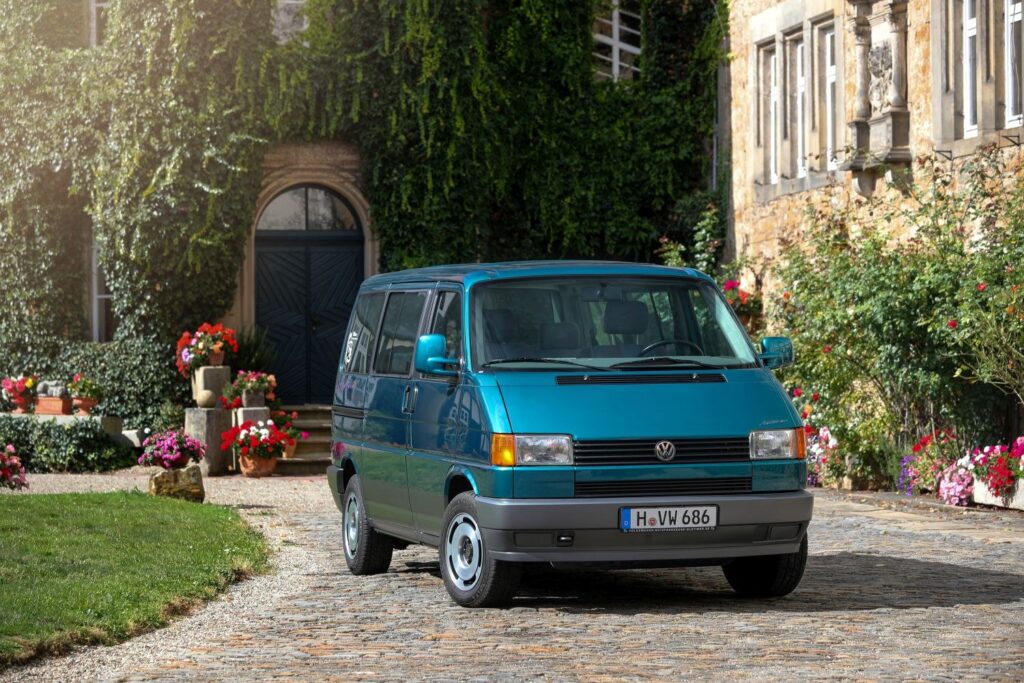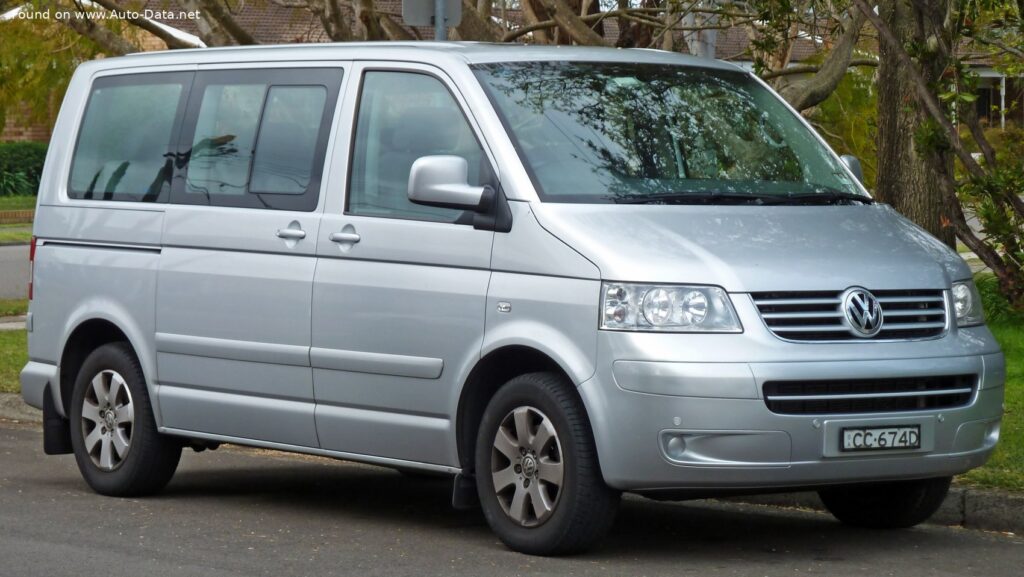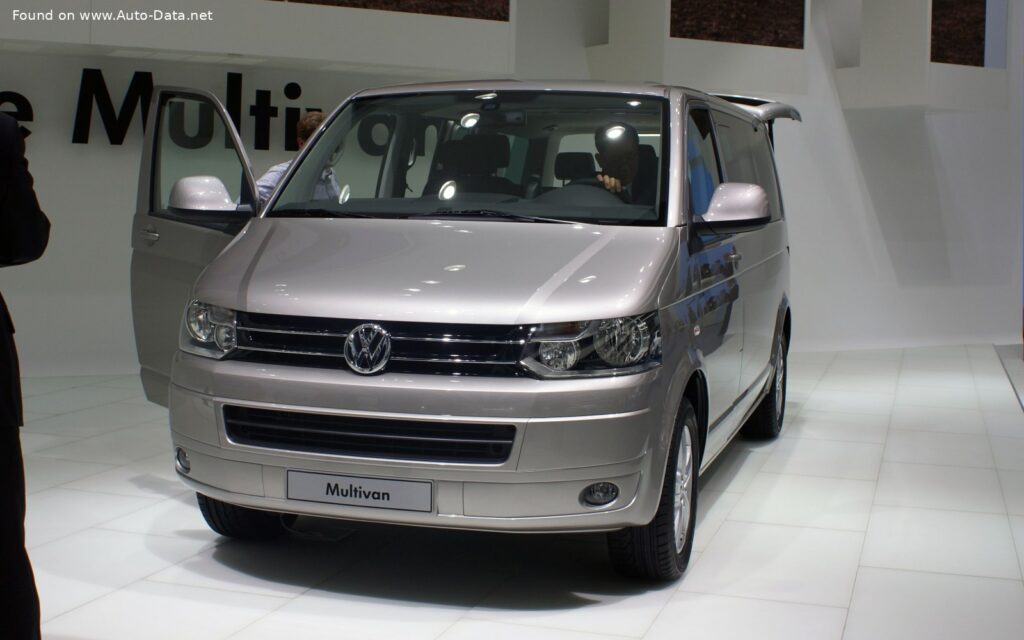
Introduction to the Volkswagen Multivan (T5, facelift 2009) Long 2.0 TSI (204 Hp)
The Volkswagen Multivan, specifically the T5 generation that received a significant facelift in 2009, represents the pinnacle of Volkswagen’s long-standing tradition in the European people mover segment. While not officially sold in the United States, the Multivan is a highly regarded and iconic vehicle across Europe, Asia, and other international markets, serving as a versatile and premium alternative to traditional minivans or larger SUVs. The T5 generation, produced from 2003 to 2015, built upon the legendary heritage of the Volkswagen Transporter (Bus/Kombi) series, evolving it into a sophisticated and comfortable family hauler or executive shuttle.
The particular variant under review, the Volkswagen Multivan (T5, facelift 2009) Long 2.0 TSI (204 Hp), signifies a crucial update that brought enhanced aesthetics, improved powertrains, and refined interior appointments. The “Long” designation indicates an extended wheelbase model, offering superior interior space and cargo capacity, making it exceptionally practical for large families, adventure enthusiasts, or commercial passenger transport. Equipped with the potent 2.0-liter TSI turbocharged gasoline engine, delivering 204 horsepower, this Multivan combined robust performance with a focus on efficiency for its class, setting a benchmark for premium minivans in its primary markets during its production run from 2009 to 2015.
Engineering and Performance of the Volkswagen Multivan (T5, facelift 2009) Long 2.0 TSI (204 Hp)
At the heart of the Volkswagen Multivan (T5, facelift 2009) Long 2.0 TSI (204 Hp) lies a thoroughly modern and efficient powertrain designed to deliver a compelling balance of power and economy. The engine, designated CJKA, is a 1984 cm3 (121.07 cu. in.) inline four-cylinder unit, featuring direct injection and a turbocharger with an intercooler. This sophisticated setup allowed the engine to produce a healthy 204 horsepower at 6000 rpm, providing ample thrust for highway cruising and confident overtaking maneuvers, even when fully loaded. Torque output was equally impressive, with 258.15 lb.-ft. (350 Nm) available at a relatively accessible 4000 rpm, ensuring strong low-end and mid-range pulling power.
Power was delivered to the front wheels via a precise 6-speed manual transmission, offering engaging driver control and optimizing fuel efficiency across various driving conditions. Despite its considerable size and curb weight of 4850.17 lbs. (2200 kg), the Multivan 2.0 TSI demonstrated respectable performance figures. It could accelerate from 0 to 60 mph in approximately 9 seconds, reaching a maximum speed of 124.27 mph (200 km/h). These figures were notable for a vehicle in its class, underscoring the effectiveness of the TSI engine technology.
Fuel economy, while not a primary selling point for a vehicle of this type, was competitive. The combined fuel consumption was rated at 24 US mpg (9.8 l/100 km), with extra-urban driving achieving 29.4 US mpg (8 l/100 km) and urban driving at 18.1 US mpg (13 l/100 km). CO2 emissions stood at 228 g/km, adhering to the Euro 4 emission standard, which was standard for its time. The powertrain architecture, driving the front wheels, provided predictable handling and a comfortable ride, further enhanced by an independent McPherson strut front suspension and a double wishbone rear suspension, ensuring stability and passenger comfort.
Design and Features
The T5 generation’s 2009 facelift brought a refreshed aesthetic to the Volkswagen Multivan, aligning its design language with other contemporary Volkswagen passenger vehicles. The exterior featured updated headlights, a revised grille, and subtle changes to the bumpers, giving it a more modern and cohesive look. As a minivan with 5 doors and seating for 7, the Multivan’s design prioritized functionality and interior volume, yet it managed to maintain a clean, understated, and unmistakably Volkswagen appearance.
The “Long” variant was particularly noteworthy for its expansive dimensions. With a length of 208.35 inches (5292 mm), a width of 74.96 inches (1904 mm), and a height of 78.35 inches (1990 mm), coupled with a generous 133.86-inch (3400 mm) wheelbase, the Multivan Long offered exceptional interior space. This extended wheelbase translated directly into more legroom for rear passengers and increased cargo capacity, making it ideal for longer journeys or transporting bulky items. The interior was highly configurable, with a versatile rail system allowing for easy adjustment or removal of seats, transforming the cabin from a comfortable people mover to a spacious cargo van in minutes. This modularity was a key differentiator and a hallmark of the Multivan’s utility.
Standard features included disc brakes all around, complemented by an Anti-lock Braking System (ABS) for enhanced safety. The steering system utilized a rack and pinion setup, providing direct and responsive feedback. The Multivan rode on 235/55 R17 tires mounted on 7J x 17-inch wheel rims, contributing to both its stable handling and comfortable ride quality. While not laden with the advanced driver-assistance systems found in modern vehicles today, the T5 facelift Multivan offered a robust and well-engineered platform, focusing on fundamental safety and passenger comfort, making it a reliable choice for its target demographic.
Technical Specifications
| Category | Specification | Value |
|---|---|---|
General Information |
||
| Brand | Volkswagen | |
| Model | Multivan | |
| Generation | Multivan (T5, facelift 2009) Long | |
| Type (Engine) | 2.0 TSI (204 Hp) | |
| Start of production | 2009 year | |
| End of production | 2015 year | |
| Powertrain Architecture | Internal Combustion engine | |
| Body type | Minivan | |
| Seats | 7 | |
| Doors | 5 | |
Performance Specs |
||
| Fuel consumption (economy) – urban | 18.1 US mpg (13 l/100 km) | |
| Fuel consumption (economy) – extra urban | 29.4 US mpg (8 l/100 km) | |
| Fuel consumption (economy) – combined | 24 US mpg (9.8 l/100 km) | |
| CO2 emissions | 228 g/km | |
| Fuel Type | Petrol (Gasoline) | |
| Acceleration 0 – 60 mph | 9 sec | |
| Acceleration 0 – 100 km/h | 9.5 sec | |
| Maximum speed | 124.27 mph (200 km/h) | |
| Emission standard | Euro 4 | |
| Weight-to-power ratio | 10.8 kg/Hp (92.7 Hp/tonne) | |
| Weight-to-torque ratio | 6.3 kg/Nm (159.1 Nm/tonne) | |
Engine Specs |
||
| Power | 204 Hp @ 6000 rpm | |
| Power per liter | 102.8 Hp/l | |
| Torque | 258.15 lb.-ft. (350 Nm) @ 4000 rpm | |
| Engine layout | Front, Transverse | |
| Engine Model/Code | CJKA | |
| Engine displacement | 121.07 cu. in. (1984 cm3) | |
| Number of cylinders | 4 | |
| Engine configuration | Inline | |
| Number of valves per cylinder | 4 | |
| Fuel injection system | Direct injection | |
| Engine aspiration | Turbocharger, Intercooler | |
| Engine oil capacity | 6.02 US qt (5.7 l) | |
Space, Volume and Weights |
||
| Kerb Weight | 4850.17 lbs. (2200 kg) | |
| Max. weight | 6790.24 lbs. (3080 kg) | |
| Max load | 1940.07 lbs. (880 kg) | |
| Fuel tank capacity | 21.13 US gal (80 l) | |
Dimensions |
||
| Length | 208.35 in. (5292 mm) | |
| Width | 74.96 in. (1904 mm) | |
| Height | 78.35 in. (1990 mm) | |
| Wheelbase | 133.86 in. (3400 mm) | |
| Front track | 64.09 in. (1628 mm) | |
| Rear (Back) track | 64.09 in. (1628 mm) | |
| Ride height (ground clearance) | 7.91 in. (201 mm) | |
Drivetrain, Brakes and Suspension Specs |
||
| Drivetrain Architecture | The Internal combustion engine (ICE) drives the front wheels of the vehicle. | |
| Drive wheel | Front wheel drive | |
| Number of gears and type of gearbox | 6 gears, manual transmission | |
| Front suspension | Independent type McPherson | |
| Rear suspension | Double wishbone | |
| Front brakes | Disc | |
| Rear brakes | Disc | |
| Assisting systems | ABS (Anti-lock braking system) | |
| Steering type | Steering rack and pinion | |
| Tires size | 235/55 R17 | |
| Wheel rims size | 7J x 17 | |
Legacy and Market Impact
The Volkswagen Multivan (T5, facelift 2009) Long 2.0 TSI (204 Hp) holds a significant place in the European automotive landscape, embodying Volkswagen’s enduring legacy of versatile and practical people movers. The T5 generation, in particular, was lauded for its robust build quality, excellent long-term reliability, and impressive residual values, making it a sound investment for both private owners and commercial fleets. Its reputation for durability and longevity cemented its status as a workhorse capable of handling demanding usage, from family vacations to hotel shuttles.
In its primary markets, the Multivan competed against a formidable array of rivals, including the Mercedes-Benz V-Class (formerly Viano), the Ford Transit Custom (Tourneo Custom variant), and to a lesser extent, premium large MPVs like the Renault Espace. What set the Multivan apart was its unique blend of commercial vehicle ruggedness with passenger car refinement. Volkswagen managed to imbue the Multivan with a level of driving dynamics and interior comfort that often surpassed its commercial van-derived competitors, particularly in higher trim levels like the Multivan.
The Multivan’s historical significance is deeply rooted in the iconic Volkswagen Type 2 “Bus” lineage. Each generation, from the T1 to the T5 and beyond, has consistently evolved to meet contemporary demands while retaining the core values of space, versatility, and efficiency. The T5 facelift, with its modern TSI engines, represented a technological leap, offering performance and fuel economy previously uncommon in such a large vehicle. Its “Long” wheelbase variant further enhanced its appeal by maximizing interior utility, a critical factor for its target audience.
The absence of the Multivan in the United States market can be attributed to several factors. The U.S. minivan market largely favored car-based platforms with dual sliding doors, a segment dominated by domestic offerings like the Chrysler Town & Country (which Volkswagen briefly rebadged as the Routan) and Japanese models. Additionally, the “chicken tax,” a tariff on imported light trucks and vans, made it economically challenging for Volkswagen to import and competitively price a vehicle like the Multivan in the U.S. market. Despite its limited global reach compared to some other Volkswagen models, the Multivan remains a beloved and highly successful model in its intended markets, a testament to its enduring appeal and practical excellence.