
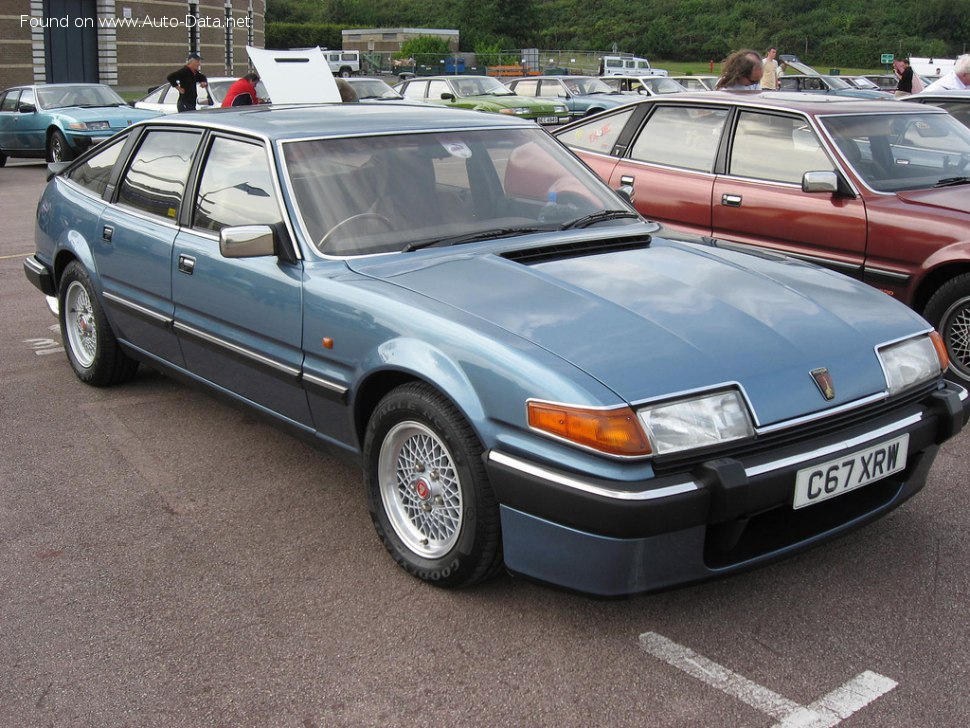
Introduction to the Rover 2000-3500 Hatchback (SD1)
The Rover SD1, officially known as the Rover 2000-3500 Hatchback, represents a significant chapter in British automotive history. Launched in 1976, the SD1 was a bold and ambitious executive car designed to compete with established European rivals. Its striking fastback silhouette, often mistaken for a sedan, was a radical departure from traditional British luxury car design, drawing inspiration from contemporary Italian supercars like the Ferrari Daytona and Lancia Gamma. The SD1 nomenclature stood for “Special Division 1,” indicating its status as the first car developed by the newly formed Rover-Triumph division of British Leyland.
The specific variant under examination, the Rover 2000-3500 Hatchback (SD1) 2400 TD (91 Hp), was introduced in 1982 and remained in production until 1986. This model marked Rover’s foray into the executive diesel market, a growing segment in Europe driven by increasing fuel costs and a demand for greater efficiency. While the SD1 was never officially sold in the United States, it played a crucial role in the European and UK markets, serving as a flagship for the Rover brand and embodying both the aspirations and challenges of the British automotive industry during the early 1980s.
As a five-door, five-seat hatchback, the SD1 offered a practical yet stylish solution for executive transport. The 2400 TD variant, with its turbocharged diesel engine, aimed to combine the SD1’s celebrated design and comfortable ride with improved fuel economy, targeting fleet buyers and private owners who prioritized running costs without sacrificing prestige. This particular iteration underscores a pivotal moment for Rover, adapting to changing market demands while retaining the distinctive character of the SD1 line.
Engine & Performance: The Rover 2000-3500 Hatchback (SD1) 2400 TD (91 Hp) Powertrain
At the heart of the Rover 2000-3500 Hatchback (SD1) 2400 TD (91 Hp) was its 2.4-liter (approximately 2393cc) turbocharged diesel engine. This unit produced a modest but respectable 91 horsepower (Hp), a figure that, while not indicative of outright performance, was competitive for a diesel executive car of its era. The inclusion of a turbocharger was a significant feature, enabling the engine to deliver more power and, crucially, greater torque across a wider rev range than a naturally aspirated diesel of similar displacement. This characteristic was vital for providing adequate acceleration and cruising ability in a car of the SD1’s size and weight.
The powertrain architecture was a conventional internal combustion engine, positioned longitudinally, driving the rear wheels. This rear-wheel-drive (RWD) layout was typical for executive cars of the period, contributing to balanced handling dynamics and a classic driving feel. While specific torque figures for this exact variant are not readily available, a turbocharged diesel of this size in the early 1980s would typically produce around 130-150 lb-ft of torque, providing ample pulling power for everyday driving and comfortable highway cruising.
Performance-wise, the 2400 TD was not designed for blistering acceleration. Its 0-60 mph sprint would likely have been in the 14-16 second range, with a top speed approaching 100 mph. Instead, its strength lay in its fuel economy and durability. Diesel engines were renowned for their longevity and lower running costs, making the 2400 TD an attractive option for high-mileage drivers and corporate fleets. The engine’s aspiration via a turbocharger meant a more responsive and less strained driving experience compared to non-turbo diesels, which could often feel sluggish in larger vehicles.
Transmission options for the SD1 typically included a five-speed manual gearbox, offering driver engagement and efficiency, or an optional three- or four-speed automatic transmission for a more relaxed driving experience. The combination of the robust diesel engine, rear-wheel drive, and a well-sorted chassis ensured that the 2400 TD, despite its lower power output compared to its V8 gasoline siblings, retained the SD1’s reputation for comfortable and stable long-distance travel.
Design & Features: The Executive Hatchback Aesthetic
The design of the Rover 2000-3500 Hatchback (SD1) was its most defining characteristic. Penned by David Bache, the car’s exterior was remarkably modern and aerodynamic for its time, eschewing the traditional three-box sedan shape in favor of a sleek, fastback profile. This five-door hatchback body style offered the practicality of a large trunk opening, while its sloping roofline and integrated rear spoiler maintained a sophisticated and sporty appearance. The design was so influential that it earned the SD1 the European Car of the Year award in 1977.
From the front, the SD1 featured a distinctive grille and rectangular headlights, giving it a purposeful and executive presence. The side profile was characterized by smooth lines and a large glass area, contributing to an airy cabin feel. The five-door configuration provided easy access for all occupants, making it a practical choice for families or business use.
Inside, the SD1 offered a spacious and comfortable cabin designed to accommodate five occupants. The interior design was also forward-thinking, featuring a driver-centric dashboard with clear instrumentation. Depending on the trim level, materials ranged from durable cloth to more luxurious velour or leather upholstery. Key features for an executive car of the early 1980s would typically include power windows, central locking, a sophisticated heating and ventilation system (with air conditioning as an option), and a quality audio system. Safety features, standard for the era, included three-point seatbelts for front occupants and lap belts for rear passengers, along with a robust body structure designed to absorb impact forces.
The hatchback design provided a versatile cargo area, making the SD1 more adaptable than many of its sedan competitors. The rear seats could typically fold down, expanding the luggage capacity significantly, a practical benefit for those needing to transport larger items. This blend of executive styling, comfortable interior, and practical utility made the SD1 a compelling proposition in its market segment, even in its more economical diesel guise.
Technical Specifications
| Category | Specification |
|---|---|
| Brand | Rover |
| Model | 2000-3500 Hatchback (SD1) |
| Generation | SD1 |
| Engine Type | 2400 TD (Turbo Diesel) |
| Production Start | 1982 year |
| Production End | 1986 year |
| Powertrain Architecture | Internal Combustion Engine |
| Body Type | Hatchback |
| Doors | 5 |
| Seats | 5 |
| Fuel Type | Diesel |
| Power Output | 91 Hp |
| Engine Aspiration | Turbocharger |
| Engine Displacement | Approx. 2.4 Liters (2393 cc) |
| Drive Type | Rear-Wheel Drive (RWD) |
| Transmission (Typical) | 5-speed Manual (Optional Automatic) |
Legacy & Market Impact: The Rover 2000-3500 Hatchback (SD1)
The Rover 2000-3500 Hatchback (SD1), particularly in its later diesel iterations, holds a complex but significant place in automotive history. Upon its launch, the SD1 was widely praised for its revolutionary styling, comfortable ride, and excellent handling, especially in its more powerful V8 guises. It was seen as a genuine contender to European luxury marques and a symbol of British design prowess. However, its legacy is also intertwined with the industrial turmoil and quality control issues that plagued British Leyland during the late 1970s and early 1980s.
In the European executive car market, the SD1 faced formidable competition. Its primary rivals included the BMW 5 Series (E12 and later E28), the Mercedes-Benz W123, the Ford Granada, and the Volvo 200 and 700 series. These competitors often offered a blend of robust engineering, established reliability, and strong brand images. The SD1 aimed to differentiate itself with its avant-garde design and distinctively British character.
The introduction of the 2400 TD (91 Hp) variant in 1982 was a strategic move to broaden the SD1’s appeal. By this point, the demand for fuel-efficient diesel engines in executive cars was growing rapidly across Europe, driven by rising fuel prices and favorable tax policies in some countries. The diesel SD1 provided a more economical option for fleet buyers and company car users, who often prioritized running costs over outright performance. While it couldn’t match the refinement or power of its V8 siblings, it offered a compelling blend of efficiency and executive comfort.
Despite its initial promise, the SD1’s reputation suffered from persistent issues with build quality, rust, and electrical reliability, which undermined its competitiveness against its German and Swedish rivals. These problems, often attributed to underinvestment and labor disputes within British Leyland, ultimately hindered its long-term success and tarnished its image. However, the SD1 also enjoyed considerable success in motorsport, particularly in touring car racing, where its V8 versions proved highly capable.
Today, the Rover SD1 is recognized as a design icon and a significant classic car. Enthusiasts appreciate its unique styling, comfortable ride, and the characterful driving experience it offers. The diesel variants, while less common and often overlooked in favor of the V8s, represent an important part of the SD1’s evolution, showcasing Rover’s efforts to adapt to changing market demands and offer a broader range of options to its European customers. It remains a testament to ambitious British design, a car that, despite its challenges, left an indelible mark on the automotive landscape.
