The Opel Rekord E Caravan (facelift 1982) 1.8 (75 Hp): A European Workhorse
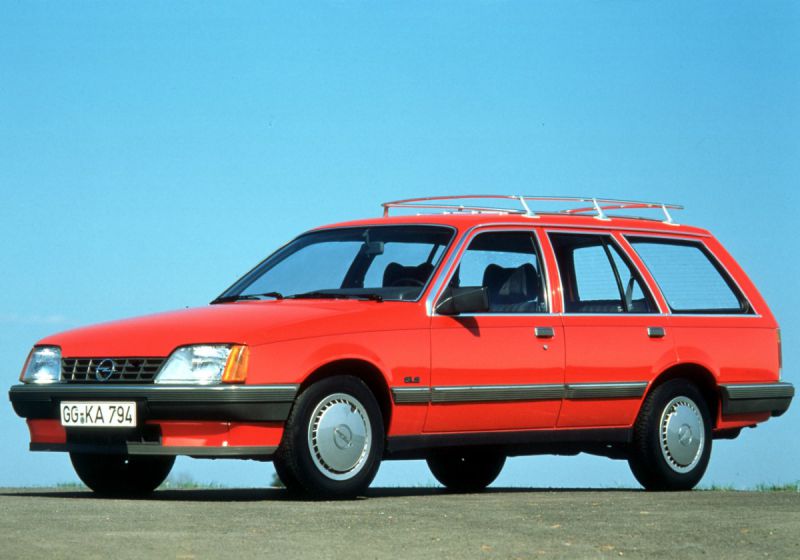
The Opel Rekord E Caravan (facelift 1982) 1.8 (75 Hp) represents a significant chapter in European automotive history, embodying the practical, durable, and family-oriented ethos of Opel, a German brand that was a key player in the General Motors international portfolio. As the penultimate iteration of the Rekord E generation, which ran from 1977 to 1986, the 1982 facelift brought subtle refinements to a proven formula. This model, specifically the 1.8-liter variant, was a ubiquitous sight on European roads, serving as a steadfast family hauler, a reliable company car, and a versatile utility vehicle. Never officially sold in the United States, the Rekord carved out its reputation in its home market as a no-nonsense, spacious, and economical mid-size station wagon, designed to withstand the rigors of daily life across the continent. Its enduring appeal stemmed from a blend of straightforward engineering, generous interior volume, and a focus on long-term reliability rather than cutting-edge luxury or performance.
Evolution and Market Positioning of the Opel Rekord E Caravan
The Opel Rekord lineage stretched back to the 1950s, establishing itself as a cornerstone of the German and wider European automotive landscape. The ‘E’ generation, launched in 1977, was conceived to modernize the Rekord’s appeal while retaining its core values of robustness and practicality. The 1982 facelift, which began production in September of that year, introduced minor cosmetic updates, improved aerodynamics, and a revised engine lineup, aimed at keeping the Rekord competitive against rivals like the Ford Sierra and Volkswagen Passat. The Caravan, or station wagon variant, was particularly popular due to its expansive cargo capacity and ability to comfortably seat five passengers, making it an ideal choice for families and tradespeople alike. Its market segment was characterized by a demand for affordable, dependable, and spacious vehicles, a niche the Rekord consistently filled with distinction.
Engine and Performance of the Opel Rekord E Caravan (facelift 1982) 1.8 (75 Hp)
Under the hood of the Opel Rekord E Caravan (facelift 1982) 1.8 (75 Hp) lay Opel’s venerable 18N inline-four engine. This naturally aspirated, 1.8-liter (1796 cm3 or 109.6 cu. in.) powerplant was engineered for durability and efficiency, characteristics highly valued in the European market of the 1980s. Utilizing a single overhead camshaft (SOHC) valvetrain with two valves per cylinder and a carburetor-based fuel injection system, the engine produced a modest but entirely adequate 75 horsepower at 5400 rpm. Torque output stood at 99.57 lb.-ft. (135 Nm) at a relatively low 3000 rpm, providing accessible pulling power for everyday driving and hauling.
Paired with a 4-speed manual transmission, the 1.8-liter engine delivered power to the rear wheels, a traditional drivetrain architecture for family cars of its era. This setup contributed to the Rekord’s reputation for straightforward mechanics and ease of maintenance. While not a performance car, its acceleration from 0 to 60 mph in a calculated 16.6 seconds and a top speed of 95.69 mph (154 km/h) were respectable figures for a mid-size family wagon in the early 1980s. The combined fuel economy was rated at 24.2 US mpg (9.7 l/100 km), an important consideration for European consumers facing higher fuel prices. With a compression ratio of 8.2:1 and a naturally aspirated design, the engine was designed for longevity and reliable operation on standard gasoline. The 70-liter (18.49 US gal) fuel tank also ensured a substantial cruising range, further enhancing its practicality for long-distance family travel.
Design and Features
The Opel Rekord E Caravan (facelift 1982) presented a practical and functional design, typical of European family cars of the period. Its body type was a station wagon, offered in both 3-door (often marketed as a commercial or panel van variant) and the more common 5-door configuration, providing ample access to its spacious interior. With seating for five occupants, the Caravan excelled in cargo versatility, a primary selling point for this segment. The overall dimensions were substantial for its class, measuring 184.17 inches (4678 mm) in length, 67.72 inches (1720 mm) in width, and 58.07 inches (1475 mm) in height. A generous wheelbase of 105.04 inches (2668 mm) contributed to a comfortable ride and stable handling, particularly when loaded.
A notable aspect of the facelifted Rekord E was its improved aerodynamics, evidenced by a drag coefficient (Cd) of 0.40. While not exceptionally low by modern standards, this was a commendable figure for a boxy station wagon of its time and contributed to better fuel efficiency and reduced wind noise at higher speeds. The exterior styling was clean and unadorned, prioritizing visibility and utility over flashy aesthetics. Inside, the Rekord featured a functional dashboard layout, durable fabric upholstery, and straightforward controls. Features, while basic by today’s standards, included a robust heating and ventilation system, and often a radio as standard or optional equipment. Safety features were rudimentary, primarily consisting of seatbelts and a sturdy body structure designed to meet the prevailing European crash standards of the era. The Rekord’s design philosophy was clearly centered on providing a reliable, no-frills vehicle that could reliably serve its owners for many years.
Technical Specifications: Opel Rekord E Caravan (facelift 1982) 1.8 (75 Hp)
| Category | Specification | US Equivalent |
|---|---|---|
| Brand | Opel | |
| Model | Rekord E Caravan (facelift 1982) | |
| Engine Type | 1.8 (75 Hp) | |
| Production Start | September, 1982 | |
| Production End | August, 1986 | |
| Body Type | Station wagon (estate) | |
| Seats | 5 | |
| Doors | 3-5 | |
| Performance Specs | ||
| Fuel Consumption (Combined) | 9.7 l/100 km | 24.2 US mpg |
| Fuel Type | Petrol (Gasoline) | |
| Acceleration 0-60 mph | 16.6 sec | |
| Maximum Speed | 154 km/h | 95.69 mph |
| Weight-to-power ratio | 15 kg/Hp | |
| Weight-to-torque ratio | 8.3 kg/Nm | |
| Engine Specs | ||
| Power | 75 Hp @ 5400 rpm | |
| Torque | 135 Nm @ 3000 rpm | 99.57 lb.-ft. @ 3000 rpm |
| Engine Model/Code | 18N | |
| Engine Displacement | 1796 cm3 | 1.8 liters (109.6 cu. in.) |
| Number of Cylinders | 4 | |
| Engine Configuration | Inline | |
| Cylinder Bore | 84.8 mm | 3.34 in. |
| Piston Stroke | 79.5 mm | 3.13 in. |
| Compression Ratio | 8.2:1 | |
| Valves per Cylinder | 2 | |
| Fuel Injection System | Carburetor | |
| Engine Aspiration | Naturally aspirated | |
| Valvetrain | SOHC | |
| Engine Oil Capacity | 3.75 l | 3.96 US qt |
| Space, Volume and Weights | ||
| Kerb Weight | 1125 kg | 2480.2 lbs. |
| Max. Weight | 1770 kg | 3902.18 lbs. |
| Max Load | 645 kg | 1421.98 lbs. |
| Fuel Tank Capacity | 70 l | 18.49 US gal |
| Permitted Trailer Load with Brakes (12%) | 1000 kg | 2204.62 lbs. |
| Permitted Trailer Load without Brakes | 535 kg | 1179.47 lbs. |
| Dimensions | ||
| Length | 4678 mm | 184.17 in. |
| Width | 1720 mm | 67.72 in. |
| Height | 1475 mm | 58.07 in. |
| Wheelbase | 2668 mm | 105.04 in. |
| Front Track | 1435 mm | 56.5 in. |
| Rear (Back) Track | 1432 mm | 56.38 in. |
| Ride Height (Ground Clearance) | 140 mm | 5.51 in. |
| Drag Coefficient (Cd) | 0.40 | |
| Minimum Turning Circle | 10.8 m | 35.43 ft. |
| Drivetrain, Brakes and Suspension Specs | ||
| Drivetrain Architecture | Internal Combustion engine drives rear wheels | |
| Drive Wheel | Rear wheel drive | |
| Number of Gears and Type | 4 gears, manual transmission | |
| Front Brakes | Ventilated discs | |
| Rear Brakes | Drum | |
Legacy and Market Impact
The Opel Rekord E Caravan (facelift 1982) 1.8 (75 Hp), like its Rekord predecessors, enjoyed a robust reputation as a thoroughly dependable and practical vehicle throughout Europe. It was a common sight as a family car, a fleet vehicle for businesses, and even as a taxi in many European cities. Its straightforward mechanical design, including the durable 18N engine and rear-wheel-drive layout, made it relatively easy and inexpensive to maintain, a significant advantage for budget-conscious consumers and fleet operators.
In its primary European market, the Rekord E competed fiercely with other mid-size offerings. Key rivals included the Ford Sierra, which introduced a more aerodynamic and modern design, the Volkswagen Passat, known for its build quality and front-wheel-drive practicality, and to some extent, French competitors like the Peugeot 505 and Italian models such as the Fiat Croma. Volvo’s 240 series also offered a more premium, albeit often more expensive, alternative in the station wagon segment. The Rekord distinguished itself by offering a compelling balance of space, economy, and traditional German engineering solidity, without venturing into the more expensive or technologically complex territory of its competitors.
The Rekord E generation marked the end of an era for Opel. When production ceased in August 1986, it was replaced by the Opel Omega, a model that moved Opel’s mid-size offering into a more modern, aerodynamically styled, and technologically advanced direction. The Rekord, therefore, holds a special place in automotive history as the last bearer of a long-standing and highly successful nameplate, embodying the practical, durable, and unpretentious values that defined a generation of European family cars. Its legacy is one of quiet competence, serving millions of families and businesses faithfully, cementing its status as a true workhorse of the European automotive scene. Even today, well-preserved examples are cherished by enthusiasts for their classic lines, robust construction, and nostalgic appeal.