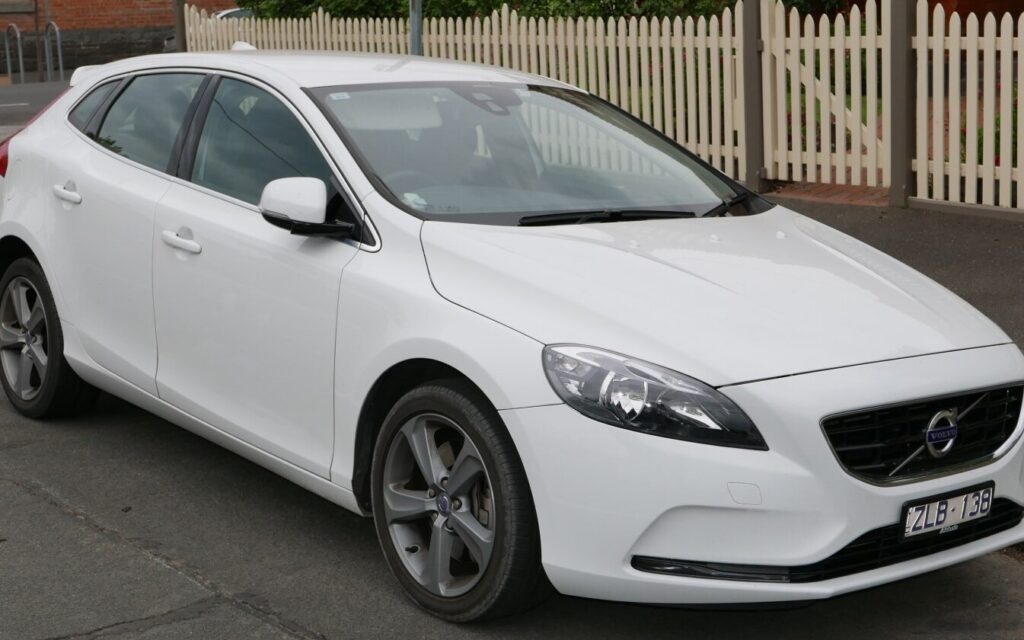
The Volvo V40 (facelift 2016): A Refined Compact Hatchback
The Volvo V40 (facelift 2016) represents a significant refresh of Volvo’s premium compact hatchback, a model primarily targeted at the discerning European and international markets. First introduced in 2012, the V40 was Volvo’s compelling entry into the highly competitive C-segment, challenging established players like the BMW 1 Series, Audi A3, and Mercedes-Benz A-Class. The 2016 facelift, produced from 2016 to 2018, brought a series of aesthetic and technological updates, solidifying its position as a sophisticated and safety-conscious alternative. This particular variant, the 2.0 D3 with 150 horsepower, showcased Volvo’s prowess in developing efficient yet potent diesel powertrains, a critical factor for its success in regions where diesel remained a popular choice for its economy and torque characteristics. While never officially sold in the United States, the V40 holds an important place in Volvo’s modern history, illustrating the brand’s commitment to design, safety, and driving dynamics in a smaller, more accessible package.
Powertrain and Performance of the Volvo V40 (facelift 2016) D3
Under the hood, the Volvo V40 (facelift 2016) 2.0 D3 features Volvo’s robust D4204T9 engine, a 2.0-liter (120.16 cubic inches) inline four-cylinder diesel unit. This engine is a prime example of modern diesel engineering, incorporating a common rail fuel injection system, a turbocharger, and an intercooler to optimize both power delivery and fuel efficiency. It generates a respectable 150 horsepower at 3750 rpm, translating to a power-per-liter output of 76.2 horsepower per liter. More impressively, the engine delivers a substantial 236.02 lb.-ft. of torque across a broad range, from 1750 to 3000 rpm. This wide torque band ensures strong, responsive acceleration and excellent drivability in various conditions, from city commuting to highway cruising.
Paired with a slick 6-speed manual transmission, the D3 engine propels the V40 from 0 to 60 mph in a swift 8 seconds, with a top speed reaching 130.49 mph. These performance figures are competitive within its segment, offering a blend of sportiness and practicality. However, where this powertrain truly shines is in its fuel economy and environmental credentials. The V40 D3 boasts an exceptional combined fuel consumption of 65.3 US mpg (3.6 liters per 100 km), with even more impressive figures on the extra-urban cycle at 71.3 US mpg (3.3 liters per 100 km). With CO2 emissions of just 95 g/km, the vehicle proudly meets the stringent Euro 6 emission standard, thanks in part to its integrated particulate filter. The front-wheel-drive architecture, combined with a transaxle internal combustion engine layout, provides predictable handling and efficient power transfer.
Design Evolution and Interior Amenities
The 2016 facelift brought a fresh aesthetic to the Volvo V40 (facelift 2016), aligning its design language with Volvo’s newer, more acclaimed models like the XC90 and S90. The most noticeable change was the introduction of the distinctive “Thor’s Hammer” LED daytime running lights, which became an iconic visual signature for the brand. This was complemented by a redesigned front grille featuring an updated Volvo Iron Mark badge, giving the V40 a more confident and contemporary face. The hatchback body style, with its five doors and seating for five, offered a sleek profile that blended Scandinavian elegance with a sporty demeanor.
Inside, the V40 continued Volvo’s tradition of ergonomic design and premium materials. While specific interior technology details are not provided, as a 2016 model in the premium segment, it would have featured a sophisticated infotainment system, comfortable seating, and a driver-centric cockpit. Volvo’s unwavering commitment to safety was paramount, with the V40 offering a comprehensive suite of passive and active safety features, typical of the brand’s reputation for protecting occupants. Practicality was also a strong suit, with a minimum trunk space of 11.83 cubic feet (335 liters) that could expand significantly to 52.97 cubic feet (1500 liters) with the rear seats folded, making it versatile for various cargo needs.
The vehicle’s dimensions, measuring 172.01 inches in length, 70.2 inches in width (80.35 inches including mirrors), and 56.65 inches in height, coupled with a 104.21-inch wheelbase, contributed to its stable road presence and agile handling. The suspension system, featuring an independent McPherson setup with coil springs and an anti-roll bar at the front and an independent coil spring rear, ensured a comfortable yet engaging ride. Braking performance was handled by ventilated discs at the front and disc brakes at the rear, supported by an Anti-lock Braking System (ABS). Electric power steering, with a rack and pinion setup, provided precise and effortless control, further enhancing the driving experience.
Technical Specifications: Volvo V40 (facelift 2016) 2.0 D3
| Category | Specification | US/Imperial Equivalent |
|---|---|---|
| Brand | Volvo | |
| Model | V40 | |
| Generation | V40 (facelift 2016) | |
| Type (Engine) | 2.0 D3 (150 Hp) Restricted | |
| Start of production | 2016 year | |
| End of production | 2018 year | |
| Powertrain Architecture | Internal Combustion engine | |
| Body type | Hatchback | |
| Seats | 5 | |
| Doors | 5 | |
| Performance Specs | ||
| Fuel consumption (economy) – urban | 4.2 l/100 km | 56 US mpg |
| Fuel consumption (economy) – extra urban | 3.3 l/100 km | 71.3 US mpg |
| Fuel consumption (economy) – combined | 3.6 l/100 km | 65.3 US mpg |
| CO2 emissions | 95 g/km | |
| Fuel Type | Diesel | |
| Acceleration 0 – 60 mph | 8 sec | |
| Maximum speed | 210 km/h | 130.49 mph |
| Emission standard | Euro 6 | |
| Engine Specs | ||
| Power | 150 Hp @ 3750 rpm. | |
| Power per liter | 76.2 Hp/l | |
| Torque | 320 Nm @ 1750-3000 rpm. | 236.02 lb.-ft. @ 1750-3000 rpm. |
| Engine layout | Front, Transverse | |
| Engine Model/Code | D4204T9 | |
| Engine displacement | 1969 cm3 | 120.16 cu. in. |
| Number of cylinders | 4 | |
| Engine configuration | Inline | |
| Cylinder Bore | 82 mm | 3.23 in. |
| Piston Stroke | 93.2 mm | 3.67 in. |
| Compression ratio | 16:1 | |
| Number of valves per cylinder | 4 | |
| Fuel injection system | Diesel Commonrail | |
| Engine aspiration | Turbocharger, Intercooler | |
| Engine oil capacity | 5.2 l | 5.49 US qt |
| Coolant | 8 l | 8.45 US qt |
| Engine systems | Particulate filter | |
| Space, Volume and Weights | ||
| Trunk (boot) space – minimum | 335 l | 11.83 cu. ft. |
| Trunk (boot) space – maximum | 1500 l | 52.97 cu. ft. |
| Fuel tank capacity | 40 l | 10.57 US gal |
| Max. roof load | 75 kg | 165.35 lbs. |
| Permitted trailer load with brakes (12%) | 1500 kg | 3306.93 lbs. |
| Dimensions | ||
| Length | 4369 mm | 172.01 in. |
| Width | 1783 mm | 70.2 in. |
| Width including mirrors | 2041 mm | 80.35 in. |
| Height | 1439 mm | 56.65 in. |
| Wheelbase | 2647 mm | 104.21 in. |
| Front track | 1559 mm | 61.38 in. |
| Rear (Back) track | 1546 mm | 60.87 in. |
| Ride height (ground clearance) | 133-144 mm | 5.24 – 5.67 in. |
| Drag coefficient (Cd) | 0.32 | |
| Minimum turning circle (turning diameter) | 10.8 m | 35.43 ft. |
| Drivetrain, Brakes and Suspension Specs | ||
| Drivetrain Architecture | The Internal combustion engine (ICE) drives the front wheels of the vehicle. | |
| Drive wheel | Front wheel drive | |
| Number of gears and type of gearbox | 6 gears, manual transmission | |
| Front suspension | Independent, type McPherson with coil spring and anti-roll bar | |
| Rear suspension | Independent coil spring | |
| Front brakes | Ventilated discs | |
| Rear brakes | Disc | |
| Assisting systems | ABS (Anti-lock braking system) | |
| Steering type | Steering rack and pinion | |
| Power steering | Electric Steering | |
Legacy and Market Standing in the Premium Compact Segment
The Volvo V40 (facelift 2016), particularly in its efficient D3 diesel guise, carved out a distinct niche in the highly competitive European premium compact segment. While it faced formidable rivals in the form of the BMW 1 Series, Audi A3, and Mercedes-Benz A-Class, the V40 offered a compelling alternative for consumers prioritizing Scandinavian design, class-leading safety, and exceptional fuel economy. Its reputation was built on Volvo’s core values: robust build quality, a comfortable and tastefully appointed interior, and a strong emphasis on occupant protection, often pioneering safety technologies that would later become industry standards.
In its primary markets, the V40 was well-received for its blend of understated elegance and practical functionality. The D3 engine’s balance of 150 horsepower and strong torque made it a popular choice, offering effortless highway cruising and confident overtaking while maintaining impressive efficiency. Its Euro 6 compliance further underscored its environmental responsibility, a growing concern for European buyers. The manual transmission variant, as detailed, appealed to those who appreciated direct driver engagement, though automatic options were also available across the range.
The V40’s production run concluded in 2018, marking the end of Volvo’s dedicated compact hatchback. Its discontinuation paved the way for the brand’s strategic shift towards SUVs, exemplified by the highly successful XC40, which effectively took over as Volvo’s entry-level premium offering. Despite its relatively short lifespan, the V40 played a crucial role in expanding Volvo’s appeal to a younger, more urban demographic and demonstrated the brand’s capability to compete effectively in segments traditionally dominated by German manufacturers. Today, the V40 remains a testament to Volvo’s ability to combine distinctive design, advanced engineering, and unparalleled safety in a compact and stylish package.