The Volkswagen Transporter (T5, Facelift 2009) Panel Van 2.0 TDI (180 Hp) L2H1: A European Workhorse
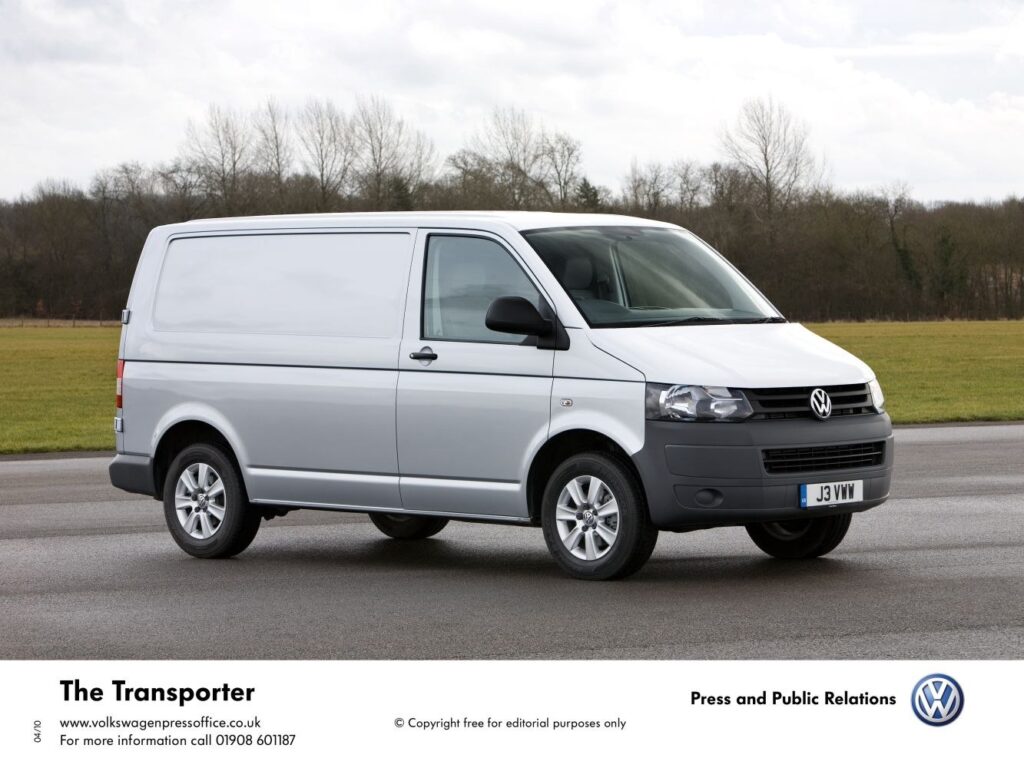
The Volkswagen Transporter, a name synonymous with utility, reliability, and versatility across Europe and many international markets, saw a significant evolution with its fifth generation, the T5. Introduced in 2003, the T5 series received a substantial facelift in 2009, bringing updated styling, enhanced technology, and more efficient powertrains. Among these, the Volkswagen Transporter (T5, facelift 2009) Panel Van 2.0 TDI (180 Hp) L2H1 stood out as a particularly capable and popular variant, designed to meet the rigorous demands of commercial users. While not a common sight on American roads, where Volkswagen focused its commercial efforts on models like the Routan and later, the Sprinter (through a partnership with Mercedes-Benz), the T5 Transporter played a pivotal role in the European light commercial vehicle segment. This specific L2H1 configuration, denoting a long wheelbase and standard roof height, offered an optimal balance of maneuverability and cargo capacity, making it an indispensable tool for businesses ranging from logistics to construction.
The 2009 facelift marked a critical juncture for the T5, introducing Volkswagen’s then-current design language with sharper lines and a more modern front fascia, aligning it with other models in the brand’s passenger car lineup. More importantly, it brought a new generation of engines, spearheaded by the advanced 2.0-liter TDI (Turbocharged Direct Injection) diesel unit, which offered superior fuel economy and reduced emissions compared to its predecessors. This particular 180 horsepower variant, equipped with a sophisticated BiTurbo setup, provided a blend of robust performance and economic operation, essential attributes for any commercial vehicle. The T5 Transporter’s enduring legacy is built on its reputation as a dependable and adaptable platform, capable of serving a multitude of roles beyond just a panel van, including passenger carriers (Multivan, Caravelle) and recreational vehicles (California).
Engine & Performance: Powering the Volkswagen Transporter (T5, facelift 2009) Panel Van
At the heart of the Volkswagen Transporter (T5, facelift 2009) Panel Van 2.0 TDI (180 Hp) L2H1 was a highly advanced 2.0-liter (1968 cm3 or 120.09 cu. in.) inline-four cylinder diesel engine, internally designated EA189 / CFCA. This powerplant was a testament to Volkswagen’s engineering prowess, featuring a BiTurbo aspiration system combined with an intercooler, DOHC (Double Overhead Camshaft) valvetrain, and a common rail fuel injection system. This sophisticated setup allowed the engine to produce a robust 180 horsepower at 4000 rpm, a significant output for a commercial van of its class. More critically for a work vehicle, it delivered an impressive 400 Nm (295.02 lb.-ft.) of torque across a broad and usable range, from 1500 to 2000 rpm. This low-end torque was crucial for hauling heavy loads and ensuring effortless acceleration, even when fully laden.
Mated to a precise 6-speed manual transmission, this powertrain enabled the Transporter Panel Van to achieve respectable performance figures. The 0 to 60 mph acceleration was clocked at approximately 9.4 seconds, with 0 to 100 km/h taking 9.9 seconds, demonstrating its capability to keep up with traffic flow on highways and urban environments alike. The maximum speed reached 191 km/h (118.68 mph), which was more than adequate for its intended purpose.
Efficiency was a key focus for the T5 facelift, and the 2.0 TDI engine delivered commendable fuel economy for its size and power. Under the NEDC (New European Driving Cycle) standards, the combined fuel consumption ranged from 7.5 to 7.8 liters per 100 kilometers, translating to an impressive 31.4 to 30.2 US miles per gallon. Urban driving figures were between 9.5-9.8 l/100 km (24.8 – 24 US mpg), while extra-urban consumption dropped to 6.4-6.7 l/100 km (36.8 – 35.1 US mpg). With CO2 emissions ranging from 197-205 g/km, the vehicle met the stringent Euro 5 emission standard, reflecting Volkswagen’s commitment to environmental responsibility during that era. The engine also featured a particulate filter, further reducing harmful emissions.
Design & Features: The Practicality of the T5 Panel Van L2H1
The Volkswagen Transporter (T5, facelift 2009) Panel Van was designed first and foremost for functionality and durability. As a panel van, its primary purpose was the transportation of goods, offering a cavernous cargo space. The L2H1 designation specifically refers to its dimensions: L2 indicates a long wheelbase (3400 mm or 133.86 in.), providing enhanced stability and a larger load area, while H1 signifies a standard roof height (1990 mm or 78.35 in.), which is ideal for navigating urban areas, multi-story parking garages, and height-restricted zones.
The exterior of the facelifted T5 featured a refreshed front end with new headlights, a revised grille, and updated bumpers, giving it a more contemporary and assertive look. The body type was a traditional van with 4-5 doors, typically including a sliding side door for easy access to the cargo bay and rear barn doors or a tailgate. The interior was configured for 2-3 occupants, with durable materials designed to withstand the rigors of commercial use. The driver-focused cockpit offered good ergonomics, with controls placed intuitively for ease of use during long working hours.
The sheer volume of the cargo area was one of the Transporter’s strongest selling points, offering a maximum trunk space of 6700 liters (236.61 cu. ft.). This ample space, combined with a maximum payload capacity ranging from 963-980 kg (2123.05 – 2160.53 lbs.), made it an incredibly versatile vehicle for various trades and logistics operations. The vehicle also boasted impressive towing capabilities, with a permitted trailer load with brakes of up to 2500 kg (5511.56 lbs.).
Underneath, the T5 utilized a robust chassis with an independent McPherson strut front suspension and an independent coil spring rear suspension with a transverse stabilizer and trailing arm, providing a comfortable ride and stable handling, even with heavy loads. The braking system comprised ventilated discs on both the front (340×32.5 mm) and rear (294×22 mm) axles, complemented by ABS (Anti-lock Braking System) for enhanced safety. Power steering was hydraulic, offering precise feedback, and tire sizes varied, typically including 215/60 R17, 235/55 R17, or 255/45 R18 options, mounted on 7J x 17 or 8J x 18 wheel rims. These features collectively contributed to the Transporter’s reputation for being a secure and reliable vehicle for commercial applications.
Technical Specifications
| Category | Specification | Value (US/Metric) |
|---|---|---|
General Information |
||
| Brand | Volkswagen | |
| Model | Transporter | |
| Generation | Transporter (T5, facelift 2009) Panel Van | |
| Engine Type | 2.0 TDI (180 Hp) L2H1 | |
| Production Start | 2009 | |
| Production End | 2015 | |
| Powertrain Architecture | Internal Combustion engine | |
| Body Type | Van | 4-5 Doors, 2-3 Seats |
Performance Specifications |
||
| Fuel Consumption (Urban, NEDC) | 9.5-9.8 l/100 km (24.8 – 24 US mpg) | |
| Fuel Consumption (Extra Urban, NEDC) | 6.4-6.7 l/100 km (36.8 – 35.1 US mpg) | |
| Fuel Consumption (Combined, NEDC) | 7.5-7.8 l/100 km (31.4 – 30.2 US mpg) | |
| CO2 Emissions (NEDC) | 197-205 g/km | |
| Fuel Type | Diesel | |
| Acceleration 0 – 60 mph | 9.4 sec | |
| Acceleration 0 – 100 km/h | 9.9 sec | |
| Maximum Speed | 191 km/h (118.68 mph) | |
| Emission Standard | Euro 5 | |
| Weight-to-Power Ratio | 10.1 kg/Hp (98.9 Hp/tonne) | |
| Weight-to-Torque Ratio | 4.6 kg/Nm (219.8 Nm/tonne) | |
Engine Specifications |
||
| Power | 180 Hp @ 4000 rpm | |
| Power per liter | 91.5 Hp/l | |
| Torque | 400 Nm @ 1500-2000 rpm (295.02 lb.-ft.) | |
| Engine Layout | Front, Transverse | |
| Engine Model/Code | EA189 / CFCA | |
| Engine Displacement | 1968 cm3 (2.0 liters / 120.09 cu. in.) | |
| Number of Cylinders | 4 | Inline |
| Cylinder Bore | 81 mm (3.19 in.) | |
| Piston Stroke | 95.5 mm (3.76 in.) | |
| Compression Ratio | 16.5:1 | |
| Valves per Cylinder | 4 | |
| Fuel Injection System | Diesel Commonrail | |
| Engine Aspiration | BiTurbo, Intercooler | |
| Valvetrain | DOHC | |
| Engine Oil Capacity | 7 l (7.4 US qt) | |
| Coolant Capacity | 11 l (11.62 US qt) | |
| Engine Systems | Particulate filter | |
Space, Volume and Weights |
||
| Kerb Weight | 1820-2237 kg (4012.41 – 4931.74 lbs.) | |
| Maximum Weight | 2800-3200 kg (6172.94 – 7054.79 lbs.) | |
| Maximum Load | 963-980 kg (2123.05 – 2160.53 lbs.) | |
| Trunk (Boot) Space – maximum | 6700 l (236.61 cu. ft.) | |
| Fuel Tank Capacity | 80 l (21.13 US gal) | |
| Maximum Roof Load | 100 kg (220.46 lbs.) | |
| Permitted Trailer Load with Brakes (12%) | 2500 kg (5511.56 lbs.) | |
| Permitted Trailer Load without Brakes | 750 kg (1653.47 lbs.) | |
| Permitted Towbar Download | 100 kg (220.46 lbs.) | |
Dimensions |
||
| Length | 5292 mm (208.35 in.) | |
| Width | 1904 mm (74.96 in.) | |
| Width (including mirrors) | 2283 mm (89.88 in.) | |
| Height | 1990 mm (78.35 in.) | |
| Wheelbase | 3400 mm (133.86 in.) | |
| Front Overhang | 896 mm (35.28 in.) | |
| Rear Overhang | 996 mm (39.21 in.) | |
| Ride Height (Ground Clearance) | 201 mm (7.91 in.) | |
| Minimum Turning Circle | 13.2 m (43.31 ft.) | |
| Approach Angle | 21° | |
| Departure Angle | 17° | |
| Ramp-over (Brakeover) Angle | 12° | |
Drivetrain, Brakes and Suspension |
||
| Drivetrain Architecture | Internal combustion engine drives the front wheels. | |
| Drive Wheel | Front wheel drive | |
| Gearbox | 6 gears, manual transmission | |
| Front Suspension | Independent, McPherson with coil spring and anti-roll bar | |
| Rear Suspension | Independent coil spring, Transverse stabilizer, Trailing arm | |
| Front Brakes | Ventilated discs | 340×32.5 mm |
| Rear Brakes | Ventilated discs | 294×22 mm |
| Assisting Systems | ABS (Anti-lock braking system) | |
| Steering Type | Steering rack and pinion | |
| Power Steering | Hydraulic Steering | |
| Tires Size | 215/60 R17; 235/55 R17; 255/45 R18 | |
| Wheel Rims Size | 7J x 17; 8J x 18 | |
Legacy & Market Impact: The Enduring Appeal of the Volkswagen Transporter
The Volkswagen Transporter T5, particularly its facelifted 2009 iteration, cemented its position as a cornerstone of the European light commercial vehicle market. The Volkswagen Transporter (T5, facelift 2009) Panel Van 2.0 TDI (180 Hp) L2H1 embodied the qualities that made the Transporter line a global success story: unwavering reliability, practical design, and a strong residual value. Its robust build quality and efficient, yet powerful, diesel engine made it a favorite among small businesses, large fleets, and self-employed tradespeople across the continent.
In its primary European market, the T5 Transporter faced stiff competition from rivals such as the Ford Transit, Mercedes-Benz Vito, Renault Trafic, and the Fiat Ducato. However, the Transporter consistently held its own, often leading sales charts in several countries due to its brand prestige, perceived durability, and a wide array of configurations that catered to diverse needs. The facelifted T5 further enhanced its appeal by offering a more refined driving experience, improved safety features for its time, and a more modern aesthetic that helped it stand out in a competitive segment.
The impact of the T5 Transporter extended beyond mere sales figures. It continued Volkswagen’s tradition of producing versatile platforms that could be adapted for various purposes, from a basic panel van to a luxurious passenger shuttle or a fully-equipped camper van. This adaptability made it an icon, not just a utilitarian vehicle. Its longevity in production (2009-2015 for the facelifted T5) and the subsequent success of its successor, the T6, are testaments to the sound engineering and market understanding that went into its design.
Even today, used T5 Transporters remain highly sought after, reflecting their reputation for being durable workhorses capable of accumulating high mileage with proper maintenance. While the American market largely missed out on this specific variant, its legacy as a global benchmark for commercial vehicle excellence is undeniable. The 2.0 TDI (180 Hp) L2H1 panel van, with its potent engine and practical dimensions, stands as a prime example of why the Volkswagen Transporter series continues to be revered as one of the most successful and influential commercial vehicles ever produced.