
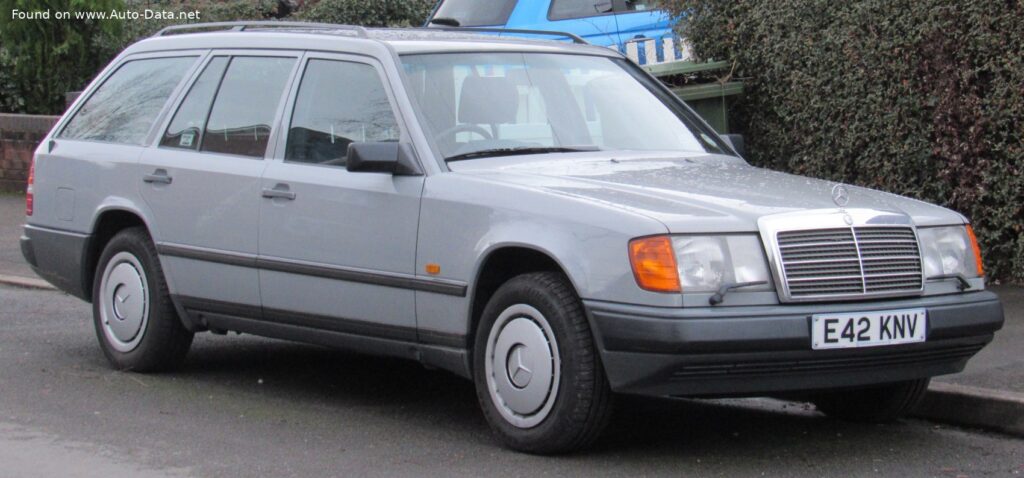
The Mercedes-Benz S124 230 TE: A Pillar of Engineering Excellence
The Mercedes-Benz S124 230 TE (136 Hp) Automatic represents a significant chapter in the history of premium executive automobiles, embodying the renowned build quality and engineering prowess for which the German marque is celebrated. As part of the iconic W124 generation, the S124 chassis code specifically denotes the station wagon (or estate) variant, which commenced production in April 1985 and concluded in August 1989 for this particular iteration. This vehicle quickly established itself as a benchmark in its segment, offering an unparalleled blend of practicality, comfort, safety, and durability.
In its primary European market, the S124 230 TE was a popular choice for discerning families and professionals who required the versatility of a wagon without compromising on luxury or driving refinement. While not as commonly imported to the United States as its sedan counterpart, the S124 generation as a whole gained a formidable reputation globally for its “over-engineered” characteristics, promising longevity and robustness rarely seen in modern vehicles. The 230 TE variant, with its 2.3-liter inline-four engine and automatic transmission, offered a balanced proposition of adequate power for comfortable cruising and reasonable efficiency, making it a highly practical and desirable vehicle for its era.
Engine and Powertrain Dynamics
At the heart of the Mercedes-Benz S124 230 TE lies the M 102 E 23 engine, specifically coded as 102.982. This naturally aspirated, 2.3-liter (2299 cm³ or 140.29 cu. in.) inline-four gasoline engine was a stalwart of Mercedes-Benz’s powertrain lineup during the 1980s. Featuring a Single Overhead Camshaft (SOHC) valvetrain with two valves per cylinder, it was designed for smooth operation and reliability. Fuel delivery was managed by a multi-port manifold injection system, ensuring precise fuel metering and combustion efficiency for its time.
The engine produced a respectable 136 horsepower at 5100 rpm, complemented by a solid 151.2 lb.-ft. of torque peaking at 3500 rpm. These figures, while not indicative of a sports car, were more than sufficient to propel the S124 230 TE with composure and confidence. Power was channeled to the rear wheels via a 4-speed automatic transmission, a common and reliable setup for Mercedes-Benz during this period. This drivetrain architecture contributed to the car’s balanced handling characteristics and comfortable ride.
Performance figures for the S124 230 TE highlight its character as a competent cruiser. It could accelerate from 0 to 60 mph in a brisk 9.9 seconds and achieve a top speed of 114.95 mph. Fuel economy, while not a primary selling point for luxury vehicles of its time, was reasonable, with an estimated urban consumption of 20.3 US mpg and an extra-urban figure of 29.4 US mpg. The 72-liter (19.02 US gallon) fuel tank provided an ample cruising range, underscoring its capabilities as a long-distance tourer.
Design Philosophy and Interior Comfort
The design of the Mercedes-Benz S124 230 TE, like the entire W124 range, was penned under the watchful eye of Bruno Sacco, Mercedes-Benz’s chief designer. His philosophy emphasized timeless elegance, functional aerodynamics, and robust construction. The S124 station wagon retained the clean, angular lines of the sedan but extended the roofline to create a highly practical and aesthetically pleasing estate car. Its five-door, five-seat configuration offered generous interior space for passengers and cargo alike.
Dimensionally, the S124 230 TE measured 187.6 inches in length, 68.5 inches in width, and 58.66 inches in height, with a substantial 110.24-inch wheelbase. These proportions contributed to a stable ride and a spacious cabin. Inside, the W124 was renowned for its ergonomic layout, high-quality materials, and exceptional build quality. The seats were designed for long-distance comfort, and the dashboard featured clear, legible instrumentation. The wagon variant particularly excelled in versatility, offering a large cargo area that could be expanded by folding down the rear seats, and often came with an optional rear-facing third-row jump seat, making it a true seven-seater for shorter journeys.
Underneath its sophisticated skin, the S124 featured advanced suspension technology for its era. The front employed a wishbone setup, while the rear utilized Mercedes-Benz’s pioneering independent multi-link suspension. This innovative rear suspension system, which debuted on the 190E (W201) and was refined for the W124, provided an exceptional balance of ride comfort, handling stability, and tire wear. Braking was handled by ventilated discs at the front and solid discs at the rear, offering confident stopping power. Hydraulic power steering with a cone worm and recirculation balls mechanism ensured effortless maneuverability, a hallmark of Mercedes-Benz luxury.
Technical Specifications of the Mercedes-Benz S124 230 TE
| Category | Specification | Value |
|---|---|---|
| General Information | ||
| Brand | Mercedes-Benz | |
| Model | W124 | |
| Generation | S124 | |
| Type (Engine) | 230 TE (136 Hp) Automatic | |
| Start of Production | April, 1985 | |
| End of Production | August, 1989 | |
| Powertrain Architecture | Internal Combustion engine | |
| Body Type | Station wagon (estate) | |
| Seats | 5 | |
| Doors | 5 | |
| Performance Specs | ||
| Fuel Consumption (Urban) | 11.6 l/100 km (20.3 US mpg) | |
| Fuel Consumption (Extra Urban) | 8 l/100 km (29.4 US mpg) | |
| Fuel Type | Petrol (Gasoline) | |
| Acceleration 0 – 60 mph | 9.9 sec | |
| Acceleration 0 – 62 mph (0 – 100 km/h) | 10.4 sec | |
| Maximum Speed | 185 km/h (114.95 mph) | |
| Weight-to-Power Ratio | 10.3 kg/Hp (97.1 Hp/tonne) | |
| Weight-to-Torque Ratio | 6.8 kg/Nm (146.4 Nm/tonne) | |
| Engine Specs | ||
| Power | 136 Hp @ 5100 rpm | |
| Power per Liter | 59.2 Hp/l | |
| Torque | 205 Nm @ 3500 rpm (151.2 lb.-ft. @ 3500 rpm) | |
| Engine Layout | Front, Longitudinal | |
| Engine Model/Code | M 102 E 23 / 102.982 | |
| Engine Displacement | 2299 cm³ (2.3 liters / 140.29 cu. in.) | |
| Number of Cylinders | 4 | |
| Engine Configuration | Inline | |
| Cylinder Bore | 95.5 mm (3.76 in.) | |
| Piston Stroke | 80.25 mm (3.16 in.) | |
| Compression Ratio | 9:1 | |
| Number of Valves per Cylinder | 2 | |
| Fuel Injection System | Multi-port manifold injection | |
| Engine Aspiration | Naturally aspirated engine | |
| Valvetrain | SOHC | |
| Engine Oil Capacity | 4.5 l (4.76 US qt) | |
| Coolant Capacity | 8.5 l (8.98 US qt) | |
| Space, Volume and Weights | ||
| Kerb Weight | 1400 kg (3086.47 lbs.) | |
| Max. Weight (Gross Weight) | 1740 kg (3836.04 lbs.) | |
| Max Load | 340 kg (749.57 lbs.) | |
| Fuel Tank Capacity | 72 l (19.02 US gal) | |
| Dimensions | ||
| Length | 4765 mm (187.6 in.) | |
| Width | 1740 mm (68.5 in.) | |
| Height | 1490 mm (58.66 in.) | |
| Wheelbase | 2800 mm (110.24 in.) | |
| Front Track | 1497 mm (58.94 in.) | |
| Rear (Back) Track | 1488 mm (58.58 in.) | |
| Drivetrain, Brakes and Suspension Specs | ||
| Drivetrain Architecture | Internal combustion engine (ICE) drives the rear wheels. | |
| Drive Wheel | Rear wheel drive | |
| Number of Gears and Type of Gearbox | 4 gears, automatic transmission | |
| Front Suspension | Wishbone | |
| Rear Suspension | Independent multi-link suspension | |
| Front Brakes | Ventilated discs | |
| Rear Brakes | Disc | |
| Steering Type | Cone worm with recirculation balls | |
| Power Steering | Hydraulic Steering | |
| Tires Size (Front/Rear) | 195/65 R15 | |
| Wheel Rims Size (Front/Rear) | 6.5J x 15 | |
Legacy and Market Influence
The Mercedes-Benz S124 230 TE, and indeed the entire W124 series, left an indelible mark on the automotive landscape. It is widely regarded as one of the last truly “over-engineered” Mercedes-Benz vehicles, built to an uncompromising standard of quality and durability that has cemented its reputation among enthusiasts and collectors. Its robust construction meant that many examples have withstood the test of time, often accumulating hundreds of thousands of miles with proper maintenance.
In its competitive landscape, the S124 230 TE faced rivals such as the Audi 100 Avant and, later, the BMW 5 Series Touring (E34 generation). While these competitors offered their own strengths, the S124 consistently stood out for its superior ride comfort, interior refinement, and legendary reliability. It wasn’t merely a mode of transport; it was an investment in long-term, dependable luxury.
Today, the S124 station wagon models, particularly well-preserved examples, are highly sought after in the classic car market. Their blend of classic Mercedes-Benz styling, practical utility, and the promise of many more years of service makes them appealing to those who appreciate solid engineering over fleeting trends. The 230 TE, with its accessible inline-four engine, offers a more economical entry into W124 ownership while still delivering the quintessential Mercedes-Benz experience. Its enduring appeal is a testament to the era when Mercedes-Benz built cars that were designed to last a lifetime, solidifying the Mercedes-Benz S124 230 TE’s place as a cherished classic and a symbol of automotive excellence.
