
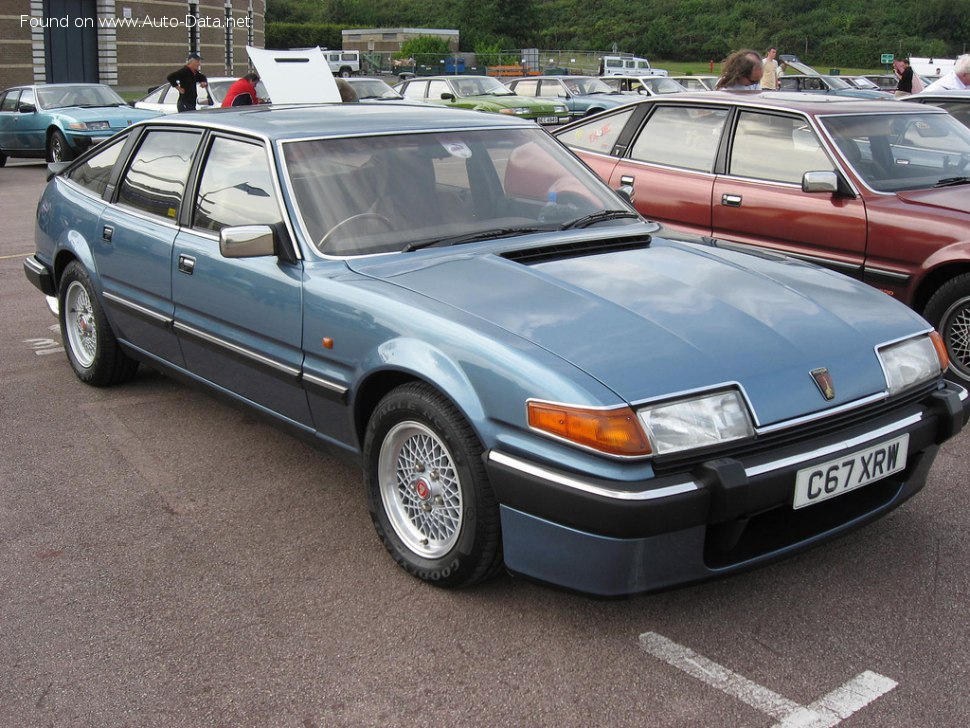
Introduction to the Rover 2000-3500 Hatchback (SD1) 2600 S (126 Hp)
The Rover SD1, officially known as the Rover 2000-3500 Hatchback, represents a significant, albeit often turbulent, chapter in British automotive history. Launched in 1976, the SD1 was an ambitious executive car designed to modernize Rover’s image and compete with established European rivals like BMW and Audi. The specific variant under review, the Rover 2000-3500 Hatchback (SD1) 2600 S (126 Hp), was produced between 1982 and 1986, representing a refined iteration of the original design. While the SD1 was briefly sold in the United States, this particular 2.6-liter inline-six model was primarily targeted at and popular within the European market, where it carved out a niche for its distinctive styling and blend of performance and practicality. It was a bold statement from British Leyland, aiming to combine Italianate design flair with traditional British engineering, packaged in an innovative five-door hatchback body.
During its production run, the SD1 garnered both critical acclaim for its aesthetics and engineering, and criticism for its variable build quality and reliability issues, a common challenge for British Leyland vehicles of the era. Nevertheless, its impact on automotive design and its role as a flagship for the struggling British industry remain noteworthy. The 2600 S model offered a compelling balance of power and economy for the time, providing a smoother, more refined driving experience compared to its four-cylinder siblings, without the higher running costs of the powerful V8.
Engine and Performance of the Rover 2000-3500 Hatchback (SD1)
At the heart of the Rover 2000-3500 Hatchback (SD1) 2600 S (126 Hp) lies a naturally aspirated, 2.6-liter inline-six gasoline engine. This powerplant was a development of Rover’s existing six-cylinder architecture, designed to offer a more economical yet still potent alternative to the venerable 3.5-liter V8 engine that also powered the SD1. With a respectable output of 126 horsepower, the 2600 S provided a smooth and responsive driving experience, characteristic of an inline-six engine. Its naturally aspirated design meant predictable power delivery, without the complexities or lag associated with early turbocharging systems.
Performance figures for the 2600 S were competitive for its segment in the early 1980s. The car could accelerate from 0 to 60 miles per hour in a brisk 10.5 seconds, and achieve a top speed of 113.71 mph. While these numbers might seem modest by today’s standards, they represented a strong showing for an executive sedan of its time, providing ample power for highway cruising and confident overtaking maneuvers. The engine’s refinement was a key selling point, offering a quieter and more composed ride than many four-cylinder competitors.
Fuel economy, always a consideration, particularly after the energy crises of the 1970s, showed the 2600 S to be reasonably efficient for its size and cylinder count. In extra-urban driving, the car could achieve approximately 34.1 US miles per gallon, while urban consumption was around 15.8 US miles per gallon. These figures, while not groundbreaking, were acceptable for a car of its class and engine capacity, especially considering the technologies available at the time. The 66-liter (17.44 US gallons) fuel tank provided a decent cruising range, making it suitable for long-distance travel across Europe.
Design and Features
Distinctive Styling and Practicality
The design of the Rover SD1, including the Rover 2000-3500 Hatchback (SD1) 2600 S (126 Hp), was its most striking feature and a major departure from Rover’s more conservative past. Penned by David Bache, the SD1’s exterior styling was heavily influenced by contemporary Italian designs, most notably the Ferrari Daytona. This resulted in a sleek, wedge-shaped profile with a long hood, minimal chrome, and a distinctive fastback rear. Crucially, the SD1 was one of the first executive cars to adopt a five-door hatchback body style, a revolutionary concept that blended the elegance of a sedan with the practicality of a wagon. This five-door configuration offered significantly enhanced cargo versatility compared to traditional sedans, making it highly appealing to families and those requiring more flexible luggage space.
The body type is unequivocally a Hatchback, featuring 5 doors and seating for 5 occupants. This layout contributed to the car’s reputation for being both stylish and remarkably practical. Inside, the SD1 aimed for a modern and driver-focused cabin. The dashboard was innovative for its time, featuring a curved instrument panel that wrapped around the driver, placing controls within easy reach. Materials, while varying in quality depending on the specific model and production year, generally aimed for an upscale feel. The “S” designation in the 2600 S typically indicated a higher trim level, often including features like alloy wheels, improved interior fabrics, and potentially power windows or a sunroof, depending on market specifications.
Safety features, typical for the early 1980s, included robust body construction and seatbelts for all occupants. While modern active and passive safety systems were decades away, the SD1’s design incorporated safety considerations prevalent at the time, aiming to provide a secure environment for its occupants. Its large glass area also contributed to good all-around visibility, a passive safety benefit.
Technical Specifications
| Category | Specification |
|---|---|
| Brand | Rover |
| Model | 2000-3500 Hatchback |
| Generation | 2000-3500 Hatchback (SD1) |
| Type (Engine) | 2600 S (126 Hp) |
| Start of Production | 1982 year |
| End of Production | 1986 year |
| Powertrain Architecture | Internal Combustion engine |
| Body Type | Hatchback |
| Seats | 5 |
| Doors | 5 |
| Fuel Consumption (Urban) | 14.9 l/100 km (15.8 US mpg) |
| Fuel Consumption (Extra Urban) | 6.9 l/100 km (34.1 US mpg) |
| Fuel Type | Petrol (Gasoline) |
| Acceleration 0 – 60 mph | 10.5 sec |
| Maximum Speed | 183 km/h (113.71 mph) |
| Power | 126 Hp |
| Engine Aspiration | Naturally aspirated engine |
| Fuel Tank Capacity | 66 l (17.44 US gal) |
Legacy and Market Impact
The Rover SD1, and specifically the Rover 2000-3500 Hatchback (SD1) 2600 S (126 Hp) variant, holds a complex but significant place in automotive history. Launched at a time of immense industrial strife and financial difficulty for British Leyland, the SD1 was intended to be a beacon of hope and a testament to British design and engineering prowess. Its award-winning styling, which garnered the European Car of the Year award in 1977, was universally praised and remains iconic. The car’s innovative hatchback body style offered a level of practicality that its German rivals, such as the BMW 5 Series and Mercedes-Benz W123, did not match at the time, giving it a unique selling proposition in the executive segment.
In its primary European markets, the SD1 competed against a formidable array of vehicles. Beyond the aforementioned German luxury sedans, it also faced competition from the Ford Granada, Volvo 200 series, and later, the Audi 100. While the SD1 could often match or even surpass these rivals in terms of driving dynamics and comfort, its reputation was frequently undermined by persistent issues with build quality, reliability, and rust, which were exacerbated by labor disputes and underinvestment in British Leyland’s production facilities. These problems, unfortunately, overshadowed its many strengths, making it a challenging ownership prospect for many and impacting its long-term market competitiveness.
Despite these challenges, the SD1 did achieve some notable successes, particularly in motorsports, where the V8 versions enjoyed considerable success in touring car racing. The 2600 S, with its smoother inline-six engine, appealed to a segment of buyers looking for a refined executive car that offered a distinct alternative to the more conventional designs from Germany. It represented a valiant effort to produce a world-class car under difficult circumstances.
The SD1’s legacy is one of unfulfilled potential. It was a car that dared to be different, with a truly groundbreaking design and advanced engineering for its time. It was the last Rover to be solely designed and engineered by the company before the increasing influence of Honda. Today, the Rover SD1 is recognized by enthusiasts and collectors for its distinctive styling and historical significance, often celebrated as a classic British executive car that, despite its flaws, was genuinely ahead of its time in many respects. The 2600 S, in particular, is valued for offering a balance of performance and efficiency, making it a desirable classic for those who appreciate its unique blend of British character and Italian design flair.
