The Ford Mustang Convertible VI 2.3 EcoBoost (317 Hp) Automatic: A Modern Pony Car Evolution
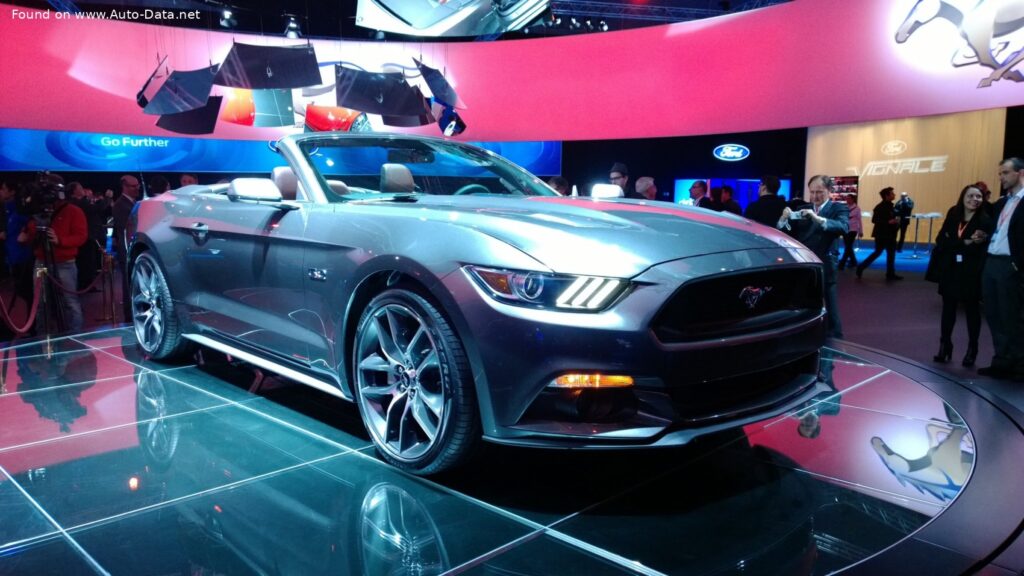
The Ford Mustang, an iconic American pony car, entered its sixth generation (S550) in 2015, marking a significant evolution in its storied history. Among the various powertrain options, the Ford Mustang Convertible VI 2.3 EcoBoost (317 Hp) Automatic represented a pivotal departure from traditional Mustang philosophy, introducing a turbocharged four-cylinder engine to a market accustomed to V8 power. This generation was not only a complete redesign but also the first Mustang to be officially marketed and sold globally, embracing modern engineering while retaining its quintessential American muscle car aesthetic. The 2.3 EcoBoost variant, produced from 2015 to 2017, offered a compelling blend of performance, efficiency, and contemporary technology, positioning the Mustang as a more versatile and accessible sports car for a broader international audience.
Engine & Performance: The EcoBoost Revolution in the Ford Mustang Convertible VI
At the heart of the Ford Mustang Convertible VI 2.3 EcoBoost (317 Hp) Automatic lies a sophisticated 2.3-liter (2264 cm3 or 138.16 cu. in.) inline-four engine, part of Ford’s renowned EcoBoost family. This powerplant was engineered to deliver a compelling balance of power and fuel efficiency, a concept that was relatively new to the Mustang lineup. Utilizing direct fuel injection, a turbocharger, and an intercooler, the engine produces a robust 317 horsepower at 5500 rpm and an impressive 318.63 lb.-ft. (432 Nm) of torque at a low 3000 rpm. This low-end torque delivery contributes to a responsive and engaging driving experience, characteristic of a true sports car.
The engine’s architecture features a front, longitudinal layout with a DOHC (Dual Overhead Camshaft) valvetrain and four valves per cylinder, ensuring optimal airflow and combustion. With a compression ratio of 9.5:1, the EcoBoost engine is designed for efficiency without sacrificing performance. Power is channeled through a smooth 6-speed automatic transmission to the rear wheels, upholding the Mustang’s traditional rear-wheel-drive dynamics. This drivetrain architecture, combined with the relatively light curb weight of 3787.54 lbs. (1718 kg), results in a favorable weight-to-power ratio of 5.4 kg/Hp (184.5 Hp/tonne), allowing for spirited acceleration and agile handling.
In terms of fuel economy, the 2.3 EcoBoost offers a combined rating of approximately 24 US mpg (9.8 l/100 km), a significant improvement over its V8 siblings and a strong selling point for daily usability. Its CO2 emissions are rated at 225 g/km, reflecting its more environmentally conscious design compared to higher displacement engines. The engine oil capacity is 5.4 liters (5.71 US qt), and the cooling system holds 8.96 liters (9.47 US qt), indicating robust engineering for sustained performance.
Design & Features: Open-Air Driving with Modern Appeal
The Ford Mustang Convertible VI maintains the iconic long hood, short deck proportions that have defined the Mustang for decades, but with a thoroughly modern interpretation. The convertible body style, featuring two doors and four seats, allows for an exhilarating open-air driving experience, enhancing the connection between driver and environment. The S550 generation introduced a sleeker, more aerodynamic profile, with a wider stance and a lower roofline than its predecessors. The overall dimensions measure 188.35 inches (4784 mm) in length, 75.43 inches (1916 mm) in width (81.89 inches or 2080 mm including mirrors), and 54.88 inches (1394 mm) in height, giving it a commanding road presence.
A significant engineering leap for this generation of Mustang was the adoption of an independent multi-link rear suspension, replacing the long-standing live axle. This change drastically improved ride quality, handling precision, and overall refinement, making the Mustang a more competitive global sports car. The front suspension retains an independent McPherson type. Stopping power is provided by ventilated disc brakes on both the front and rear, complemented by an Anti-lock Braking System (ABS) for enhanced safety and control. Steering is managed by a responsive rack and pinion system, contributing to the car’s dynamic feel.
The Ford Mustang Convertible VI 2.3 EcoBoost comes equipped with 19-inch wheels and 255/40 R19 tires, providing ample grip and a sporty aesthetic. Inside, the cabin blends retro-inspired cues with modern amenities. While the data provided doesn’t detail interior features, typical for this era of Mustang, it would include contemporary infotainment systems, power-adjustable seats, and advanced driver-assistance technologies, depending on the trim level. The trunk space offers a respectable 11.72 cu. ft. (332 liters), practical enough for weekend getaways, and the fuel tank capacity is 15.59 US gallons (59 liters), allowing for a decent cruising range.
Technical Specifications
| Category | Specification |
|---|---|
| Brand | Ford |
| Model | Mustang |
| Generation | Mustang Convertible VI |
| Type (Engine) | 2.3 EcoBoost (317 Hp) Automatic |
| Start of Production | 2015 year |
| End of Production | 2017 year |
| Powertrain Architecture | Internal Combustion engine |
| Body type | Cabriolet |
| Seats | 4 |
| Doors | 2 |
| Fuel consumption (combined) | 9.8 l/100 km (24 US mpg) |
| CO2 emissions | 225 g/km |
| Fuel Type | Petrol (Gasoline) |
| Weight-to-power ratio | 5.4 kg/Hp (184.5 Hp/tonne) |
| Weight-to-torque ratio | 4 kg/Nm (251.5 Nm/tonne) |
| Power | 317 Hp @ 5500 rpm |
| Power per liter | 140 Hp/l |
| Torque | 432 Nm (318.63 lb.-ft.) @ 3000 rpm |
| Engine layout | Front, Longitudinal |
| Engine Model/Code | EcoBoost |
| Engine displacement | 2264 cm3 (2.3 l / 138.16 cu. in.) |
| Number of cylinders | 4 |
| Engine configuration | Inline |
| Cylinder Bore | 87.55 mm (3.45 in.) |
| Piston Stroke | 94 mm (3.7 in.) |
| Compression ratio | 9.5:1 |
| Number of valves per cylinder | 4 |
| Fuel injection system | Direct injection |
| Engine aspiration | Turbocharger, Intercooler |
| Valvetrain | DOHC |
| Engine oil capacity | 5.4 l (5.71 US qt) |
| Coolant | 8.96 l (9.47 US qt) |
| Kerb Weight | 1718 kg (3787.54 lbs.) |
| Trunk (boot) space – minimum | 332 l (11.72 cu. ft.) |
| Fuel tank capacity | 59 l (15.59 US gal) |
| Length | 4784 mm (188.35 in.) |
| Width | 1916 mm (75.43 in.) |
| Width with mirrors folded | 1956 mm (77.01 in.) |
| Width including mirrors | 2080 mm (81.89 in.) |
| Height | 1394 mm (54.88 in.) |
| Wheelbase | 2720 mm (107.09 in.) |
| Front track | 1582 mm (62.28 in.) |
| Rear (Back) track | 1655 mm (65.16 in.) |
| Minimum turning circle | 12.2 m (40.03 ft.) |
| Drivetrain Architecture | The Internal combustion engine (ICE) drives the rear wheels of the vehicle. |
| Drive wheel | Rear wheel drive |
| Number of gears and type of gearbox | 6 gears, automatic transmission |
| Front suspension | Independent type McPherson |
| Rear suspension | Independent multi-link spring suspension with stabilizer |
| Front brakes | Ventilated discs |
| Rear brakes | Ventilated discs |
| Assisting systems | ABS (Anti-lock braking system) |
| Steering type | Steering rack and pinion |
| Tires size | 255/40 R19 |
| Wheel rims size | 19 |
Legacy & Market Impact: Global Ambitions of the Ford Mustang Convertible VI
The sixth-generation Mustang, particularly the Ford Mustang Convertible VI 2.3 EcoBoost (317 Hp) Automatic, represented a bold strategic move for Ford. By offering a refined, independent rear suspension, a more sophisticated interior, and a fuel-efficient yet powerful turbocharged four-cylinder engine, Ford aimed to transform the Mustang from a regional icon into a truly global sports car. This generation was the first to be produced in right-hand drive for markets like the UK and Australia, significantly broadening its appeal and sales reach.
In its primary market, the United States, the 2.3 EcoBoost Mustang carved out a niche for buyers seeking the Mustang’s iconic styling and rear-wheel-drive dynamics without the higher purchase price, insurance costs, and fuel consumption associated with the larger V8 models. It effectively competed against entry-level versions of traditional rivals like the Chevrolet Camaro and Dodge Challenger, offering a more modern and technologically advanced package. Globally, it found success against European and Asian sports coupes and convertibles, often at a more competitive price point, attracting customers who might have otherwise considered models from brands like BMW or Audi, albeit with different performance envelopes.
The introduction of the EcoBoost engine in the Mustang was initially met with some skepticism from purists who believed a four-cylinder engine had no place in a pony car. However, its strong performance figures, respectable fuel economy, and the overall refinement of the S550 platform quickly won over many critics. It proved that a Mustang could be both powerful and efficient, appealing to a new generation of buyers and solidifying its position as a versatile and desirable sports car. The Ford Mustang Convertible VI 2.3 EcoBoost ultimately contributed to the Mustang’s sustained popularity and its status as one of the best-selling sports coupes in the world, demonstrating Ford’s commitment to innovation while respecting the brand’s rich heritage.