The Nissan Silvia (S13): A JDM Icon of Performance and Style
The Nissan Silvia, particularly the S13 generation, holds a revered position in the pantheon of Japanese sports cars. Introduced in May 1988, the S13 generation marked a significant evolution for the Silvia nameplate, moving away from the boxy aesthetics of its predecessors towards a more curvaceous and aerodynamic design. The specific variant under discussion, the Nissan Silvia (S13) 2.0i (140 Hp), produced between 1991 and 1993, represents a naturally aspirated, mid-cycle iteration of this iconic coupe. While not officially sold in the United States in this exact configuration, the S13, in various forms including its 240SX sibling, became a global phenomenon, particularly in the realm of motorsport and aftermarket tuning. This variant, with its SR20DE engine, offered a balanced blend of performance, handling, and daily usability, cementing its legacy as a foundational vehicle for automotive enthusiasts worldwide.
Engine & Performance: The Naturally Aspirated SR20DE
At the heart of the 1991-1993 Nissan Silvia (S13) 2.0i (140 Hp) lies the renowned SR20DE engine. This 2.0-liter (1998 cm³ or 121.93 cu. in.) inline-four powerplant is a testament to Nissan’s engineering prowess, offering a robust and reliable foundation for the vehicle’s dynamic capabilities. Unlike its turbocharged SR20DET sibling, which gained immense fame for its raw power, the SR20DE in this Silvia variant is a naturally aspirated unit, relying on its finely tuned mechanics rather than forced induction.
The engine features a DOHC (Double Overhead Camshaft) valvetrain with four valves per cylinder, a configuration that allows for efficient airflow and contributes to its responsive nature. With a square bore and stroke of 86 mm (3.39 in.) each, the SR20DE is designed for a balance of torque and high-revving performance. It delivers a respectable 140 horsepower at 6400 rpm, which translates to a power per liter output of 70.1 Hp/l. Torque peaks at 179 Newton-meters (132.02 lb.-ft.) at 4800 rpm, providing a broad powerband that is both engaging and manageable.
Fuel delivery is handled by a multi-port manifold injection system, ensuring precise fuel-air mixture control. With a compression ratio of 9:1, the engine is designed to run efficiently on standard gasoline (petrol). Power is sent to the rear wheels via a crisp 5-speed manual transmission, offering an unadulterated driving experience that appeals to purists. The vehicle’s relatively light curb weight of 2491.22 lbs (1130 kg) contributes to an agile feel, resulting in a weight-to-power ratio of 8.1 kg/Hp (123.9 Hp/tonne) and a weight-to-torque ratio of 6.3 kg/Nm (158.4 Nm/tonne). This combination of a free-revving engine and a well-sorted manual gearbox made the Silvia (S13) 2.0i a joy to drive, particularly on winding roads or at the track.
Design & Features: The Iconic “S-Chassis” Aesthetic
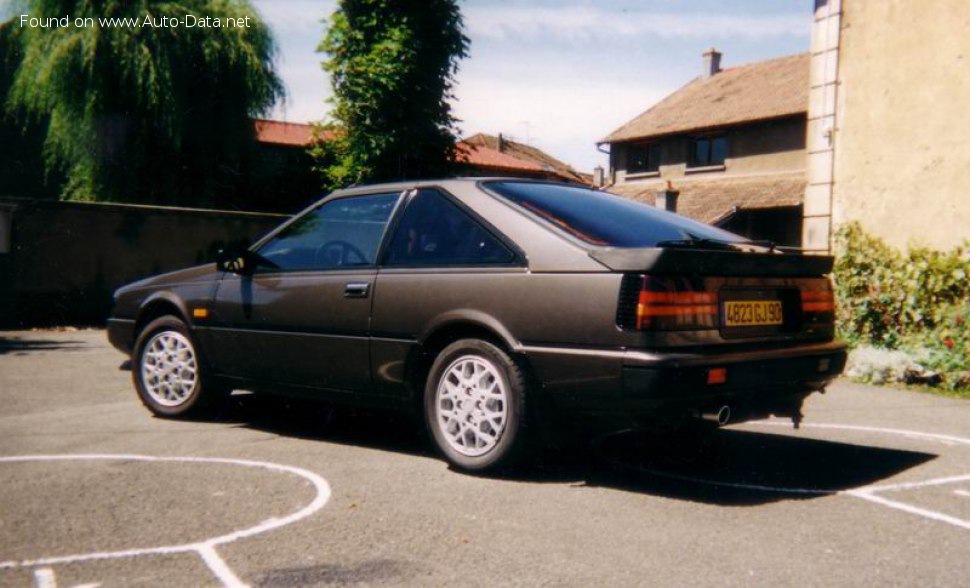
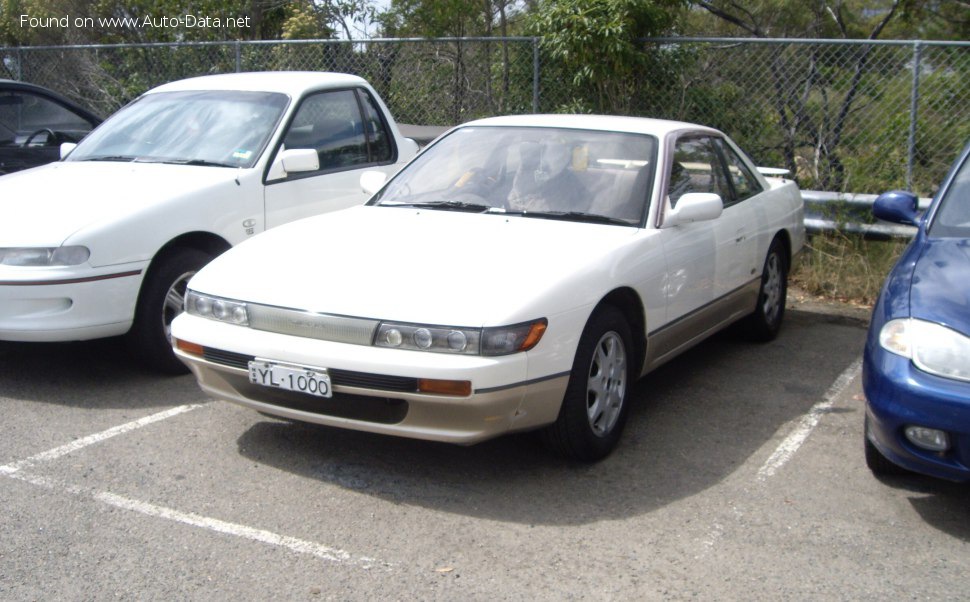
The Nissan Silvia (S13) is instantly recognizable by its sleek, low-slung coupe body style. Its design marked a departure from the more angular styling prevalent in the 1980s, embracing softer lines and a more aerodynamic profile. The S13, particularly in its early “Zenki” and mid-life “Chuki” iterations (which the 1991-1993 model falls into), is famous for its distinctive pop-up headlights, which contributed to its futuristic appeal and clean front fascia when retracted. The two-door, four-seat configuration offered a practical yet sporty package, suitable for both spirited driving and occasional passenger transport.
Measuring 175.98 inches (4470 mm) in length, 66.54 inches (1690 mm) in width, and 50.79 inches (1290 mm) in height, the S13 possesses compact dimensions that enhance its agility. A wheelbase of 97.44 inches (2475 mm) provided a stable platform, while the relatively wide front and rear tracks (57.68 in. and 57.48 in., respectively) contributed to its planted stance. The minimum turning circle of 30.84 ft (9.4 m) made it surprisingly maneuverable in urban environments.
Underneath its stylish exterior, the S13 featured a sophisticated suspension setup for its era. The front utilized a spring strut system, while the rear employed a multi-link spring with telescopic shock absorbers. This independent rear suspension was a significant upgrade over previous generations and a key factor in the S13’s celebrated handling characteristics, making it highly responsive and predictable at the limit. Braking performance was handled by ventilated discs at the front and solid discs at the rear, providing adequate stopping power for the vehicle’s performance capabilities. The car rode on 185/70R14 tires, a relatively modest size by today’s standards but appropriate for the car’s intended balance of grip and playful handling. The 15.85 US gallon (60 liter) fuel tank offered a decent range for extended drives.
Technical Specifications: Nissan Silvia (S13) 2.0i (140 Hp)
| Category | Specification | Value |
|---|---|---|
General Information |
||
| Brand | Nissan | |
| Model | Silvia | |
| Generation | Silvia (S13) | |
| Type (Engine) | 2.0i (140 Hp) | |
| Start of Production | 1991 year | |
| End of Production | 1993 year | |
| Powertrain Architecture | Internal Combustion engine | |
| Body type | Coupe | |
| Seats | 4 | |
| Doors | 2 | |
Performance Specs |
||
| Fuel Type | Petrol (Gasoline) | |
| Weight-to-power ratio | 8.1 kg/Hp, 123.9 Hp/tonne | |
| Weight-to-torque ratio | 6.3 kg/Nm, 158.4 Nm/tonne | |
Engine Specs |
||
| Power | 140 Hp @ 6400 rpm | |
| Power per liter | 70.1 Hp/l | |
| Torque | 179 Nm (132.02 lb.-ft.) @ 4800 rpm | |
| Engine layout | Front, Longitudinal | |
| Engine Model/Code | SR20DE | |
| Engine displacement | 1998 cm³ (121.93 cu. in.) | |
| Number of cylinders | 4 | |
| Engine configuration | Inline | |
| Cylinder Bore | 86 mm (3.39 in.) | |
| Piston Stroke | 86 mm (3.39 in.) | |
| Compression ratio | 9:1 | |
| Number of valves per cylinder | 4 | |
| Fuel injection system | Multi-port manifold injection | |
| Engine aspiration | Naturally aspirated engine | |
| Valvetrain | DOHC | |
Space, Volume and Weights |
||
| Kerb Weight | 1130 kg (2491.22 lbs) | |
| Fuel tank capacity | 60 l (15.85 US gal) | |
Dimensions |
||
| Length | 4470 mm (175.98 in.) | |
| Width | 1690 mm (66.54 in.) | |
| Height | 1290 mm (50.79 in.) | |
| Wheelbase | 2475 mm (97.44 in.) | |
| Front track | 1465 mm (57.68 in.) | |
| Rear (Back) track | 1460 mm (57.48 in.) | |
| Minimum turning circle (turning diameter) | 9.4 m (30.84 ft.) | |
Drivetrain, Brakes and Suspension Specs |
||
| Drivetrain Architecture | The Internal combustion engine (ICE) drives the rear wheels of the vehicle. | |
| Drive wheel | Rear wheel drive | |
| Number of gears and type of gearbox | 5 gears, manual transmission | |
| Front suspension | Spring Strut | |
| Rear suspension | Dependent, multi-link spring with telescopic shock absorbers | |
| Front brakes | Ventilated discs | |
| Rear brakes | Disc | |
| Tires size | 185/70R14 | |
Legacy & Market Impact: The Enduring Charm of the Nissan Silvia (S13)
The Nissan Silvia (S13) transcended its role as a mere sports coupe to become a cultural phenomenon, particularly within the Japanese Domestic Market (JDM) and global enthusiast communities. While the 2.0i (140 Hp) naturally aspirated model might not have garnered the headlines of its more potent turbocharged SR20DET sibling, it played a crucial role in establishing the S13’s reputation for exceptional balance, responsive handling, and remarkable tunability. Its rear-wheel-drive layout, lightweight chassis, and well-designed suspension made it an ideal platform for various motorsports, most notably drifting. Even in naturally aspirated form, the SR20DE engine was known for its robust construction, making it a popular choice for engine swaps and forced induction conversions in the aftermarket.
In its primary market, Japan, the Silvia (S13) faced competition from rivals such as the Toyota Celica (though the Celica moved to FWD in 1985, the AE86 Corolla Levin/Sprinter Trueno was its spiritual predecessor), the Honda Prelude, and the Mazda MX-5 Miata (for pure driving dynamics). However, the Silvia carved out its own niche by offering a blend of aggressive styling, a solid performance foundation, and a high degree of customization potential. Its relatively affordable price point when new, combined with its robust mechanics, made it accessible to a wide audience of young enthusiasts.
The S13’s impact on car culture is profound. It became a staple in street racing, time attack, and especially drifting. Its balanced chassis, combined with the ease of modifying its SR-series engines, made it the go-to choice for aspiring and professional drifters alike. This exposure in motorsports and popular media, including video games and movies, cemented its status as an automotive icon. Even decades after its production ceased, the Nissan Silvia (S13) remains highly sought after on the used car market, with well-preserved examples commanding significant prices. Its enduring appeal lies not just in its mechanical prowess but also in its timeless design and the rich subculture it helped to define. The 2.0i (140 Hp) variant, with its pure, unadulterated driving experience, stands as a testament to the S13’s fundamental brilliance and its lasting legacy as a driver’s car.