The Mitsubishi L200 VI Double Cab: A Global Workhorse
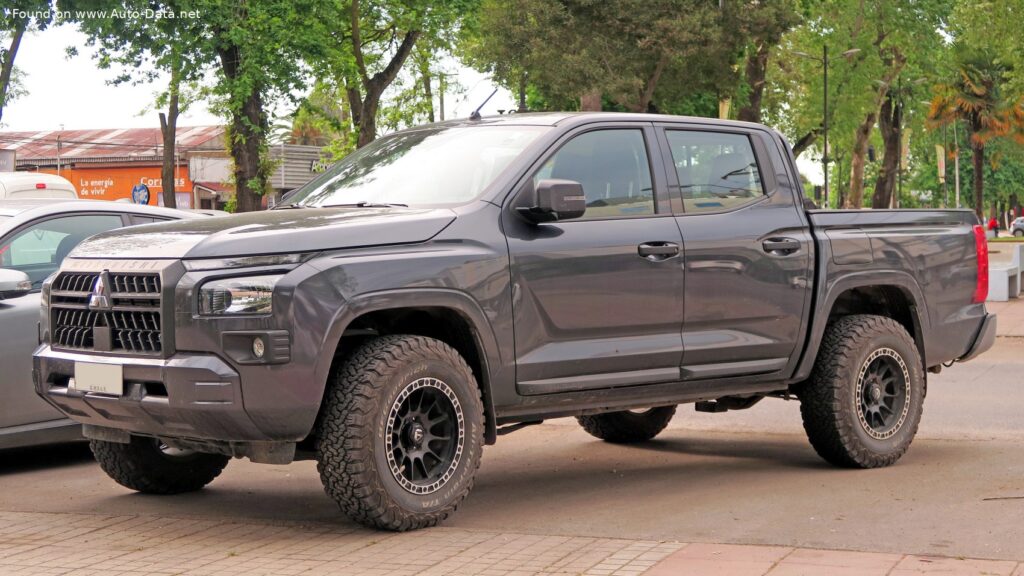
The Mitsubishi L200 VI Double Cab 2.4 MIVEC (184 Hp) 4WD Automatic represents the sixth generation of Mitsubishi Motors’ highly successful compact to mid-size pickup truck. Known globally as the L200 in markets such as Europe, Australia (where it is often branded as the Triton), Southeast Asia, Africa, and Latin America, this vehicle has forged a reputation for rugged durability, versatile utility, and surprisingly refined driving dynamics. The 2023 model, specifically the Double Cab variant equipped with the 2.4-liter MIVEC diesel engine, 184 horsepower, an automatic transmission, and advanced four-wheel drive, continues this legacy, offering a compelling blend of workhorse capability and modern comfort. Introduced in 2023, this iteration builds upon decades of development, catering to a diverse clientele ranging from commercial operators requiring a dependable utility vehicle to private owners seeking an adventurous and practical daily driver. Its architecture is firmly rooted in an internal combustion engine powertrain, designed to tackle demanding terrains and heavy loads while providing a comfortable experience for up to five occupants.
Powertrain and Performance Dynamics
At the heart of the 2023 Mitsubishi L200 VI Double Cab lies the robust 2.4-liter MIVEC (Mitsubishi Innovative Valve timing Electronic Control) diesel engine, designated with the internal code 4N16. This inline four-cylinder powerplant is a testament to Mitsubishi’s engineering prowess, delivering a potent 184 horsepower at 3500 rpm. The MIVEC system, more commonly associated with gasoline engines, is adapted here to optimize diesel combustion, improving both efficiency and power delivery across the rev range. Crucially for a pickup truck, the engine generates an impressive 317.15 lb.-ft. (430 Nm) of torque, available in a broad band between 2250 and 2500 rpm. This substantial torque output is fundamental to the L200’s hauling and towing capabilities, enabling it to pull a permitted trailer load with brakes of up to 7716.18 lbs (3500 kg) with confidence.
Power is channeled through a smooth 6-speed automatic transmission, which ensures seamless gear changes and contributes to a relaxed driving experience, whether navigating city streets or tackling off-road trails. The vehicle’s top speed is rated at 109.98 mph (177 km/h), a respectable figure for a utility-focused truck. Fuel efficiency is enhanced by modern diesel common rail injection and a turbocharger with an intercooler, maximizing power while managing emissions. Furthermore, the inclusion of a Start & Stop System helps reduce fuel consumption and emissions during urban driving, underscoring its modern design philosophy. The engine’s DOHC (Double Overhead Camshaft) valvetrain with four valves per cylinder ensures optimal airflow and combustion efficiency.
Exterior Design and Interior Comfort
The sixth-generation Mitsubishi L200 VI Double Cab sports a contemporary and assertive design, characteristic of modern pickup trucks. Its four-door, five-seat double cab configuration strikes an ideal balance between passenger accommodation and cargo utility. Measuring 209.45 inches in length, 73.43 inches in width, and 70.67 inches in height, the L200 projects a substantial road presence. The design language, often incorporating Mitsubishi’s “Dynamic Shield” front fascia (though not explicitly stated in the data, it’s a prevalent theme for the brand), offers a bold and recognizable look.
Internally, the double cab layout provides ample space for five adults, making it suitable for both family use and crew transport. While specific interior features are not detailed, a 2023 model would invariably include a modern infotainment system, climate control, and a suite of convenience features designed to enhance comfort during long journeys or arduous workdays. Practicality is a key focus, with durable materials and thoughtful storage solutions expected.
The L200’s off-road credentials are highlighted by its impressive dimensions, including a ground clearance of 8.98 inches (228 mm), an approach angle of 30.4°, a departure angle of 22.8°, and a ramp-over angle of 23.4°. These figures ensure that the vehicle can confidently navigate challenging terrain without risking undercarriage damage. The substantial wheelbase of 123.23 inches (3130 mm) contributes to both ride stability and off-road capability. The steering system is a hydraulic rack and pinion setup, providing reliable feedback and control.
Advanced Drivetrain and Chassis
The L200 VI Double Cab is equipped with a sophisticated all-wheel-drive (4×4) system, underpinning its versatile performance. The drivetrain architecture is designed for adaptability: the internal combustion engine primarily drives the rear wheels, with the front wheels engaging through an electrically or mechanically operated clutch when additional traction is required. This part-time 4WD system allows for optimized fuel efficiency in two-wheel drive mode on paved roads while offering superior grip and control in challenging conditions or off-road environments.
The suspension system is engineered for both comfort and durability. The front features an independent double wishbone setup with coil springs and a transverse stabilizer, providing precise handling and absorbing road imperfections effectively. At the rear, a rigid axle suspension with leaf springs is employed, a classic and robust design choice for pickup trucks, specifically chosen for its ability to handle heavy loads and withstand harsh conditions. Braking performance is managed by ventilated discs on the front, measuring 320 mm, and drum brakes on the rear, at 295 mm. An Anti-lock Braking System (ABS) is standard, enhancing safety by preventing wheel lock-up during hard braking. The vehicle rides on 265/60 R18 tires mounted on 7.5J x 18 wheel rims, providing a good balance of road manners and off-road grip. With a curb weight ranging from 4343.11 to 4354.13 lbs (1970-1975 kg) and a maximum gross weight of 6613.87 lbs (3000 kg), the L200 is built to be sturdy and capable.
Technical Specifications
| Category | Specification | Value (US Units) |
|---|---|---|
| Brand | Mitsubishi | |
| Model | L200 | |
| Generation | L200 VI Double Cab | |
| Type (Engine) | 2.4 MIVEC (184 Hp) 4WD Automatic | |
| Start of Production | 2023 year | |
| Powertrain Architecture | Internal Combustion engine | |
| Body Type | Pick-up | 4 Doors, 5 Seats |
| Performance Specs | ||
| Fuel Type | Diesel | |
| Maximum Speed | 177 km/h | 109.98 mph |
| Weight-to-Power Ratio | 10.7 kg/Hp, 93.4 Hp/tonne | 23.59 lbs/Hp, 84.73 Hp/US ton |
| Weight-to-Torque Ratio | 4.6 kg/Nm, 218.3 Nm/tonne | 10.14 lbs/lb.-ft., 198.11 lb.-ft./US ton |
| Engine Specs | ||
| Power | 184 Hp @ 3500 rpm | |
| Power per Liter | 75.3 Hp/l | |
| Torque | 430 Nm @ 2250-2500 rpm | 317.15 lb.-ft. @ 2250-2500 rpm |
| Engine Layout | Front, Longitudinal | |
| Engine Model/Code | 4N16 | |
| Engine Displacement | 2442 cm3 | 149.02 cu. in. (2.4 Liters) |
| Number of Cylinders | 4 | Inline |
| Cylinder Bore | 86 mm | 3.39 in. |
| Piston Stroke | 105.1 mm | 4.14 in. |
| Number of Valves per Cylinder | 4 | |
| Fuel Injection System | Diesel Commonrail | |
| Engine Aspiration | Turbocharger, Intercooler | |
| Valvetrain | DOHC | |
| Engine Oil Capacity | 6.7 l | 7.08 US qt |
| Engine Systems | Start & Stop System | |
| Space, Volume and Weights | ||
| Kerb Weight | 1970-1975 kg | 4343.11 – 4354.13 lbs |
| Max. Weight | 3000 kg | 6613.87 lbs |
| Max Load | 1025-1030 kg | 2259.74 – 2270.76 lbs |
| Fuel Tank Capacity | 75 l | 19.81 US gal |
| Permitted Trailer Load with Brakes (12%) | 3500 kg | 7716.18 lbs |
| Dimensions | ||
| Length | 5320 mm | 209.45 in. |
| Width | 1865 mm | 73.43 in. |
| Height | 1795 mm | 70.67 in. |
| Wheelbase | 3130 mm | 123.23 in. |
| Front Track | 1570 mm | 61.81 in. |
| Rear (Back) Track | 1565 mm | 61.61 in. |
| Front Overhang | 890 mm | 35.04 in. |
| Rear Overhang | 1300 mm | 51.18 in. |
| Ride Height (Ground Clearance) | 228 mm | 8.98 in. |
| Minimum Turning Circle (Turning Diameter) | 12.4 m | 40.68 ft. |
| Approach Angle | 30.4° | |
| Departure Angle | 22.8° | |
| Ramp-over (Brakeover) Angle | 23.4° | |
| Drivetrain, Brakes and Suspension Specs | ||
| Drivetrain Architecture | ICE drives rear wheels permanently, front wheels driven via clutch if necessary. | |
| Drive Wheel | All wheel drive (4×4) | |
| Number of Gears and Type of Gearbox | 6 gears, automatic transmission | |
| Front Suspension | Double wishbone, Independent coil spring, Transverse stabilizer | |
| Rear Suspension | Rigid axle suspension, Leaf spring | |
| Front Brakes | Ventilated discs, 320 mm | |
| Rear Brakes | Drum, 295 mm | |
| Assisting Systems | ABS (Anti-lock braking system) | |
| Steering Type | Steering rack and pinion | |
| Power Steering | Hydraulic Steering | |
| Tires Size | 265/60 R18 | |
| Wheel Rims Size | 7.5J x 18 | |
Market Positioning and Legacy
The Mitsubishi L200, or Triton as it’s known in some regions, has consistently been a cornerstone of Mitsubishi Motors’ global sales strategy, particularly outside the North American market where the brand focuses on SUVs and crossovers. Its enduring appeal stems from a carefully cultivated reputation for reliability, ruggedness, and exceptional off-road capability, making it a favorite among tradespeople, farmers, and adventure enthusiasts alike. The 2023 Mitsubishi L200 VI Double Cab continues to reinforce this standing, offering a modern package that enhances comfort, technology, and efficiency without compromising its core utility.
In its primary markets, the L200 competes fiercely with established rivals such as the global Ford Ranger, Toyota Hilux, Isuzu D-Max, and Nissan Navara. What sets the L200 apart is its unique blend of Mitsubishi’s Super Select 4WD-II system (a feature often offered in higher trims, enabling full-time 4WD on pavement), its robust chassis, and a focus on balancing work and leisure capabilities. The sixth generation elevates the L200’s position by incorporating contemporary safety features, improved interior amenities, and more refined on-road manners, attracting a broader spectrum of buyers who demand versatility from their vehicles.
Historically, the L200 has been instrumental in Mitsubishi’s success in emerging and established markets, providing a dependable solution for diverse transportation needs. Its evolution over six generations demonstrates Mitsubishi’s commitment to adapting the pickup truck to changing consumer expectations, from basic utility to a sophisticated, multi-purpose vehicle. The 2.4 MIVEC diesel engine, coupled with the automatic transmission and advanced 4WD, exemplifies this evolution, offering a powerful, efficient, and user-friendly package that is well-suited for the demands of the modern world. The L200’s legacy is one of unwavering dependability and a testament to Mitsubishi’s engineering philosophy of building vehicles that are truly “Built for Life.”