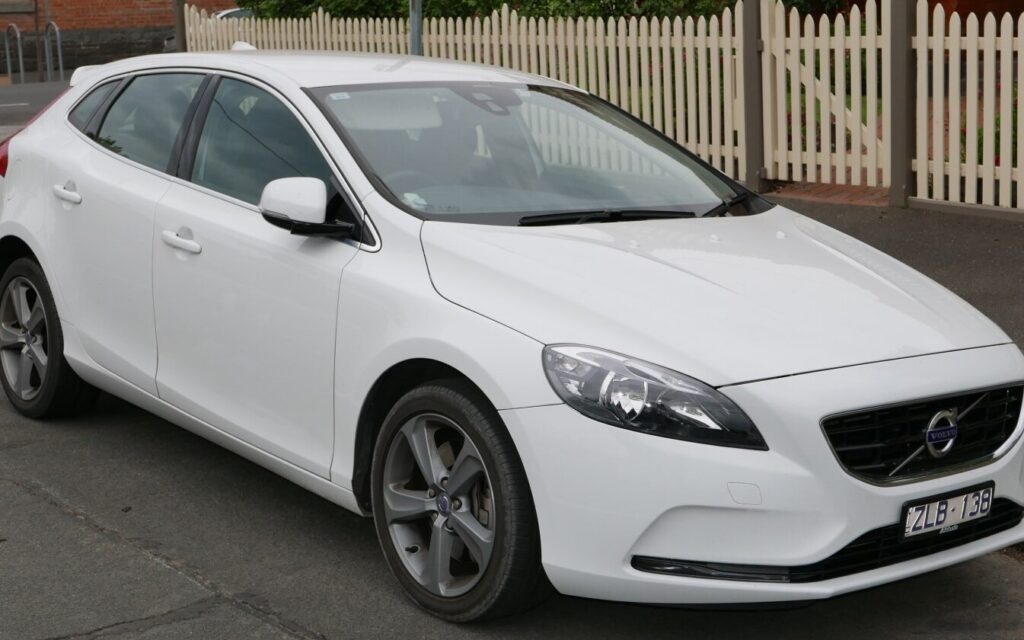
The Volvo V40 (facelift 2016): A Premium European Compact Hatchback
The Volvo V40 (facelift 2016) 2.0 D4 Geartronic Start/Stop represents a significant evolution of Volvo’s entry into the competitive premium compact hatchback segment. Produced from 2016 to 2018, this particular iteration showcased Volvo’s commitment to sophisticated design, advanced technology, and its renowned safety standards, all wrapped in a practical five-door package. While the V40 was a popular choice in its primary markets, particularly across Europe and parts of Asia, it was not officially sold in the United States. This decision reflected Volvo’s strategic shift in the North American market towards SUVs and larger sedans, where the compact hatchback segment, especially for diesel variants, held limited appeal.
The 2016 facelift brought several key enhancements, aligning the V40’s aesthetic with the brand’s newer design language, which had debuted with the XC90. This included the distinctive “Thor’s Hammer” LED daytime running lights, a more prominent grille, and updated interior trim options. Under the hood, the V40 continued to utilize Volvo’s efficient and powerful Drive-E powertrain family, with the 2.0-liter D4 diesel engine standing out as a performance-oriented yet remarkably fuel-efficient option. This model was positioned to challenge established German rivals like the Audi A3, BMW 1 Series, and Mercedes-Benz A-Class, offering a distinctly Scandinavian alternative focused on understated luxury, ergonomic design, and a strong emphasis on driver and passenger well-being.
Engine and Performance: The Drive-E D4 Powertrain in the Volvo V40 (facelift 2016)
At the heart of the Volvo V40 (facelift 2016) 2.0 D4 Geartronic Start/Stop lies Volvo’s advanced D4204T14 engine, a 2.0-liter (120.16 cu. in.) inline four-cylinder diesel unit from the brand’s modular Drive-E family. This powertrain was engineered for an impressive balance of power, refinement, and exceptional fuel economy. With a sophisticated twin-turbocharger setup and an intercooler, the engine produces a robust 190 horsepower at 4250 rpm, providing ample thrust for both city driving and highway cruising.
More critically for a diesel engine, the D4 delivers a formidable 295.02 lb.-ft. of torque, available across a broad and usable rev range from 1750 to 2500 rpm. This substantial torque output ensures strong low-end acceleration and effortless overtaking capability. Power is sent to the front wheels via Volvo’s smooth and responsive 6-speed Geartronic automatic transmission, which also incorporates a Start/Stop system to further enhance fuel efficiency and reduce emissions in urban environments.
Performance figures underscore the D4’s capabilities: the V40 can accelerate from 0 to 60 mph in a brisk 6.8 seconds, making it one of the quicker options in its class. Its top speed is rated at 142.92 mph. Despite its performance credentials, the V40 2.0 D4 achieves remarkable fuel economy, with a combined rating of 56 US mpg (4.2 l/100 km). CO2 emissions are kept low at 109 g/km, adhering to stringent Euro 6 emission standards, a testament to Volvo’s engineering prowess in developing clean diesel technology. The engine’s architecture, featuring a common rail fuel injection system, 15.8:1 compression ratio, and four valves per cylinder, contributes to its efficient combustion and overall refinement.
Design and Features: Scandinavian Practicality and Modern Aesthetics
The Volvo V40 (facelift 2016) is a five-door hatchback designed with a sleek, athletic stance that perfectly blends Scandinavian minimalist design with dynamic proportions. Measuring 172.01 inches in length, 70.2 inches in width (80.35 inches including mirrors), and 56.65 inches in height, the V40 strikes a balance between compact maneuverability and interior spaciousness. The 2016 facelift notably introduced Volvo’s signature “Thor’s Hammer” LED daytime running lights, integrated into the headlights, which instantly modernized the car’s front fascia and brought it in line with the brand’s larger, more recently designed models. The refreshed grille featured a more prominent Volvo iron mark, enhancing its premium appeal.
Inside, the V40 offers seating for five, characterized by Volvo’s famously supportive and comfortable seats. The cabin design is clean and driver-centric, featuring high-quality materials and intuitive controls. While perhaps not as overtly flashy as some competitors, the V40’s interior exudes a sense of understated luxury and durability. Practicality is a strong suit, with a minimum trunk space of 11.83 cu. ft., which expands significantly to 52.97 cu. ft. with the rear seats folded down, making it versatile for various cargo needs. The maximum permissible roof load is 165.35 lbs, and it can tow a trailer with brakes up to 3306.93 lbs, demonstrating its utility.
In terms of driving dynamics, the V40 features an independent McPherson strut front suspension and an independent multi-link rear suspension, both with coil springs and anti-roll bars, providing a composed and comfortable ride with confident handling. The electric power steering system offers precise control, and the minimum turning circle of 35.43 feet aids maneuverability in urban settings. Safety, as always with Volvo, is paramount. Standard features include ABS (Anti-lock Braking System), and the V40 was built upon a strong safety cell, designed to protect occupants. While specific advanced safety systems aren’t detailed in the raw data, Volvo typically equips its vehicles with a comprehensive suite of active and passive safety technologies, often leading the industry in this regard. The kerb weight of 3313.55 lbs (1503 kg) contributes to its solid road feel and inherent safety.
Technical Specifications: Volvo V40 (facelift 2016) 2.0 D4 (190 Hp) Geartronic Start/Stop
| Category | Specification | Value |
|---|---|---|
General Information |
||
| Brand | Volvo | |
| Model | V40 | |
| Generation | V40 (facelift 2016) | |
| Type (Engine) | 2.0 D4 (190 Hp) Geartronic Start/Stop | |
| Start of Production | 2016 | |
| End of Production | 2018 | |
| Powertrain Architecture | Internal Combustion engine | |
| Body Type | Hatchback | |
| Seats | 5 | |
| Doors | 5 | |
Performance Specifications |
||
| Fuel Consumption (Urban) | 47 US mpg (5.0 l/100 km) | |
| Fuel Consumption (Extra Urban) | 63.6 US mpg (3.7 l/100 km) | |
| Fuel Consumption (Combined) | 56 US mpg (4.2 l/100 km) | |
| CO2 Emissions | 109 g/km | |
| Fuel Type | Diesel | |
| Acceleration 0 – 60 mph | 6.8 sec | |
| Acceleration 0 – 62 mph (0-100 km/h) | 7.2 sec | |
| Maximum Speed | 142.92 mph (230 km/h) | |
| Emission Standard | Euro 6 | |
| Weight-to-Power Ratio | 7.9 kg/Hp, 126.4 Hp/tonne | |
| Weight-to-Torque Ratio | 3.8 kg/Nm, 266.1 Nm/tonne | |
Engine Specifications |
||
| Power | 190 Hp @ 4250 rpm | |
| Power per Liter | 96.5 Hp/l | |
| Torque | 295.02 lb.-ft. (400 Nm) @ 1750-2500 rpm | |
| Engine Layout | Front, Transverse | |
| Engine Model/Code | D4204T14 | |
| Engine Displacement | 120.16 cu. in. (1969 cm3) | |
| Number of Cylinders | 4 | |
| Engine Configuration | Inline | |
| Cylinder Bore | 3.23 in. (82 mm) | |
| Piston Stroke | 3.67 in. (93.2 mm) | |
| Compression Ratio | 15.8:1 | |
| Number of Valves per Cylinder | 4 | |
| Fuel Injection System | Diesel Commonrail | |
| Engine Aspiration | Twin-Turbo, Intercooler | |
| Engine Oil Capacity | 5.49 US qt (5.2 l) | |
| Coolant Capacity | 8.45 US qt (8 l) | |
| Engine Systems | Start & Stop System, Particulate filter | |
Space, Volume and Weights |
||
| Kerb Weight | 3313.55 lbs (1503 kg) | |
| Max. Weight | 4420.27 lbs (2005 kg) | |
| Max Load | 1106.72 lbs (502 kg) | |
| Trunk (Boot) Space – Minimum | 11.83 cu. ft. (335 l) | |
| Trunk (Boot) Space – Maximum | 52.97 cu. ft. (1500 l) | |
| Fuel Tank Capacity | 16.38 US gal (62 l) | |
| Max. Roof Load | 165.35 lbs (75 kg) | |
| Permitted Trailer Load with Brakes (12%) | 3306.93 lbs (1500 kg) | |
Dimensions |
||
| Length | 172.01 in. (4369 mm) | |
| Width | 70.2 in. (1783 mm) | |
| Width including mirrors | 80.35 in. (2041 mm) | |
| Height | 56.65 in. (1439 mm) | |
| Wheelbase | 104.21 in. (2647 mm) | |
| Front Track | 61.38 in. (1559 mm) | |
| Rear (Back) Track | 60.87 in. (1546 mm) | |
| Ride Height (Ground Clearance) | 5.24 – 5.67 in. (133-144 mm) | |
| Drag Coefficient (Cd) | 0.32 | |
| Minimum Turning Circle (Turning Diameter) | 35.43 ft. (10.8 m) | |
Drivetrain, Brakes and Suspension Specs |
||
| Drivetrain Architecture | The Internal combustion engine (ICE) drives the front wheels of the vehicle. | |
| Drive Wheel | Front wheel drive | |
| Number of Gears and Type of Gearbox | 6 gears, automatic transmission Geartronic | |
| Front Suspension | Independent, type McPherson with coil spring and anti-roll bar | |
| Rear Suspension | Independent coil spring | |
| Front Brakes | Ventilated discs | |
| Rear Brakes | Disc | |
| Assisting Systems | ABS (Anti-lock braking system) | |
| Steering Type | Steering rack and pinion | |
| Power Steering | Electric Steering | |
Legacy and Market Impact
The Volvo V40 (facelift 2016), particularly in its potent 2.0 D4 Geartronic Start/Stop configuration, carved out a strong niche in the European premium compact segment. Its reputation was built on Volvo’s core tenets: exceptional safety, refined road manners, and a distinctively elegant Scandinavian design. While it faced stiff competition from the well-established German trio—the Audi A3 Sportback, BMW 1 Series, and Mercedes-Benz A-Class—the V40 offered a compelling alternative. It often appealed to buyers seeking something less ostentatious but equally premium, prioritizing comfort and safety without sacrificing performance or efficiency.
In its primary markets, the V40 was praised for its robust build quality, the quiet efficiency of its Drive-E diesel engines, and its comprehensive suite of safety features, many of which were standard or available long before competitors adopted them widely. Its absence from the U.S. market was a strategic decision by Volvo, which opted to focus its American lineup on the more lucrative SUV segments (XC60, XC90) and luxury sedans (S60, S90). The declining popularity of diesel engines in the U.S. consumer market, coupled with the V40’s compact hatchback form factor, which has historically struggled against crossovers and SUVs in North America, made its introduction impractical.
The V40’s historical significance lies in its role as Volvo’s last traditional hatchback before the brand’s full pivot towards electrification and a more SUV-centric global portfolio. It served as a powerful showcase for the versatility and efficiency of Volvo’s Drive-E powertrain philosophy, demonstrating that premium performance and outstanding fuel economy could coexist in a sophisticated package. The D4 engine, in particular, was a highlight, proving that a 2.0-liter diesel could deliver performance comparable to larger gasoline engines while setting benchmarks for efficiency. Even after its production ceased in 2018, the V40 remains a respected entry in the premium compact class, valued by owners for its enduring quality, safety, and unique Scandinavian character. It represents a successful chapter in Volvo’s modern history, solidifying its position as a global premium automaker capable of competing in diverse segments.