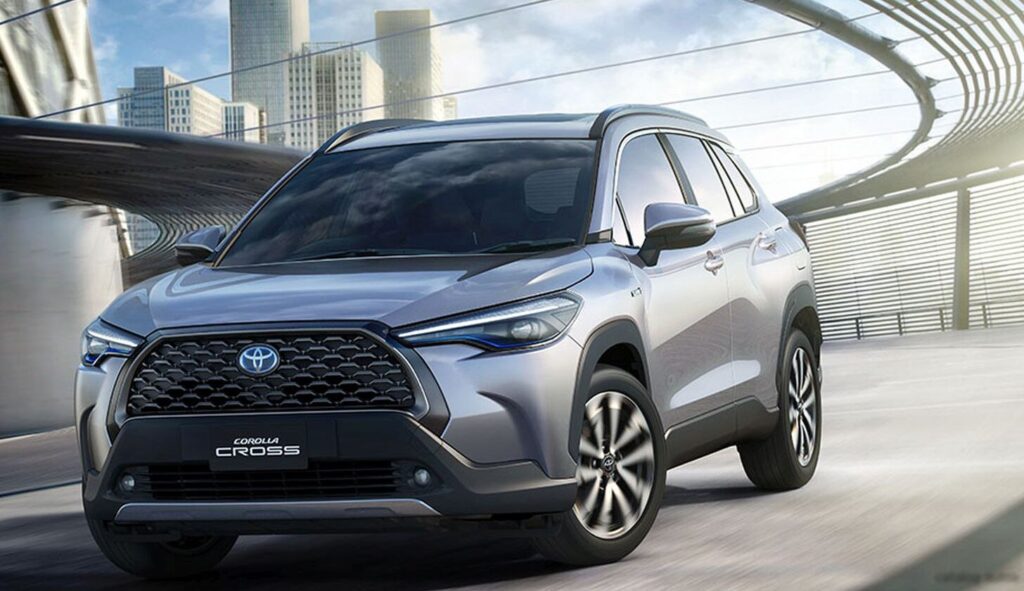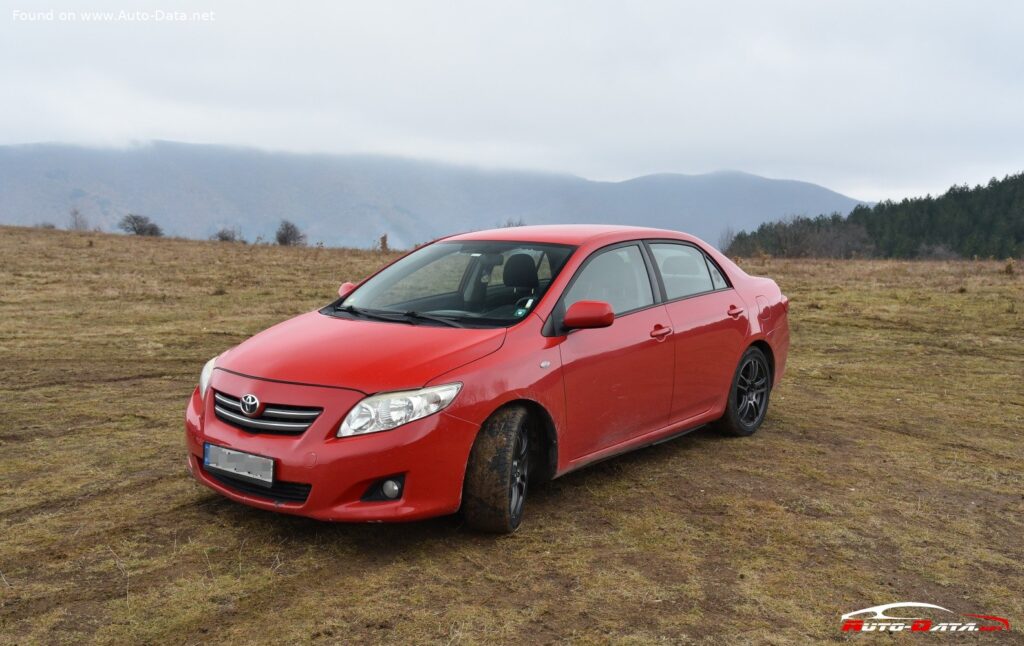
Toyota Corolla X (E140, E150) 1.3 i 16V VVT-i (101 Hp)
The Toyota Corolla, a name synonymous with reliability and practicality, has been a global automotive cornerstone for decades. The tenth generation of this venerable compact car, internally designated as the E140 and E150 series, continued this legacy with its production run from 2006 to 2013, though the specific variant under review, the Toyota Corolla X (E140, E150) 1.3 i 16V VVT-i (101 Hp), was produced from 2008 to 2012. While the Corolla nameplate is well-known in North America, this particular 1.3-liter engine variant was primarily targeted at European and Asian markets, where smaller displacement engines are favored for their fuel efficiency and lower taxation. This iteration of the Corolla sedan upheld its reputation as a dependable, economical, and comfortable vehicle, serving as a workhorse for families and businesses across numerous international territories.
The E140/E150 generation represented an evolutionary step in the Corolla’s design and engineering. It offered a more refined ride, improved interior quality, and enhanced safety features compared to its predecessors. The 1.3 i 16V VVT-i engine, in particular, showcased Toyota’s commitment to developing efficient, small-displacement powertrains that met stringent emissions standards like Euro 4, while still providing adequate performance for daily driving in its intended markets. This model was a crucial player in Toyota’s global strategy, reinforcing its presence in segments where cost-effectiveness and durability were paramount.
Engine and Performance of the Toyota Corolla X (E140/E150)
At the heart of the Toyota Corolla X (E140, E150) 1.3 i 16V VVT-i (101 Hp) lies the 1NR-FE engine, a naturally aspirated, 1.3-liter (1329 cm³ or 81.1 cu. in.) inline four-cylinder gasoline unit. This engine is a prime example of Toyota’s engineering prowess in creating compact, efficient, and durable powertrains. It features a Double Overhead Camshaft (DOHC) valvetrain with 4 valves per cylinder, incorporating Toyota’s renowned Variable Valve Timing with intelligence (VVT-i) system. VVT-i continuously adjusts the timing of the intake and exhaust valves, optimizing engine performance across the RPM range, enhancing both power output and fuel efficiency.
The 1NR-FE engine generates a respectable 101 horsepower at 6000 rpm, which, for a 1.3-liter unit, is a strong output, translating to approximately 76 horsepower per liter. Torque peaks at 132 Nm (97.36 lb.-ft.) at a relatively low 3800 rpm, providing decent pulling power for city driving and highway cruising. Power is delivered to the front wheels via a smooth-shifting 6-speed manual transmission, a choice that further contributes to the vehicle’s efficiency and driver engagement.
In terms of performance, the Corolla 1.3 i 16V VVT-i is geared more towards economy than outright speed. It accelerates from 0 to 60 mph in a calculated 12.4 seconds (0-100 km/h in 13.1 seconds), with a maximum speed of 111.85 mph (180 km/h). These figures are competitive for its class and engine size in the markets it served. Fuel efficiency was a major selling point, with combined consumption rated at 5.8 l/100 km, equivalent to an impressive 40.6 US mpg. Urban driving yielded 7.3 l/100 km (32.2 US mpg), while extra-urban cycles achieved an excellent 4.9 l/100 km (48 US mpg). This fuel economy, combined with its Euro 4 emission standard compliance, made it an environmentally conscious and cost-effective choice for consumers.
Design and Features
The tenth-generation Toyota Corolla sedan, including the Toyota Corolla X (E140, E150), adopted a more contemporary and aerodynamic design compared to its predecessors. Its exterior styling was conservative yet elegant, characterized by clean lines, a prominent grille, and well-integrated headlamps and taillights. The four-door sedan body type offered a classic profile, appealing to a broad demographic seeking a practical and understated vehicle.
Measuring 178.74 inches (4540 mm) in length, 69.29 inches (1760 mm) in width, and 57.87 inches (1470 mm) in height, the Corolla provided a spacious and comfortable cabin for five occupants. The 102.36-inch (2600 mm) wheelbase contributed to a stable ride and generous interior room, particularly for rear passengers. Trunk space was ample for a compact sedan, offering 15.89 cubic feet (450 liters) of cargo volume, making it suitable for family trips or daily errands.
Inside, the Corolla focused on functionality and ergonomics. The dashboard layout was straightforward, with controls placed intuitively for ease of use. Materials were durable and well-fitted, reflecting Toyota’s commitment to long-term quality. Standard features typically included power steering with a rack and pinion system, ensuring responsive handling, and an Anti-lock Braking System (ABS) for enhanced safety during emergency stops. The suspension system, featuring an independent MacPherson strut setup with coil springs and an anti-roll bar at the front, and a semi-independent coil spring arrangement at the rear, provided a comfortable and composed ride, absorbing road imperfections effectively. Braking performance was handled by ventilated discs at the front and solid discs at the rear, offering reliable stopping power. The vehicle came equipped with 195/65 R15 tires, striking a balance between ride comfort and grip.
Technical Specifications
| Category | Specification | Metric Value | US Customary Value |
|---|---|---|---|
| Brand | Toyota | ||
| Model | Corolla | ||
| Generation | Corolla X (E140, E150) | ||
| Engine Type | 1.3 i 16V VVT-i (101 Hp) | ||
| Production Start | 2008 year | ||
| Production End | 2012 year | ||
| Body Type | Sedan | ||
| Seats | 5 | ||
| Doors | 4 | ||
| Performance Specifications | |||
| Fuel Consumption (Urban) | 7.3 l/100 km | 32.2 US mpg | |
| Fuel Consumption (Extra Urban) | 4.9 l/100 km | 48 US mpg | |
| Fuel Consumption (Combined) | 5.8 l/100 km | 40.6 US mpg | |
| Fuel Type | Petrol (Gasoline) | ||
| Acceleration 0 – 60 mph | 12.4 sec | ||
| Acceleration 0 – 100 km/h | 13.1 sec | ||
| Maximum Speed | 180 km/h | 111.85 mph | |
| Emission Standard | Euro 4 | ||
| Weight-to-Power Ratio | 12.6 kg/Hp | ||
| Weight-to-Torque Ratio | 9.6 kg/Nm | ||
| Engine Specifications | |||
| Power | 101 Hp @ 6000 rpm | ||
| Torque | 132 Nm @ 3800 rpm | 97.36 lb.-ft. @ 3800 rpm | |
| Engine Layout | Front, Transverse | ||
| Engine Model/Code | 1NR-FE | ||
| Engine Displacement | 1329 cm³ | 81.1 cu. in. | |
| Number of Cylinders | 4 | ||
| Engine Configuration | Inline | ||
| Cylinder Bore | 72.5 mm | 2.85 in. | |
| Piston Stroke | 80.5 mm | 3.17 in. | |
| Compression Ratio | 11.5:1 | ||
| Valves per Cylinder | 4 | ||
| Fuel Injection System | Multi-port manifold injection | ||
| Engine Aspiration | Naturally aspirated engine | ||
| Valvetrain | DOHC | ||
| Engine Oil Capacity | 3.4 l | 3.59 US qt | |
| Coolant Capacity | 4.7 l | 4.97 US qt | |
| Dimensions, Space, and Weights | |||
| Kerb Weight | 1270 kg | 2799.87 lbs. | |
| Max. Weight (GVWR) | 1785 kg | 3935.25 lbs. | |
| Max Load | 515 kg | 1135.38 lbs. | |
| Trunk (Boot) Space – minimum | 450 l | 15.89 cu. ft. | |
| Fuel Tank Capacity | 55 l | 14.53 US gal | |
| Length | 4540 mm | 178.74 in. | |
| Width | 1760 mm | 69.29 in. | |
| Height | 1470 mm | 57.87 in. | |
| Wheelbase | 2600 mm | 102.36 in. | |
| Front Track | 1525 mm | 60.04 in. | |
| Rear Track | 1520 mm | 59.84 in. | |
| Minimum Turning Circle | 10.4 m | 34.12 ft. | |
| Drivetrain, Brakes, and Suspension | |||
| Drivetrain Architecture | Front-wheel drive with Internal Combustion Engine | ||
| Drive Wheel | Front wheel drive | ||
| Gearbox Type | 6 gears, manual transmission | ||
| Front Suspension | Independent, McPherson with coil spring and anti-roll bar | ||
| Rear Suspension | Semi-independent, coil spring | ||
| Front Brakes | Ventilated discs | ||
| Rear Brakes | Disc | ||
| Assisting Systems | ABS (Anti-lock braking system) | ||
| Steering Type | Steering rack and pinion | ||
| Tires Size | 195/65 R15 | ||
Legacy and Market Impact of the Toyota Corolla E140/E150
The Toyota Corolla X (E140, E150), particularly with its 1.3-liter engine variant, solidified the Corolla’s standing as an international bestseller. While this specific engine was not offered in the North American market, where larger 1.8L and 2.4L engines were standard, it played a pivotal role in Toyota’s success in regions like Europe, Asia, and other developing markets. In these areas, the demand for fuel-efficient, reliable, and affordable compact sedans was consistently high, and the Corolla perfectly met these requirements.
Its primary competitors in these markets included other global compact cars such as the Honda Civic, Volkswagen Jetta (or Golf sedan in some markets), Ford Focus, and various Korean offerings from Hyundai and Kia. The Corolla consistently stood out due to its legendary reputation for bulletproof reliability, low running costs, and strong resale value. Owners appreciated its no-fuss ownership experience, minimal maintenance requirements, and comfortable, albeit unexciting, driving dynamics.
The E140/E150 generation continued to build upon the Corolla’s heritage of being a dependable appliance. It wasn’t designed to be a sports car or a luxury cruiser, but rather a highly competent and trustworthy mode of transportation. Its impact on the market was profound, reinforcing Toyota’s image as a manufacturer of quality, durable, and value-for-money vehicles. The 1.3-liter VVT-i engine variant, in particular, demonstrated Toyota’s ability to extract impressive efficiency and sufficient power from a small displacement, catering directly to the needs and preferences of its target audience in highly competitive international segments. This generation of the Corolla remains a common sight on roads worldwide, a testament to its enduring design and engineering.