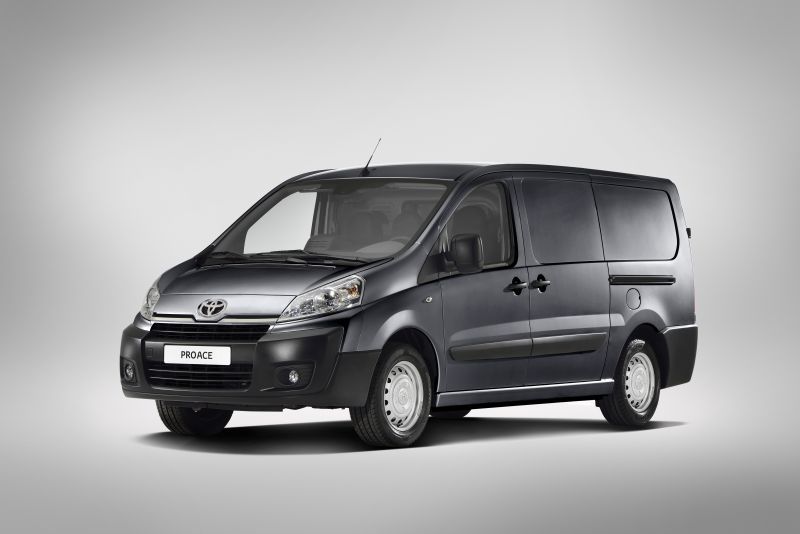
Introduction to the Toyota Proace
The Toyota Proace 2.0 D4-D (128 Hp) L1H1 represents Toyota’s strategic entry into the highly competitive European mid-size light commercial vehicle (LCV) segment. Launched in 2013, this specific configuration, the L1H1, denotes the shortest wheelbase and standard roof height, making it a versatile and maneuverable option for urban deliveries and various commercial applications. The Proace, during its first generation from 2013 to 2016, was not an entirely in-house Toyota design but rather a rebadged variant of the highly successful Sevel Nord platform, shared with the Citroën Jumpy, Peugeot Expert, and Fiat Scudo. This collaboration allowed Toyota to quickly establish a presence in a market segment where it traditionally had a limited offering, leveraging proven European engineering with Toyota’s renowned reputation for quality and reliability.
Positioned as a practical and efficient workhorse, the Toyota Proace aimed to provide businesses with a reliable and cost-effective solution for their transportation needs. Its minivan body type, designed primarily for cargo but also capable of seating three occupants, underscored its utility-first approach. This generation of the Proace was a critical step for Toyota in expanding its commercial vehicle footprint beyond its traditional pickup truck and larger van offerings, catering specifically to the demands of European businesses for compact yet capable commercial vehicles.
Powertrain and Performance of the Toyota Proace
The 2.0-Liter D4-D Diesel Engine
Under the hood, the Toyota Proace 2.0 D4-D (128 Hp) L1H1 was powered by a robust and efficient 2.0-liter (1997 cm3 or 121.86 cu. in.) inline four-cylinder diesel engine, designated with the code 4WZ-FTV. This powerplant featured Toyota’s acclaimed D4-D (Direct Injection 4-stroke Common Rail Diesel) technology, known for its balance of power, fuel economy, and durability. The engine was equipped with a turbocharger and intercooler, enhancing both its output and efficiency. It delivered a respectable 128 horsepower at 4000 rpm, which was ample for its intended commercial duties, providing sufficient grunt for hauling goods without feeling underpowered.
Crucially for a commercial vehicle, the engine produced a healthy 236.02 lb.-ft. of torque at a low 2000 rpm. This strong low-end torque was vital for pulling away with heavy loads, navigating city traffic, and maintaining momentum on inclines, making the Proace a capable partner for businesses. The power was sent to the front wheels via a smooth and durable 6-speed manual transmission, a common and preferred choice in European commercial vehicles for its reliability and driver control. The front-wheel-drive architecture offered benefits such as a lower load floor for easier loading and unloading, and improved traction in light snow or slippery conditions, particularly when unladen.
Driving Dynamics and Efficiency
Performance figures for the Toyota Proace 2.0 D4-D reflected its practical orientation. It could accelerate from 0 to 60 mph in a reasonable 11.6 seconds, with a top speed of 105.63 mph (170 km/h). While not a speed demon, these figures were more than adequate for typical commercial routes, including highway driving.
Fuel efficiency was a significant strong suit, especially important for businesses looking to minimize operating costs. The combined fuel consumption was rated at an impressive 36.8 US mpg (6.4 l/100 km), with extra-urban figures reaching 40.6 US mpg (5.8 l/100 km). This made the Proace an economical choice for long-distance deliveries. Emissions were also competitive for its era, with CO2 output at 168 g/km, meeting the Euro 5 emission standard. The inclusion of a particulate filter further underscored its commitment to environmental responsibility. The vehicle’s weight-to-power ratio of 13.8 kg/Hp and weight-to-torque ratio of 5.5 kg/Nm highlighted its efficient power delivery relative to its curb weight, ranging from 3882.34 to 4129.26 lbs.
Design and Practicality of the Toyota Proace
Exterior and Interior Design Philosophy
The design of the first-generation Toyota Proace was inherently functional and robust, characteristic of its European siblings. The L1H1 configuration provided a compact footprint with a length of 189.49 inches (4813 mm), a width of 74.61 inches (1895 mm), and a height of 77.95 inches (1980 mm). This made it highly suitable for navigating narrow city streets and parking in urban environments, a crucial factor for many European businesses. The exterior featured a straightforward, aerodynamic profile, designed to maximize interior space and minimize drag for better fuel economy. It typically offered 5 or 6 doors, including sliding side doors for easy access to the cargo area in tight spaces.
Inside, the cabin of the Toyota Proace was engineered for durability and driver comfort during long working hours. With seating for three occupants, the dashboard layout was ergonomic, prioritizing functionality and ease of access to controls. Storage solutions were plentiful, acknowledging the need for commercial drivers to keep documents, tools, and personal items organized. The robust materials used throughout the interior were chosen to withstand the rigors of daily commercial use, emphasizing longevity and ease of cleaning.
Versatility and Cargo Capacity
The true strength of the Toyota Proace lay in its versatility and impressive cargo capacity for its size. The L1H1 variant offered a substantial maximum payload capacity ranging from 2259.74 to 2506.66 lbs (1025-1137 kg), allowing it to handle a wide array of goods. The generous fuel tank capacity of 21.13 US gallons (80 liters) provided an excellent driving range, reducing the frequency of refueling stops and increasing operational efficiency.
The Proace was also well-equipped for towing, boasting a permitted trailer load of 4409.25 lbs (2000 kg) with brakes and 1653.47 lbs (750 kg) without brakes, further expanding its utility for businesses that needed to transport larger equipment or materials. The chassis featured a double wishbone front suspension and a semi-independent, coil spring rear suspension, providing a good balance of ride comfort for the driver and stability under load. Braking was handled by ventilated discs at the front and disc brakes at the rear, coupled with an Anti-lock Braking System (ABS) for enhanced safety and control. Electric power steering made maneuvering the van, even when fully loaded, a light and responsive experience, especially beneficial in urban settings with a minimum turning circle of 40.03 feet (12.2 meters).
Technical Specifications
| Category | Specification | Value |
|---|---|---|
| General Information | Brand | Toyota |
| Model | Proace | |
| Generation | Proace (First Generation) | |
| Type (Engine) | 2.0 D4-D (128 Hp) L1H1 | |
| Start of Production | 2013 year | |
| End of Production | 2016 year | |
| Powertrain Architecture | Internal Combustion Engine | |
| Body Type | Minivan | |
| Seats | 3 | |
| Doors | 5/6 | |
| Performance Specs | Fuel Consumption (Urban) | 7.6 l/100 km (30.9 US mpg) |
| Fuel Consumption (Extra Urban) | 5.8 l/100 km (40.6 US mpg) | |
| Fuel Consumption (Combined) | 6.4 l/100 km (36.8 US mpg) | |
| CO2 Emissions | 168 g/km | |
| Fuel Type | Diesel | |
| Acceleration 0 – 60 mph | 11.6 seconds | |
| Maximum Speed | 105.63 mph (170 km/h) | |
| Emission Standard | Euro 5 | |
| Weight-to-Power Ratio | 13.8 kg/Hp (72.7 Hp/tonne) | |
| Weight-to-Torque Ratio | 5.5 kg/Nm (181.7 Nm/tonne) | |
| Engine Specs | Power | 128 Hp @ 4000 rpm |
| Power per Liter | 64.1 Hp/l | |
| Torque | 236.02 lb.-ft. @ 2000 rpm (320 Nm) | |
| Engine Layout | Front, Transverse | |
| Engine Model/Code | 4WZ-FTV | |
| Engine Displacement | 2.0 Liters (1997 cm3 / 121.86 cu. in.) | |
| Number of Cylinders | 4 | |
| Engine Configuration | Inline | |
| Cylinder Bore | 3.35 in. (85 mm) | |
| Piston Stroke | 3.46 in. (88 mm) | |
| Compression Ratio | 16:1 | |
| Fuel Injection System | Diesel Commonrail | |
| Engine Aspiration | Turbocharger, Intercooler | |
| Valvetrain | DOHC | |
| Engine Oil Capacity | 5.28 US qt (5 Liters) | |
| Engine Systems | Particulate filter | |
| Space, Volume and Weights | Kerb Weight | 3882.34 – 4129.26 lbs (1761-1873 kg) |
| Max. Weight (GVWR) | 6389 lbs (2898 kg) | |
| Max Load (Payload) | 2259.74 – 2506.66 lbs (1025-1137 kg) | |
| Fuel Tank Capacity | 21.13 US gal (80 Liters) | |
| Max. Roof Load | 374.79 lbs (170 kg) | |
| Permitted Trailer Load with Brakes (12%) | 4409.25 lbs (2000 kg) | |
| Permitted Trailer Load without Brakes | 1653.47 lbs (750 kg) | |
| Permitted Towbar Download | 176.37 lbs (80 kg) | |
| Dimensions | Length | 189.49 in. (4813 mm) |
| Width | 74.61 in. (1895 mm) | |
| Height | 77.95 in. (1980 mm) | |
| Wheelbase | 118.11 in. (3000 mm) | |
| Front Track | 61.81 in. (1570 mm) | |
| Rear (Back) Track | 63.15 in. (1604 mm) | |
| Minimum Turning Circle (Turning Diameter) | 40.03 ft. (12.2 m) | |
| Drivetrain, Brakes and Suspension Specs | Drivetrain Architecture | Front-wheel drive with Internal Combustion Engine |
| Drive Wheel | Front-wheel drive | |
| Number of Gears and Type of Gearbox | 6 gears, Manual Transmission | |
| Front Suspension | Double wishbone | |
| Rear Suspension | Semi-independent, coil spring | |
| Front Brakes | Ventilated discs | |
| Rear Brakes | Disc | |
| Assisting Systems | ABS (Anti-lock braking system) | |
| Steering Type | Steering rack and pinion | |
| Power Steering | Electric Steering | |
| Tires Size | 215/60 R16 | |
| Wheel Rims Size | 7J x 16 |
Legacy and Market Positioning
Market Impact and Competitors
The first-generation Toyota Proace, specifically the 2.0 D4-D (128 Hp) L1H1, played a crucial role in Toyota’s European commercial vehicle strategy. By partnering with PSA (Peugeot S.A.), Toyota was able to offer a highly competitive product in a segment dominated by established players without the immense investment required for ground-up development. This allowed the brand to quickly gain market share and offer a full range of commercial solutions to its European customer base.
In its primary European market, the Proace competed against a formidable lineup of rivals. Key competitors included the segment-leading Volkswagen Transporter, the highly popular Ford Transit Custom, the versatile Renault Trafic, the robust Mercedes-Benz Vito, and its platform siblings such as the Citroën Jumpy, Peugeot Expert, and Opel Vivaro. What set the Proace apart, beyond its shared platform, was the added value of Toyota’s brand reputation for exceptional reliability, low running costs, and strong after-sales service, which are paramount considerations for commercial vehicle operators.
The Proace’s Enduring Reputation
During its production run from 2013 to 2016, the Toyota Proace earned a solid reputation as a dependable and efficient work vehicle. Its combination of a proven diesel powertrain, practical design, and competitive operating costs made it an attractive proposition for small businesses, fleet operators, and tradespeople across Europe. The L1H1 configuration, in particular, was praised for its urban agility and ease of parking, making it a favorite for last-mile delivery services and city-based operations.
The success of this first generation laid the groundwork for future iterations of the Proace, demonstrating Toyota’s commitment to the European LCV market. While it was a product of collaboration, the rigorous quality standards applied by Toyota ensured that the Proace upheld the brand’s global image for durability and longevity. Its legacy is that of a smart strategic move, allowing Toyota to effectively cater to a vital commercial sector with a vehicle that delivered on its promise of practicality, efficiency, and reliability,