The Seat Ibiza IV (facelift 2012) 1.6 TDI (90 Hp): A European Compact Diesel Standard
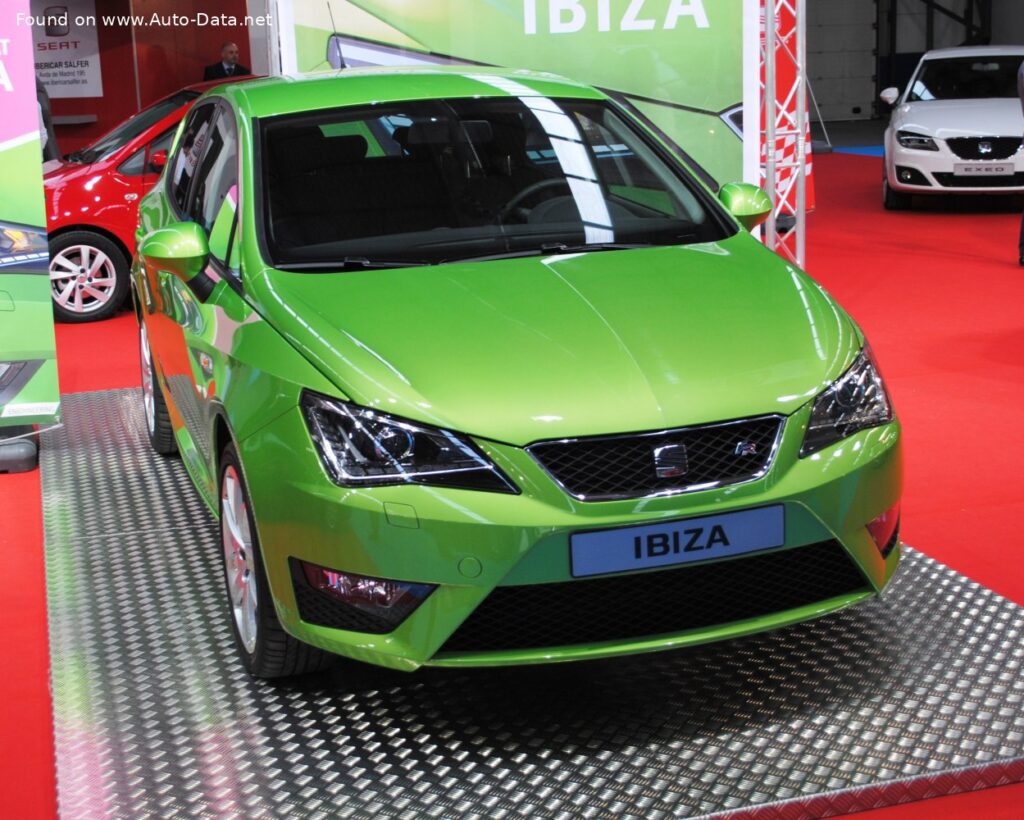
The Seat Ibiza IV (facelift 2012) 1.6 TDI (90 Hp) represents a significant iteration in the long-running history of Seat’s popular subcompact car. Unveiled as part of the fourth-generation Ibiza’s mid-cycle refresh in 2012, this particular variant, with its efficient 1.6-liter TDI diesel engine, carved out a crucial niche in the highly competitive European B-segment. Produced from 2012 to 2015, the facelifted Ibiza IV aimed to refine an already successful formula, bringing updated styling, enhanced interior materials, and improved technological features to a discerning market that highly valued fuel economy and practicality. As a brand under the Volkswagen Group umbrella, Seat leverages shared platforms and powertrains, allowing the Ibiza to offer robust engineering and a dynamic driving experience, often with a sportier flair than its corporate cousins. This model, specifically, was a five-door hatchback designed for urban maneuverability and comfortable longer journeys, positioning itself as a compelling choice for young families, commuters, and those seeking an economical yet engaging daily driver across Europe and other international markets where Seat operates.
Engine & Performance: The Heart of the Seat Ibiza IV (facelift 2012)
At the core of the Seat Ibiza IV (facelift 2012) 1.6 TDI (90 Hp) lies a highly regarded 1.6-liter TDI (Turbocharged Direct Injection) inline-four diesel engine, designated with the CAYB code. This powertrain was a testament to the Volkswagen Group’s expertise in diesel technology, offering a balance of efficiency and usable performance. With a displacement of 1598 cm3 (or 97.52 cu. in.), the engine produced a respectable 90 horsepower at 4200 rpm. More importantly for its class, it delivered a robust 230 Nm (169.64 lb.-ft.) of torque across a broad and accessible rev range, from 1500 to 2500 rpm. This low-end torque was crucial for urban driving, allowing for swift acceleration from a standstill and confident overtaking maneuvers without constantly needing to downshift.
Power was sent to the front wheels via a smooth-shifting 5-speed manual transmission, a common and reliable setup for vehicles in this segment. Performance figures were competitive for its class, with the Ibiza 1.6 TDI accelerating from 0 to 60 mph in a calculated 11.2 seconds (0-100 km/h in 11.8 seconds) and reaching a top speed of 110.6 mph (178 km/h). However, the true highlight of this diesel variant was its outstanding fuel economy. The combined cycle consumption was rated at an impressive 4.2 l/100 km, translating to approximately 56 US mpg. Even in urban conditions, it achieved 5.1 l/100 km (46.1 US mpg), while extra-urban cruising yielded an exceptional 3.6 l/100 km (65.3 US mpg). These figures, coupled with CO2 emissions of just 109 g/km, ensured the vehicle met the Euro 5 emission standard and offered low running costs, a key selling point in its primary markets. The engine featured a common rail fuel injection system, a turbocharger, and an intercooler, along with a particulate filter, all contributing to its clean and efficient operation.
Design & Features: Practicality Meets Spanish Flair
The Seat Ibiza IV (facelift 2012) retained the sharp, angular design language introduced with the fourth generation, but the facelift brought subtle yet effective enhancements. The five-door hatchback body style offered a blend of sporty aesthetics and practical utility. Its dimensions were compact, measuring 159.88 inches (4061 mm) in length, 66.65 inches (1693 mm) in width, and 56.89 inches (1445 mm) in height, making it ideal for navigating crowded European city streets and tight parking spaces. The wheelbase of 97.2 inches (2469 mm) provided a stable ride and adequate interior space for five occupants.
Inside, the facelift introduced updated trim materials and revised infotainment options, aiming for a more premium feel. While the Ibiza was positioned as a more youthful and dynamic alternative to its Volkswagen Polo cousin, it didn’t compromise on everyday usability. The 292-liter (10.31 cu. ft.) minimum trunk space was competitive for the segment, offering enough room for groceries or weekend luggage. Standard features for the era included power steering (electric for efficiency), and essential safety systems like ABS (Anti-lock Braking System) were part of the package. The suspension setup featured an independent McPherson strut system with coil springs and an anti-roll bar at the front, paired with hydraulic elements at the rear, providing a comfortable yet engaging ride. Braking performance was handled by ventilated discs at the front and solid discs at the rear. Various tire and wheel options were available, ranging from 175/70 R14 to more aggressive 215/40 R17 setups, allowing buyers to customize the car’s stance and handling characteristics.
Technical Specifications: Seat Ibiza IV (facelift 2012) 1.6 TDI (90 Hp)
| Category | Specification | Metric / US Equivalent |
|---|---|---|
| General Information | ||
| Brand | Seat | |
| Model | Ibiza | |
| Generation | Ibiza IV (facelift 2012) | |
| Type (Engine) | 1.6 TDI (90 Hp) | |
| Start of Production | 2012 year | |
| End of Production | 2015 year | |
| Powertrain Architecture | Internal Combustion engine | |
| Body type | Hatchback | |
| Seats | 5 | |
| Doors | 5 | |
| Performance Specs | ||
| Fuel consumption (economy) – urban | 5.1 l/100 km | 46.1 US mpg |
| Fuel consumption (economy) – extra urban | 3.6 l/100 km | 65.3 US mpg |
| Fuel consumption (economy) – combined | 4.2 l/100 km | 56 US mpg |
| CO2 emissions | 109 g/km | |
| Fuel Type | Diesel | |
| Acceleration 0 – 60 mph | 11.2 sec | |
| Acceleration 0 – 100 km/h | 11.8 sec | |
| Maximum speed | 178 km/h | 110.6 mph |
| Emission standard | Euro 5 | |
| Weight-to-power ratio | 13 kg/Hp | |
| Weight-to-torque ratio | 5.1 kg/Nm | |
| Engine Specs | ||
| Power | 90 Hp @ 4200 rpm | |
| Power per liter | 56.3 Hp/l | |
| Torque | 230 Nm @ 1500-2500 rpm | 169.64 lb.-ft. @ 1500-2500 rpm |
| Engine layout | Front, Transverse | |
| Engine Model/Code | CAYB | |
| Engine displacement | 1598 cm3 | 97.52 cu. in. |
| Number of cylinders | 4 | |
| Engine configuration | Inline | |
| Cylinder Bore | 79.5 mm | 3.13 in. |
| Piston Stroke | 80.5 mm | 3.17 in. |
| Compression ratio | 16.5:1 | |
| Number of valves per cylinder | 4 | |
| Fuel injection system | Diesel Commonrail | |
| Engine aspiration | Turbocharger, Intercooler | |
| Engine oil capacity | 4.3 l | 4.54 US qt |
| Engine oil specification | Log in to see. | |
| Coolant | 8 l | 8.45 US qt |
| Engine systems | Particulate filter | |
| Space, Volume and Weights | ||
| Kerb Weight | 1170 kg | 2579.41 lbs. |
| Max. weight | 1670 kg | 3681.72 lbs. |
| Max load | 500 kg | 1102.31 lbs. |
| Trunk (boot) space – minimum | 292 l | 10.31 cu. ft. |
| Fuel tank capacity | 45 l | 11.89 US gal |
| Dimensions | ||
| Length | 4061 mm | 159.88 in. |
| Width | 1693 mm | 66.65 in. |
| Height | 1445 mm | 56.89 in. |
| Wheelbase | 2469 mm | 97.2 in. |
| Front track | 1465 mm | 57.68 in. |
| Rear (Back) track | 1457 mm | 57.36 in. |
| Minimum turning circle (turning diameter) | 10.48 m | 34.38 ft. |
| Drivetrain, Brakes and Suspension Specs | ||
| Drivetrain Architecture | The Internal combustion engine (ICE) drives the front wheels of the vehicle. | |
| Drive wheel | Front wheel drive | |
| Number of gears and type of gearbox | 5 gears, manual transmission | |
| Front suspension | Independent, type McPherson with coil spring and anti-roll bar | |
| Rear suspension | Hydraulic elements | |
| Front brakes | Ventilated discs | |
| Rear brakes | Disc | |
| Assisting systems | ABS (Anti-lock braking system) | |
| Steering type | Steering rack and pinion | |
| Power steering | Electric Steering | |
| Tires size | 175/70 R14; 185/60 R15; 215/45 R16; 215/40 R17 | |
| Wheel rims size | 14; 15; 16; 17 | |
Legacy & Market Impact of the Seat Ibiza IV (facelift 2012)
The Seat Ibiza IV (facelift 2012) 1.6 TDI (90 Hp) played a crucial role in maintaining Seat’s presence and reputation in the fiercely contested European subcompact segment. While the Ibiza has never been officially sold in the United States, it is a household name across Europe, particularly in Spain, Germany, and the UK. Its primary competitors included stalwarts like the Volkswagen Polo (its platform mate), Ford Fiesta, Renault Clio, Peugeot 208, and Opel Corsa. What set the Ibiza apart was its distinctive “auto emoción” philosophy, aiming to inject a sportier, more youthful character into the practical compact car formula. This diesel variant, in particular, was highly regarded for its balance of spirited performance and exceptional fuel economy, making it a favorite among drivers who covered significant mileage or prioritized low running costs without sacrificing driving enjoyment.
The Ibiza IV’s legacy is defined by its robust Volkswagen Group engineering, sharp styling, and its ability to offer a more engaging driving experience than some of its more conservative rivals. The 1.6 TDI engine, a proven workhorse, further cemented its appeal by providing reliable, efficient power. For the 2012 facelift, Seat successfully refined the car’s aesthetics and interior quality, keeping it competitive against newer entrants. This generation of the Ibiza continued Seat’s tradition of offering a compelling value proposition, blending Spanish design flair with German engineering prowess. It contributed significantly to Seat’s sales volumes during its production run, solidifying its position as a cornerstone of the brand’s lineup and a strong contender in the European compact car landscape. Its widespread adoption across various European markets underscored its practical appeal, dynamic handling, and economical operation, making it a significant model in the history of compact diesel hatchbacks. The Ibiza continues to be a key model for Seat, evolving with each generation to meet changing market demands, but the IV generation, particularly its diesel variants, stands out for its blend of efficiency, style, and accessible performance.