
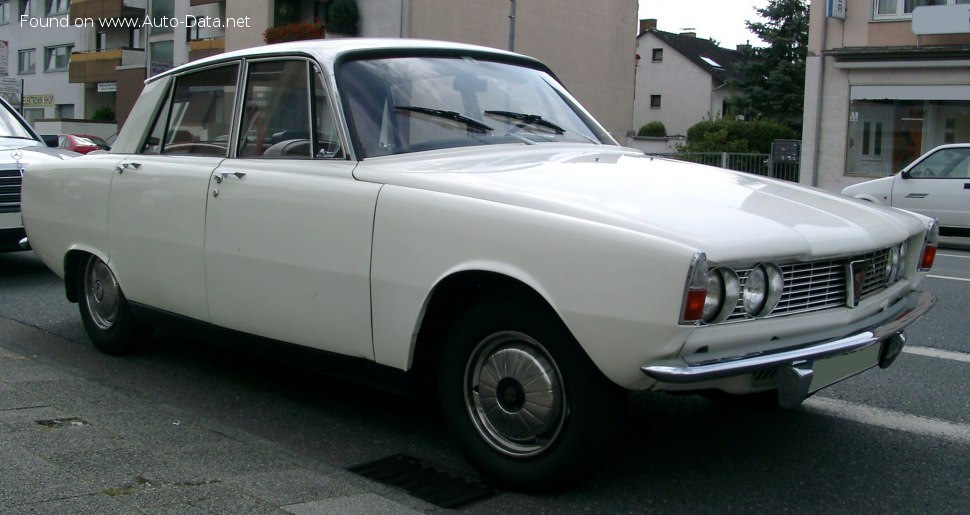
Introduction to the Rover 2200-3500 (P6)
The Rover P6 series, officially known as the Rover 2000 and later expanded to include the 2200 and 3500 models,
represents a pivotal moment in British automotive engineering and design. Launched in 1963, the P6 was
conceived as a revolutionary mid-size executive sedan, aiming to blend sophisticated engineering with modern
styling and a comfortable, luxurious driving experience. It quickly earned critical acclaim, being crowned
the inaugural European Car of the Year in 1964, a testament to its forward-thinking approach.
Designed primarily for the European market, where it competed fiercely with established German and French
luxury marques, the Rover 2200-3500 (P6) was never officially sold in significant numbers in the United States,
making it a lesser-known but historically significant vehicle on this side of the Atlantic. Its impact, however,
reverberated globally, influencing automotive design and construction methods for years to come. The specific
variant under discussion, the Rover 2200 (TC) with 113 horsepower, represents a refined and powerful iteration
within the P6 lineup, offering an enhanced driving experience over its 2.0-liter predecessor. This model,
produced from 1963 to 1976, encapsulated Rover’s commitment to innovation and quality during a transformative
era for the automotive industry.
Engineering and Performance of the Rover 2200-3500 (P6) 2200 (TC)
Powertrain Details
At the heart of the Rover 2200 (TC) was its robust 2.2-liter (2200 cc) four-cylinder engine. This unit was a
development of the original 2.0-liter engine found in the early P6 2000 models, specifically designed to
offer improved torque and horsepower. The “TC” designation stood for “Twin Carburetor,” indicating the
presence of two SU (Skinners Union) carburetors, which allowed for more efficient fuel delivery and greater
power output compared to single-carburetor versions.
With a power output of 113 horsepower, the 2.2-liter TC engine provided spirited performance for its era and
vehicle class. It was a naturally aspirated engine, relying solely on atmospheric pressure to draw air into
its cylinders, a common and reliable configuration for the time. This engine was renowned for its smooth
operation, refinement, and durability, traits that were hallmarks of Rover engineering. The power delivery
was linear and predictable, making for a comfortable yet engaging driving experience.
The engine’s design emphasized longevity and ease of maintenance, with a respectable engine oil capacity of
5 liters (5.28 US quarts) and a coolant capacity of 8 liters (8.45 US quarts), ensuring adequate lubrication
and thermal management for sustained operation. This powertrain architecture, featuring an internal combustion
engine driving the rear wheels (a traditional layout for executive sedans), contributed to the car’s balanced
handling characteristics and refined ride quality. The Rover 2200 (TC) was a testament to Rover’s ability to
extract impressive performance and refinement from a conventional engine design.
Design Philosophy and Features
The Rover 2200-3500 (P6) was a groundbreaking vehicle in terms of its design and construction. Its most
innovative feature was its unique “base unit” or “safety frame” construction. Unlike conventional unibody
designs, the P6 featured a strong, rigid steel monocoque chassis onto which all mechanical components and
non-stressed outer body panels were bolted. This modular approach offered several advantages: it allowed for
easier repairs, reduced manufacturing costs for body panel variations, and significantly enhanced occupant
safety by creating a strong protective cell around the passengers. This was a revolutionary concept in the 1960s,
ahead of its time in terms of passive safety.
Aesthetically, the P6 presented a clean, modern, and distinctive appearance. Its styling, penned by David Bache,
was characterized by crisp lines, a relatively low roofline, and a large glass area that provided excellent
visibility. The unique front end, with its recessed grille and integrated headlamps, gave the car a purposeful
and sophisticated look. The four-door sedan body type, capable of seating five occupants comfortably, was
designed with practicality and elegance in mind, suitable for both family use and executive transport.
Interior and Comfort
Inside, the Rover P6 maintained its reputation for refinement and thoughtful design. The cabin was well-appointed,
featuring high-quality materials such as real wood veneers and comfortable seating. Ergonomics were carefully
considered, with a dashboard layout that was clear and intuitive. For its era, the P6 offered an impressive
level of comfort and convenience, with features like power windows and optional air conditioning becoming
available on later models. The ride quality was exceptional, thanks to an advanced suspension system that
included a sophisticated De Dion tube rear axle with inboard disc brakes, a setup more commonly found on
sports cars. This combination provided a smooth ride over varied road surfaces while maintaining precise
handling characteristics. Safety features, while rudimentary by modern standards, were advanced for the 1960s,
including the strong safety frame and a collapsible steering column.
Technical Specifications
| Category | Specification |
|---|---|
| Brand | Rover |
| Model | 2200-3500 |
| Generation | 2200-3500 (P6) |
| Type (Engine) | 2200 (TC) (113 Hp) |
| Start of Production | 1963 year |
| End of Production | 1976 year |
| Powertrain Architecture | Internal Combustion engine |
| Body Type | Sedan |
| Seats | 5 |
| Doors | 4 |
| Fuel Type | Petrol (Gasoline) |
| Power | 113 Hp |
| Engine Aspiration | Naturally aspirated engine |
| Engine Oil Capacity | 5 l (5.28 US qt | 4.4 UK qt) |
| Coolant Capacity | 8 l (8.45 US qt | 7.04 UK qt) |
| Drivetrain Type | Internal Combustion engine (RWD) |
Legacy and Market Impact
The Rover 2200-3500 (P6) carved out a significant legacy, particularly within the British and European automotive
landscape. Upon its introduction, it was lauded for its innovative engineering, sophisticated ride, and
distinctive styling, quickly establishing itself as a benchmark in the executive sedan segment. Its European
Car of the Year award in 1964 cemented its reputation as a truly advanced and desirable vehicle. The P6 was
seen as a symbol of British ingenuity and quality, offering a compelling alternative to more traditional
offerings from Ford, Vauxhall, and even some German competitors.
In its primary market, the P6 competed with vehicles like the Triumph 2000, Mercedes-Benz W110 and later W114/W115
series, and the BMW New Class sedans. While it might not have matched the ultimate sporting prowess of the
BMW or the bulletproof reliability of some Mercedes models, the Rover P6 offered a unique blend of comfort,
refinement, and technological innovation that appealed to a discerning clientele. It was often favored by
professionals, civil servants, and those who appreciated its understated elegance and advanced engineering.
The P6’s production run from 1963 to 1976 saw various engine iterations, culminating in the popular 3.5-liter
V8 model, but the 2.2-liter TC remained a strong performer in the four-cylinder lineup. Despite later production
challenges under the British Leyland conglomerate, which led to some quality control issues towards the end
of its life, the fundamental design and engineering of the P6 remained sound.
Today, the Rover P6 is highly regarded by classic car enthusiasts for its unique design, engineering integrity,
and historical significance. It represents a golden age of Rover, before the brand faced the significant
challenges of the late 20th century. Its influence can be seen in subsequent Rover models and even in the
broader automotive industry, particularly in its pioneering use of a modular construction method and its
commitment to passive safety. The Rover 2200-3500 (P6) remains a cherished classic, a testament to a time
when British engineering was at the forefront of automotive innovation.
