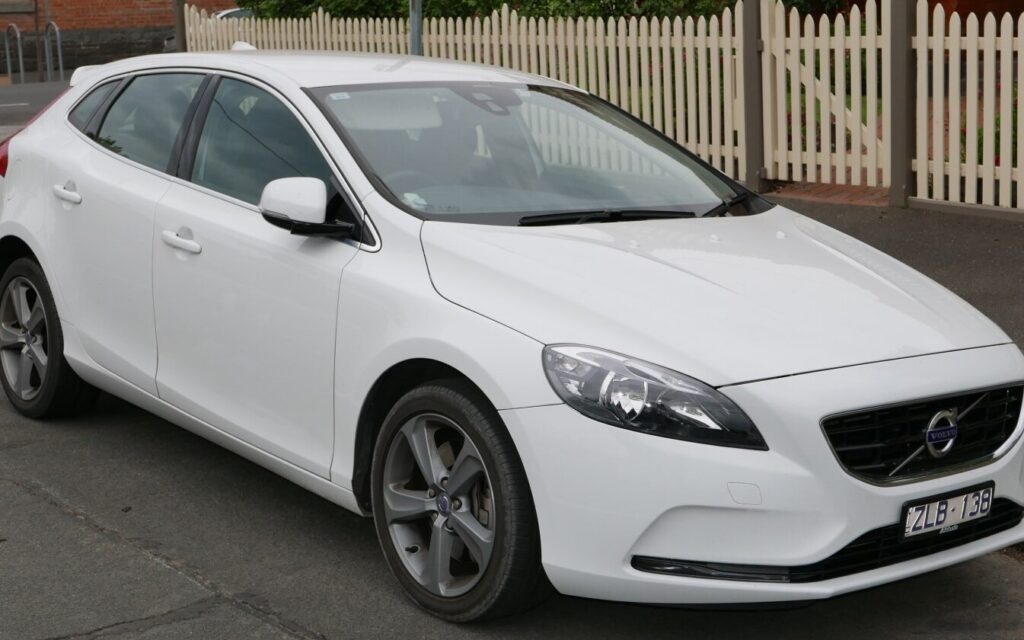
The Volvo V40 (facelift 2016): A Compact Premium Offering
The Volvo V40 (facelift 2016) 2.0 D4 (190 Hp) Start/Stop represents a significant iteration of Volvo’s premium compact hatchback, a model primarily targeted at the discerning European market. Introduced in 2016 as a refreshed version of the second-generation V40, this particular variant showcased Volvo’s commitment to combining sophisticated design, advanced safety features, and efficient, powerful powertrains. Positioned as a direct competitor to established German rivals in the C-segment, the V40 aimed to offer a distinct Scandinavian alternative, emphasizing comfort, understated luxury, and a strong environmental consciousness, particularly evident in its advanced diesel engine technology.
The V40, which began its production run in 2012, received its notable facelift in 2016, bringing updated styling cues, enhanced interior options, and a refined powertrain lineup. The 2.0 D4 (190 Hp) Start/Stop variant, produced from 2016 to 2018, stood out as one of the most potent and efficient diesel offerings in the range, embodying Volvo’s Drive-E philosophy. This car was never officially sold in the United States, making it a distinctive example of Volvo’s European-market strategy, where compact premium hatchbacks hold substantial appeal. Its role in its primary market was to provide a stylish, safe, and dynamic option for buyers seeking a premium experience in a more manageable footprint.
Engine & Performance: The Drive-E D4 Powertrain
At the heart of the Volvo V40 (facelift 2016) 2.0 D4 (190 Hp) Start/Stop lies Volvo’s highly regarded Drive-E D4 engine, an inline four-cylinder diesel unit designed for both robust performance and impressive fuel efficiency. With an engine displacement of 1969 cm³ (120.16 cu. in.), this powertrain generates a substantial 190 horsepower at 4250 rpm, making it one of the most powerful engines in its class. Torque delivery is equally impressive, peaking at a formidable 400 Nm (295.02 lb.-ft.) across a broad range from 1750 to 2500 rpm. This wide torque band ensures strong pulling power and effortless acceleration in various driving conditions.
The advanced nature of this diesel engine is underscored by its twin-turbo aspiration and intercooler system, which optimize air intake and combustion efficiency. The common rail fuel injection system further refines fuel delivery, contributing to both power output and environmental performance. The engine’s high compression ratio of 15.8:1 is typical for a modern diesel, aiding in thermal efficiency. Paired with a precise 6-speed manual transmission, the front-wheel-drive V40 D4 delivers an engaging driving experience.
Performance figures for this V40 variant are quite strong for a compact hatchback. It can accelerate from 0 to 60 mph in a swift 7.0 seconds (0-100 km/h in 7.4 seconds) and boasts a maximum speed of 142.92 mph (230 km/h). Beyond raw power, efficiency is a core tenet of the Drive-E philosophy. The inclusion of a Start/Stop system, which automatically shuts off the engine when the vehicle is stationary and restarts it upon clutch engagement, significantly contributes to reducing fuel consumption and CO2 emissions, particularly in urban driving. The V40 D4 achieves an impressive combined fuel economy of 61.9 US mpg (3.8 l/100 km) and emits a mere 99 g/km of CO2, meeting stringent Euro 6 emission standards. This makes it an environmentally conscious choice without compromising on dynamic capabilities.
Design & Features: Scandinavian Elegance and Modern Practicality
The Volvo V40 (facelift 2016) retains the sleek and sophisticated hatchback body type that defined its initial launch, but with subtle yet impactful enhancements. The facelift introduced Volvo’s signature “Thor’s Hammer” LED daytime running lights, aligning its front fascia with the brand’s newer, larger models like the XC90 and S90, and giving it a more contemporary and assertive presence. The five-door, five-seat configuration ensures practical versatility for everyday use, making it suitable for both urban commutes and longer journeys.
Inside, the V40 continued Volvo’s tradition of minimalist Scandinavian design, characterized by high-quality materials, ergonomic controls, and a focus on driver and passenger comfort. While specific feature lists can vary by trim, Volvo’s reputation for safety is paramount. The V40 came equipped with a comprehensive suite of active and passive safety systems, including multiple airbags, a robust chassis, and advanced driver-assistance features that were cutting-edge for its segment at the time. These would typically include City Safety (Volvo’s autonomous emergency braking system), pedestrian detection, and various stability control systems. The vehicle’s independent McPherson front suspension and independent coil spring rear suspension, coupled with electric power steering, provide a balanced ride quality and responsive handling. Ventilated discs at the front and disc brakes at the rear, supported by ABS, ensure confident stopping power.
The V40’s dimensions – a length of 172.01 inches (4369 mm), width of 70.2 inches (1783 mm), and height of 56.65 inches (1439 mm) – contributed to its agile feel and ease of maneuverability in congested city environments, further aided by a minimum turning circle of 35.43 feet (10.8 m). Despite its compact exterior, the V40 offers a practical trunk space ranging from 11.83 cu. ft. (335 liters) with the rear seats up, expanding to 52.97 cu. ft. (1500 liters) when folded, providing ample cargo flexibility for a car of its size. The thoughtful design, combined with its strong engine, made the V40 D4 a compelling package in the premium compact segment.
Technical Specifications
| Category | Specification | US Equivalent (where applicable) |
|---|---|---|
| General Information | ||
| Brand | Volvo | |
| Model | V40 | |
| Generation | V40 (facelift 2016) | |
| Type (Engine) | 2.0 D4 (190 Hp) Start/Stop | |
| Start of Production | 2016 year | |
| End of Production | 2018 year | |
| Powertrain Architecture | Internal Combustion engine | |
| Body type | Hatchback | |
| Seats | 5 | |
| Doors | 5 | |
| Performance Specs | ||
| Fuel consumption (urban) | 4.2 l/100 km | 56 US mpg |
| Fuel consumption (extra urban) | 3.6 l/100 km | 65.3 US mpg |
| Fuel consumption (combined) | 3.8 l/100 km | 61.9 US mpg |
| CO2 emissions | 99 g/km | |
| Fuel Type | Diesel | |
| Acceleration 0 – 60 mph | 7.0 sec | |
| Acceleration 0 – 100 km/h | 7.4 sec | |
| Maximum speed | 230 km/h | 142.92 mph |
| Emission standard | Euro 6 | |
| Weight-to-power ratio | 7.9 kg/Hp | 17.42 lbs/Hp |
| Weight-to-torque ratio | 3.8 kg/Nm | |
| Engine Specs | ||
| Power | 190 Hp @ 4250 rpm | |
| Power per liter | 96.5 Hp/l | |
| Torque | 400 Nm @ 1750-2500 rpm | 295.02 lb.-ft. @ 1750-2500 rpm |
| Engine layout | Front, Transverse | |
| Engine Model/Code | D4204T14 | |
| Engine displacement | 1969 cm³ | 120.16 cu. in. |
| Number of cylinders | 4 | |
| Engine configuration | Inline | |
| Cylinder Bore | 82 mm | 3.23 in. |
| Piston Stroke | 93.2 mm | 3.67 in. |
| Compression ratio | 15.8:1 | |
| Number of valves per cylinder | 4 | |
| Fuel injection system | Diesel Commonrail | |
| Engine aspiration | Twin-Turbo, Intercooler | |
| Engine oil capacity | 5.2 l | 5.49 US qt |
| Coolant | 8 l | 8.45 US qt |
| Engine systems | Start & Stop System, Particulate filter | |
| Space, Volume and Weights | ||
| Kerb Weight | 1503 kg | 3313.55 lbs. |
| Max. weight | 2005 kg | 4420.27 lbs. |
| Max load | 502 kg | 1106.72 lbs. |
| Trunk (boot) space – minimum | 335 l | 11.83 cu. ft. |
| Trunk (boot) space – maximum | 1500 l | 52.97 cu. ft. |
| Fuel tank capacity | 62 l | 16.38 US gal |
| Max. roof load | 75 kg | 165.35 lbs. |
| Permitted trailer load with brakes (12%) | 1500 kg | 3306.93 lbs. |
| Dimensions | ||
| Length | 4369 mm | 172.01 in. |
| Width | 1783 mm | 70.2 in. |
| Width including mirrors | 2041 mm | 80.35 in. |
| Height | 1439 mm | 56.65 in. |
| Wheelbase | 2647 mm | 104.21 in. |
| Front track | 1559 mm | 61.38 in. |
| Rear (Back) track | 1546 mm | 60.87 in. |
| Ride height (ground clearance) | 133-144 mm | 5.24 – 5.67 in. |
| Drag coefficient (Cd) | 0.32 | |
| Minimum turning circle (turning diameter) | 10.8 m | 35.43 ft. |
| Drivetrain, Brakes and Suspension Specs | ||
| Drivetrain Architecture | Internal combustion engine drives the front wheels | |
| Drive wheel | Front wheel drive | |
| Number of gears and type of gearbox | 6 gears, manual transmission | |
| Front suspension | Independent, type McPherson with coil spring and anti-roll bar | |
| Rear suspension | Independent coil spring | |
| Front brakes | Ventilated discs | |
| Rear brakes | Disc | |
| Assisting systems | ABS (Anti-lock braking system) | |
| Steering type | Steering rack and pinion | |
| Power steering | Electric Steering |
Legacy & Market Impact: A Strong European Contender
The Volvo V40, particularly in its facelifted 2016 guise with the potent 2.0 D4 engine, carved out a distinct niche in the highly competitive European premium compact segment. While it never reached American shores, its impact in its primary market was significant. It offered a compelling alternative to the traditional German triumvirate of the Audi A3, BMW 1 Series, and Mercedes-Benz A-Class, alongside other premium offerings like the Lexus CT. The V40’s unique selling propositions were its distinctive Scandinavian design, an unwavering commitment to safety (a Volvo hallmark), and a focus on sophisticated yet efficient powertrains.
The V40’s reputation was built on its solid build quality, comfortable interior, and refined driving dynamics. The 2.0 D4 engine specifically garnered praise for its blend of strong performance and exceptional fuel economy, making it a popular choice for drivers seeking a premium feel without excessive running costs. Its Euro 6 compliance and low CO2 emissions were particularly attractive in European markets with strict environmental regulations and tax incentives for greener vehicles.
Historically, the V40 represented Volvo’s continued effort to broaden its appeal beyond its traditional larger sedan and wagon offerings. It served as an entry point into the Volvo brand for many younger or urban buyers, introducing them to the brand’s core values. Although the V40 concluded its production run in 2019 without a direct successor in the traditional hatchback form, elements of its design language and powertrain philosophy can be seen influencing subsequent Volvo models. Its discontinuation marked a shift in Volvo’s strategy towards SUVs and electrified vehicles, yet the V40 remains a significant chapter in the brand’s modern history, remembered as a stylish, safe, and efficient compact premium hatchback that ably represented Volvo’s distinct vision in the European automotive landscape.