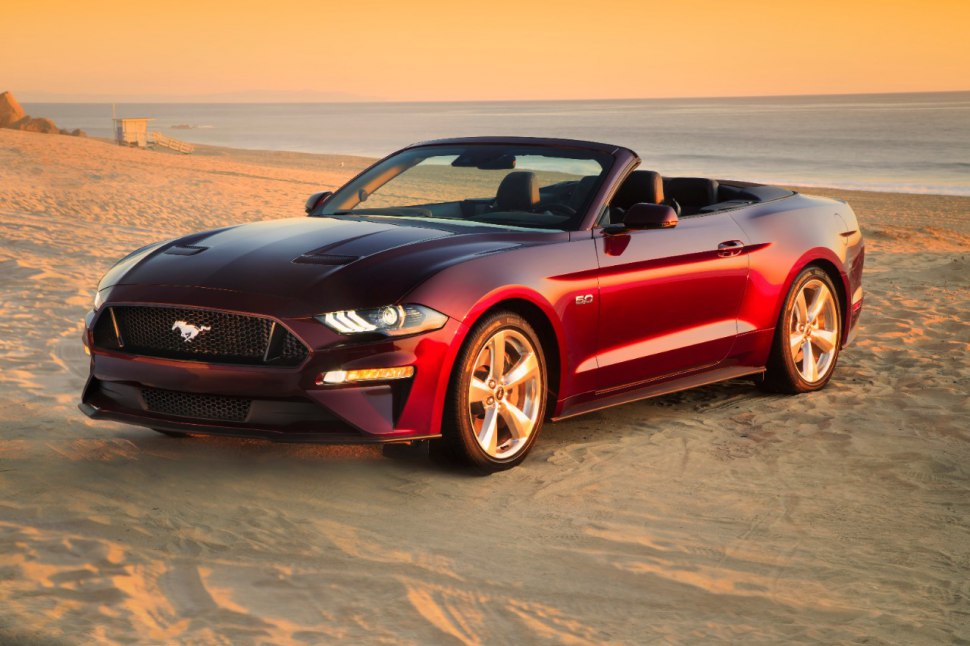
Ford Mustang Convertible VI (facelift 2017) 2.3 GTDi EcoBoost (310 Hp)
The Ford Mustang Convertible VI (facelift 2017) 2.3 GTDi EcoBoost (310 Hp) represents a significant evolution in the storied history of the iconic American pony car. Introduced as part of the sixth generation’s mid-cycle refresh for the 2018 model year, this particular variant offered a compelling blend of classic Mustang styling, open-air driving pleasure, and modern, efficient turbocharged performance. While the Mustang has long been synonymous with V8 power, the 2.3-liter EcoBoost engine carved out a crucial niche, appealing to a broader international audience and those seeking a more fuel-conscious yet still engaging driving experience. This generation, produced from 2017 to 2023, solidified the Mustang’s global presence, making it a true world car while retaining its quintessential American character.
The Evolution of the Ford Mustang Convertible VI (facelift 2017)
The sixth generation of the Ford Mustang, internally known as S550, marked a radical departure for the nameplate, introducing an independent rear suspension across the lineup for the first time in its history. This fundamental change drastically improved the car’s handling dynamics and ride comfort, making it a more sophisticated and competitive sports car on a global stage. The 2017 facelift, often referred to as the 2018 model year refresh, brought a host of updates designed to sharpen its aesthetics, enhance its technology, and refine its powertrain options. For the convertible, these changes translated into a more aggressive front fascia, revised LED lighting signatures, and subtle aerodynamic tweaks, ensuring the open-top variant maintained its visual appeal and modern stance. The 2.3 GTDi EcoBoost engine option became a cornerstone of this updated strategy, offering a compelling alternative to the traditional V8.
Engine and Performance
At the heart of the Ford Mustang Convertible VI (facelift 2017) 2.3 GTDi EcoBoost (310 Hp) lies Ford’s acclaimed 2.3-liter (2254 cm³) GTDi EcoBoost inline-four engine. This sophisticated powerplant, featuring direct fuel injection and a turbocharger with an intercooler, was engineered to deliver robust performance while adhering to contemporary efficiency standards. It generates an impressive 310 horsepower at 5500 rpm and a substantial 350.34 lb-ft of torque at a relatively low 3000 rpm. This torque delivery makes the EcoBoost Mustang feel responsive and eager, particularly in urban driving and highway passing maneuvers.
The engine’s layout is front, longitudinal, driving the rear wheels, a classic configuration for a pony car that ensures a traditional, engaging driving feel. Power is managed through a standard 6-speed manual transmission, offering enthusiasts a direct and tactile connection to the car’s performance. With a power-to-weight ratio of 5.4 kg/Hp (184.4 Hp/tonne) and a torque-to-weight ratio of 3.5 kg/Nm (282.6 Nm/tonne), the EcoBoost convertible provides lively acceleration and a spirited character that belies its four-cylinder displacement. Its performance figures demonstrate that modern engine technology can deliver true Mustang spirit without requiring a large-displacement V8.
Fuel efficiency, a key selling point for the EcoBoost, is commendable for a performance convertible. The combined fuel economy is rated at 9.4 liters per 100 km (25 US mpg), with urban consumption at 11.2 l/100 km (21 US mpg) and extra-urban at 7.5 l/100 km (31.4 US mpg). These figures highlight the engine’s ability to offer a balance of power and economy, making it a practical choice for daily driving or longer road trips. The engine’s high compression ratio of 9.5:1 further contributes to its efficiency and responsiveness.
Design and Features
The Ford Mustang Convertible VI (facelift 2017) maintains the aggressive and muscular styling that has defined the Mustang for decades, now updated with contemporary design cues. As a two-door, four-seat cabriolet, it offers the quintessential open-air driving experience, allowing occupants to enjoy the thrill of the road with the top down. The facelift introduced a more streamlined hood, redesigned front grille, and new LED headlamps and taillamps, giving the car a more sophisticated and modern aesthetic while retaining its unmistakable Mustang identity.
Dimensionally, the convertible measures 188.5 inches in length, 75.39 inches in width (81.89 inches including mirrors), and 54.88 inches in height, with a wheelbase of 107.09 inches. These proportions contribute to its commanding road presence and stable handling. The curb weight of 3705.97 lbs (1681 kg) is well-managed, contributing to the car’s agile feel.
Underneath its striking exterior, the Mustang Convertible features a sophisticated chassis. The front suspension employs an independent McPherson-type setup with coil springs and an anti-roll bar, while the rear utilizes an independent multi-link spring suspension with a stabilizer. This advanced suspension architecture, a hallmark of the S550 generation, provides precise handling, reduced body roll, and a comfortable ride, a significant upgrade from previous generations. Braking is handled by ventilated discs both front and rear, ensuring strong stopping power, complemented by an Anti-lock Braking System (ABS) for enhanced safety and control. The steering system is a responsive rack-and-pinion type, providing direct feedback to the driver. Despite its performance focus, the convertible offers a practical trunk space of 11.41 cubic feet (323 liters), making it suitable for weekend getaways. The fuel tank capacity is 15.59 US gallons (59 liters).
Technical Specifications
| General Information | |
|---|---|
| Brand | Ford |
| Model | Mustang |
| Generation | Mustang Convertible VI (facelift 2017) |
| Type (Engine) | 2.3 GTDi EcoBoost (310 Hp) |
| Start of Production | 2017 year |
| End of Production | 2023 year |
| Powertrain Architecture | Internal Combustion engine |
| Body Type | Cabriolet |
| Seats | 4 |
| Doors | 2 |
| Performance Specifications | |
| Fuel Consumption (Urban) | 11.2 l/100 km (21 US mpg) |
| Fuel Consumption (Extra Urban) | 7.5 l/100 km (31.4 US mpg) |
| Fuel Consumption (Combined) | 9.4 l/100 km (25 US mpg) |
| Fuel Type | Petrol (Gasoline) |
| Weight-to-Power Ratio | 5.4 kg/Hp, 184.4 Hp/tonne |
| Weight-to-Torque Ratio | 3.5 kg/Nm, 282.6 Nm/tonne |
| Engine Specifications | |
| Power | 310 Hp @ 5500 rpm |
| Power per Liter | 137.5 Hp/l |
| Torque | 475 Nm (350.34 lb-ft) @ 3000 rpm |
| Engine Layout | Front, Longitudinal |
| Engine Model/Code | EcoBoost |
| Engine Displacement | 2254 cm³ (137.55 cu. in.) |
| Number of Cylinders | 4 |
| Engine Configuration | Inline |
| Cylinder Bore | 87.5 mm (3.44 in.) |
| Piston Stroke | 94 mm (3.7 in.) |
| Compression Ratio | 9.5:1 |
| Fuel Injection System | Direct injection |
| Engine Aspiration | Turbocharger, Intercooler |
| Engine Oil Capacity | 5.67 l (5.99 US qt) |
| Engine Oil Specification | Not specified |
| Coolant Capacity | 8.96 l (9.47 US qt) |
| Space, Volume and Weights | |
| Kerb Weight | 1681 kg (3705.97 lbs) |
| Trunk (Boot) Space – Minimum | 323 l (11.41 cu. ft.) |
| Fuel Tank Capacity | 59 l (15.59 US gal) |
| Dimensions | |
| Length | 4788 mm (188.5 in.) |
| Width | 1915 mm (75.39 in.) |
| Width with Mirrors Folded | 1933 mm (76.1 in.) |
| Width Including Mirrors | 2080 mm (81.89 in.) |
| Height | 1394 mm (54.88 in.) |
| Wheelbase | 2720 mm (107.09 in.) |
| Front Track | 1585 mm (62.4 in.) |
| Rear (Back) Track | 1654 mm (65.12 in.) |
| Drivetrain, Brakes and Suspension Specifications | |
| Drivetrain Architecture | The Internal combustion engine (ICE) drives the rear wheels of the vehicle. |
| Drive Wheel | Rear wheel drive |
| Number of Gears and Type of Gearbox | 6 gears, manual transmission |
| Front Suspension | Independent, type McPherson with coil spring and anti-roll bar |
| Rear Suspension | Independent multi-link spring suspension with stabilizer |
| Front Brakes | Ventilated discs |
| Rear Brakes | Ventilated discs |
| Assisting Systems | ABS (Anti-lock braking system) |
| Steering Type | Steering rack and pinion |
Legacy and Market Impact
The Ford Mustang Convertible VI (facelift 2017) 2.3 GTDi EcoBoost (310 Hp) played a pivotal role in broadening the Mustang’s appeal and solidifying its position as the world’s best-selling sports coupe. Historically, the Mustang was a quintessentially American product, but the S550 generation was explicitly designed for global markets, with right-hand drive versions and the EcoBoost engine being key to its international success. The EcoBoost option allowed Ford to offer the Mustang in regions with higher fuel taxes or where larger displacement engines were less practical or desirable, without sacrificing the car’s performance credentials entirely.
In the North American market, the EcoBoost Mustang Convertible offered a compelling alternative to its V8-powered GT sibling. It attracted buyers who desired the iconic Mustang styling and rear-wheel-drive dynamics but preferred better fuel economy or a lower entry price point. It competed indirectly with other performance-oriented four-cylinder models like the Chevrolet Camaro 2.0T and even some European sports coupes, offering a unique blend of muscle car presence with modern efficiency. While purists might always gravitate towards the V8, the EcoBoost variant proved that a four-cylinder Mustang could still deliver a thrilling and authentic experience, especially in convertible form where the joy of open-air driving often takes precedence over raw, unadulterated power.
The Mustang’s reputation for customization and a vibrant aftermarket scene also extended to the EcoBoost models, allowing owners to personalize their vehicles and further enhance performance. Its introduction underscored Ford’s commitment to technology and efficiency across its performance lineup, demonstrating that the future of performance cars could embrace smaller, turbocharged engines without losing their soul. The 2017 facelifted EcoBoost Convertible, therefore, stands as a testament to the Mustang’s adaptability and enduring legacy, successfully navigating changing market demands while remaining true to its roots as an accessible, exciting, and stylish American icon. Its production run until 2023 ensured its presence as a key model in the lineup for several years, influencing both Ford’s product strategy and the broader sports car market.