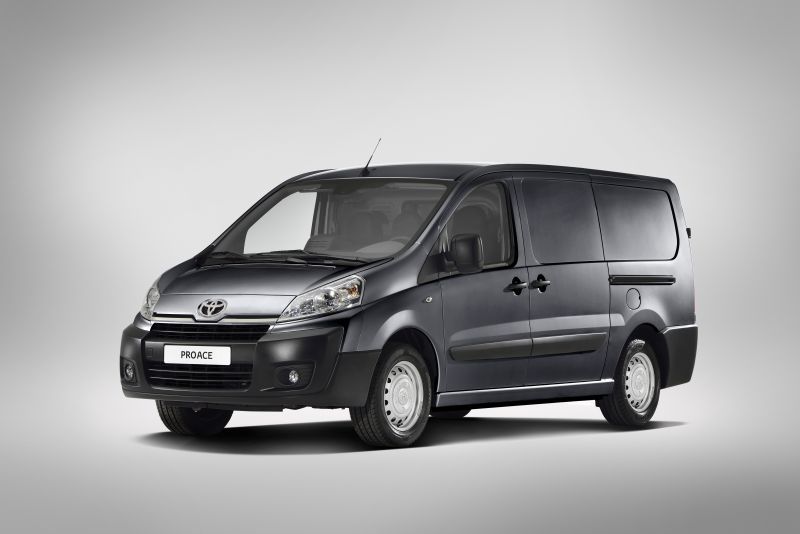
The Toyota Proace 2.0 D4-D (128 Hp) L2H1: A European Workhorse
The Toyota Proace, specifically the 2.0 D4-D (128 Hp) L2H1 variant, represents Toyota’s strategic entry and significant presence in the competitive European light commercial vehicle (LCV) market. Introduced in 2013 and produced through 2016, this first-generation Proace was the result of a collaboration between Toyota and the PSA Group (Peugeot-Citroën), essentially a rebadged version of the Citroën Jumpy, Fiat Scudo, and Peugeot Expert. This partnership allowed Toyota to offer a robust and versatile van tailored to the diverse needs of European businesses without developing an entirely new platform from scratch. The Proace carved out a niche as a practical, efficient, and reliable commercial van, embodying Toyota’s renowned quality standards within a proven and popular European van architecture. The L2H1 designation signifies its long wheelbase (L2) and standard roof height (H1), making it a versatile choice for a wide array of commercial applications, from cargo transport to specialized conversions, offering a balance of cargo capacity and maneuverability.
Engine and Performance of the Toyota Proace 2.0 D4-D (128 Hp) L2H1
At the heart of the **Toyota Proace 2.0 D4-D (128 Hp) L2H1** lies a dependable 2.0-liter (1997 cm3 or 121.86 cubic inches) inline four-cylinder turbo-diesel engine. Designated with the model code 4WZ-FTV, this powerplant is engineered for efficiency and durability, critical attributes for any commercial vehicle. It utilizes a common rail fuel injection system and is equipped with a turbocharger and intercooler, ensuring optimal air-fuel mixture and enhanced power delivery across the rev range. This configuration allows the engine to produce a respectable 128 horsepower at 4000 rpm, providing ample power for urban deliveries and highway cruising alike. More importantly for a commercial vehicle, the engine delivers a substantial 236.02 lb.-ft. of torque at a low 2000 rpm, crucial for hauling heavy loads and maintaining performance even when fully laden.
Power is channeled to the front wheels via a smooth-shifting 6-speed manual transmission, offering drivers precise control and contributing to the vehicle’s overall fuel efficiency. The powertrain architecture is a front, transverse layout, driving the front wheels, which is a common and efficient setup for light commercial vehicles. Performance figures indicate that the Proace 2.0 D4-D (128 Hp) L2H1 can accelerate from 0 to 60 mph in a calculated 12.4 seconds, with a top speed of approximately 105.63 mph (170 km/h). While not built for speed, these figures are more than adequate for its intended commercial duties. Fuel economy is a strong suit, with a combined cycle rating of 36.8 US mpg (6.4 l/100 km), demonstrating its cost-effectiveness over long periods of operation. The engine also meets the Euro 5 emission standard, incorporating a particulate filter to reduce environmental impact, a key consideration for fleet operators in Europe.
Design and Features: Practicality Meets Utility
The design philosophy of the Toyota Proace 2.0 D4-D (128 Hp) L2H1 prioritizes functionality and practicality, typical of a European light commercial van. While categorized as a “Minivan” in some contexts, it is primarily configured as a panel van or a crew van, designed to transport goods or a combination of goods and passengers. This L2H1 variant features a length of 202.48 inches (5143 mm), a width of 74.61 inches (1895 mm), and a height of 77.95 inches (1980 mm), providing a substantial cargo volume while remaining maneuverable in urban environments. The wheelbase stretches 122.91 inches (3122 mm), contributing to a stable ride and generous interior space.
The vehicle typically offers seating for three occupants in the front, with 5 or 6 doors depending on the configuration (including rear barn doors or a tailgate, and sliding side doors). The robust body structure is designed to withstand the rigors of daily commercial use. Key features enhancing its utility include a maximum payload capacity ranging from 2266.35 to 2506.66 lbs. (1028-1137 kg), and a substantial permissible trailer load with brakes of 4409.25 lbs. (2000 kg). The front suspension utilizes a double wishbone setup, while the rear features a semi-independent coil spring system, ensuring a comfortable ride even under load. Braking is handled by ventilated discs at the front and disc brakes at the rear, complemented by an Anti-lock Braking System (ABS) for enhanced safety. Electric power steering and a tight minimum turning circle of 41.34 ft. (12.6 m) further aid maneuverability in tight city streets and loading docks. The vehicle rides on 215/60 R16 tires mounted on 7J x 16 wheel rims, providing a good balance of load-bearing capability and ride comfort.
Technical Specifications
| Category | Specification | Value |
|---|---|---|
| General Information | ||
| Brand | Toyota | Proace |
| Model | Generation | Proace |
| Type (Engine) | 2.0 D4-D (128 Hp) L2H1 | |
| Production Years | Start – End | 2013 – 2016 |
| Powertrain Architecture | Internal Combustion engine | |
| Body type | Minivan (Commercial Van) | |
| Seats | 3 | |
| Doors | 5/6 | |
| Performance Specs | ||
| Fuel consumption (urban) | 7.6 l/100 km (30.9 US mpg) | |
| Fuel consumption (extra urban) | 5.8 l/100 km (40.6 US mpg) | |
| Fuel consumption (combined) | 6.4 l/100 km (36.8 US mpg) | |
| CO2 emissions | 168 g/km | |
| Fuel Type | Diesel | |
| Acceleration 0 – 62 mph | 13 sec | |
| Acceleration 0 – 60 mph (Calculated) | 12.4 sec | |
| Maximum speed | 105.63 mph (170 km/h) | |
| Emission standard | Euro 5 | |
| Weight-to-power ratio | 14 kg/Hp (71.3 Hp/tonne) | |
| Weight-to-torque ratio | 5.6 kg/Nm (178.3 Nm/tonne) | |
| Engine Specs | ||
| Power | 128 Hp @ 4000 rpm | |
| Power per liter | 64.1 Hp/l | |
| Torque | 236.02 lb.-ft. (320 Nm) @ 2000 rpm | |
| Engine layout | Front, Transverse | |
| Engine Model/Code | 4WZ-FTV | |
| Engine displacement | 1997 cm3 (121.86 cu. in.) | |
| Number of cylinders | 4 | |
| Engine configuration | Inline | |
| Cylinder Bore | 3.35 in. (85 mm) | |
| Piston Stroke | 3.46 in. (88 mm) | |
| Compression ratio | 16:1 | |
| Fuel injection system | Diesel Commonrail | |
| Engine aspiration | Turbocharger, Intercooler | |
| Valvetrain | DOHC | |
| Engine oil capacity | 5.28 US qt (5 l) | |
| Engine systems | Particulate filter | |
| Space, Volume and Weights | ||
| Kerb Weight | 3957.3 – 4197.6 lbs. (1795-1904 kg) | |
| Max. weight | 6463.95 lbs. (2932 kg) | |
| Max load | 2266.35 – 2506.66 lbs. (1028-1137 kg) | |
| Fuel tank capacity | 21.13 US gal (80 l) | |
| Max. roof load | 176.37 lbs. (80 kg) | |
| Permitted trailer load with brakes (12%) | 4409.25 lbs. (2000 kg) | |
| Permitted trailer load without brakes | 1653.47 lbs. (750 kg) | |
| Dimensions | ||
| Length | 202.48 in. (5143 mm) | |
| Width | 74.61 in. (1895 mm) | |
| Height | 77.95 in. (1980 mm) | |
| Wheelbase | 122.91 in. (3122 mm) | |
| Front track | 61.81 in. (1570 mm) | |
| Rear (Back) track | 63.15 in. (1604 mm) | |
| Minimum turning circle (turning diameter) | 41.34 ft. (12.6 m) | |
| Drivetrain, Brakes and Suspension Specs | ||
| Drivetrain Architecture | Internal combustion engine drives the front wheels. | |
| Drive wheel | Front wheel drive | |
| Number of gears and type of gearbox | 6 gears, manual transmission | |
| Front suspension | Double wishbone | |
| Rear suspension | Semi-independent, coil spring | |
| Front brakes | Ventilated discs | |
| Rear brakes | Disc | |
| Assisting systems | ABS (Anti-lock braking system) | |
| Steering type | Steering rack and pinion | |
| Power steering | Electric Steering | |
| Tires size | 215/60 R16 | |
| Wheel rims size | 7J x 16 | |
Legacy and Market Impact in Europe
The Toyota Proace 2.0 D4-D (128 Hp) L2H1, as part of the first-generation Proace lineup, played a crucial role in Toyota’s strategy to bolster its light commercial vehicle offerings in Europe. While not a household name in the North American market, the Proace established itself as a credible and competitive option in a segment dominated by established players. Its collaborative origins with the PSA Group were a smart move, allowing Toyota to leverage a proven platform known for its robustness and adaptability, while infusing it with Toyota’s legendary reputation for reliability and customer service.
In the fiercely contested European LCV market, the Proace faced stiff competition from rivals such as the Ford Transit Custom, Volkswagen Transporter, Mercedes-Benz Vito, and the Renault Trafic, as well as its platform siblings from Peugeot, Citroën, and Fiat. What allowed the Proace to stand out was its combination of a highly efficient and torquey diesel engine, practical cargo solutions (especially in the L2H1 configuration), and the peace of mind associated with the Toyota brand. For businesses, the promise of low running costs, good fuel economy, and strong residual values made it an attractive proposition.
The first-generation Proace, including the 2.0 D4-D (128 Hp) L2H1, was well-regarded for its comfortable driving dynamics, especially for a commercial vehicle, and its ability to handle various loads with composure. Its moderate dimensions made it suitable for both urban deliveries and longer-haul tasks, appealing to a broad spectrum of commercial users, from small businesses to larger fleet operators. The model’s success laid the groundwork for subsequent generations of the Proace, which continued the collaboration with PSA Group, evolving with newer technologies, improved efficiency, and enhanced safety features. The 2013-2016 Proace, therefore, isn’t just a footnote; it’s a foundational chapter in Toyota’s enduring commitment to the European commercial vehicle segment, demonstrating the brand’s adaptability and strategic partnerships to meet specific market demands.