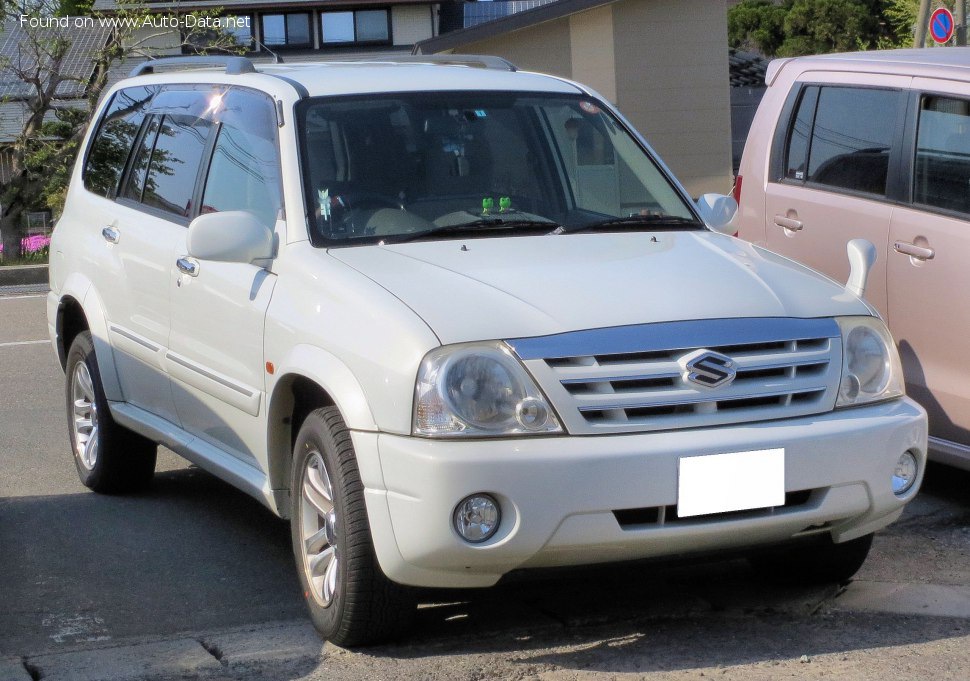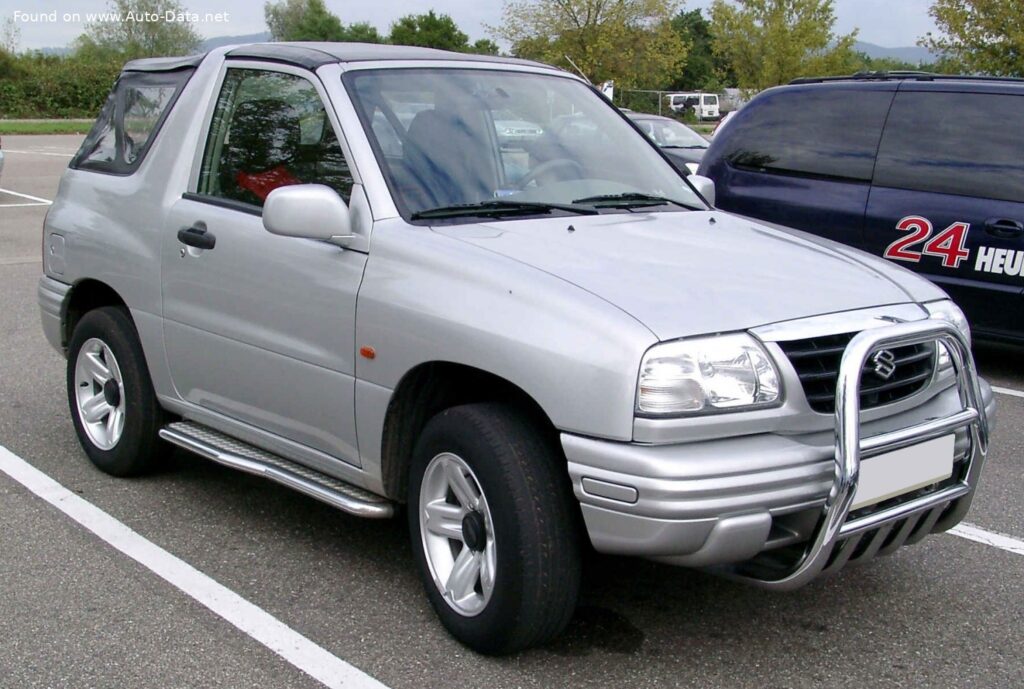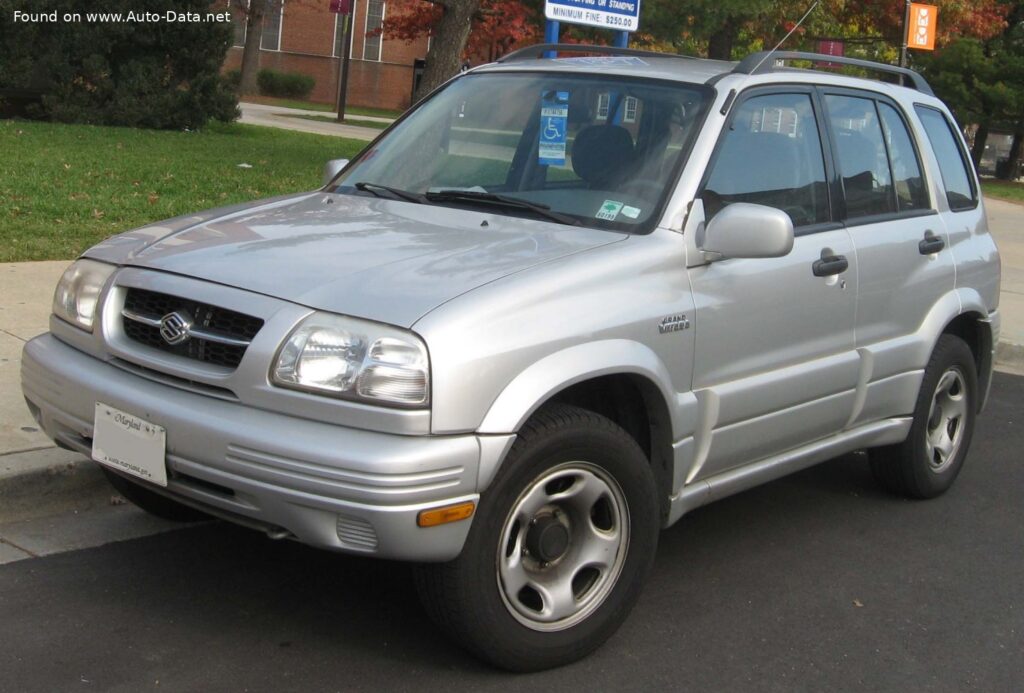
The Suzuki Grand Vitara (FT,GT) 2.5 i V6 (158 Hp) Automatic: A Compact SUV with Rugged Ambition
The Suzuki Grand Vitara (FT,GT) represents a significant evolution in Suzuki’s lineage of compact sport utility vehicles, building upon the heritage established by its predecessors, the Vitara and Sidekick. Introduced globally in various markets, the 2.5 i V6 (158 Hp) Automatic variant, produced from 2002 to 2005, stood out as a more potent and refined offering within the first generation of models to officially carry the “Grand Vitara” nameplate. Positioned in the burgeoning compact SUV segment, this model aimed to blend the traditional ruggedness and off-road capability Suzuki was known for with enhanced on-road comfort and a more sophisticated powertrain. It offered consumers a compelling package for both urban commuting and adventurous excursions, maintaining Suzuki’s reputation for durable and practical 4×4 vehicles.
Engine and Performance of the Suzuki Grand Vitara (FT,GT)
At the heart of this particular Grand Vitara model was a robust 2.5-liter V6 engine, internally designated as the H25A. This naturally aspirated, multi-port manifold injection engine featured a Double Overhead Camshaft (DOHC) valvetrain with four valves per cylinder, a configuration that contributed to its smooth operation and respectable power delivery. With an engine displacement of 2493 cm³ (152.13 cubic inches), it generated a healthy 158 horsepower at 6200 rpm, providing ample thrust for a vehicle of its size and class. The torque output was equally competitive, peaking at 213 Nm (157.1 lb-ft) at a relatively accessible 3500 rpm, which was beneficial for both acceleration and off-road tractability.
Power was channeled through a 4-speed automatic transmission to an All-Wheel Drive (4×4) system, a hallmark of Suzuki’s SUV offerings, emphasizing its capability beyond paved roads. This drivetrain configuration allowed the Grand Vitara to accelerate from 0 to 60 mph in a reasonable 10.5 seconds, with a top speed reaching 105.63 mph (170 km/h). While not a performance-oriented SUV, these figures were more than adequate for everyday driving and highway cruising.
Despite its V6 engine and 4×4 capability, the Suzuki Grand Vitara (FT,GT) aimed for a balance of power and efficiency for its time. Fuel consumption figures stood at an estimated 15.9 US mpg in urban conditions and a more economical 26.7 US mpg on the extra-urban cycle. This placed it competitively within its segment, considering its V6 engine and traditional SUV construction. The engine’s layout was front-mounted and longitudinal, aiding in weight distribution and contributing to its balanced handling characteristics.
Design and Features
The Suzuki Grand Vitara (FT,GT) 2.5 i V6 (158 Hp) Automatic was offered exclusively as a 5-door SUV, designed to accommodate five occupants comfortably. Its exterior design was characterized by a practical yet appealing aesthetic, featuring a relatively compact footprint that made it maneuverable in urban environments while still conveying a sense of ruggedness. With a length of 165.94 inches (4215 mm), a width of 70.08 inches (1780 mm), and a height of 68.5 inches (1740 mm), it struck a good balance between interior space and exterior dimensions. The wheelbase measured 97.64 inches (2480 mm), contributing to its stable ride.
Inside, the Grand Vitara offered a functional cabin focused on utility and durability. The five-seat configuration provided decent passenger room, and the cargo area was versatile. With the rear seats in place, it offered 9.11 cubic feet (258 liters) of trunk space, which could expand significantly to 38.14 cubic feet (1080 liters) with the rear seats folded, catering to various hauling needs.
In terms of chassis and suspension, the Grand Vitara employed a Spring Strut setup at the front and a Coil spring arrangement at the rear. This combination, while basic by modern standards, provided a good compromise between on-road comfort and off-road articulation, consistent with its dual-purpose nature. The vehicle was fitted with 235/60 R16 tires, offering a balance of grip and ride quality. Braking power was provided by ventilated discs at the front and disc brakes at the rear, augmented by an Anti-lock Braking System (ABS) for enhanced safety during emergency stops. The steering system was a hydraulic rack and pinion setup, providing direct feedback to the driver.
Technical Specifications for the Suzuki Grand Vitara (FT,GT) 2.5 i V6 (158 Hp) Automatic
| Category | Specification | Value |
|---|---|---|
| General Information | ||
| Brand | Suzuki | |
| Model | Grand Vitara | |
| Generation | Grand Vitara (FT,GT) | |
| Type (Engine) | 2.5 i V6 (158 Hp) Automatic | |
| Start of Production | 2002 year | |
| End of Production | 2005 year | |
| Powertrain Architecture | Internal Combustion engine | |
| Body type | SUV | |
| Seats | 5 | |
| Doors | 5 | |
| Performance Specs | ||
| Fuel consumption (economy) – urban | 14.8 l/100 km (15.9 US mpg) | |
| Fuel consumption (economy) – extra urban | 8.8 l/100 km (26.7 US mpg) | |
| Fuel Type | Petrol (Gasoline) | |
| Acceleration 0 – 60 mph | 10.5 sec | |
| Acceleration 0 – 100 km/h | 11.1 sec | |
| Maximum speed | 170 km/h (105.63 mph) | |
| Weight-to-power ratio | 8.9 kg/Hp (112.5 Hp/tonne) | |
| Weight-to-torque ratio | 6.6 kg/Nm (151.6 Nm/tonne) | |
| Engine Specs | ||
| Power | 158 Hp @ 6200 rpm | |
| Power per liter | 63.4 Hp/l | |
| Torque | 213 Nm (157.1 lb-ft) @ 3500 rpm | |
| Engine layout | Front, Longitudinal | |
| Engine Model/Code | H25A | |
| Engine displacement | 2493 cm³ (152.13 cu. in.) | |
| Number of cylinders | 6 | |
| Engine configuration | V-engine | |
| Cylinder Bore | 84 mm (3.31 in.) | |
| Piston Stroke | 75 mm (2.95 in.) | |
| Compression ratio | 9.5:1 | |
| Number of valves per cylinder | 4 | |
| Fuel injection system | Multi-port manifold injection | |
| Engine aspiration | Naturally aspirated engine | |
| Valvetrain | DOHC | |
| Engine oil capacity | 5.5 l (5.81 US qt) | |
| Engine oil specification | Not specified | |
| Coolant | 8 l (8.45 US qt) | |
| Space, Volume and Weights | ||
| Kerb Weight | 1405 kg (3097.49 lbs) | |
| Max. weight | 1950 kg (4299.01 lbs) | |
| Max load | 545 kg (1201.52 lbs) | |
| Trunk (boot) space – minimum | 258 l (9.11 cu. ft.) | |
| Trunk (boot) space – maximum | 1080 l (38.14 cu. ft.) | |
| Fuel tank capacity | 66 l (17.44 US gal) | |
| Dimensions | ||
| Length | 4215 mm (165.94 in.) | |
| Width | 1780 mm (70.08 in.) | |
| Height | 1740 mm (68.5 in.) | |
| Wheelbase | 2480 mm (97.64 in.) | |
| Front track | 1500 mm (59.06 in.) | |
| Rear (Back) track | 1500 mm (59.06 in.) | |
| Minimum turning circle (turning diameter) | 9.4 m (30.84 ft.) | |
| Drivetrain, Brakes and Suspension Specs | ||
| Drive wheel | All wheel drive (4×4) | |
| Number of gears and type of gearbox | 4 gears, automatic transmission | |
| Front suspension | Spring Strut | |
| Rear suspension | Coil spring | |
| Front brakes | Ventilated discs | |
| Rear brakes | Disc | |
| Assisting systems | ABS (Anti-lock braking system) | |
| Steering type | Steering rack and pinion | |
| Power steering | Hydraulic Steering | |
| Tires size | 235/60 R16 | |
Legacy and Market Impact of the Suzuki Grand Vitara (FT,GT)
The Suzuki Grand Vitara (FT,GT) 2.5 i V6 (158 Hp) Automatic carved out a notable niche in the North American compact SUV market during its production run from 2002 to 2005. Suzuki had long been recognized for its rugged, capable, and often overlooked 4×4 vehicles, and the Grand Vitara continued this tradition while offering a more refined and family-friendly package. Its V6 engine provided a distinct advantage over many four-cylinder competitors, offering smoother power delivery and improved towing capacity, which appealed to buyers looking for a bit more capability without moving into a full-size SUV.
In a segment increasingly dominated by car-based crossovers like the Honda CR-V and Toyota RAV4, the Grand Vitara maintained a more traditional SUV construction, often featuring a body-on-frame chassis and a robust 4×4 system (typically with a low-range transfer case in many trims, although not explicitly detailed in the provided data for this specific variant, it was a common feature of the FT/GT generation). This made it a more genuinely capable off-roader than many of its rivals, appealing to a demographic that valued true all-terrain prowess alongside everyday usability. Its direct competitors in the US market included the Ford Escape, Jeep Liberty, and Hyundai Santa Fe, each offering a different blend of on-road comfort and off-road ruggedness. The Grand Vitara positioned itself as a durable, reliable, and value-oriented choice for those seeking a balance of both.
The reputation of the Grand Vitara was largely positive, lauded for its sturdy build quality, dependable mechanicals, and surprising off-road performance for its compact size. While its interior might have been considered less luxurious than some rivals, it was practical and well-suited to its intended purpose. The 4-speed automatic transmission, while effective, was becoming somewhat dated by the end of its production run, as many competitors began offering 5-speed or continuously variable transmissions (CVTs). However, its simplicity contributed to its perceived reliability.
Ultimately, the Grand Vitara (FT,GT) played a crucial role in Suzuki’s global strategy, especially in North America, by demonstrating the brand’s ability to evolve its SUV offerings while retaining its core values. It helped bridge the gap between the more utilitarian Sidekick/Vitara and the subsequent, more modernized generations of the Grand Vitara. Its legacy is one of a capable, no-nonsense compact SUV that offered genuine off-road credentials in a market that was increasingly shifting towards softer, car-like crossovers. It remains a testament to Suzuki’s engineering philosophy of building durable and versatile vehicles for a wide range of uses.