
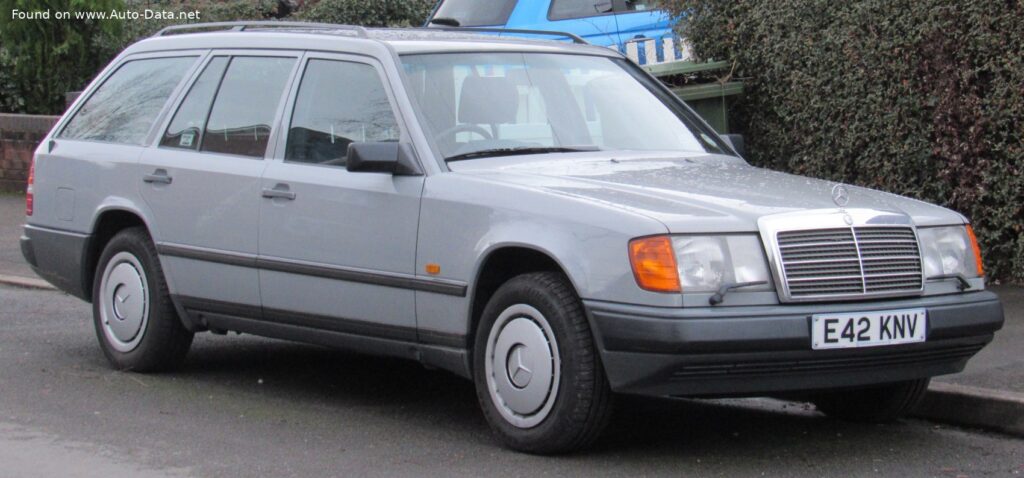
Introduction to the Mercedes-Benz S124 250 TD
The Mercedes-Benz S124 250 TD represents a significant chapter in the history of premium executive automobiles, specifically within the highly acclaimed W124 generation. This particular variant, a station wagon (known as an “estate” in many markets), was produced for a brief period from February to August 1989. As part of the W124 series, which debuted in 1984, the S124 chassis code designated the wagon body style, a highly practical and durable offering from the German automaker. While the W124 sedan and coupe models saw widespread global distribution, including a strong presence in the United States, the diesel S124 wagon, like the 250 TD, was primarily a staple of the European market, where diesel engines and versatile wagons held immense popularity for their combination of efficiency, durability, and cargo-carrying capability. It embodied Mercedes-Benz’s commitment to robust engineering, timeless design, and passenger comfort, establishing a benchmark for its segment.
Engine and Performance of the Mercedes-Benz S124
Under the hood of the Mercedes-Benz S124 250 TD lies a powerplant renowned for its longevity and modest, yet reliable, performance: the OM 602 D 25 / 602.912 engine. This is a 2.5-liter (2497 cubic inches) inline five-cylinder, naturally aspirated diesel engine. Mercedes-Benz’s choice of a five-cylinder configuration was notable, offering a balance between the smoothness of a six-cylinder and the packaging benefits of a four-cylinder, while delivering characteristic diesel torque.
The engine produced a conservative 94 horsepower (HP) at 4600 revolutions per minute (rpm), a figure that, by modern standards, might seem humble. However, its true strength lay in its torque output: 116.53 pound-feet (lb.-ft.) available across a broad and usable range of 2600-3100 rpm. This low-end torque was crucial for the vehicle’s intended purpose – comfortable cruising and effortless load hauling, rather than outright speed.
Power was delivered to the rear wheels via a robust four-speed automatic transmission, a common and reliable setup for Mercedes-Benz models of this era. This drivetrain architecture prioritized smooth shifts and long-term durability over rapid acceleration. Performance figures reflect this philosophy: the S124 250 TD accelerated from 0 to 60 miles per hour (mph) in approximately 17.9 seconds, with a top speed of 99.42 mph. These numbers clearly indicate that the vehicle was designed for steady, comfortable travel on autobahns and highways, not for spirited driving.
Despite its substantial curb weight of 3262.84 pounds, the 250 TD offered commendable fuel efficiency for its time and class, especially for a diesel. Fuel economy ratings were approximately 25.3 US miles per gallon (mpg) in urban driving and an impressive 37.3 US mpg on the highway. This efficiency, combined with a generous 19.02 US gallon fuel tank capacity, provided excellent cruising range, a highly desirable trait for European drivers covering long distances. The engine featured a precombustion chamber injection system and a Single Overhead Camshaft (SOHC) valvetrain, contributing to its renowned reliability and relatively quiet operation for a diesel of its generation.
Design and Features
The Mercedes-Benz S124 250 TD, like all W124 variants, epitomized the brand’s design ethos of understated elegance and functional sophistication. The station wagon body style, with its five doors and seating for five occupants, was a testament to practicality. Designed by Bruno Sacco, the W124 series featured a clean, aerodynamic silhouette that, even decades later, retains a timeless appeal. The S124 wagon seamlessly integrated a long roofline and expansive cargo area without compromising the aesthetic balance of the sedan.
Utility was a cornerstone of the S124’s design. The large rear hatch provided easy access to a cavernous cargo bay, making it ideal for families, professionals, or anyone requiring significant hauling capacity. The robust construction and well-appointed interior materials spoke to Mercedes-Benz’s commitment to quality. While the 250 TD was a more utilitarian offering compared to its gasoline-powered counterparts, it still benefited from the W124’s overall high standards of comfort and refinement.
The chassis and suspension were particularly advanced for the era. The S124 featured a sophisticated independent multi-link rear suspension, a technology that Mercedes-Benz pioneered and refined, providing exceptional ride comfort, stability, and handling characteristics. The front suspension utilized a sturdy wishbone setup. This combination contributed to the W124’s legendary reputation for a smooth, composed ride even over challenging road surfaces, a critical attribute for a long-distance cruiser.
Safety features, though not as extensive as modern vehicles, were advanced for 1989. The S124 250 TD came equipped with Anti-lock Braking System (ABS), providing enhanced control during emergency stops. Braking was handled by disc brakes on both the front and rear wheels, offering reliable stopping power. The steering system was a cone worm with recirculation balls, augmented by hydraulic power steering, providing a precise yet comfortable steering feel. The vehicle rode on 195/65 R15 tires mounted on 9.5J x 15-inch wheel rims, a practical choice balancing comfort and durability.
Technical Specifications
| Category | Specification |
|---|---|
| General Information | |
| Brand | Mercedes-Benz |
| Model | W124 |
| Generation | S124 |
| Type (Engine) | 250 TD (94 Hp) Automatic |
| Start of Production | February, 1989 |
| End of Production | August, 1989 |
| Powertrain Architecture | Internal Combustion Engine |
| Body Type | Station wagon (estate) |
| Seats | 5 |
| Doors | 5 |
| Performance Specs | |
| Fuel Consumption (City) | 9.3 l/100 km (25.3 US mpg) |
| Fuel Consumption (Highway) | 6.3 l/100 km (37.3 US mpg) |
| Fuel Type | Diesel |
| Acceleration 0-60 mph | 17.9 sec |
| Maximum Speed | 99.42 mph (160 km/h) |
| Weight-to-Power Ratio | 15.7 kg/Hp (63.5 Hp/tonne) |
| Weight-to-Torque Ratio | 9.4 kg/Nm (106.8 Nm/tonne) |
| Engine Specs | |
| Power | 94 Hp @ 4600 rpm |
| Power per Liter | 37.6 Hp/l |
| Torque | 116.53 lb.-ft. (158 Nm) @ 2600-3100 rpm |
| Engine Layout | Front, Longitudinal |
| Engine Model/Code | OM 602 D 25 / 602.912 |
| Engine Displacement | 2.5 liters (2497 cm3, 152.38 cu. in.) |
| Number of Cylinders | 5 |
| Engine Configuration | Inline |
| Cylinder Bore | 3.43 in. (87 mm) |
| Piston Stroke | 3.31 in. (84 mm) |
| Compression Ratio | 22:1 |
| Valves per Cylinder | 2 |
| Fuel Injection System | Precombustion chamber injection |
| Engine Aspiration | Naturally aspirated engine |
| Valvetrain | SOHC |
| Engine Oil Capacity | 7.4 US qt (7 l) |
| Coolant Capacity | 10.04 US qt (9.5 l) |
| Space, Volume and Weights | |
| Kerb Weight | 3262.84 lbs. (1480 kg) |
| Max. Weight | 4629.71 lbs. (2100 kg) |
| Max Load | 1366.87 lbs. (620 kg) |
| Fuel Tank Capacity | 19.02 US gal (72 l) |
| Dimensions | |
| Length | 187.6 in. (4765 mm) |
| Width | 68.5 in. (1740 mm) |
| Height | 58.66 in. (1490 mm) |
| Wheelbase | 110.24 in. (2800 mm) |
| Front Track | 58.94 in. (1497 mm) |
| Rear (Back) Track | 58.58 in. (1488 mm) |
| Drivetrain, Brakes and Suspension Specs | |
| Drivetrain Architecture | Internal combustion engine drives the rear wheels. |
| Drive Wheel | Rear wheel drive |
| Number of Gears/Type | 4 gears, automatic transmission |
| Front Suspension | Wishbone |
| Rear Suspension | Independent multi-link suspension |
| Front Brakes | Disc |
| Rear Brakes | Disc |
| Assisting Systems | ABS (Anti-lock braking system) |
| Steering Type | Cone worm with recirculation balls |
| Power Steering | Hydraulic Steering |
| Tires Size (Front/Rear) | 195/65 R15 |
| Wheel Rims Size (Front/Rear) | 9.5J x 15 |
Legacy and Market Impact
The Mercedes-Benz W124 series, including the S124 wagon, is widely regarded as one of the most meticulously engineered and durable automotive platforms ever produced. The Mercedes-Benz S124 250 TD, despite its relatively short production window for this specific engine and transmission combination, contributed significantly to this enduring legacy, particularly in its primary European market.
Its reputation for “over-engineering” meant that components were built to an exceptionally high standard, often exceeding the requirements of typical road use. This resulted in vehicles that could withstand hundreds of thousands of miles with proper maintenance, a testament to Mercedes-Benz’s commitment to quality during that era. The S124 wagon, with its robust diesel engine, became a favored choice for taxi fleets, long-distance travelers, and families who valued reliability, space, and economic running costs above outright performance.
In the European market, the S124 250 TD competed against other premium wagons such as the BMW 5-Series Touring (E34 generation), the Audi 100 Avant (C3 and later C4 generations), and the Volvo 740/940 wagons. While each competitor offered its own blend of attributes, the Mercedes-Benz stood out for its unparalleled build quality, the refined comfort of its ride, and the perceived prestige of the three-pointed star. The diesel variants, in particular, were often chosen for their superior fuel efficiency compared to gasoline engines, an important consideration in regions with higher fuel prices.
While the W124 sedans and coupes were popular in the United States, the diesel S124 wagons were far less common, if officially imported at all, making them somewhat rare and highly sought after by enthusiasts today. Their robust construction and the longevity of the OM 602 diesel engine mean that many S124 250 TD models are still in active service around the world, a clear indicator of their inherent quality and the foresight of their design.
The historical significance of the S124 250 TD lies in its embodiment of a golden age for Mercedes-Benz engineering. It demonstrated that a practical family vehicle could also be a paragon of luxury, durability, and technological sophistication for its time. It solidified the W124 series’ status as a benchmark for executive cars, influencing subsequent generations of premium vehicles and leaving an indelible mark on automotive history. The enduring appeal of these classic wagons among collectors and daily drivers worldwide continues to grow, further cementing their legendary status.
