Volkswagen Multivan (T6) 2.0 TDI (150 Hp): A European Icon of Versatility
The Volkswagen Multivan (T6) represents the sixth generation of Volkswagen’s venerable Transporter series, a lineage tracing its roots back to the iconic Type 2 “Bus.” Specifically, the 2.0 TDI (150 Hp) variant, produced in 2019, stands as a testament to practical engineering, efficiency, and passenger comfort within the European and international markets. While not typically sold in the United States, the Multivan (T6) is a cornerstone of the European large minivan segment, revered for its adaptability for both family transport and business applications. It combines a spacious, configurable interior with a robust, economical diesel powertrain, making it a highly sought-after vehicle for those prioritizing utility and long-distance comfort.
Positioned as a premium offering in the van-derived passenger vehicle category, the Multivan (T6) builds upon decades of evolutionary refinement. The 2019 model year for this specific configuration highlights a period where Volkswagen continued to optimize its TDI engines for performance, efficiency, and adherence to increasingly stringent emission standards, exemplified by its Euro 6d-TEMP-EVAP certification. This particular model, with its 150 horsepower 2.0-liter turbo-diesel engine and a focus on front-wheel drive, embodies the balance between everyday usability and the capability to handle diverse transport needs.
Engine and Performance of the Volkswagen Multivan (T6) 2.0 TDI (150 Hp)
At the heart of this particular Volkswagen Multivan (T6) lies a sophisticated 2.0-liter (1968 cm3 or 120.09 cu. in.) Turbocharged Direct Injection (TDI) diesel engine, designated by the codes EA288, CXFA, or CXHA. This inline four-cylinder engine is transversely mounted at the front and features a Double Overhead Camshaft (DOHC) valvetrain with four valves per cylinder, optimizing airflow and combustion efficiency. The engine’s compression ratio of 15.5:1 is characteristic of a modern diesel, designed to maximize fuel economy and torque output.
The powertrain generates a robust 150 horsepower (Hp) between 3250 and 3750 revolutions per minute (rpm), providing ample power for highway cruising and city driving, even when fully loaded. More significantly for a vehicle of this type, the engine delivers a substantial 250.77 lb.-ft. (340 Nm) of torque, available across a broad and usable range from 1500 to 3000 rpm. This wide torque band ensures strong acceleration from a standstill and effortless overtaking maneuvers, a crucial attribute for a large minivan often used for long journeys or carrying heavy loads. The engine benefits from a common rail fuel injection system, a turbocharger, and an intercooler, all working in concert to enhance performance and fuel atomization.
Power is channeled to the front wheels via a smooth-shifting 6-speed manual transmission, offering the driver direct control over the power delivery. This drivetrain architecture, combined with the diesel engine’s inherent efficiency, results in commendable fuel economy figures for a vehicle of its size. The combined fuel consumption is rated between 34.1 and 32.7 US mpg (6.9-7.2 l/100 km). In urban settings, it achieves 28.3 to 26.7 US mpg, while extra-urban driving can see figures as high as 38.6 to 37.3 US mpg. These figures underscore the Multivan’s suitability for cost-conscious long-distance travel.
Performance-wise, the Multivan (T6) 2.0 TDI (150 Hp) accelerates from 0 to 60 mph in an estimated 12.3 seconds (0-100 km/h in 12.9 seconds), with a maximum speed of 113.09 mph (182 km/h). While not a speed demon, these figures are more than adequate for its intended purpose. The vehicle also incorporates modern efficiency features such as a Start & Stop System and a Particulate filter, helping it meet the stringent Euro 6d-TEMP-EVAP emission standards and reduce its environmental footprint, with CO2 emissions ranging from 181-189 g/km.
Design and Features
Exterior and Dimensions
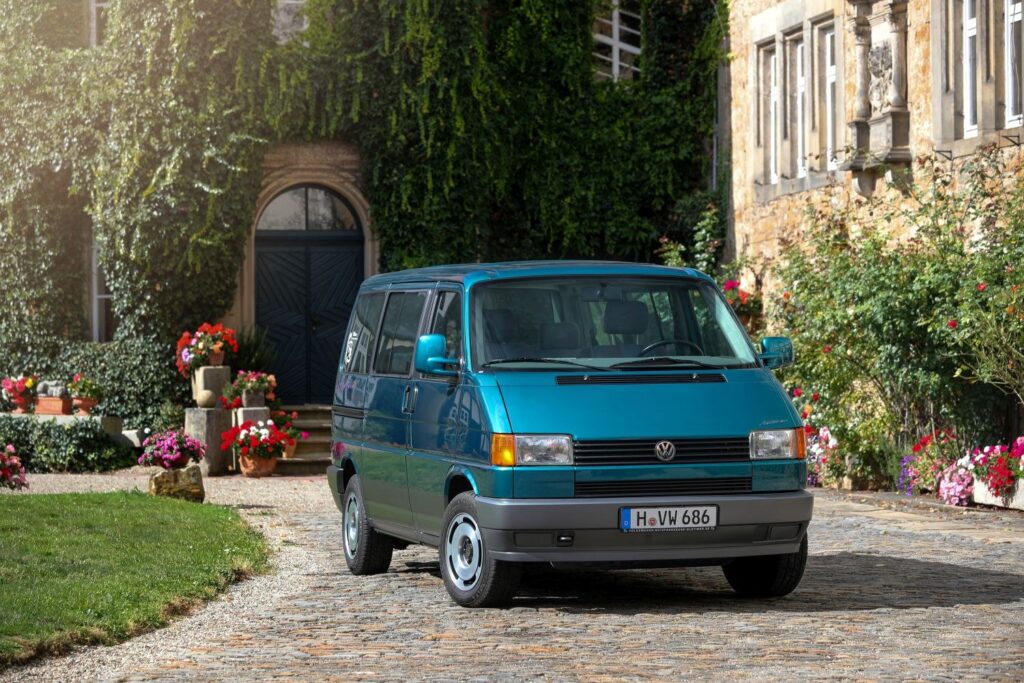
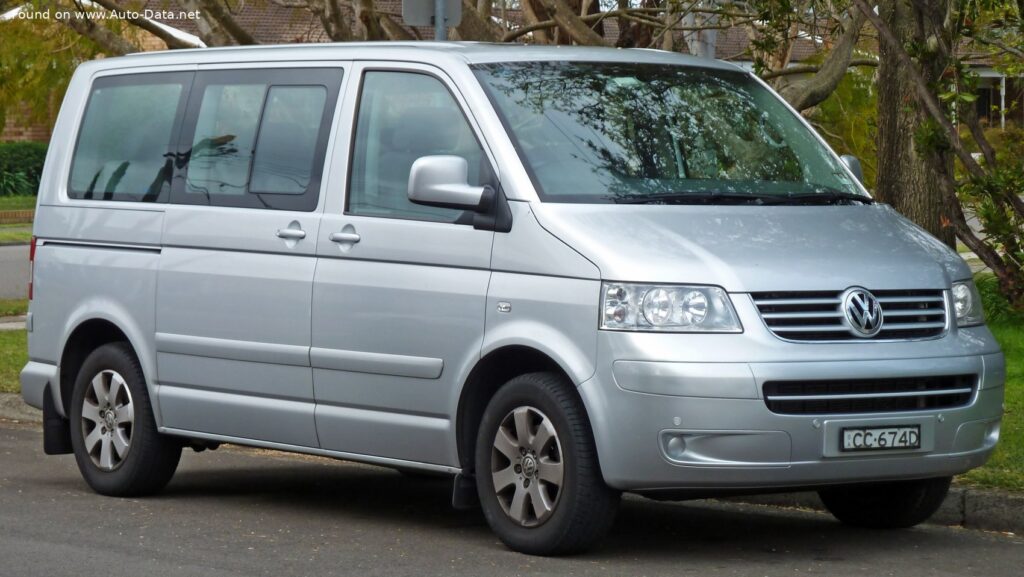
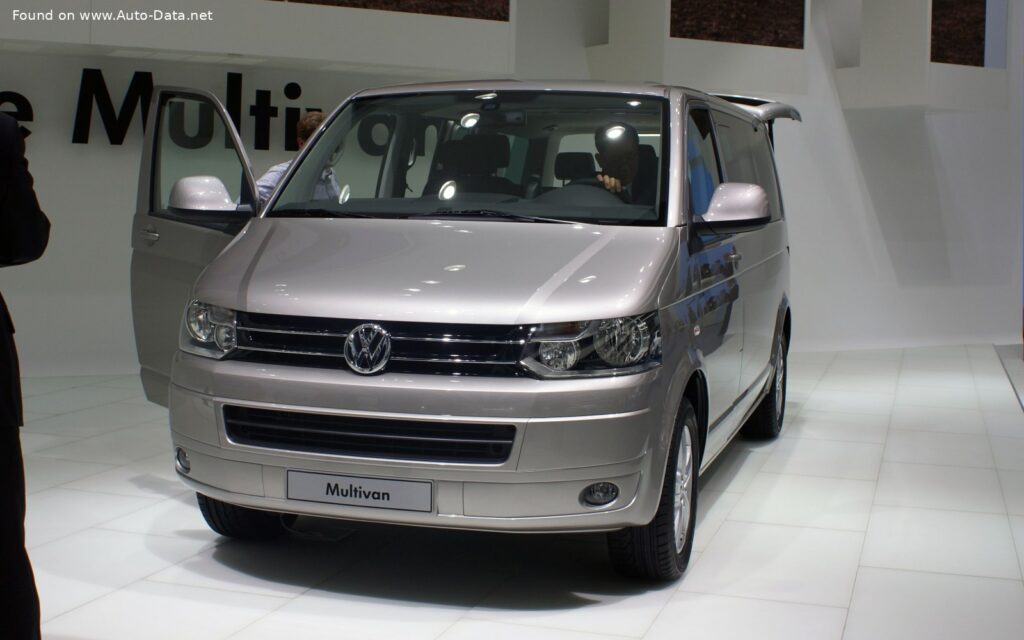
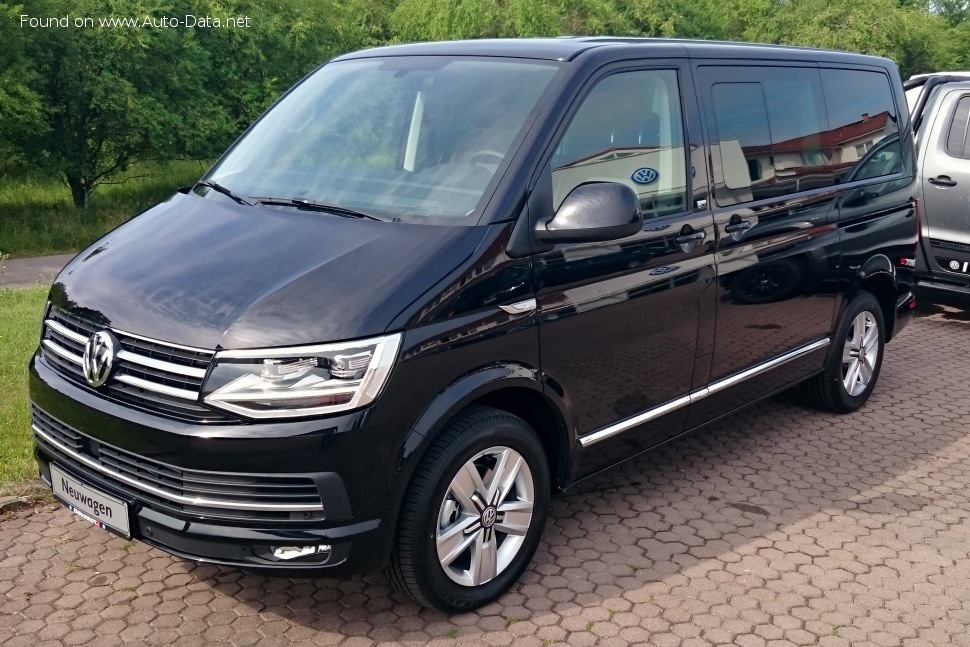
The Volkswagen Multivan (T6) maintains the iconic, boxy yet refined silhouette that has defined the Transporter family for generations. As a minivan body type, its design prioritizes interior volume and practicality. With a length of 193.07 inches (4904 mm), a width of 74.96 inches (1904 mm, or 90.43 inches including mirrors), and a height of 77.56 inches (1970 mm), the Multivan presents a substantial road presence. Its generous 118.11-inch (3000 mm) wheelbase contributes significantly to its stable ride and expansive interior space. The vehicle offers 4 to 5 doors, typically including large sliding rear doors for easy access to the passenger compartment.
The design is characterized by clean lines, a prominent Volkswagen grille, and functional lighting elements. Despite its commercial vehicle roots, the Multivan offers a more passenger-oriented aesthetic compared to its commercial Transporter siblings, with body-colored bumpers and often more upscale wheel and trim options. Ground clearance stands at 7.6 inches (193 mm), providing reasonable capability over varied terrain, while approach and departure angles of 21.8° and 16.7° respectively, along with a ramp-over angle of 14.3°, indicate its capacity for light off-road or uneven surface navigation. The minimum turning circle of 39.04 feet (11.9 m) is commendable for a vehicle of its size, aiding maneuverability in urban environments.
Interior and Practicality
Inside, the Multivan (T6) is designed for maximum flexibility and comfort, offering seating for seven passengers. The interior is highly adaptable, with a rail system that allows seats to be slid, removed, or even swiveled to create different configurations, from a conference-style setup to a vast cargo area. With all rear seats removed or folded, the Multivan boasts an impressive maximum trunk (boot) space of 204.83 cu. ft. (5800 liters), making it exceptionally versatile for carrying large items, sports equipment, or luggage for extended trips.
Key features for passenger comfort and convenience include numerous storage compartments, climate control options, and infotainment systems that would have been current for the 2019 model year. Safety features are comprehensive, including an Anti-lock Braking System (ABS) as standard, along with a robust chassis and multiple airbags (though specific airbag count is not provided in the data). The steering system is a rack and pinion setup with electric power steering, offering precise control and ease of maneuvering.
The suspension system is engineered for comfort and stability, featuring an independent McPherson strut setup with coil springs and an anti-roll bar at the front, and an independent coil spring wishbone design with a transverse stabilizer at the rear. This sophisticated suspension ensures a smooth ride quality, absorbing road imperfections effectively, while maintaining good body control. Braking is handled by ventilated discs both front (308×29.5 mm) and rear (294×22 mm), providing strong and consistent stopping power. The vehicle offers a choice of tire sizes, including 215/65 R16, 235/55 R17, and 255/45 R18, mounted on corresponding wheel rims (6.5J x 16, 7J x 17, 8J x 18), allowing for varying levels of ride comfort and grip.
Technical Specifications: Volkswagen Multivan (T6) 2.0 TDI (150 Hp)
| Category | Specification | US Equivalent |
|---|---|---|
General Information |
||
| Brand | Volkswagen | |
| Model | Multivan | |
| Generation | Multivan (T6) | |
| Type (Engine) | 2.0 TDI (150 Hp) | |
| Start of production | 2019 year | |
| End of production | 2019 year | |
| Powertrain Architecture | Internal Combustion engine | |
| Body type | Minivan | |
| Seats | 7 | |
| Doors | 4-5 | |
Performance Specs |
||
| Fuel consumption (urban) | 8.3-8.8 l/100 km | 28.3 – 26.7 US mpg |
| Fuel consumption (extra urban) | 6.1-6.3 l/100 km | 38.6 – 37.3 US mpg |
| Fuel consumption (combined) | 6.9-7.2 l/100 km | 34.1 – 32.7 US mpg |
| CO2 emissions | 181-189 g/km | |
| Fuel Type | Diesel | |
| Acceleration 0 – 60 mph | 12.3 sec (Calculated) | |
| Acceleration 0 – 100 km/h | 12.9 sec | |
| Maximum speed | 182 km/h | 113.09 mph |
| Emission standard | Euro 6d-TEMP-EVAP | |
| Weight-to-power ratio | 13 kg/Hp | 77 Hp/tonne |
| Weight-to-torque ratio | 5.7 kg/Nm | 174.5 Nm/tonne |
Engine Specs |
||
| Power | 150 Hp @ 3250-3750 rpm. | |
| Power per liter | 76.2 Hp/l | |
| Torque | 340 Nm @ 1500-3000 rpm. | 250.77 lb.-ft. @ 1500-3000 rpm. |
| Engine layout | Front, Transverse | |
| Engine Model/Code | EA288 / CXFA, CXHA | |
| Engine displacement | 1968 cm3 | 2.0 liters / 120.09 cu. in. |
| Number of cylinders | 4 | |
| Engine configuration | Inline | |
| Cylinder Bore | 81 mm | 3.19 in. |
| Piston Stroke | 95.5 mm | 3.76 in. |
| Compression ratio | 15.5:1 | |
| Number of valves per cylinder | 4 | |
| Fuel injection system | Diesel Commonrail | |
| Engine aspiration | Turbocharger, Intercooler | |
| Valvetrain | DOHC | |
| Engine oil capacity | 7.4 l | 7.82 US qt | 6.51 UK qt |
| Engine oil specification | Log in to see. | |
Engine Systems |
||
| Start & Stop System | Yes | |
| Particulate filter | Yes | |
Space, Volume and Weights |
||
| Kerb Weight | 1948-1988 kg | 4294.6 – 4382.79 lbs. |
| Max. weight | 3000-3080 kg | 6613.87 – 6790.24 lbs. |
| Max load | 1052-1092 kg | 2319.26 – 2407.45 lbs. |
| Trunk (boot) space – maximum | 5800 l | 204.83 cu. ft. |
| Fuel tank capacity | 70 l | 18.49 US gal | 15.4 UK gal |
| AdBlue tank | 13 l | 3.43 US gal | 2.86 UK gal |
| Max. roof load | 100 kg | 220.46 lbs. |
| Permitted trailer load with brakes (12%) | 2500 kg | 5511.56 lbs. |
| Permitted trailer load without brakes | 750 kg | 1653.47 lbs. |
| Permitted towbar download | 100 kg | 220.46 lbs. |
Dimensions |
||
| Length | 4904 mm | 193.07 in. |
| Width | 1904 mm | 74.96 in. |
| Width including mirrors | 2297 mm | 90.43 in. |
| Height | 1970 mm | 77.56 in. |
| Wheelbase | 3000 mm | 118.11 in. |
| Front overhang | 908 mm | 35.75 in. |
| Rear overhang | 993 mm | 39.09 in. |
| Ride height (ground clearance) | 193 mm | 7.6 in. |
| Minimum turning circle (diameter) | 11.9 m | 39.04 ft. |
| Approach angle | 21.8° | |
| Departure angle | 16.7° | |
| Ramp-over (brakeover) angle | 14.3° | |
Drivetrain, Brakes and Suspension Specs |
||
| Drivetrain Architecture | The Internal combustion engine (ICE) drives the front wheels of the vehicle. | |
| Drive wheel | Front wheel drive | |
| Number of gears and type of gearbox | 6 gears, manual transmission | |
| Front suspension | Independent, type McPherson with coil spring and anti-roll bar | |
| Rear suspension | Independent coil spring, Wishbone, Transverse stabilizer | |
| Front brakes | Ventilated discs, 308×29.5 mm | |
| Rear brakes | Ventilated discs, 294×22 mm | |
| Assisting systems | ABS (Anti-lock braking system) | |
| Steering type | Steering rack and pinion | |
| Power steering | Electric Steering | |
| Tires size | 215/65 R16; 235/55 R17; 255/45 R18 | |
| Wheel rims size | 6.5J x 16; 7J x 17; 8J x 18 | |
Legacy and Market Impact of the Volkswagen Multivan (T6)
The Volkswagen Multivan (T6) is more than just a vehicle; it’s the latest iteration of a legendary lineage that began with the Volkswagen Type 2, affectionately known as the “Bus” or “Microbus.” This heritage imbues the Multivan with a unique cultural significance, particularly in Europe, where it is often seen as the ultimate family hauler and a versatile companion for outdoor enthusiasts and small businesses alike. The T6 generation, including the 2.0 TDI (150 Hp) variant, successfully carried forward this legacy, blending iconic styling cues with modern automotive technology and safety standards.