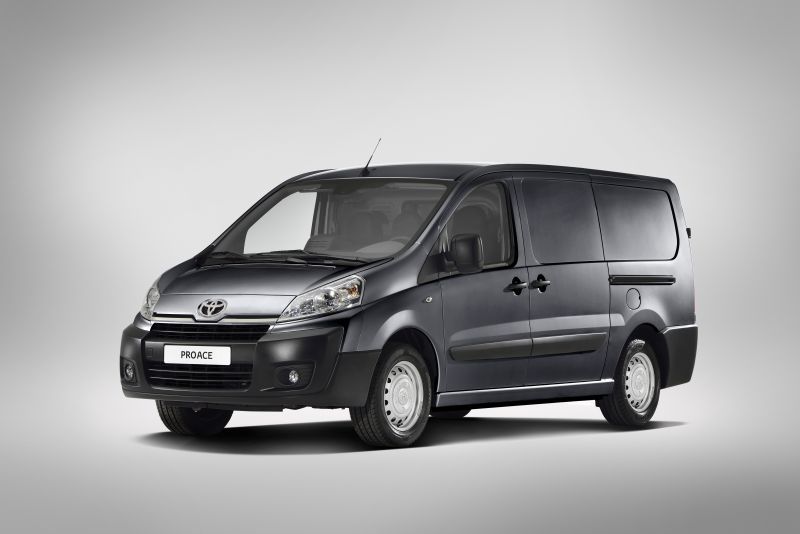
Toyota Proace 2.0 D4-D (128 Hp) L2H2: A Detailed Overview
The Toyota Proace represents a significant entry for the Japanese automaker into the highly competitive European light commercial vehicle (LCV) market. The variant under scrutiny, the Toyota Proace 2.0 D4-D (128 Hp) L2H2, was part of the first generation of this model, produced between 2013 and 2016. This vehicle was a product of a strategic collaboration between Toyota and the PSA Peugeot Citroën group, essentially a rebadged version of the popular Citroën Jumpy, Peugeot Expert, and Fiat Scudo vans. This allowed Toyota to quickly offer a full-size van in regions where it previously had a limited presence in this segment, leveraging proven European designs and engineering.
Positioned as a versatile and robust workhorse, the Proace was designed to cater to a diverse range of commercial users, from small businesses and tradespeople to larger fleet operators. The “L2H2” designation for this specific model indicates a long wheelbase (L2) and a high roof (H2), signifying its focus on maximizing cargo volume and utility. While not sold in the North American market, the Proace played a crucial role in expanding Toyota’s global commercial vehicle footprint, offering a blend of practicality, efficiency, and the brand’s renowned reputation for reliability, tailored specifically for the demands of European and other international markets.
Engine and Performance Characteristics of the Toyota Proace 2.0 D4-D (128 Hp) L2H2
At the heart of the Toyota Proace 2.0 D4-D (128 Hp) L2H2 lies a robust 2.0-liter (1997 cm³) D4-D inline four-cylinder diesel engine, designated with the code 4WZ-FTV. This powerplant is a testament to modern diesel engineering, featuring a Double Overhead Camshaft (DOHC) valvetrain, a common rail fuel injection system, and forced induction through a turbocharger complemented by an intercooler. These technologies work in concert to deliver a balance of power, torque, and fuel efficiency crucial for a commercial vehicle.
The engine generates a respectable 128 horsepower at 4000 revolutions per minute (rpm), providing ample motivation for both urban deliveries and highway cruising, even when fully loaded. More importantly for a commercial vehicle, it produces a substantial 236.02 lb.-ft. of torque at a low 2000 rpm. This strong low-end torque is vital for confident acceleration from a standstill, managing heavy payloads, and navigating challenging terrain, ensuring the vehicle feels capable and responsive under varying conditions. The compression ratio of 16:1 further optimizes the diesel combustion process for efficiency.
Power is transmitted to the front wheels via a smooth and durable 6-speed manual transmission, a common and reliable choice for commercial vehicles of this segment. This drivetrain architecture, with the engine mounted transversely at the front, contributes to efficient packaging and maximizes interior space. In terms of performance, the Proace 2.0 D4-D (128 Hp) L2H2 is capable of accelerating from 0 to 60 mph in an estimated 11.6 seconds, with a top speed of 105.63 mph. While not designed for outright speed, these figures underscore its capability to keep pace with traffic flow on major roads.
Fuel efficiency is a critical factor for commercial operators, and the Proace delivers commendable figures. The combined fuel economy is rated between 33.1 and 36.8 US miles per gallon. For urban driving, it achieves 29-30.9 US mpg, while extra-urban cycles see figures of 35.6-40.6 US mpg. These numbers