<!DOCTYPE html>
<html lang=”en”>
<head>
<meta charset=”UTF-8″>
<meta name=”viewport” content=”width=device-width, initial-scale=1.0″>
<title>Volvo V40 (facelift 2016) 2.0 T2 (122 Hp) Expert Review</title>
</head>
<body>
<h2>The Volvo V40 (facelift 2016) 2.0 T2 (122 Hp): A Premium Compact for the European Market</h2>
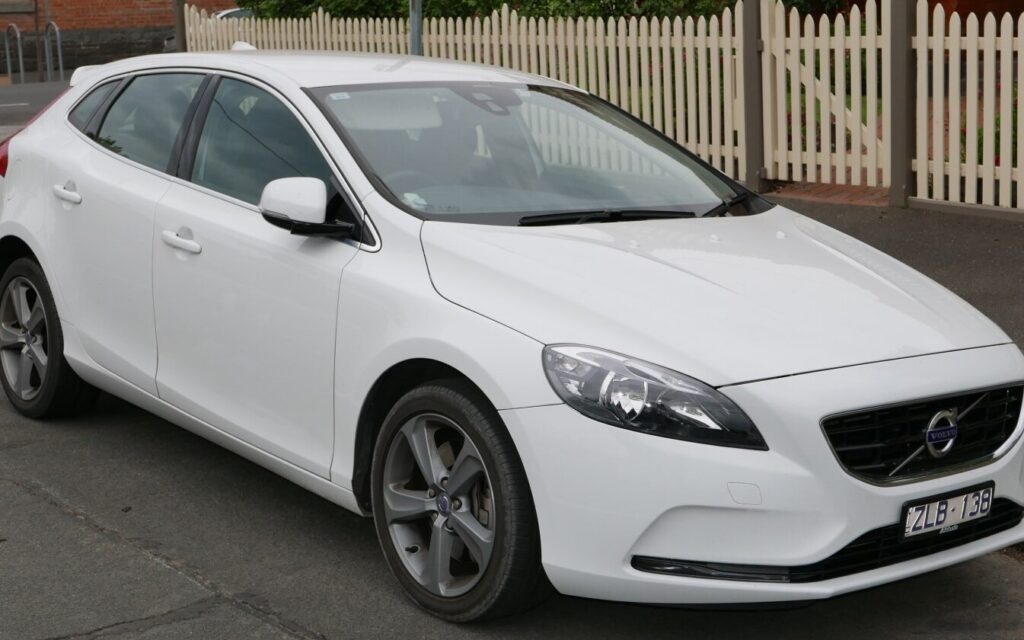
<p>The <strong>Volvo V40 (facelift 2016) 2.0 T2 (122 Hp)</strong> represents a significant offering in the highly competitive European premium compact hatchback segment. Launched as a refreshed version of the second-generation V40, this model, produced between 2018 and 2020, continued Volvo’s tradition of combining sophisticated Scandinavian design with robust safety features and practical functionality. Positioned as an entry point into the Volvo brand for many European consumers, the V40 aimed to challenge established German rivals like the Audi A3, BMW 1 Series, and Mercedes-Benz A-Class by offering a distinct blend of comfort, style, and efficiency.</p<
<p>While the V40 was never officially sold in the United States, its presence in Europe underscored Volvo’s global strategy to cater to diverse market needs. The 2016 facelift brought a series of aesthetic and technological updates, ensuring the V40 remained contemporary and aligned with Volvo’s evolving design language, particularly the introduction of the distinctive “Thor’s Hammer” LED daytime running lights. This particular variant, powered by the 2.0-liter T2 gasoline engine, offered a balanced proposition of performance suitable for urban commuting and longer journeys, coupled with commendable fuel efficiency and adherence to stringent European emission standards.</p>
<h2>Engine and Performance: The 2.0 T2 Powertrain in the Volvo V40 (facelift 2016)</h2>
<p>At the heart of the <strong>Volvo V40 (facelift 2016) 2.0 T2 (122 Hp)</strong> is a modern 2.0-liter (1969 cm<sup>3</sup> or 120.16 cu. in.) inline four-cylinder gasoline engine, designated with the internal code B4204T17. This engine, part of Volvo’s Drive-E family, features a turbocharger and intercooler, enhancing both power delivery and efficiency. It utilizes direct fuel injection and a DOHC (Dual Overhead Camshaft) valvetrain with 4 valves per cylinder, contributing to its refined operation and responsiveness. With a compression ratio of 11.3:1, the engine is optimized for performance while maintaining fuel economy.</p>
<p>The T2 variant delivers a respectable 122 horsepower (HP) at 5000 revolutions per minute (rpm), making it a capable performer for its class. More notably, it produces 220 Newton-meters (Nm) of torque, equivalent to 162.26 pound-feet (lb-ft), available across a broad and accessible rev range from 1200 to 3480 rpm. This wide torque band ensures smooth acceleration and flexibility in daily driving conditions, reducing the need for frequent gear changes. Power is sent to the front wheels via a precise 6-speed manual transmission, offering an engaging driving experience.</p>
<p>In terms of acceleration, the V40 2.0 T2 can sprint from 0 to 60 mph in a calculated 9.9 seconds (0-100 km/h in 10.4 seconds), with a maximum speed of 118.06 mph (190 km/h). While not a performance leader, these figures are more than adequate for typical European road conditions and highway cruising. Fuel efficiency is a strong point for this powertrain, with a combined consumption rating of 38.6 to 39.9 US miles per gallon (mpg). Urban driving yields 29.8 to 29 US mpg, while extra-urban cycles can achieve an impressive 48 to 50 US mpg. CO2 emissions range from 137 to 142 grams per kilometer, meeting the strict Euro 6d-Temp emission standard, underscoring Volvo’s commitment to environmental responsibility.</p>
<h3>Design and Features: Scandinavian Sophistication</h3>
<p>The <strong>Volvo V40 (facelift 2016)</strong> maintains its distinctive 5-door hatchback body type, blending sporty proportions with Volvo’s signature understated elegance. The 2016 facelift brought crucial visual updates, most notably the “Thor’s Hammer” LED daytime running lights, a design cue first seen on the XC90 and subsequently adopted across the Volvo lineup. This modernized front fascia, coupled with a revised grille and new wheel designs, gave the V40 a fresh and contemporary appearance, aligning it with the brand’s new design direction.</p>
<p>Measuring 172.05 inches in length, 70.2 inches in width (80.35 inches including mirrors), and 56.65 inches in height, the V40 is compactly sized for urban maneuverability yet offers a stable stance with a wheelbase of 104.21 inches. Its drag coefficient (Cd) ranges from 0.29 to 0.32, indicating aerodynamic efficiency. The interior reflects Volvo’s commitment to ergonomic design and high-quality materials, embodying Scandinavian minimalism. The cabin is designed for five occupants, with comfortable seating and intuitive controls.</p<
<p>While specific infotainment details are not provided, Volvo cars of this era typically featured a user-friendly Sensus infotainment system. As a Volvo, safety is paramount. Even with only ABS (Anti-lock Braking System) explicitly listed, the V40 benefited from Volvo’s renowned safety cage structure and a suite of passive and active safety features. These would have included multiple airbags, stability control, and potentially advanced driver-assistance systems such as City Safety (Volvo’s autonomous emergency braking system), which was a hallmark of the V40 generation. The front suspension is an independent McPherson strut setup, while the rear features an independent coil spring system with a transverse stabilizer, providing a comfortable yet composed ride. Braking is handled by disc brakes both front and rear, with the rear discs measuring 280 mm. The electric power steering system ensures precise and effortless maneuverability, particularly in urban environments.</p>
<p>Practicality is a key aspect of any hatchback, and the V40 offers a minimum trunk (boot) space of 8.33 cubic feet (236 liters), which is adequate for daily use. The 16.38 US gallon (62 liter) fuel tank provides a good cruising range. The vehicle’s curb weight is 3322.37 lbs (1507 kg), contributing to its solid feel on the road.</p>
<h2>Technical Specifications: Volvo V40 (facelift 2016) 2.0 T2 (122 Hp)</h2>
<table border=”1″ style=”width:100%; border-collapse: collapse;”>
<tr>
<th style=”padding: 8px; text-align: left; background-color: #f2f2f2;”>Category</th>
<th style=”padding: 8px; text-align: left; background-color: #f2f2f2;”>Specification</th>
</tr>
<tr>
<td style=”padding: 8px; border-bottom: 1px solid #ddd;”><strong>General Information</strong></td>
<td style=”padding: 8px; border-bottom: 1px solid #ddd;”> </td>
</tr>
<tr>
<td style=”padding: 8px; border-bottom: 1px solid #ddd;”>Brand</td>
<td style=”padding: 8px; border-bottom: 1px solid #ddd;”>Volvo</td>
</tr>
<tr>
<td style=”padding: 8px; border-bottom: 1px solid #ddd;”>Model</td>
<td style=”padding: 8px; border-bottom: 1px solid #ddd;”>V40</td>
</tr>
<tr>
<td style=”padding: 8px; border-bottom: 1px solid #ddd;”>Generation</td>
<td style=”padding: 8px; border-bottom: 1px solid #ddd;”>V40 (facelift 2016)</td>
</tr>
<tr>
<td style=”padding: 8px; border-bottom: 1px solid #ddd;”>Engine Type</td>
<td style=”padding: 8px; border-bottom: 1px solid #ddd;”>2.0 T2 (122 Hp)</td>
</tr>
<tr>
<td style=”padding: 8px; border-bottom: 1px solid #ddd;”>Production Start</td>
<td style=”padding: 8px; border-bottom: 1px solid #ddd;”>2018</td>
</tr>
<tr>
<td style=”padding: 8px; border-bottom: 1px solid #ddd;”>Production End</td>
<td style=”padding: 8px; border-bottom: 1px solid #ddd;”>2020</td>
</tr>
<tr>
<td style=”padding: 8px; border-bottom: 1px solid #ddd;”>Body Type</td>
<td style=”padding: 8px; border-bottom: 1px solid #ddd;”>Hatchback</td>
</tr>
<tr>
<td style=”padding: 8px; border-bottom: 1px solid #ddd;”>Seats</td>
<td style=”padding: 8px; border-bottom: 1px solid #ddd;”>5</td>
</tr>
<tr>
<td style=”padding: 8px; border-bottom: 1px solid #ddd;”>Doors</td>
<td style=”padding: 8px; border-bottom: 1px solid #ddd;”>5</td>
</tr>
<tr>
<td style=”padding: 8px; border-bottom: 1px solid #ddd;”><strong>Performance Specifications</strong></td>
<td style=”padding: 8px; border-bottom: 1px solid #ddd;”> </td>
</tr>
<tr>
<td style=”padding: 8px; border-bottom: 1px solid #ddd;”>Fuel Consumption (Urban)</td>
<td style=”padding: 8px; border-bottom: 1px solid #ddd;”>29.8 – 29 US mpg (7.9-8.1 l/100 km)</td>
</tr>
<tr>
<td style=”padding: 8px; border-bottom: 1px solid #ddd;”>Fuel Consumption (Extra Urban)</td>
<td style=”padding: 8px; border-bottom: 1px solid #ddd;”>50 – 48 US mpg (4.7-4.9 l/100 km)</td>
</tr>
<tr>
<td style=”padding: 8px; border-bottom: 1px solid #ddd;”>Fuel Consumption (Combined)</td>
<td style=”padding: 8px; border-bottom: 1px solid #ddd;”>39.9 – 38.6 US mpg (5.9-6.1 l/100 km)</td>
</tr>
<tr>
<td style=”padding: 8px; border-bottom: 1px solid #ddd;”>CO2 Emissions</td>
<td style=”padding: 8px; border-bottom: 1px solid #ddd;”>137-142 g/km</td>
</tr>
<tr>
<td style=”padding: 8px; border-bottom: 1px solid #ddd;”>Fuel Type</td>
<td style=”padding: 8px; border-bottom: 1px solid #ddd;”>Petrol (Gasoline)</td>
</tr>
<tr>
<td style=”padding: 8px; border-bottom: 1px solid #ddd;”>Acceleration 0-60 mph</td>
<td style=”padding: 8px; border-bottom: 1px solid #ddd;”>9.9 sec</td>
</tr>
<tr>
<td style=”padding: 8px; border-bottom: 1px solid #ddd;”>Maximum Speed</td>
<td style=”padding: 8px; border-bottom: 1px solid #ddd;”>118.06 mph (190 km/h)</td>
</tr>
<tr>
<td style=”padding: 8px; border-bottom: 1px solid #ddd;”>Braking Distance (100 km/h – 0)</td>
<td style=”padding: 8px; border-bottom: 1px solid #ddd;”>37 m</td>
</tr>
<tr>
<td style=”padding: 8px; border-bottom: 1px solid #ddd;”>Emission Standard</td>
<td style=”padding: 8px; border-bottom: 1px solid #ddd;”>Euro 6d-Temp</td>
</tr>
<tr>
<td style=”padding: 8px; border-bottom: 1px solid #ddd;”>Weight-to-Power Ratio</td>
<td style=”padding: 8px; border-bottom: 1px solid #ddd;”>12.4 kg/Hp</td>
</tr>>
<tr>
<td style=”padding: 8px; border-bottom: 1px solid #ddd;”><strong>Engine Specifications</strong></td>
<td style=”padding: 8px; border-bottom: 1px solid #ddd;”> </td>
</tr>
<tr>
<td style=”padding: 8px; border-bottom: 1px solid #ddd;”>Power</td>
<td style=”padding: 8px; border-bottom: 1px solid #ddd;”>122 Hp @ 5000 rpm</td>
</tr>
<tr>
<td style=”padding: 8px; border-bottom: 1px solid #ddd;”>Torque</td>
<td style=”padding: 8px; border-bottom: 1px solid #ddd;”>162.26 lb-ft (220 Nm) @ 1200-3480 rpm</td>
</tr>
<tr>
<td style=”padding: 8px; border-bottom: 1px solid #ddd;”>Engine Displacement</td>
<td style=”padding: 8px; border-bottom: 1px solid #ddd;”>120.16 cu. in. (1969 cm<