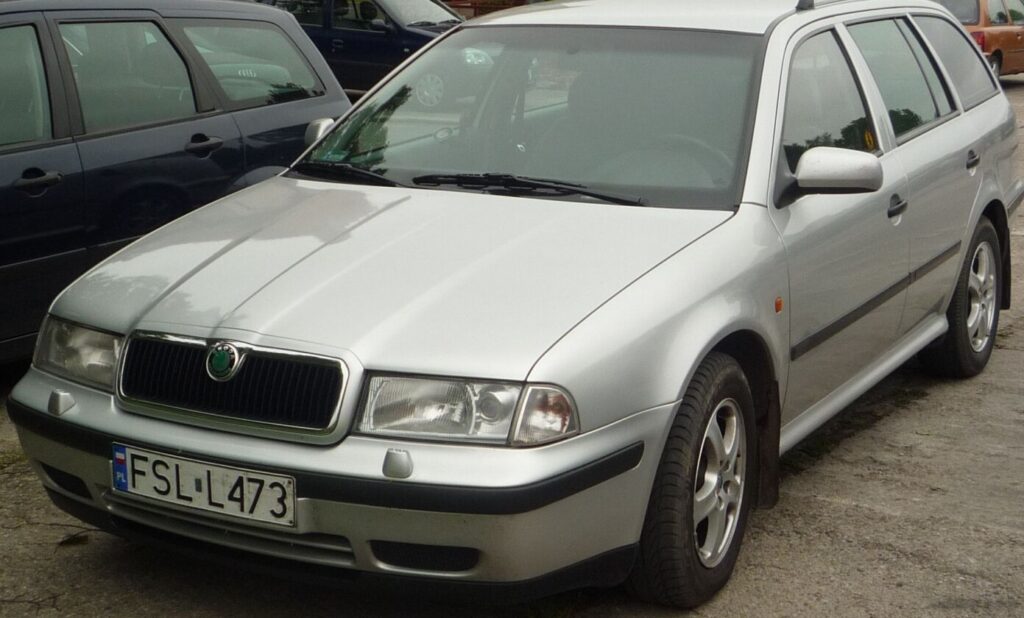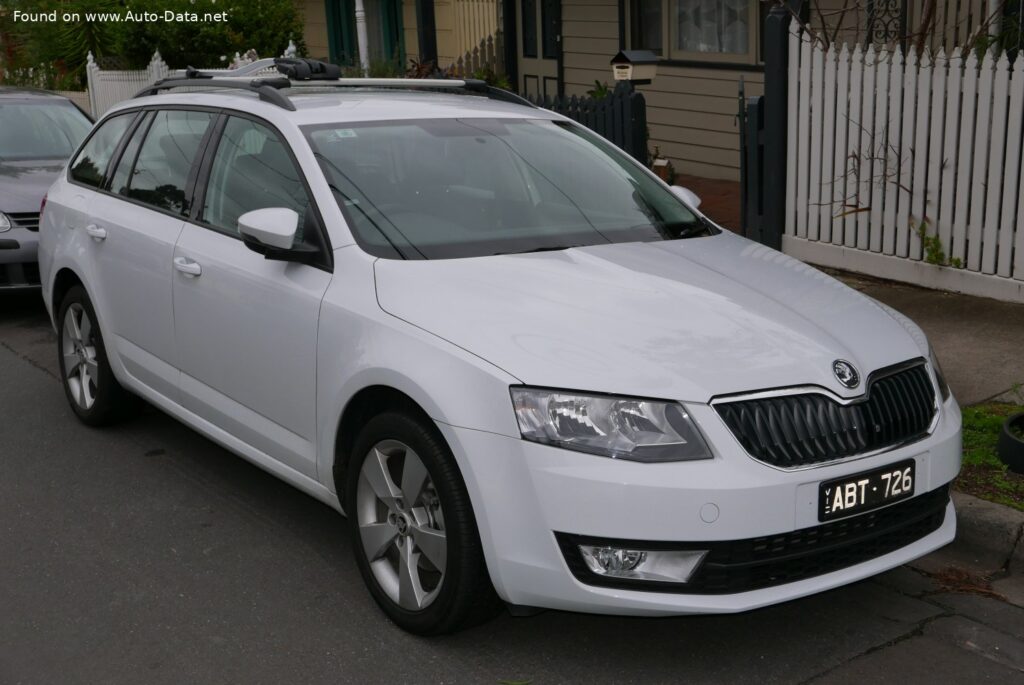
Skoda Octavia III Combi 1.0 TSI (115 Hp)
The Skoda Octavia III Combi 1.0 TSI (115 Hp) represents a significant evolution in the C-segment, showcasing Skoda’s commitment to efficiency and practicality within the Volkswagen Group. Launched in June 2016 and produced through 2017, this particular variant of the third-generation Octavia station wagon (known as “estate” in European markets) integrated a cutting-edge, downsized turbocharged gasoline engine. While the Skoda brand is not officially sold in the United States, the Octavia has carved out a formidable reputation across Europe and other international markets as a highly competitive and value-driven family vehicle, often praised for offering Volkswagen Group engineering and quality at a more accessible price point. This specific model, with its 1.0-liter TSI engine, was designed to appeal to buyers prioritizing fuel economy and lower emissions without significantly compromising daily usability or performance.
The Octavia III generation itself, built on the versatile MQB platform shared with models like the Volkswagen Golf, was lauded for its spacious interior, robust build quality, and comprehensive features. The Combi (station wagon) body style further amplified its appeal by providing exceptional cargo capacity, making it a strong contender for families and professionals needing ample space. The introduction of the 1.0 TSI engine to the lineup underscored a broader industry trend towards smaller, more efficient powertrains capable of delivering respectable performance alongside reduced running costs.
Engine and Performance: The Efficient Heart of the Skoda Octavia III Combi 1.0 TSI (115 Hp)
At the core of the Skoda Octavia III Combi 1.0 TSI (115 Hp) is its remarkably compact yet potent 1.0-liter (999 cm³ or 60.96 cu. in.) three-cylinder turbocharged gasoline engine. This powerplant, identified by the EA211 / CHZD engine code, is a testament to modern engineering, delivering an impressive 115 horsepower at 5000-5500 rpm. The power per liter stands at an excellent 115.1 Hp/l, showcasing the efficiency of its design. More importantly for daily driving, the engine generates a robust 147.51 lb.-ft. (200 Nm) of torque, available across a broad rev range from 2000 to 3500 rpm. This wide torque band ensures responsive acceleration and flexible driving characteristics, minimizing the need for frequent gear changes.
The engine’s advanced features include direct fuel injection, a turbocharger with an intercooler, and a Double Overhead Camshaft (DOHC) valvetrain with four valves per cylinder. These technologies work in concert to optimize combustion efficiency and power delivery. The 10.3:1 compression ratio further contributes to its thermal efficiency. Power is routed to the front wheels via a precise 6-speed manual transmission, offering engaging control for the driver. This powertrain architecture enables the Octavia Combi to accelerate from 0 to 60 mph in a respectable 9.6 seconds, with a top speed of 124.27 mph (200 km/h) – figures that defy its small engine displacement and highlight the effectiveness of its turbocharging.
Fuel efficiency is a major highlight, with a combined NEDC cycle rating of 4.5 liters per 100 km, which translates to an excellent 52.3 US mpg. Urban consumption is rated at 42.8 US mpg (5.5 l/100 km), while extra-urban driving can yield an impressive 58.8 US mpg (4 l/100 km). These figures, combined with CO2 emissions of just 105 g/km and Euro 6 emission standard compliance, underscore the vehicle’s environmentally conscious design and low running costs, making it an attractive option in markets where fuel prices and emissions regulations are stringent. The inclusion of a Start & Stop system further enhances fuel economy in city driving conditions by automatically shutting off the engine when the vehicle is stationary.
Design and Features
The Skoda Octavia III Combi exudes a design philosophy rooted in practicality, understated elegance, and spaciousness, hallmarks of the Skoda brand under Volkswagen Group stewardship. Its body type is a traditional 5-door station wagon, designed to maximize interior volume and cargo utility. With an overall length of 183.43 inches (4659 mm), a width of 71.42 inches (1814 mm), and a height of 57.68 inches (1465 mm), the Octavia Combi boasts generous dimensions for its segment, translating into ample passenger room and class-leading trunk capacity.
The design features clean lines and a modern, cohesive aesthetic that, while not overtly flashy, conveys a sense of solidity and purpose. The large wheelbase of 105.75 inches (2686 mm) contributes significantly to both interior space and ride comfort. Inside, the Octavia Combi offers seating for five occupants, with a focus on ergonomic design and durable materials. The true strength of the Combi lies in its cargo versatility: a minimum trunk space of 21.54 cu. ft. (610 liters) expands to a cavernous 61.45 cu. ft. (1740 liters) with the rear seats folded, making it exceptionally practical for hauling luggage, sports equipment, or even small furniture. A maximum payload of 1421.98 lbs. (645 kg) further emphasizes its utility.
Underneath, the Octavia employs a well-engineered chassis for a comfortable yet composed ride. The front suspension features an independent McPherson strut setup with coil springs and an anti-roll bar, while the rear utilizes a coil spring torsion beam, a common and cost-effective solution for front-wheel-drive vehicles in this segment. Braking is handled by ventilated discs at the front and solid discs at the rear, supported by an Anti-lock Braking System (ABS) for enhanced safety. Electric power steering ensures light and precise control, contributing to an effortless driving experience, particularly in urban environments. Standard tire sizes range from 195/65 R15 to 205/55 R16, mounted on 6J x 15 or 6.5J x 16 wheel rims, providing a balance of grip and ride comfort.
Technical Specifications
| Category | Specification | US Equivalent |
|---|---|---|
| General Information | ||
| Brand | Skoda | — |
| Model | Octavia | — |
| Generation | Octavia III Combi | — |
| Type (Engine) | 1.0 TSI (115 Hp) | — |
| Production Start | June, 2016 | — |
| Production End | 2017 | — |
| Powertrain Architecture | Internal Combustion engine | — |
| Body type | Station wagon (estate) | — |
| Seats | 5 | — |
| Doors | 5 | — |
| Performance Specs | ||
| Fuel consumption (economy) – urban (NEDC) | 5.5 l/100 km | 42.8 US mpg |
| Fuel consumption (economy) – extra urban (NEDC) | 4 l/100 km | 58.8 US mpg |
| Fuel consumption (economy) – combined (NEDC) | 4.5 l/100 km | 52.3 US mpg |
| CO2 emissions (NEDC) | 105 g/km | — |
| Fuel Type | Petrol (Gasoline) | — |
| Acceleration 0 – 60 mph | 9.6 sec | — |
| Acceleration 0 – 100 km/h | 10.1 sec | — |
| Maximum speed | 200 km/h | 124.27 mph |
| Emission standard | Euro 6 | — |
| Weight-to-power ratio | 10.2 kg/Hp | 98.1 Hp/tonne |
| Weight-to-torque ratio | 5.9 kg/Nm | 170.6 Nm/tonne |
| Engine Specs | ||
| Power | 115 Hp @ 5000-5500 rpm. | — |
| Power per liter | 115.1 Hp/l | — |
| Torque | 200 Nm @ 2000-3500 rpm. | 147.51 lb.-ft. @ 2000-3500 rpm. |
| Engine layout | Front, Transverse | — |
| Engine Model/Code | EA211 / CHZD | — |
| Engine displacement | 999 cm³ | 60.96 cu. in. |
| Number of cylinders | 3 | — |
| Engine configuration | Inline | — |
| Cylinder Bore | 74.5 mm | 2.93 in. |
| Piston Stroke | 76.4 mm | 3.01 in. |
| Compression ratio | 10.3:1 | — |
| Number of valves per cylinder | 4 | — |
| Fuel injection system | Direct injection | — |
| Engine aspiration | Turbocharger, Intercooler | — |
| Valvetrain | DOHC | — |
| Engine oil capacity | 4 l | 4.23 US qt |
| Engine systems | Start & Stop System | — |
| Space, Volume and Weights | ||
| Kerb Weight | 1172 kg | 2583.82 lbs. |
| Max. weight (GVWR) | 1817 kg | 4005.8 lbs. |
| Max load | 645 kg | 1421.98 lbs. |
| Trunk (boot) space – minimum | 610 l | 21.54 cu. ft. |
| Trunk (boot) space – maximum | 1740 l | 61.45 cu. ft. |
| Fuel tank capacity | 50 l | 13.21 US gal |
| Max. roof load | 75 kg | 165.35 lbs. |
| Permitted trailer load with brakes (12%) | 1300 kg | 2866.01 lbs. |
| Permitted trailer load without brakes | 620 kg | 1366.87 lbs. |
| Permitted towbar download | 75 kg | 165.35 lbs. |
| Dimensions | ||
| Length | 4659 mm | 183.43 in. |
| Width | 1814 mm | 71.42 in. |
| Width including mirrors | 2017 mm | 79.41 in. |
| Height | 1465 mm | 57.68 in. |
| Wheelbase | 2686 mm | 105.75 in. |
| Front track | 1549 mm | 60.98 in. |
| Rear (Back) track | 1520 mm | 59.84 in. |
| Front overhang | 886 mm | 34.88 in. |
| Rear overhang | 1087 mm | 42.8 in. |
| Ride height (ground clearance) | 140 mm | 5.51 in. |
| Minimum turning circle (turning diameter) | 11.05 m | 36.25 ft. |
| Approach angle | 13.9° | — |
| Departure angle | 12.2° | — |
| Drivetrain, Brakes and Suspension Specs | ||
| Drivetrain Architecture | The Internal combustion engine (ICE) drives the front wheels of the vehicle. | |
| Drive wheel | Front wheel drive | — |
| Number of gears and type of gearbox | 6 gears, manual transmission | — |
| Front suspension | Independent, type McPherson with coil spring and anti-roll bar | |
| Rear suspension | Coil spring, Torsion | |
| Front brakes | Ventilated discs | — |
| Rear brakes | Disc | — |
| Assisting systems | ABS (Anti-lock braking system) | — |
| Steering type | Steering rack and pinion | — |
| Power steering | Electric Steering | — |
| Tires size | 195/65 R15; 205/55 R16 | — |
| Wheel rims size | 6J x 15; 6.5J x 16 | — |
Legacy and Market Impact
The Skoda Octavia, particularly in its Combi form, has been a cornerstone of Skoda’s success and reputation in its primary European and Asian markets. The third-generation Octavia, produced from 2012 to 2020, reinforced the brand’s image as a provider of practical, well-engineered, and high-value vehicles. The introduction of the 1.0 TSI (115 Hp) variant in 2016 further solidified this standing, demonstrating that strong performance and ample space could be achieved with a highly economical, small-displacement engine.
In a competitive segment featuring rivals like the Volkswagen Golf Variant (Estate), Ford Focus Estate, Opel Astra Sports Tourer, and Peugeot 308 SW, the Octavia Combi consistently stood out for its superior interior space, especially its class-leading trunk volume, often surpassing even larger vehicles. This practical advantage, combined with Volkswagen Group’s renowned build quality and a more accessible price point than its VW siblings, made it a compelling choice for fleet buyers, families, and individuals seeking maximum utility for their money.
The 1.0 TSI engine played a crucial role in enhancing the Octavia’s market appeal. It addressed the growing consumer demand for lower running costs, reduced fuel consumption, and compliance with increasingly strict environmental regulations such as Euro 6. This engine option allowed the Octavia to compete effectively against diesel alternatives in terms of efficiency, while offering the smoother, quieter operation characteristic of gasoline engines. Its ability to deliver 115 horsepower and a solid 147.51 lb.-ft. of torque from just a one-liter, three-cylinder unit was a significant technical achievement, showcasing the potential of engine downsizing.
The legacy of the Skoda Octavia III Combi 1.0 TSI (115 Hp) is one of intelligent engineering and market-savvy positioning. It proved that a highly practical and spacious family car could be powered by a small, efficient engine without feeling underpowered or compromised. This model contributed to Skoda’s continued growth and its transition from a budget brand to a respected manufacturer known for its “Simply Clever” solutions and excellent value proposition. While unseen on American roads, its impact on the European automotive landscape was significant, setting a benchmark for efficiency and utility in the compact station wagon segment.