The Renault Megane II Coupe 1.5 dCi (106 Hp): A Distinctive European Compact
The Renault Megane II Coupe 1.5 dCi (106 Hp) represents a fascinating chapter in the history of compact cars, particularly within the European market. Launched in 2005, this specific variant of the second-generation Megane showcased Renault’s bold design philosophy and its commitment to efficient diesel powertrains. While the Renault Megane series has been a cornerstone of the European C-segment (compact car segment) for decades, it was never officially sold in the United States, making it a unique subject for an American automotive expert’s perspective. The Megane II, in particular, was renowned for its avant-garde styling, advanced safety features for its era, and a wide array of engine options, among which the 1.5 dCi stood out for its blend of performance and fuel economy.
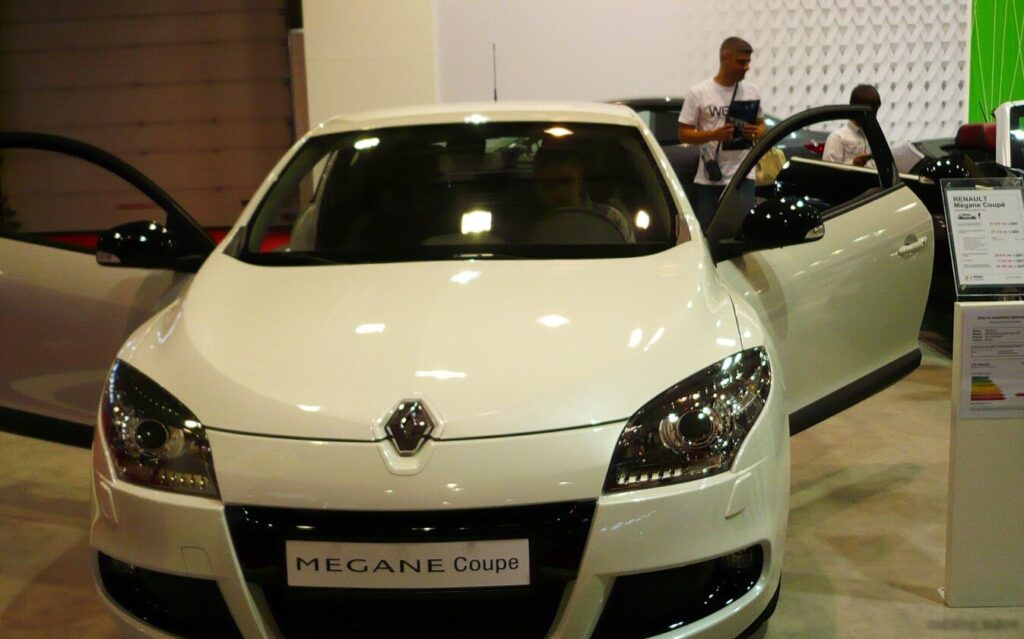
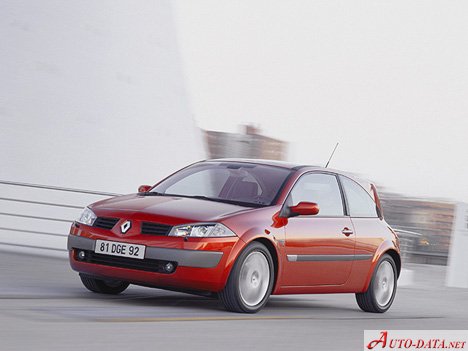
The Megane II generation, produced from 2002 to 2009, marked a significant departure from its predecessor with a design that was both celebrated and debated. The three-door coupe body style, especially with its distinctive “bustle-back” rear end, gave the car a sporty and unmistakable presence on European roads. This particular 1.5 dCi (106 Hp) model, produced for a specific window in 2005, exemplified the European trend of offering powerful yet frugal diesel engines even in sportier-looking compacts, a concept that rarely crossed the Atlantic to the US market.
Engine and Performance of the Renault Megane II Coupe 1.5 dCi (106 Hp)
At the heart of this particular Renault Megane II Coupe was the highly regarded K9K engine, a 1.5-liter (1461 cm3 or 89.16 cu. in.) inline four-cylinder diesel unit. This engine featured a common rail fuel injection system, a turbocharger, and an intercooler, technologies designed to maximize both power output and fuel efficiency. It delivered a respectable 106 horsepower at 4000 rpm, which for a compact car of its size and weight (2623.5 lbs. curb weight) provided ample motivation. The torque figure was particularly impressive for a diesel of this displacement, producing 177.01 lb.-ft. (240 Nm) at a low 2000 rpm, characteristic of diesel engines that offer robust pulling power from low revs.
Mated to a precise 6-speed manual transmission, the Megane II Coupe 1.5 dCi offered an engaging driving experience. Performance figures were competitive for its class, with an acceleration from 0 to 60 mph achieved in a brisk 10.5 seconds, and a top speed of approximately 115 mph (185 km/h). These numbers highlight its capability as a competent cruiser on European highways and a nimble performer in urban environments.
One of the most compelling aspects of the 1.5 dCi engine was its exceptional fuel economy. The combined fuel consumption was rated at an impressive 50 US mpg (4.7 l/100 km), with highway (extra-urban) figures reaching 57.4 US mpg (4.1 l/100 km). Even in city (urban) driving, it managed a commendable 40.6 US mpg (5.8 l/100 km). These figures, coupled with CO2 emissions of 124 g/km and adherence to the Euro 3 emission standard, made it an economically and environmentally conscious choice for European consumers at the time.
Design and Features
The design of the Megane II Coupe was a major talking point upon its release. Its distinct “bustle-back” rear end, characterized by a steeply raked rear window and a prominent boot lid, was a bold statement from Renault’s design chief, Patrick le Quément. This three-door coupe body offered a sportier aesthetic compared to the five-door hatchback, while still providing practical seating for five occupants, a common configuration for European compacts. The overall length of the vehicle was 165.71 inches (4209 mm), with a width of 69.96 inches (1777 mm) and a height of 57.4 inches (1458 mm), making it a compact yet substantial presence.
Inside, the Megane II offered a modern and ergonomic cabin for its time. While specific luxury features aren’t detailed in the provided data, the Megane II generation was known for its innovative features, including a keyless ignition system (Renault Card) and a focus on safety. Standard safety equipment for this era and segment typically included an Anti-lock Braking System (ABS), which is confirmed in the data, and a comprehensive airbag system (though not explicitly listed, it was a hallmark of the Megane II’s strong Euro NCAP safety ratings). The electric power steering system provided light and responsive handling, making it easy to maneuver in tight city streets with a minimum turning circle of 34.45 feet (10.5 m).
Practicality was also a consideration, with a trunk capacity ranging from 11.65 cu. ft. (330 liters) with the rear seats up, expandable to a generous 42.02 cu. ft. (1190 liters) when the rear seats were folded down. This flexibility allowed the coupe to accommodate varying cargo needs, from daily commutes to weekend trips. The vehicle rode on 195/65 R15 tires mounted on 6J x 15-inch wheel rims, providing a comfortable and stable ride. The suspension system featured an independent McPherson strut setup at the front and a torsion beam at the rear, a common and effective combination for front-wheel-drive compacts.
Technical Specifications: Renault Megane II Coupe 1.5 dCi (106 Hp)
| Category | Specification | Value |
|---|---|---|
General Information |
||
| Brand | Renault | |
| Model | Megane | |
| Generation | Megane II Coupe | |
| Engine Type | 1.5 dCi (106 Hp) | |
| Production Start | 2005 | |
| Production End | 2005 | |
| Powertrain Architecture | Internal Combustion engine | |
| Body Type | Coupe | |
| Seats | 5 | |
| Doors | 3 | |
Performance Specifications |
||
| Fuel Consumption (Urban) | 40.6 US mpg (5.8 l/100 km) | |
| Fuel Consumption (Extra Urban) | 57.4 US mpg (4.1 l/100 km) | |
| Fuel Consumption (Combined) | 50 US mpg (4.7 l/100 km) | |
| CO2 Emissions | 124 g/km | |
| Fuel Type | Diesel | |
| Acceleration 0-60 mph | 10.5 sec | |
| Acceleration 0-100 km/h | 11.1 sec | |
| Maximum Speed | 114.95 mph (185 km/h) | |
| Emission Standard | Euro 3 | |
| Weight-to-Power Ratio | 11.2 kg/Hp, 89.1 Hp/tonne | |
| Weight-to-Torque Ratio | 5 kg/Nm, 201.7 Nm/tonne | |
Engine Specifications |
||
| Power | 106 Hp @ 4000 rpm | |
| Power per liter | 72.6 Hp/l | |
| Torque | 177.01 lb.-ft. (240 Nm) @ 2000 rpm | |
| Engine Layout | Front, Transverse | |
| Engine Model/Code | K9K | |
| Engine Displacement | 1.5 liters (1461 cm3 / 89.16 cu. in.) | |
| Number of Cylinders | 4 | Inline |
| Cylinder Bore | 2.99 in. (76 mm) | |
| Piston Stroke | 3.17 in. (80.5 mm) | |
| Compression Ratio | 18.8:1 | |
| Valves per Cylinder | 2 | |
| Fuel Injection System | Diesel Commonrail | |
| Engine Aspiration | Turbocharger, Intercooler | |
| Engine Oil Capacity | 4.76 US qt (4.5 l) | |
| Coolant Capacity | 7.93 US qt (7.5 l) | |
Space, Volume, and Weights |
||
| Kerb Weight | 2623.5 lbs. (1190 kg) | |
| Max. Weight | 3858.09 lbs. (1750 kg) | |
| Max Load | 1234.59 lbs. (560 kg) | |
| Trunk (Boot) Space (Min) | 11.65 cu. ft. (330 l) | |
| Trunk (Boot) Space (Max) | 42.02 cu. ft. (1190 l) | |
| Fuel Tank Capacity | 15.85 US gal (60 l) | |
| Max. Roof Load | 176.37 lbs. (80 kg) | |
| Permitted Trailer Load with Brakes (12%) | 2866.01 lbs. (1300 kg) | |
| Permitted Trailer Load without Brakes | 1433 lbs. (650 kg) | |
| Permitted Towbar Download | 165.35 lbs. (75 kg) | |
Dimensions |
||
| Length | 165.71 in. (4209 mm) | |
| Width | 69.96 in. (1777 mm) | |
| Height | 57.4 in. (1458 mm) | |
| Wheelbase | 103.35 in. (2625 mm) | |
| Front Track | 59.76 in. (1518 mm) | |
| Rear Track | 59.61 in. (1514 mm) | |
| Drag Coefficient (Cd) | 0.35 | |
| Minimum Turning Circle | 34.45 ft. (10.5 m) | |
Drivetrain, Brakes, and Suspension |
||
| Drivetrain Architecture | Front wheel drive | |
| Drive Wheel | Front wheel drive | |
| Gearbox | 6 gears, manual transmission | |
| Front Suspension | Independent type McPherson | |
| Rear Suspension | Torsion beam | |
| Front Brakes | Ventilated discs | |
| Rear Brakes | Disc | |
| Assisting Systems | ABS (Anti-lock braking system) | |
| Steering Type | Steering rack and pinion | |
| Power Steering | Electric Steering | |
| Tire Size | 195/65 R15 | |
| Wheel Rims Size | 6J x 15 | |
Legacy and Market Impact
The Renault Megane II, and particularly its distinctive coupe variant, carved out a significant niche in the European compact car market. Its bold design, while initially polarizing, ultimately helped it stand out in a crowded segment dominated by more conventionally styled competitors like the Volkswagen Golf, Ford Focus, Opel Astra, and Peugeot 307. The Megane II was a critical success for Renault, winning the European Car of the Year award in 2003, largely due to its innovative design, advanced safety features (it was one of the first cars to achieve a five-star Euro NCAP safety rating), and a wide range of efficient engines.
The 1.5 dCi (106 Hp) version, specifically, played a crucial role in the Megane II’s success. Diesel engines were, and still are, immensely popular in Europe due to their superior fuel economy and strong torque delivery, which translates to effortless highway cruising and lower running costs. This particular powertrain offered a sweet spot for many buyers, balancing adequate performance with outstanding efficiency. It appealed to a broad spectrum of drivers, from young professionals seeking a stylish and economical commuter to small families who appreciated the practicality disguised by its sporty coupe facade.
In the broader automotive landscape, the Megane II represented a period of design experimentation for Renault, moving away from conservative styling towards more expressive and sculptural forms. This approach influenced subsequent Renault models and contributed to a shift in European car design towards greater individuality. Its success cemented Renault’s reputation as a leader in safety and innovation within the compact segment.
From an American perspective, the Renault Megane II Coupe 1.5 dCi (106 Hp) remains an intriguing example of a segment and powertrain combination that never truly gained traction in the US. The American market’s preference for larger vehicles, gasoline engines, and a historical aversion to diesel cars (especially after certain emissions scandals) meant that models like the Megane, which thrived on efficiency and compact dimensions, were never imported. However, understanding its role and success in its primary European market offers valuable insight into the diverse automotive preferences and engineering priorities across different global regions.