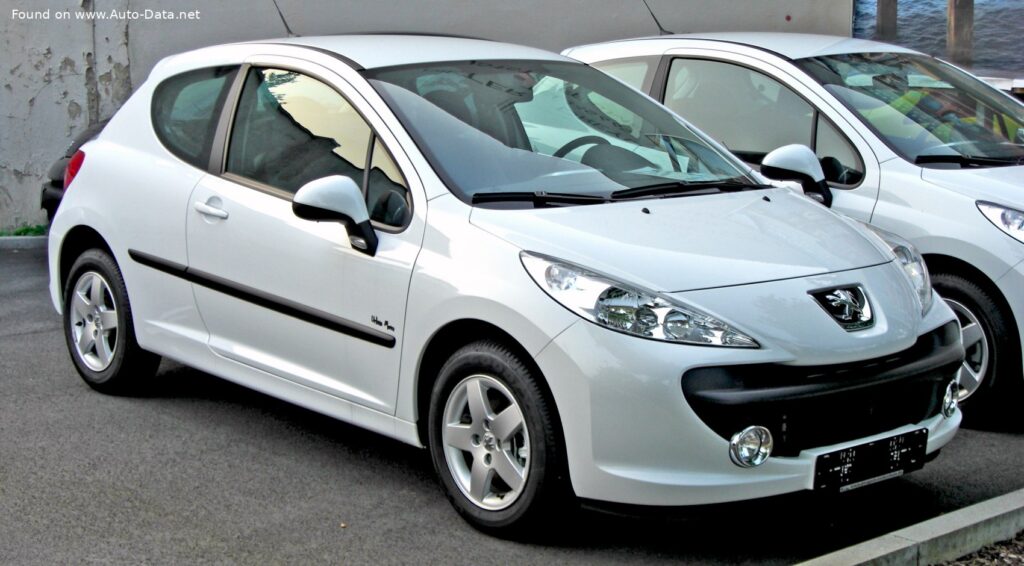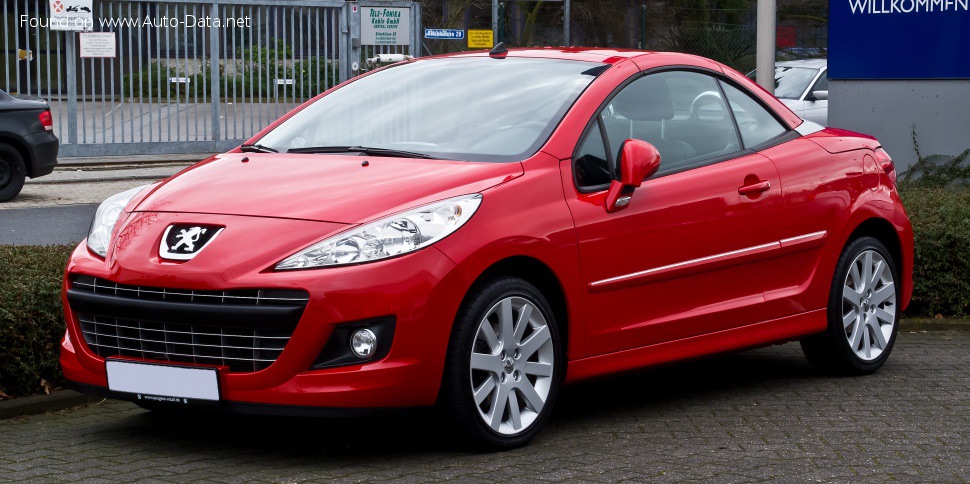
The Peugeot 207 CC (facelift 2009): A European Compact Convertible Icon
The Peugeot 207 CC (facelift 2009) represents a significant evolution in the compact coupe-cabriolet segment, a niche largely pioneered and popularized by Peugeot itself. Launched in 2009 as a refreshed version of the original 207 CC, this vehicle continued the French automaker’s tradition of offering an affordable and stylish open-top experience. While never officially sold in the United States, the 207 CC played a crucial role in the European and other international markets, providing a blend of coupe practicality and convertible exhilaration. It was a direct successor to the hugely successful 206 CC, building upon its predecessor’s formula with improved styling, enhanced technology, and a more refined driving experience, particularly with its efficient 1.6 VTi (120 Hp) powertrain. This generation of the 207 CC maintained its position as a fashionable and accessible four-seater convertible, produced until 2015.
Engine and Performance of the Peugeot 207 CC (facelift 2009)
Under the hood, the Peugeot 207 CC (facelift 2009) 1.6 VTi (120 Hp) featured a modern and efficient gasoline engine, a product of the collaboration between PSA Peugeot Citroën and BMW. This naturally aspirated 1.6-liter (1598 cm³) inline-four engine, designated by the code 5FS EP6C, was engineered for a balance of performance and fuel economy, adhering to the Euro 5 emission standards prevalent at the time. It delivered a respectable 120 horsepower at 6000 rpm, translating to a power-per-liter ratio of 75.1 Hp/l, a strong figure for its class.
Torque output was rated at 118.01 lb.-ft. (160 Nm) peaking at 4250 rpm, providing adequate pulling power for city driving and comfortable cruising. Power was sent to the front wheels via a standard five-speed manual transmission, a common setup for compact cars in this segment. The drivetrain architecture, featuring a front, transverse engine layout, contributed to the car’s balanced handling characteristics.
In terms of acceleration, the 207 CC 1.6 VTi could sprint from 0 to 60 mph in a calculated 10.2 seconds (0-100 km/h in 10.7 seconds), and reached a maximum speed of 119.3 mph (192 km/h). While not a performance powerhouse, these figures were competitive for a compact convertible designed more for cruising than outright speed. Fuel efficiency was a strong suit, with a combined fuel economy of 36.8 US mpg (6.4 l/100 km), and an impressive 45.2 US mpg (5.2 l/100 km) on the extra-urban cycle. CO2 emissions were kept to 149 g/km, reflecting its compliance with contemporary environmental regulations. The engine’s DOHC-VVT (Double Overhead Camshaft with Variable Valve Timing) valvetrain and multi-port manifold injection system ensured optimal combustion and responsiveness.
Design and Features: The Coupe-Cabriolet Concept
The defining characteristic of the Peugeot 207 CC (facelift 2009) was its innovative coupe-cabriolet body style, offering the best of both worlds: the security and insulation of a hardtop coupe and the open-air freedom of a convertible. The retractable hardtop, a sophisticated piece of engineering, could transform the car from a sleek coupe to a stylish convertible in a matter of seconds. This feature was a significant upgrade over traditional soft-top convertibles, offering better noise insulation, enhanced security, and improved all-weather usability.
Measuring 159.21 inches in length, 68.82 inches in width (77.64 inches including mirrors), and 54.84 inches in height, the 207 CC maintained compact dimensions, making it agile in urban environments. Its 100-inch wheelbase contributed to a stable ride. The facelift introduced subtle but effective styling changes, including revised front fascias, updated lighting signatures, and new wheel designs, keeping the car fresh and appealing within its segment.
Inside, the 207 CC offered seating for four, though the rear seats were primarily suitable for children or short journeys, typical of a 2+2 convertible. Trunk space varied significantly depending on the roof’s position; with the roof up, it provided a decent 13.07 cubic feet (370 liters) of cargo room, which reduced to 5.12 cubic feet (145 liters) when the roof was stowed. Standard features included power windows, air conditioning, and a respectable audio system. Safety was addressed with the inclusion of ABS (Anti-lock Braking System) and multiple airbags (though specific airbag count is not provided in data, it was standard for European cars of this era). The car rode on 195/55 R16 tires with 16-inch wheel rims, providing a good balance of grip and ride comfort.
Technical Specifications
| Category | Specification | US Equivalent |
|---|---|---|
| General Information | ||
| Brand | Peugeot | |
| Model | 207 | |
| Generation | 207 CC (facelift 2009) | |
| Engine Type | 1.6 VTi (120 Hp) | |
| Production Start | 2009 | |
| Production End | 2015 | |
| Powertrain Architecture | Internal Combustion engine | |
| Body Type | Coupe – Cabriolet | |
| Seats | 4 | |
| Doors | 2 | |
| Performance Specs | ||
| Fuel Consumption – Urban | 8.6 l/100 km | 27.4 US mpg |
| Fuel Consumption – Extra Urban | 5.2 l/100 km | 45.2 US mpg |
| Fuel Consumption – Combined | 6.4 l/100 km | 36.8 US mpg |
| CO2 Emissions | 149 g/km | |
| Fuel Type | Petrol (Gasoline) | |
| Acceleration 0 – 60 mph | 10.2 sec | |
| Acceleration 0 – 100 km/h | 10.7 sec | |
| Maximum Speed | 192 km/h | 119.3 mph |
| Emission Standard | Euro 5 | |
| Weight-to-Power Ratio | 11.2 kg/Hp | 89.4 Hp/tonne |
| Weight-to-Torque Ratio | 8.4 kg/Nm | 119.2 Nm/tonne |
| Engine Specs | ||
| Power | 120 Hp @ 6000 rpm | |
| Power per Liter | 75.1 Hp/l | |
| Torque | 160 Nm @ 4250 rpm | 118.01 lb.-ft. @ 4250 rpm |
| Engine Layout | Front, Transverse | |
| Engine Model/Code | 5FS EP6C | |
| Engine Displacement | 1598 cm³ | 1.6 Liters / 97.52 cu. in. |
| Number of Cylinders | 4 | |
| Engine Configuration | Inline | |
| Cylinder Bore | 77 mm | 3.03 in. |
| Piston Stroke | 85.8 mm | 3.38 in. |
| Compression Ratio | 11:1 | |
| Valves per Cylinder | 4 | |
| Fuel Injection System | Multi-port manifold injection | |
| Engine Aspiration | Naturally aspirated engine | |
| Valvetrain | DOHC-VVT | |
| Engine Oil Capacity | 4.25 l | 4.49 US qt |
| Coolant Capacity | 5.7 l | 6.02 US qt |
| Space, Volume and Weights | ||
| Kerb Weight | 1342 kg | 2958.6 lbs. |
| Max. Weight | 1709 kg | 3767.7 lbs. |
| Max Load | 367 kg | 809.1 lbs. |
| Trunk Space – Minimum | 145 l | 5.12 cu. ft. |
| Trunk Space – Maximum | 370 l | 13.07 cu. ft. |
| Fuel Tank Capacity | 50 l | 13.21 US gal |
| Permitted Trailer Load with Brakes (12%) | 1040 kg | 2292.81 lbs. |
| Permitted Trailer Load without Brakes | 600 kg | 1322.77 lbs. |
| Dimensions | ||
| Length | 4044 mm | 159.21 in. |
| Width | 1748 mm | 68.82 in. |
| Width with mirrors folded | 1818 mm | 71.57 in. |
| Width including mirrors | 1972 mm | 77.64 in. |
| Height | 1393 mm | 54.84 in. |
| Wheelbase | 2540 mm | 100 in. |
| Front Track | 1469 mm | 57.83 in. |
| Rear Track | 1470 mm | 57.87 in. |
| Drag Coefficient (Cd) | 0.31 | |
| Minimum Turning Circle | 11.0 m | 36.09 ft. |
| Drivetrain, Brakes and Suspension | ||
| Drivetrain Architecture | Front wheel drive, Internal Combustion engine | |
| Drive Wheel | Front wheel drive | |
| Number of Gears and Type | 5 gears, manual transmission | |
| Front Suspension | Independent type McPherson | |
| Rear Suspension | Semi-independent, coil spring | |
| Front Brakes | Ventilated discs | |
| Rear Brakes | Disc | |
| Assisting Systems | ABS (Anti-lock braking system) | |
| Steering Type | Steering rack and pinion | |
| Tires Size | 195/55 R16 | |
| Wheel Rims Size | 16 inches |
Legacy and Market Impact of the Peugeot 207 CC (facelift 2009)
The Peugeot 207 CC (facelift 2009) continued a successful lineage for Peugeot in the compact coupe-cabriolet market, a segment it had significantly shaped with the launch of the 206 CC in 2000. The 206 CC was a groundbreaking vehicle, bringing the retractable hardtop mechanism, previously reserved for much more expensive cars, to the mass market. The 207 CC built on this legacy, offering a more contemporary design, improved safety features, and a more refined driving experience.
In its primary markets, particularly across Europe, the 207 CC was well-received by consumers looking for a stylish, versatile, and relatively affordable open-top car. Its main competitors included other compact coupe-cabriolets like the Opel Tigra TwinTop, Nissan Micra C+C, and the Ford Focus CC. The 207 CC distinguished itself with its distinctive French styling, comfortable ride, and the perceived quality of its interior, which was a step up from its predecessor.
The car’s reputation was generally positive, praised for its practical folding hardtop, reasonable running costs thanks to its efficient engines, and its ability to offer both a sporty coupe feel and a relaxed convertible experience. While not a performance car, its handling was competent, and the 1.6 VTi engine provided sufficient power for most everyday driving scenarios.
The absence of the 207 CC from the North American market is typical for many European compacts. The US market has historically shown less interest in small, niche convertibles, especially those with 2+2 seating configurations where the rear seats are often impractical for adults. Furthermore, the cost of homologating such a model for US safety and emissions regulations, coupled with potentially low sales volumes, made it an unfeasible venture for Peugeot. Instead, the 207 CC remained a distinctly European phenomenon, cementing Peugeot’s reputation as a leader in innovative and accessible convertible design. Its discontinuation in 2015 marked the end of an era for Peugeot’s compact coupe-cabriolet line, as consumer preferences shifted towards crossovers and SUVs, but its impact on the European automotive landscape remains notable.