The Toyota Corolla X (E140, E150) 2.0 D-4D (126 Hp): A Global Workhorse with European Flair
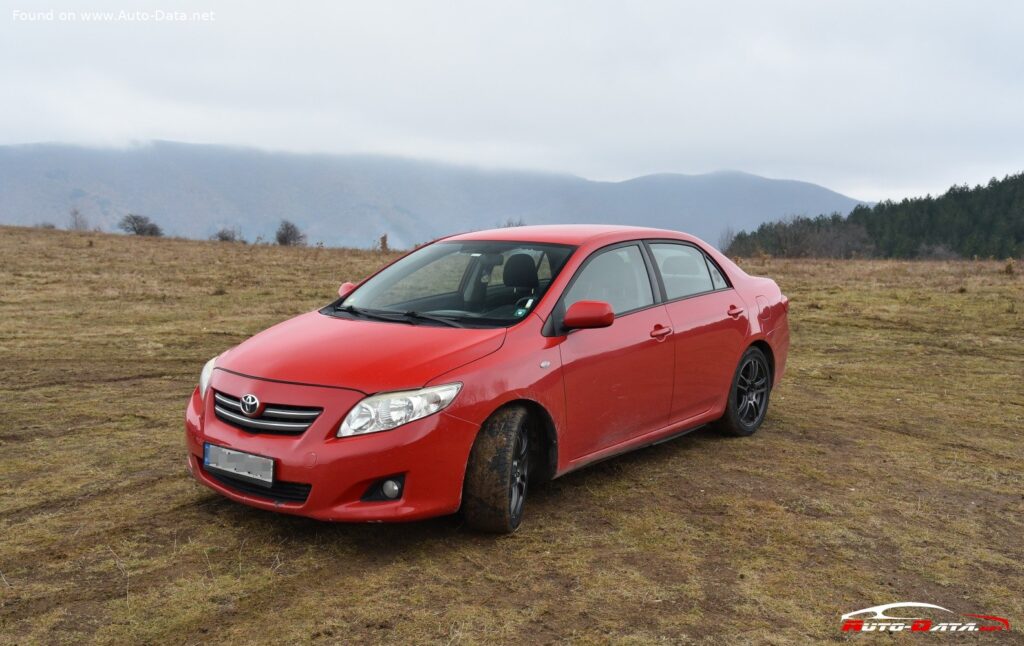
The Toyota Corolla, a name synonymous with reliability and value across the globe, entered its tenth generation, known internally as the E140 or E150 series, with production commencing in 2006 and concluding in 2012. While North American markets primarily received gasoline-powered variants, the Toyota Corolla X (E140, E150) introduced in other major markets, particularly Europe and parts of Asia, offered a compelling diesel powertrain option. This specific variant, the 2.0 D-4D with 126 horsepower, represented Toyota’s commitment to efficiency and robust performance in regions where diesel engines were a popular choice for their fuel economy and torque characteristics. As a four-door, five-seat sedan, it continued the Corolla’s legacy as a practical and dependable compact family car, distinguished by its sophisticated common rail diesel technology.
Engine & Performance: The Efficient 2.0 D-4D Powerplant
At the heart of this particular Toyota Corolla X (E140, E150) was the 1AD-FTV engine, a 2.0-liter (1998 cm3 or 121.93 cubic inches) D-4D (Direct Injection 4-stroke Common Rail Diesel) inline-four diesel unit. This advanced powertrain was engineered to deliver a balanced blend of power and exceptional fuel economy, qualities highly prized in its target markets. The engine featured a DOHC (Double Overhead Camshaft) valvetrain with four valves per cylinder, ensuring optimal airflow and combustion. A key component of its performance was the turbocharger, coupled with an intercooler, which significantly boosted power output and engine responsiveness across the RPM range.
The 2.0 D-4D engine produced a respectable 126 horsepower at 3600 rpm, a solid figure for a compact sedan of its era. More impressively, it generated a robust 221.27 pound-feet of torque, available from a low 1800 rpm and sustained up to 2400 rpm. This broad torque band provided excellent drivability, particularly in urban environments and for highway cruising, allowing for effortless acceleration and reduced need for frequent gear changes. Power was transmitted to the front wheels via a smooth and precise 6-speed manual transmission, a choice that further enhanced both performance and fuel efficiency.
Performance figures reflected the engine’s capability, with the Corolla X 2.0 D-4D accelerating from 0 to 60 mph in a competitive 9.8 seconds. Its top speed was rated at 124.27 mph (200 km/h), making it perfectly capable of handling sustained highway speeds. However, where this powertrain truly shone was in its fuel economy. The vehicle achieved an impressive 44.4 US miles per gallon (mpg) in combined driving conditions, with urban consumption rated at 33.6 US mpg and an outstanding 53.5 US mpg on the extra-urban cycle. This efficiency, coupled with its compliance with Euro 4 emission standards, made it an environmentally conscious and cost-effective choice for consumers.
Design & Features: Practicality Meets Refinement in the Toyota Corolla X (E140, E150)
The tenth-generation Toyota Corolla, in its E140/E150 guise, presented a more contemporary and refined design language compared to its predecessors. While maintaining the brand’s reputation for understated elegance, the sedan body offered a clean, aerodynamic profile that appealed to a broad demographic. Measuring 178.74 inches in length, 69.29 inches in width, and 57.87 inches in height, with a wheelbase of 102.36 inches, the Corolla X provided a spacious and comfortable cabin for five occupants. The practical four-door configuration ensured easy access for all passengers.
Inside, the Corolla was designed with user-friendliness and durability in mind. The 450 liters (15.89 cubic feet) of trunk space offered ample room for luggage, making it suitable for family trips or daily errands. The interior layout was ergonomic, with controls intuitively placed for the driver. While specific trim levels would dictate the full suite of features, standard safety equipment for the era included an Anti-lock Braking System (ABS), contributing to secure stopping power.
The vehicle’s chassis was engineered for a comfortable and predictable ride, typical of Toyota’s approach to mass-market vehicles. It featured a Spring Strut front suspension, known for its ability to balance ride comfort with reasonable handling, paired with a Torsion beam rear suspension, a compact and robust setup ideal for a front-wheel-drive compact car. Braking was handled by ventilated discs at the front and solid discs at the rear, providing reliable stopping performance. The steering system utilized a rack and pinion setup, offering direct and responsive control. The Corolla X rolled on 195/65 R15 tires, providing a good balance of grip and ride comfort.
Technical Specifications
| Category | Specification | Value |
|---|---|---|
| General Information | ||
| Brand | Toyota | |
| Model | Corolla | |
| Generation | Corolla X (E140, E150) | |
| Type (Engine) | 2.0 D-4D (126 Hp) | |
| Start of Production | 2006 year | |
| End of Production | 2012 year | |
| Powertrain Architecture | Internal Combustion engine | |
| Body Type | Sedan | |
| Seats | 5 | |
| Doors | 4 | |
| Performance Specifications | ||
| Fuel Consumption (Urban) | 7 l/100 km | 33.6 US mpg |
| Fuel Consumption (Extra Urban) | 4.4 l/100 km | 53.5 US mpg |
| Fuel Consumption (Combined) | 5.3 l/100 km | 44.4 US mpg |
| Fuel Type | Diesel | |
| Acceleration 0 – 60 mph | 9.8 sec | |
| Maximum Speed | 200 km/h | 124.27 mph |
| Emission Standard | Euro 4 | |
| Weight-to-Power Ratio | 11.2 kg/Hp | |
| Weight-to-Torque Ratio | 4.7 kg/Nm | |
| Engine Specifications | ||
| Power | 126 Hp @ 3600 rpm | |
| Power per Liter | 63.1 Hp/l | |
| Torque | 300 Nm @ 1800-2400 rpm | 221.27 lb.-ft. |
| Engine Layout | Front, Transverse | |
| Engine Model/Code | 1AD-FTV | |
| Engine Displacement | 1998 cm3 | 121.93 cu. in. |
| Number of Cylinders | 4 | |
| Engine Configuration | Inline | |
| Cylinder Bore | 86 mm | 3.39 in. |
| Piston Stroke | 86 mm | 3.39 in. |
| Compression Ratio | 16.8:1 | |
| Number of Valves per Cylinder | 4 | |
| Fuel Injection System | Diesel Commonrail | |
| Engine Aspiration | Turbocharger, Intercooler | |
| Valvetrain | DOHC | |
| Engine Oil Capacity | 6.3 l | 6.66 US qt |
| Coolant Capacity | 7.4 l | 7.82 US qt |
| Space, Volume and Weights | ||
| Kerb Weight | 1405 kg | 3097.49 lbs. |
| Max. Weight | 1890 kg | 4166.74 lbs. |
| Max Load | 485 kg | 1069.24 lbs. |
| Trunk (Boot) Space – Minimum | 450 l | 15.89 cu. ft. |
| Fuel Tank Capacity | 55 l | 14.53 US gal |
| Dimensions | ||
| Length | 4540 mm | 178.74 in. |
| Width | 1760 mm | 69.29 in. |
| Height | 1470 mm | 57.87 in. |
| Wheelbase | 2600 mm | 102.36 in. |
| Front Track | 1525 mm | 60.04 in. |
| Rear (Back) Track | 1520 mm | 59.84 in. |
| Minimum Turning Circle | 10.4 m | 34.12 ft. |
| Drivetrain, Brakes and Suspension Specifications | ||
| Drivetrain Architecture | The Internal combustion engine (ICE) drives the front wheels of the vehicle. | |
| Drive Wheel | Front wheel drive | |
| Number of Gears and Type of Gearbox | 6 gears, manual transmission | |
| Front Suspension | Spring Strut | |
| Rear Suspension | Torsion | |
| Front Brakes | Ventilated discs | |
| Rear Brakes | Disc | |
| Assisting Systems | ABS (Anti-lock braking system) | |
| Steering Type | Steering rack and pinion | |
| Tires Size | 195/65 R15 | |
Legacy & Market Impact: The Toyota Corolla X (E140, E150) in its Global Context
The Toyota Corolla’s enduring legacy as the best-selling car nameplate in automotive history is built on a foundation of reliability, practicality, and excellent value. The tenth-generation Toyota Corolla X (E140, E150), particularly in its 2.0 D-4D (126 Hp) sedan configuration, played a crucial role in maintaining this reputation in markets where diesel engines were highly favored. In regions like Europe, the Middle East, and parts of Asia, the diesel Corolla offered a compelling alternative to its gasoline counterparts, appealing to buyers who prioritized fuel efficiency, low running costs, and strong low-end torque for both daily commuting and longer journeys.
In its primary markets, the Corolla X 2.0 D-4D faced stiff competition from a host of well-established compact sedans and hatchbacks, many of which also offered robust diesel engine options. Key rivals included the Volkswagen Jetta (or Golf with a sedan variant), Ford Focus, Honda Civic, Opel Astra, and Peugeot 307/308. What set the Corolla apart was its almost legendary reputation for unwavering dependability and low maintenance costs. While some competitors might have offered slightly more dynamic handling or avant-garde interior designs, the Corolla consistently delivered on its promise of trouble-free ownership and a comfortable, predictable driving experience.
The 2.0 D-4D engine, with its impressive fuel economy and Euro 4 compliance, positioned the Corolla X as a responsible choice in an era of increasing environmental awareness. It demonstrated Toyota’s capability to produce advanced diesel powertrains that were both efficient and refined, challenging perceptions that Toyota’s expertise lay solely in gasoline and hybrid technologies. This variant underscored the Corolla’s adaptability to diverse global market demands, providing a tailored solution for regions where diesel was a dominant fuel choice for passenger cars.
Ultimately, the Toyota Corolla X (E140, E150) 2.0 D-4D (126 Hp) solidified the model’s status as a global automotive icon. It was not just a car; it was a testament to Toyota’s engineering prowess, offering a practical, economical, and exceptionally reliable mode of transport that catered to the specific needs of millions of drivers outside of the North American continent. Its enduring presence on roads worldwide, years after its production ceased, is a clear indicator of its lasting impact and the quality of its construction.