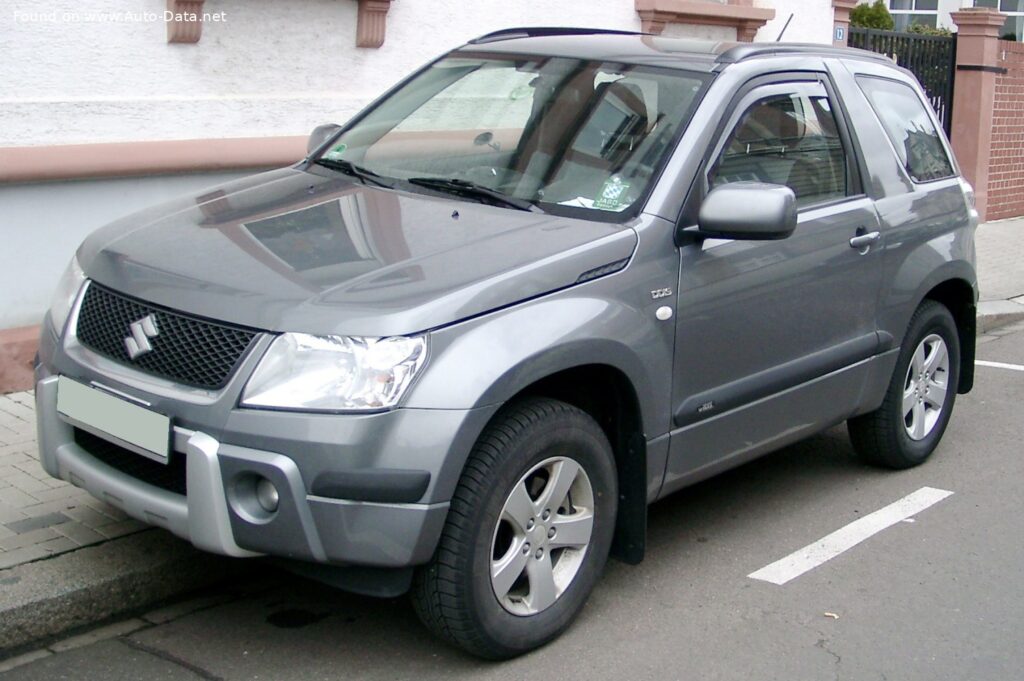
The Suzuki Grand Vitara II 3 Door: A Compact SUV with Off-Road Spirit (2005-2008)
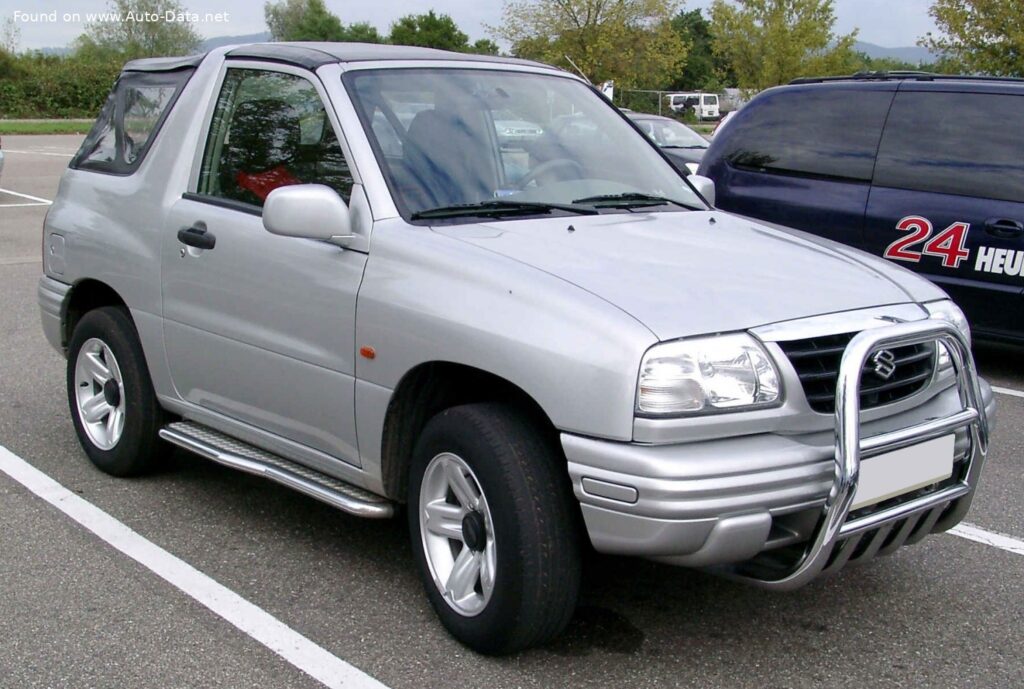
The Suzuki Grand Vitara II 3 Door, produced between 2005 and 2008, represented the second generation of Suzuki’s popular compact SUV. While its longer five-door sibling was available in North America, the three-door variant, particularly with the 2.4-liter VVT engine and automatic transmission, primarily served markets outside the United States, notably Europe, Asia, and Australia. This iteration of the Grand Vitara marked a significant evolution from its more utilitarian predecessors, blending a more refined on-road experience with Suzuki’s renowned off-road capability. Positioned in the highly competitive compact SUV segment, the Grand Vitara II 3 Door aimed to attract buyers seeking a robust and versatile vehicle capable of navigating both urban environments and challenging terrains.
Unlike many car-based crossovers emerging at the time, the second-generation Grand Vitara retained a more traditional SUV architecture, featuring a unibody construction integrated with a ladder frame, offering enhanced rigidity and durability for tougher conditions. The 3-door configuration emphasized its compact dimensions and agile character, making it a compelling choice for individuals or small families who valued maneuverability and a distinctive, sporty appearance. The 2.4 VVT engine, combined with a four-speed automatic transmission, provided a balance of power and ease of use, making the Suzuki Grand Vitara II 3 Door a practical and engaging option in its class.
Engine and Performance: The Heart of the Suzuki Grand Vitara II 3 Door
At the core of this specific Suzuki Grand Vitara II 3 Door model was the J24B engine, a naturally aspirated 2.4-liter (2393 cm³ or 146.03 cu. in.) inline four-cylinder powerplant. This engine featured a Double Overhead Camshaft (DOHC) valvetrain with 16 valves (four per cylinder) and Suzuki’s Variable Valve Timing (VVT) technology. The VVT system was crucial for optimizing valve lift and timing, allowing the engine to deliver a respectable 163 horsepower at 6000 rpm and a solid 165.95 lb.-ft. of torque at 3800 rpm. This combination ensured a broad power band, providing adequate acceleration for highway driving and sufficient low-end torque for off-road excursions.
Power was delivered to all four wheels through a conventional, yet reliable, 4-speed automatic transmission and a permanent all-wheel-drive (4×4) system. This setup gave the Grand Vitara II 3 Door genuine off-road credentials, distinguishing it from many front-wheel-drive biased crossovers. Performance figures included an acceleration from 0 to 60 mph in a reasonable 10.9 seconds, with a top speed reaching 105.63 mph. While not a performance leader, these numbers were competitive for its segment and intended purpose.
Fuel economy for the 2.4 VVT engine was rated at 25 US mpg combined, with urban consumption at 19.8 US mpg and extra-urban (highway) at 29.4 US mpg. These figures, while not groundbreaking by modern standards, were acceptable for a non-turbocharged all-wheel-drive SUV of its era. The engine complied with the Euro 4 emission standard, reflecting its design for European markets and a commitment to environmental regulations of the mid-2000s.
Design and Features: Compact Utility and Robust Aesthetics
The Suzuki Grand Vitara II 3 Door presented a more contemporary and robust design compared to its first-generation predecessor. Its compact footprint, with a length of 157.68 inches, a width of 71.26 inches, and a height of 66.73 inches, made it highly maneuverable in urban settings while still projecting a capable SUV stance. The 3-door body style, with its shorter wheelbase of 96.06 inches, contributed to a tighter turning radius and improved break-over angle for off-road driving.
Despite its compact exterior, the interior was designed to comfortably accommodate five occupants, making efficient use of space. The rugged exterior styling was complemented by practical features suitable for an adventure-oriented vehicle. Standard features for its time included an Anti-lock Braking System (ABS), providing enhanced safety during emergency braking. The vehicle rode on 17-inch wheels, typically fitted with 225/65 R17 tires, offering a good balance between on-road comfort and off-road grip. The suspension system comprised a spring strut setup at the front and coil springs at the rear, tuned to provide a comfortable ride on pavement while also absorbing the impacts of uneven terrain. Braking was handled by ventilated discs at the front and solid discs at the rear, ensuring consistent stopping power.
The Grand Vitara II 3 Door’s design ethos was clearly functional yet appealing, offering a practical solution for those who needed a vehicle that could handle more than just paved roads without the bulk of a full-size SUV. Its relatively light curb weight of 3185.68 lbs also contributed to its agility and overall performance.
Technical Specifications
| Suzuki Grand Vitara II 3 Door 2.4 VVT (163 Hp) Automatic | |
|---|---|
| General Information | |
| Brand | Suzuki |
| Model | Grand Vitara |
| Generation | Grand Vitara II 3 Door |
| Engine Type | 2.4 VVT (163 Hp) Automatic |
| Production Start | 2005 |
| Production End | 2008 |
| Powertrain Architecture | Internal Combustion Engine |
| Body Type | SUV |
| Seats | 5 |
| Doors | 3 |
| Performance Specifications | |
| Fuel Consumption (Urban) | 19.8 US mpg |
| Fuel Consumption (Extra Urban) | 29.4 US mpg |
| Fuel Consumption (Combined) | 25 US mpg |
| Fuel Type | Petrol (Gasoline) |
| Acceleration 0 – 60 mph | 10.9 sec |
| Maximum Speed | 105.63 mph |
| Emission Standard | Euro 4 |
| Weight-to-Power Ratio | 8.9 kg/Hp (112.8 Hp/tonne) |
| Weight-to-Torque Ratio | 6.4 kg/Nm (155.7 Nm/tonne) |
| Engine Specifications | |
| Power | 163 Hp @ 6000 rpm |
| Power per Liter | 68.1 Hp/l |
| Torque | 165.95 lb.-ft. @ 3800 rpm |
| Engine Layout | Front, Longitudinal |
| Engine Model/Code | J24B |
| Engine Displacement | 2.4 liters (2393 cm³ / 146.03 cu. in.) |
| Number of Cylinders | 4 |
| Engine Configuration | Inline |
| Cylinder Bore | 3.62 in (92 mm) |
| Piston Stroke | 3.54 in (90 mm) |
| Compression Ratio | 9.5:1 |
| Valves per Cylinder | 4 |
| Fuel Injection System | Multi-port manifold injection |
| Engine Aspiration | Naturally aspirated |
| Valvetrain | DOHC |
| Engine Oil Capacity | 5.07 US qt (4.8 l) |
| Coolant Capacity | 7.71 US qt (7.3 l) |
| Space, Volume, and Weights | |
| Curb Weight | 3185.68 lbs (1445 kg) |
| Max. Weight | 3968.32 lbs (1800 kg) |
| Max Load | 782.64 lbs (355 kg) |
| Fuel Tank Capacity | 14.53 US gal (55 l) |
| Dimensions | |
| Length | 157.68 in (4005 mm) |
| Width | 71.26 in (1810 mm) |
| Height | 66.73 in (1695 mm) |
| Wheelbase | 96.06 in (2440 mm) |
| Front Track | 60.63 in (1540 mm) |
| Rear Track | 61.81 in (1570 mm) |
| Drivetrain, Brakes, and Suspension | |
| Drive Wheel | All-wheel drive (4×4) |
| Gearbox Type | 4 gears, automatic transmission |
| Front Suspension | Spring Strut |
| Rear Suspension | Coil spring |
| Front Brakes | Ventilated discs |
| Rear Brakes | Disc |
| Assisting Systems | ABS (Anti-lock braking system) |
| Steering Type | Steering rack and pinion |
| Tire Size | 225/65 R17 |
| Wheel Rims Size | 17 inches |
Legacy and Market Impact of the Suzuki Grand Vitara II 3 Door
The Suzuki Grand Vitara II 3 Door carved out a distinct niche in the global automotive market. In regions like Europe, Australia, and parts of Asia, where smaller, more capable 4x4s were highly valued, the Grand Vitara 3-door offered a compelling package. It stood apart from the burgeoning segment of purely car-based crossovers by offering genuine off-road capability, thanks to its robust chassis and all-wheel-drive system, which often included low-range gearing in some markets (though not specified for this particular variant). This made it a favorite among those who occasionally ventured off the beaten path but still required a practical daily driver.
Its primary competitors varied by region but generally included vehicles like the Toyota RAV4 (especially its 3-door versions in some markets), the Honda CR-V, and even some smaller offerings from brands like Land Rover (e.g., Freelander). What set the Grand Vitara apart was its reputation for reliability, durability, and a more rugged demeanor than many of its rivals. Suzuki had a long-standing heritage in producing dependable small 4x4s, a legacy that the Grand Vitara II successfully continued.
The 2.4-liter engine, while not the most fuel-efficient in the class, provided a good balance of power for both on-road and light off-road duties. The automatic transmission, though a 4-speed, was known for its robustness and smooth operation. The compact 3-door format appealed to buyers looking for a vehicle that was easy to park and maneuver in crowded city environments, yet still offered the elevated driving position and perceived safety of an SUV.
Ultimately, the Suzuki Grand Vitara II 3 Door contributed to Suzuki’s image as a manufacturer of capable and value-oriented SUVs. While the 3-door variant gradually faded from many markets as consumer preference shifted towards larger, more family-oriented 5-door crossovers, its impact was significant in demonstrating that a compact SUV could still offer authentic off-road prowess without sacrificing too much in terms of urban practicality. It remains a testament to Suzuki’s engineering philosophy of building vehicles that are both reliable workhorses and enjoyable companions for adventure.