Seat Ibiza IV (facelift 2015)
The Seat Ibiza IV (facelift 2015) represents a significant refresh of the fourth generation of Seat’s popular subcompact hatchback, a model that has long served as a cornerstone of the Spanish automaker’s lineup. Unveiled in May 2015, this updated version aimed to keep the Ibiza competitive within the fiercely contested European B-segment, often referred to as the supermini category. While never officially sold in the United States, the Ibiza is a familiar sight across Europe and other international markets, known for its youthful styling, agile handling, and practical nature. This particular variant, equipped with a 1.0-liter engine producing 75 horsepower, emphasized affordability and fuel efficiency, catering to a broad demographic of urban drivers and young families seeking an economical yet stylish mode of transportation.
The fourth-generation Ibiza, which first debuted in 2008, was built on the Volkswagen Group’s PQ25 platform, shared with its corporate cousins, the Volkswagen Polo and Audi A1. The 2015 facelift brought a series of enhancements, both aesthetic and mechanical, designed to extend the model’s appeal before the introduction of an all-new generation. These updates included revised exterior styling, an overhauled interior, and a focus on new, more efficient engines, including the compact three-cylinder gasoline unit detailed here.
Engine and Performance of the Seat Ibiza IV (facelift 2015) 1.0 (75 Hp)
At the heart of this particular Seat Ibiza IV (facelift 2015) model lies a compact and efficient 1.0-liter (999 cm³ or 60.96 cubic inches) naturally aspirated inline three-cylinder gasoline engine, designated with the code CHYB. This powertrain was engineered with a strong emphasis on fuel economy and low emissions, a critical factor for success in the European market. It delivers a modest but adequate 75 horsepower at 6200 rpm, which, combined with the car’s relatively low curb weight of 2147.3 pounds (974 kg), provides a weight-to-power ratio of approximately 13 kg/Hp (77 Hp/tonne).
Torque output for the 1.0-liter unit stands at 95 Nm (70.07 lb.-ft.), available across a broad and accessible rev range from 3000 to 4300 rpm. This characteristic makes the engine tractable in city driving, reducing the need for constant gear changes. Power is sent to the front wheels via a standard 5-speed manual transmission, a common setup for cars in this segment, prioritizing driver engagement and efficiency.
In terms of acceleration, the Ibiza 1.0 (75 Hp) can achieve 0 to 60 mph in a calculated 13.6 seconds (0 to 100 km/h in 14.3 seconds), with a top speed of 106.88 mph (172 km/h). While not a performance-oriented vehicle, these figures are entirely respectable for its class and intended use, primarily urban and suburban commuting. Fuel efficiency is a strong suit, with a combined cycle consumption rated at 4.8 liters per 100 kilometers, translating to an impressive 49 US mpg. This efficiency is further underscored by its CO2 emissions of 108 g/km, allowing it to meet the stringent Euro 6 emission standard prevalent in Europe. The engine utilizes a multi-port manifold injection system and has a compression ratio of 10.5:1, with 4 valves per cylinder, optimizing combustion for efficiency.
Design and Features
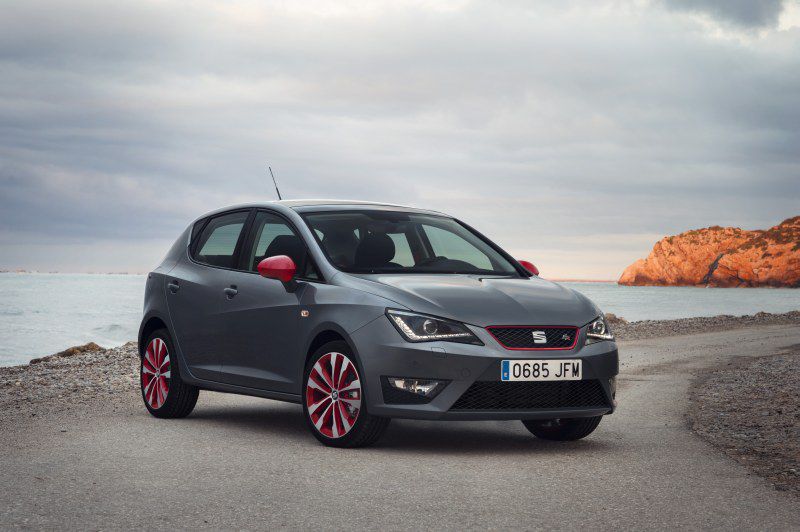
The Seat Ibiza IV (facelift 2015) maintained the sharp, angular styling that defined the fourth generation, a design language penned by Luc Donckerwolke, known for his work with Lamborghini and Bentley. The facelift introduced subtle but effective changes to keep its aesthetics fresh. These included revised headlights with integrated LED daytime running lights (on higher trims), a subtly reshaped grille, and updated wheel designs. The 5-door hatchback body type offered a practical solution for passengers and cargo, making it a versatile choice for a wide range of buyers. Its dimensions – a length of 159.88 inches (4061 mm), a width of 66.65 inches (1693 mm), and a height of 56.89 inches (1445 mm) – made it compact enough for urban maneuverability while offering a surprisingly spacious interior for a subcompact.
Inside, the 2015 facelift brought a more significant overhaul. The dashboard received a new design with higher-quality materials, improved ergonomics, and a more modern infotainment system. While specific features varied by trim level, common elements included an updated instrument cluster, new steering wheel designs, and improved connectivity options for the era. Despite its compact footprint, the Ibiza offered seating for five occupants, making it suitable for small families. The trunk space was a practical 10.31 cubic feet (292 liters), which could be expanded by folding down the rear seats, enhancing its utility for shopping or weekend trips.
Safety features for the 2015 Ibiza were standard for its class, including an Anti-lock Braking System (ABS) and multiple airbags. The front suspension utilized an independent McPherson strut setup with coil springs and an anti-roll bar, providing a balance of comfort and dynamic handling. The rear featured a semi-independent setup with coil springs, a cost-effective and space-efficient solution typical of front-wheel-drive subcompacts. Braking was handled by ventilated discs at the front and drum brakes at the rear, offering reliable stopping power. The steering system was a responsive rack and pinion setup, contributing to the Ibiza’s reputation for agile handling.
Technical Specifications
| Category | Specification | US Equivalent |
|---|---|---|
General Information |
||
| Brand | Seat | |
| Model | Ibiza | |
| Generation | Ibiza IV (facelift 2015) | |
| Type (Engine) | 1.0 (75 Hp) | |
| Start of Production | May, 2015 | |
| End of Production | 2017 | |
| Powertrain Architecture | Internal Combustion Engine | |
| Body Type | Hatchback | |
| Seats | 5 | |
| Doors | 5 | |
Performance Specifications |
||
| Fuel Consumption (Combined) | 4.8 l/100 km | 49 US mpg |
| CO2 Emissions | 108 g/km | |
| Fuel Type | Petrol (Gasoline) | |
| Acceleration 0-62 mph (0-100 km/h) | 14.3 sec | |
| Acceleration 0-60 mph (Calculated) | 13.6 sec | |
| Maximum Speed | 172 km/h | 106.88 mph |
| Emission Standard | Euro 6 | |
| Weight-to-Power Ratio | 13 kg/Hp | |
| Weight-to-Torque Ratio | 10.3 kg/Nm | |
Engine Specifications |
||
| Power | 75 Hp @ 6200 rpm | 75 Hp @ 6200 rpm |
| Power per Liter | 75.1 Hp/l | |
| Torque | 95 Nm @ 3000-4300 rpm | 70.07 lb.-ft. @ 3000-4300 rpm |
| Engine Layout | Front, Transverse | |
| Engine Model/Code | CHYB | |
| Engine Displacement | 999 cm³ | 60.96 cu. in. |
| Number of Cylinders | 3 | |
| Engine Configuration | Inline | |
| Cylinder Bore | 74.5 mm | 2.93 in. |
| Piston Stroke | 76.4 mm | 3.01 in. |
| Compression Ratio | 10.5:1 | |
| Valves per Cylinder | 4 | |
| Fuel Injection System | Multi-port manifold injection | |
| Engine Aspiration | Naturally aspirated engine | |
| Engine Oil Capacity | 3.4 l | 3.59 US qt |
| Coolant Capacity | 8 l | 8.45 US qt |
Space, Volume and Weights |
||
| Kerb Weight | 974 kg | 2147.3 lbs. |
| Max. Weight | 1540 kg | 3395.12 lbs. |
| Max. Load | 566 kg | 1247.82 lbs. |
| Trunk (Boot) Space – Minimum | 292 l | 10.31 cu. ft. |
| Fuel Tank Capacity | 45 l | 11.89 US gal |
Dimensions |
||
| Length | 4061 mm | 159.88 in. |
| Width | 1693 mm | 66.65 in. |
| Height | 1445 mm | 56.89 in. |
| Wheelbase | 2469 mm | 97.2 in. |
| Front Track | 1465 mm | 57.68 in. |
| Rear Track | 1457 mm | 57.36 in. |
| Minimum Turning Circle | 10 m | 32.81 ft. |
Drivetrain, Brakes and Suspension |
||
| Drivetrain Architecture | Internal combustion engine drives the front wheels | |
| Drive Wheel | Front wheel drive | |
| Number of Gears and Gearbox Type | 5 gears, manual transmission | |
| Front Suspension | Independent, McPherson with coil spring and anti-roll bar | |
| Rear Suspension | Semi-independent, coil spring | |
| Front Brakes | Ventilated discs | |
| Rear Brakes | Drum | |
| Assisting Systems | ABS (Anti-lock braking system) | |
| Steering Type | Steering rack and pinion | |
| Tire Sizes | 175/70 R14; 185/60 R15; 215/45 R16 | |
| Wheel Rims Size | 14; 15; 16 | |
Legacy and Market Impact of the Seat Ibiza IV (facelift 2015)
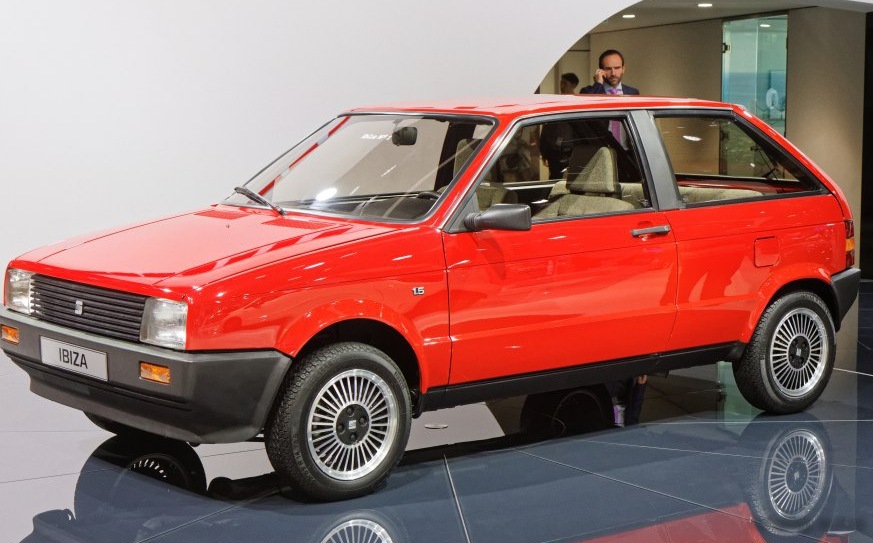
The Seat Ibiza IV (facelift 2015) played a crucial role in maintaining Seat’s presence and competitiveness in the highly important European supermini segment during its production run from 2015 to 2017. While the Ibiza nameplate has a long and storied history for Seat, dating back to 1984, the fourth generation, particularly after its 2015 update, continued to embody the brand’s core values: a youthful and sporty image, practical functionality, and strong value for money.
In its primary market, the Ibiza faced formidable competition from well-established rivals such as the Volkswagen Polo (with which it shared a platform), Ford Fiesta, Renault Clio, Peugeot 208, and Opel Corsa. The 2015 facelift ensured that the Ibiza remained a compelling option by addressing previous interior criticisms with improved materials and technology, while its exterior styling continued to appeal to buyers looking for a more distinctive and less conservative alternative to some of its German counterparts. The 1.0-liter (75 Hp) variant, in particular, was strategically positioned as an entry-level offering, providing excellent fuel economy and low running costs, which are paramount considerations for European buyers in this class. Its Euro 6 emission compliance was also a significant selling point, demonstrating Seat’s commitment to environmental standards.
The Ibiza’s impact extended beyond just sales figures; it helped solidify Seat’s brand identity as the sportier, more emotionally charged member of the Volkswagen Group. Its agile chassis, derived from the robust PQ25 platform, contributed to a driving experience that was often praised for its responsiveness and engagement, especially when compared to some of its more comfort-oriented rivals. The model’s success allowed Seat to attract a younger demographic, many of whom were first-time car buyers or those seeking an economical second car for urban use.
Ultimately, the Seat Ibiza IV (facelift 2015) served as a successful interim model, bridging the gap to the fifth-generation Ibiza introduced in 2017. It demonstrated that a well-executed facelift could significantly extend a car’s lifecycle and maintain its relevance in a fast-evolving market. Its legacy is one of a practical, stylish, and efficient supermini that successfully upheld Seat’s reputation for delivering dynamic and value-driven vehicles to the European automotive landscape.