The Renault Megane II Coupe 1.5 dCi: A European Compact Innovator
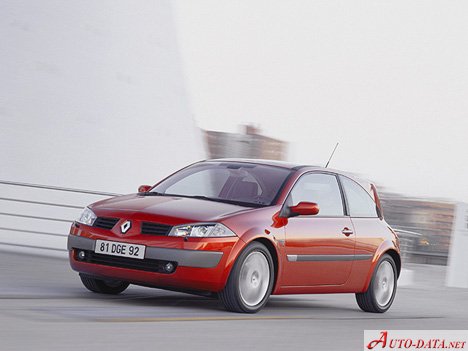
The Renault Megane II Coupe 1.5 dCi (82 Hp) represents a significant chapter in the history of compact European automobiles. Launched in 2002 as part of the second generation of the Renault Megane, this particular variant embodied a bold design philosophy combined with a focus on fuel efficiency, a hallmark of European diesel powertrains. While the Renault Megane II was never officially sold in the United States market, it carved out a substantial niche in Europe and other international markets, becoming a strong contender in the highly competitive C-segment. This 3-door coupe model, produced from 2002 to 2005, stood out with its distinctive styling and practical packaging, offering a compelling blend of economy and everyday usability for its target audience.
The Megane II generation was celebrated for its radical departure from its predecessor’s more conservative styling, introducing a design language that was both polarizing and influential. The 1.5 dCi (82 Hp) engine variant specifically highlighted Renault’s commitment to accessible diesel technology, providing impressive fuel economy and lower emissions at a time when environmental concerns were gaining increasing prominence in the automotive industry.
Engine and Performance of the Renault Megane II Coupe 1.5 dCi
At the heart of the Renault Megane II Coupe 1.5 dCi lies the renowned K9K engine, a 1.5-liter (1461 cm3 or 89.16 cu. in.) inline-four diesel unit. This powertrain architecture utilized a common rail direct fuel injection system, coupled with a turbocharger and intercooler, to deliver a balance of power and exceptional efficiency. The engine produced a modest yet capable 82 horsepower at 4000 revolutions per minute (rpm) and a respectable 136.45 lb.-ft. of torque at a low 2000 rpm. This low-end torque was particularly beneficial for city driving and relaxed cruising, making the car feel more responsive than its horsepower figure might suggest.
Power was delivered to the front wheels via a smooth-shifting 5-speed manual transmission, a common and reliable setup for compact cars of this era. In terms of acceleration, the Megane II Coupe 1.5 dCi achieved 0 to 60 miles per hour in 13.6 seconds, with a top speed of 105.63 mph (170 km/h). While not a performance powerhouse, its emphasis was clearly on economical operation. The official combined fuel economy figures were outstanding for its time, achieving an impressive 52.3 US miles per gallon (4.5 liters per 100 km). Urban driving saw consumption at 42.8 US mpg (5.5 l/100 km), while extra-urban cruising could yield up to 60.3 US mpg (3.9 l/100 km). With CO2 emissions rated at 117 g/km and meeting Euro 3 emission standards, this variant was a leader in environmental consideration for its class.
Design and Features
The design of the Renault Megane II Coupe was undeniably its most striking feature. Breaking away from the conventional hatchback silhouette, the 3-door coupe adopted a distinctive “bustle-back” rear styling, characterized by a steeply raked rear window and a pronounced, almost vertical trunk lid. This bold aesthetic, conceived under the direction of then-Renault design chief Patrick le Quément, was a significant talking point upon its launch and contributed to the Megane II’s reputation for avant-garde styling in the compact segment. The overall length of the vehicle was 165.71 inches, with a width of 69.96 inches and a height of 57.4 inches, riding on a 103.35-inch wheelbase.
Despite its coupe designation, the Megane II Coupe offered practical seating for five occupants. The interior, while less overtly radical than the exterior, was ergonomically designed with a focus on comfort and user-friendliness. Standard features for the era included power steering, an anti-lock braking system (ABS) for enhanced safety, and a robust chassis setup. The front suspension utilized an independent McPherson strut system, while the rear featured a torsion beam, a common and cost-effective solution for compact front-wheel-drive vehicles that provided a good balance of ride comfort and handling. Braking was handled by ventilated discs at the front and solid discs at the rear, ensuring adequate stopping power. The trunk space was surprisingly versatile for a coupe, offering a minimum of 11.65 cubic feet, expandable to 42.02 cubic feet with the rear seats folded down, showcasing its practical side.
Technical Specifications: Renault Megane II Coupe 1.5 dCi (82 Hp)
| Category | Specification |
|---|---|
| Brand | Renault |
| Model | Megane II Coupe |
| Type (Engine) | 1.5 dCi (82 Hp) |
| Production Years | 2002 – 2005 |
| Body Type | Coupe, 3 Doors |
| Seating Capacity | 5 |
| Powertrain Architecture | Internal Combustion Engine, Front-Wheel Drive |
| Performance | |
| Fuel Consumption (Urban) | 42.8 US mpg (5.5 l/100 km) |
| Fuel Consumption (Extra Urban) | 60.3 US mpg (3.9 l/100 km) |
| Fuel Consumption (Combined) | 52.3 US mpg (4.5 l/100 km) |
| CO2 Emissions | 117 g/km |
| Fuel Type | Diesel |
| Acceleration 0-60 mph | 13.6 seconds |
| Maximum Speed | 105.63 mph (170 km/h) |
| Emission Standard | Euro 3 |
| Weight-to-Power Ratio | 14.3 kg/Hp (69.8 Hp/tonne) |
| Weight-to-Torque Ratio | 6.4 kg/Nm (157.4 Nm/tonne) |
| Engine Specifications | |
| Power | 82 Hp @ 4000 rpm |
| Power per liter | 56.1 Hp/l |
| Torque | 136.45 lb.-ft. (185 Nm) @ 2000 rpm |
| Engine Layout | Front, Transverse |
| Engine Model/Code | K9K |
| Engine Displacement | 1.5 liters (1461 cm3 / 89.16 cu. in.) |
| Number of Cylinders | 4 |
| Engine Configuration | Inline |
| Cylinder Bore | 2.99 inches (76 mm) |
| Piston Stroke | 3.17 inches (80.5 mm) |
| Compression Ratio | 18.8:1 |
| Valves per Cylinder | 2 |
| Fuel Injection System | Diesel Commonrail |
| Engine Aspiration | Turbocharger, Intercooler |
| Engine Oil Capacity | 4.76 US quarts (4.5 liters) |
| Coolant Capacity | 5.6 US quarts (5.3 liters) |
| Dimensions, Volume, and Weights | |
| Length | 165.71 inches (4209 mm) |
| Width | 69.96 inches (1777 mm) |
| Height | 57.4 inches (1458 mm) |
| Wheelbase | 103.35 inches (2625 mm) |
| Front Track | 59.76 inches (1518 mm) |
| Rear Track | 59.61 inches (1514 mm) |
| Kerb Weight | 2590.43 lbs. (1175 kg) |
| Maximum Weight (GVWR) | 3802.97 lbs. (1725 kg) |
| Maximum Load | 1212.54 lbs. (550 kg) |
| Trunk Space (Minimum) | 11.65 cu. ft. (330 liters) |
| Trunk Space (Maximum) | 42.02 cu. ft. (1190 liters) |
| Fuel Tank Capacity | 15.85 US gallons (60 liters) |
| Maximum Roof Load | 176.37 lbs. (80 kg) |
| Permitted Trailer Load (with brakes) | 2866.01 lbs. (1300 kg) |
| Permitted Trailer Load (without brakes) | 1433 lbs. (650 kg) |
| Permitted Towbar Download | 165.35 lbs. (75 kg) |
| Drag Coefficient (Cd) | 0.35 |
| Minimum Turning Circle | 34.45 feet (10.5 meters) |
| Drivetrain, Brakes, and Suspension | |
| Drive Wheel | Front-wheel drive |
| Gearbox Type | 5-speed manual transmission |
| Front Suspension | Independent type McPherson |
| Rear Suspension | Torsion beam |
| Front Brakes | Ventilated discs |
| Rear Brakes | Disc |
| Assisting Systems | ABS (Anti-lock braking system) |
| Steering Type | Steering rack and pinion |
| Power Steering | Electric Steering |
| Tire Size | 195/65 R15 |
| Wheel Rims Size | 6J x 15 |
Legacy and Market Impact
The Renault Megane II, and particularly its distinctive coupe variant with the 1.5 dCi engine, left a notable mark on the European automotive landscape. Its bold design was a major talking point and helped Renault stand out in a crowded segment dominated by more conventionally styled competitors like the Volkswagen Golf, Opel Astra, and Ford Focus. While not universally loved, the “bustle-back” design garnered significant attention and contributed to the Megane II being awarded the European Car of the Year in 2003, underscoring its innovative approach.
Beyond its aesthetics, the 1.5 dCi engine variant played a crucial role in establishing Renault’s reputation for producing highly efficient and reliable diesel powertrains. The K9K engine, which became a staple across numerous Renault and Nissan models, was lauded for its exceptional fuel economy and relatively low running costs, making the Megane II Coupe 1.5 dCi an attractive proposition for budget-conscious buyers and those facing rising fuel prices. It demonstrated that a compact, stylish car could also be incredibly economical without sacrificing everyday usability.
The Megane II Coupe 1.5 dCi contributed to the broader trend of diesel proliferation in Europe during the early 2000s, offering a compelling alternative to gasoline engines. Its combination of distinctive styling, impressive fuel efficiency, and a comfortable ride ensured its popularity throughout its production run. While its radical design might have limited its appeal in markets outside of Europe, within its primary market, the Renault Megane II Coupe 1.5 dCi remains a testament to Renault’s willingness to innovate and push design boundaries, while simultaneously delivering practical and economical motoring solutions.