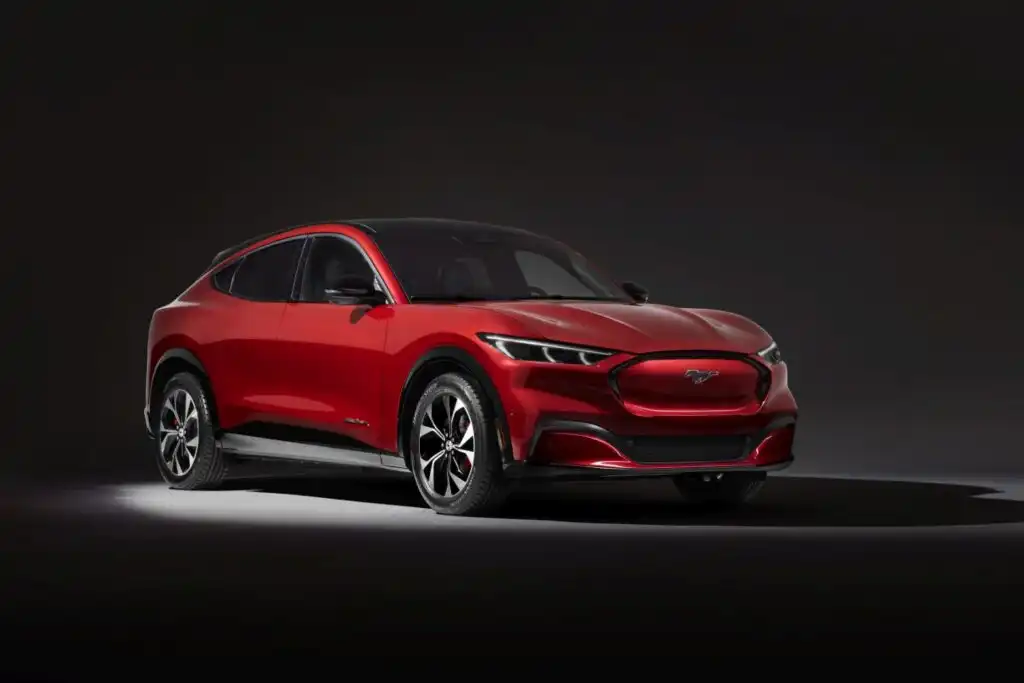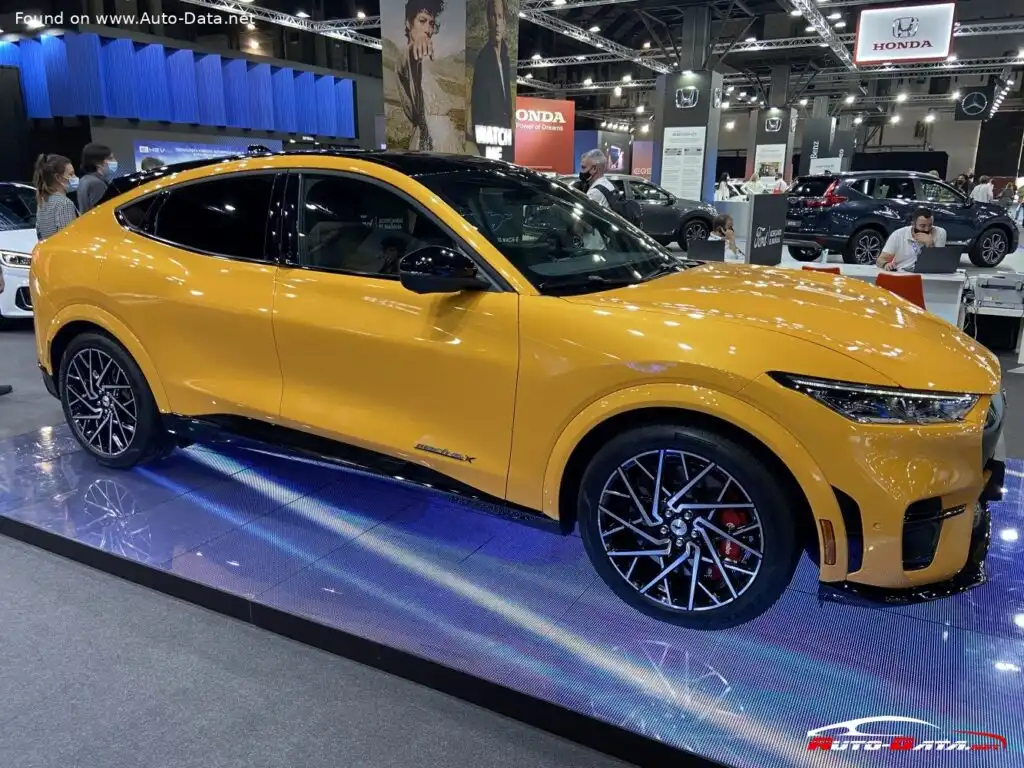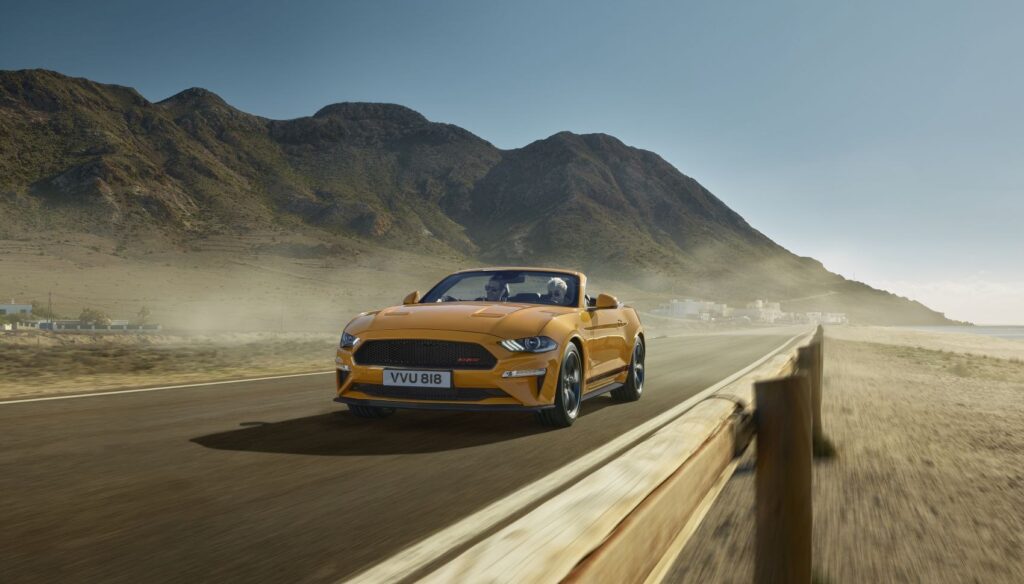
Introduction: The Ford Mustang Convertible VI (facelift 2017) GT/CS 5.0 V8 (450 Hp)
The Ford Mustang, an iconic American muscle car, has captivated enthusiasts worldwide since its debut in 1964. The sixth generation, introduced in 2015, marked a significant evolution for the pony car, featuring an independent rear suspension for the first time across the lineup and a more globally-minded design. The model under scrutiny here is the Ford Mustang Convertible VI, specifically the facelifted version from 2017, equipped with the potent GT/CS 5.0 V8 engine producing 450 horsepower. This particular variant, produced between March 2022 and 2023, represents the California Special (GT/CS) package, combining classic Mustang aesthetics with contemporary performance and open-air driving pleasure. Positioned in the performance convertible segment, it offers a compelling blend of raw power, distinctive styling, and modern amenities, appealing to drivers seeking a visceral American driving experience.
The GT/CS package, a nod to the original 1968 California Special, adds unique styling cues that differentiate it from standard GT models. These typically include distinctive wheels, specific badging, unique grille designs, and interior enhancements, all designed to evoke a sense of heritage while delivering a fresh, aggressive look. As a modern iteration, this Mustang Convertible continues the tradition of offering a powerful V8 engine in a two-door, four-seat cabriolet configuration, designed for spirited driving and cruising alike.
Engine and Performance of the Ford Mustang Convertible VI (facelift 2017) GT/CS 5.0 V8 (450 Hp)
At the heart of the Ford Mustang Convertible VI (facelift 2017) GT/CS lies the revered 5.0-liter “Coyote” V8 engine, a naturally aspirated powerhouse known for its high-revving character and robust output. In this 2022-2023 iteration, the engine delivers an impressive 450 horsepower at 7000 rpm, complemented by a substantial 390.17 lb.-ft. of torque peaking at 4600 rpm. This potent combination ensures exhilarating performance, propelling the convertible from 0 to 60 mph in a mere 4.6 seconds. The top speed is electronically limited to 154.72 mph, a testament to its formidable capabilities.
The Coyote V8 features an advanced powertrain architecture, incorporating both direct injection and multi-port manifold injection systems. This dual-fuel strategy optimizes fuel delivery across the engine’s operating range, enhancing both power output and fuel efficiency. With a compression ratio of 12:1 and a DOHC (Dual Overhead Camshaft) valvetrain with TIVCT (Twin Independent Variable Cam Timing), the engine maximizes volumetric efficiency and allows for precise control over valve timing. Despite its high performance, the engine also integrates modern efficiency technologies such as a Start & Stop system and a particulate filter, helping it meet stringent Euro 6d emission standards, a relevant consideration for its global sales presence.
Power is delivered to the rear wheels via a precise 6-speed manual transmission, offering an engaging and direct driving experience that purists often prefer. The rear-wheel-drive architecture is fundamental to the Mustang’s character, providing classic muscle car dynamics. The weight-to-power ratio stands at a competitive 3.8 kg/Hp (approximately 8.38 lbs/Hp), underscoring the convertible’s impressive acceleration capabilities for its segment.
Design and Features
Exterior Aesthetics and Cabriolet Design
The Ford Mustang Convertible VI (facelift 2017) GT/CS 5.0 V8 (450 Hp) maintains the instantly recognizable, muscular proportions of the sixth-generation Mustang, enhanced by the distinct styling cues of the California Special package. The facelift itself brought a more aggressive front fascia with revised LED headlights and a lower, wider grille, contributing to a more assertive stance. The GT/CS trim typically adds unique five-spoke wheels, a more prominent front splitter, side scoops, and specific badging that harks back to its heritage, ensuring it stands out from other Mustang variants. As a cabriolet, it features a power-operated soft top that retracts quickly, transforming the driving experience into an open-air adventure. The two-door, four-seat configuration allows for comfortable cruising with passengers, though the rear seats are typically best suited for shorter journeys or smaller occupants, a common characteristic of 2+2 convertibles.
Interior and Technology
Inside, the Mustang GT/CS offers a blend of retro-inspired design and modern technology. While specific interior features of the GT/CS can vary by model year and region, they generally include unique upholstery options, special badging on the dashboard and seats, and contrast stitching. The driver-focused cockpit features a digital instrument cluster (introduced with the facelift), providing customizable displays for various driving modes. The infotainment system, typically Ford’s SYNC 3 or later, offers a touchscreen interface with navigation, smartphone integration (Apple CarPlay and Android Auto), and voice commands, ensuring connectivity and entertainment on the go. Standard features like automatic climate control, power-adjustable seats, and a premium audio system contribute to a comfortable and engaging cabin environment.
Chassis and Safety
Underpinning the Mustang Convertible is a sophisticated chassis designed for both performance and ride comfort. The front suspension utilizes an independent McPherson strut setup with coil springs and an anti-roll bar, while the rear features an independent multi-link spring suspension with a stabilizer bar. This independent rear suspension, a significant upgrade for the sixth generation, greatly improves handling, ride quality, and traction, especially over uneven surfaces. Braking performance is handled by large ventilated discs at both the front (380×34 mm) and rear (330×25 mm), coupled with ABS (Anti-lock Braking System) for confident stopping power. The electric power steering system provides precise feedback and can often be adjusted for different driving preferences. Safety features include a suite of airbags, traction control, and stability control systems, common in modern vehicles.
Technical Specifications
| Category | Specification | US Equivalent |
|---|---|---|
General Information |
||
| Brand | Ford | Ford |
| Model | Mustang | Mustang |
| Generation | Mustang Convertible VI (facelift 2017) | Mustang Convertible VI (facelift 2017) |
| Type (Engine) | GT/CS 5.0 V8 (450 Hp) | GT/CS 5.0 V8 (450 Hp) |
| Start of Production | March, 2022 year | March, 2022 |
| End of Production | 2023 year | 2023 |
| Powertrain Architecture | Internal Combustion engine | Internal Combustion engine |
| Body type | Cabriolet | Convertible |
| Seats | 4 | 4 |
| Doors | 2 | 2 |
Performance Specs |
||
| Combined Fuel Consumption (WLTP) | 11.8-12.1 l/100 km | 19.9 – 19.4 US mpg |
| CO2 Emissions (WLTP) | 268-276 g/km | 268-276 g/km |
| Fuel Type | Petrol (Gasoline) | Gasoline |
| Acceleration 0 – 60 mph | 4.6 sec | 4.6 sec |
| Maximum Speed | 249 km/h | 154.72 mph |
| Emission Standard | Euro 6d | Euro 6d |
| Weight-to-Power Ratio | 3.8 kg/Hp | 8.38 lbs/Hp |
| Weight-to-Torque Ratio | 3.3 kg/Nm | 7.28 lbs/Nm |
Engine Specs |
||
| Power | 450 Hp @ 7000 rpm | 450 Hp @ 7000 rpm |
| Power per liter | 89.3 Hp/l | 89.3 Hp/l |
| Torque | 529 Nm @ 4600 rpm | 390.17 lb.-ft. @ 4600 rpm |
| Engine Layout | Front, Longitudinal | Front, Longitudinal |
| Engine Model/Code | Coyote | Coyote |
| Engine Displacement | 5038 cm3 | 307.44 cu. in. (5.0 Liters) |
| Number of Cylinders | 8 | 8 |
| Engine Configuration | V-engine | V-engine |
| Cylinder Bore | 93 mm | 3.66 in. |
| Piston Stroke | 92.7 mm | 3.65 in. |
| Compression Ratio | 12:1 | 12:1 |
| Number of Valves per Cylinder | 4 | 4 |
| Fuel Injection System | Direct injection and Multi-port manifold injection | Direct injection and Multi-port manifold injection |
| Engine Aspiration | Naturally aspirated engine | Naturally aspirated engine |
| Valvetrain | DOHC, TIVCT | DOHC, TIVCT |
| Engine Oil Capacity | 9.5 l | 10.04 US qt |
| Coolant Capacity | 12.88 l | 13.61 US qt |
Engine Systems |
||
| Start & Stop System | Yes | Yes |
| Particulate filter | Yes | Yes |
Space, Volume and Weights |
||
| Kerb Weight | 1732 kg | 3818.41 lbs. |
| Max. Weight | 2150 kg | 4739.94 lbs. |
| Max Load | 418 kg | 921.53 lbs. |
| Trunk (boot) Space – minimum | 332 l | 11.72 cu. ft. |
| Fuel Tank Capacity | 61 l | 16.11 US gal |
Dimensions |
||
| Length | 4789 mm | 188.54 in. |
| Width | 1916 mm | 75.43 in. |
| Width with mirrors folded | 1957 mm | 77.05 in. |
| Width including mirrors | 2081 mm | 81.93 in. |
| Height | 1396 mm | 54.96 in. |
| Wheelbase | 2720 mm | 107.09 in. |
| Front Track | 1642 mm | 64.65 in. |
| Rear (Back) Track | 1642 mm | 64.65 in. |
| Ride Height (Ground Clearance) | 144 mm | 5.67 in. |
| Minimum Turning Circle (Turning Diameter) | 12.2 m | 40.03 ft. |
Drivetrain, Brakes and Suspension Specs |
||
| Drivetrain Architecture | Internal combustion engine (ICE) drives the rear wheels. | Rear-wheel drive. |
| Drive Wheel | Rear wheel drive | Rear wheel drive |
| Number of Gears and Type of Gearbox | 6 gears, manual transmission | 6-speed manual transmission |
| Front Suspension | Independent, type McPherson with coil spring and anti-roll bar | Independent McPherson strut with coil spring and anti-roll bar |
| Rear Suspension | Independent multi-link spring suspension with stabilizer | Independent multi-link spring suspension with stabilizer |
| Front Brakes | Ventilated discs, 380×34 mm | Ventilated discs, 14.96×1.34 in. |
| Rear Brakes | Ventilated discs, 330×25 mm | Ventilated discs, 12.99×0.98 in. |
| Assisting Systems | ABS (Anti-lock braking system) | ABS (Anti-lock braking system) |
| Steering Type | Steering rack and pinion | Steering rack and pinion |
| Power Steering | Electric Steering | Electric Power Steering |
| Tires Size | Front: 255/40 R19; Rear: 275/40 R19 | Front: 255/40 R19; Rear: 275/40 R19 |
| Wheel Rims Size | Front: 9J x 19; Rear: 9.5J x 19 | Front: 9J x 19; Rear: 9.5J x 19 |
Legacy and Market Impact
The Ford Mustang, particularly in its GT/CS convertible guise, holds a significant position in the automotive landscape, both in the United States and increasingly in global markets. As a modern muscle car, it continues to embody the spirit of American performance, offering a unique blend of heritage, power, and style that few competitors can match. The sixth generation, with its independent rear suspension and more refined chassis, elevated the Mustang beyond its traditional straight-line prowess, making it a more capable and sophisticated sports car on twisty roads.
The GT/CS package, a recurring special edition, plays a crucial role in maintaining the Mustang’s connection to its rich history. It appeals to enthusiasts who appreciate the blend of modern performance with nostalgic styling cues, making it a collector’s item in its own right even as a new vehicle. This careful balance of tradition and innovation has allowed the Mustang to remain relevant and desirable for decades.
In the North American market, the Mustang Convertible GT/CS competes primarily against the Chevrolet Camaro Convertible and, to a lesser extent, performance variants of the Dodge Challenger (though the Challenger does not offer a convertible option in its modern form, it’s a key rival for the muscle car segment). The Mustang distinguishes itself with its iconic styling, the visceral experience of its naturally aspirated Coyote V8, and the open-air driving pleasure of the convertible. While European and Asian markets have different competitive landscapes, the Mustang’s global availability has broadened its appeal, introducing the American muscle car experience to a wider audience, albeit with adjustments for local regulations and tastes.
The 2022-2023 Ford Mustang Convertible VI (facelift 2017) GT/CS 5.0 V8 (450 Hp) stands as a testament to Ford’s commitment to its most celebrated nameplate. It represents the pinnacle of the naturally aspirated V8 convertible experience in its generation, offering enthusiasts a potent combination of raw power, engaging driving dynamics, and a timeless design. Its legacy is cemented not just by its performance figures, but by its enduring cultural impact as a symbol of freedom and American automotive ingenuity.