The Opel Rekord E Caravan (facelift 1982): A Stalwart of European Motoring
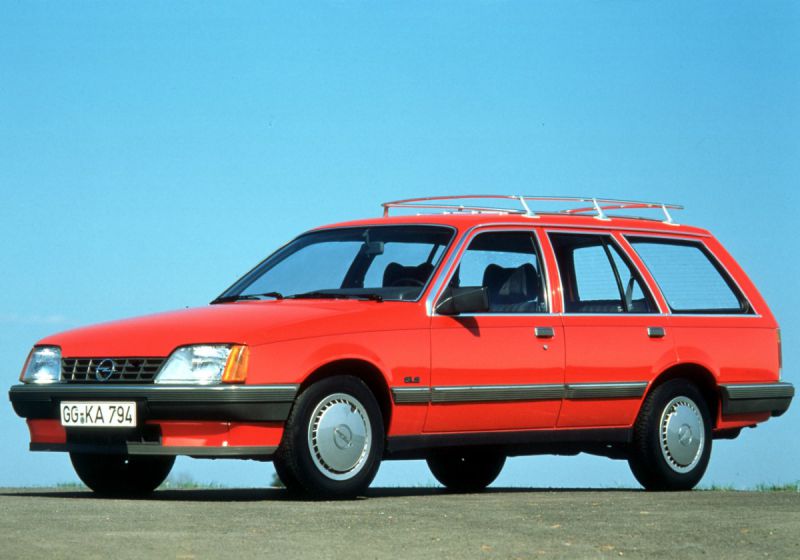
The Opel Rekord E Caravan (facelift 1982) represents a significant chapter in the history of European family transportation. Produced by the German automaker Opel, a subsidiary of General Motors, the Rekord series was a long-running and highly successful line of executive cars and family vehicles, particularly popular across Western Europe. The E-generation, launched in 1977, received a notable facelift in September 1982, bringing updated styling and minor mechanical refinements that kept it competitive into the mid-1980s. This particular variant, the 2.0 S (101 Hp) Automatic, exemplifies the practical and reliable motoring Opel offered to families and businesses alike, serving as a dependable station wagon (or estate car, as it’s known in Europe) designed for utility and comfort. While never officially sold in the United States, the Rekord E Caravan played a crucial role in Opel’s strategy to provide accessible, robust vehicles for the European market.
Engine & Performance of the Opel Rekord E Caravan (facelift 1982)
Under the hood, the Opel Rekord E Caravan (facelift 1982) 2.0 S was powered by Opel’s venerable 2.0-liter (1979 cm³ or 120.77 cu. in.) inline-four engine, designated with the code “20S.” This naturally aspirated powerplant utilized a carburetor fuel injection system, a common and reliable setup for its era, and featured a Single Overhead Camshaft (SOHC) valvetrain with two valves per cylinder. It delivered a respectable 101 horsepower at 5400 rpm, generating a solid 115.06 lb.-ft. (156 Nm) of torque at a lower 3800 rpm. This engine was known for its smooth operation and durability, characteristics highly valued by buyers of family wagons.
Mated to a 3-speed automatic transmission, the powertrain was designed for ease of driving and comfortable cruising rather than outright speed. The Rekord E Caravan 2.0 S could accelerate from 0 to 60 mph in a measured 14.3 seconds, reaching a maximum speed of 105 mph (169 km/h). While these figures might seem modest by today’s standards, they were entirely adequate for the typical usage patterns of a family station wagon in the early 1980s, which prioritized cargo capacity and passenger comfort over blistering acceleration. Fuel economy for the combined cycle was rated at approximately 25 US mpg (9.4 l/100 km), which was competitive for a vehicle of its size and weight with an automatic transmission at the time. The rear-wheel-drive architecture, a hallmark of many Opel models from this era, provided predictable handling and robust traction, especially when laden.
Design & Features
The Opel Rekord E Caravan (facelift 1982) embraced a functional yet clean design aesthetic, characteristic of early 1980s European cars. As a station wagon, its primary purpose was utility, reflected in its spacious interior and expansive cargo area. The facelift in 1982 introduced minor cosmetic changes, primarily to the front fascia, enhancing its contemporary appeal without fundamentally altering its practical silhouette. The body type offered 3 to 5 doors, providing flexibility for different market preferences, all while accommodating five occupants comfortably.
Measuring 184.17 inches (4678 mm) in length, 67.72 inches (1720 mm) in width, and 58.07 inches (1475 mm) in height, the Rekord Caravan was a substantial vehicle, offering generous interior space. Its 105.04-inch (2668 mm) wheelbase contributed to a stable ride, a crucial attribute for long-distance family travel. With a curb weight of 2601.45 lbs (1180 kg) and a maximum permissible weight of 3968.32 lbs (1800 kg), it boasted a significant maximum load capacity of 1366.87 lbs (620 kg), underscoring its role as a workhorse. The ample 18.49 US gallon (70-liter) fuel tank provided a good cruising range, reducing the frequency of fuel stops on journeys.
In terms of chassis, the Rekord E featured ventilated disc brakes at the front and traditional drum brakes at the rear, a common setup for family cars of the period, offering reliable stopping power. The drivetrain maintained a rear-wheel-drive configuration, which was simple, robust, and familiar to many drivers. While the drag coefficient of 0.40 might seem high by modern aerodynamic standards, it was typical for a boxy station wagon of its era. The minimum turning circle of 35.43 feet (10.8 m) ensured reasonable maneuverability for a vehicle of its size.
Technical Specifications
| Category | Specification | US Equivalent |
|---|---|---|
| General Information | ||
| Brand | Opel | |
| Model | Rekord E Caravan (facelift 1982) 2.0 S (101 Hp) Automatic | |
| Production Start | September, 1982 | |
| Production End | August, 1984 | |
| Body Type | Station wagon (estate) | |
| Seats | 5 | |
| Doors | 3-5 | |
| Powertrain Architecture | Internal Combustion Engine, Rear-Wheel Drive | |
| Performance Specs | ||
| Fuel Consumption (Combined) | 9.4 l/100 km | 25 US mpg |
| Fuel Type | Petrol (Gasoline) | |
| Acceleration 0 – 60 mph | 14.3 sec | 14.3 sec |
| Acceleration 0 – 100 km/h | 15 sec | 15 sec |
| Maximum Speed | 169 km/h | 105.01 mph |
| Weight-to-Power Ratio | 11.7 kg/Hp | 25.79 lbs/Hp |
| Weight-to-Torque Ratio | 7.6 kg/Nm | 16.75 lbs/Nm |
| Engine Specs | ||
| Power | 101 Hp @ 5400 rpm | 101 Hp @ 5400 rpm |
| Torque | 156 Nm @ 3800 rpm | 115.06 lb.-ft. @ 3800 rpm |
| Engine Model/Code | 20S | |
| Engine Displacement | 1979 cm³ | 120.77 cu. in. |
| Number of Cylinders | 4 | |
| Engine Configuration | Inline | |
| Cylinder Bore | 95 mm | 3.74 in. |
| Piston Stroke | 69.8 mm | 2.75 in. |
| Compression Ratio | 9:1 | |
| Valves per Cylinder | 2 | |
| Fuel Injection System | Carburetor | |
| Engine Aspiration | Naturally aspirated | |
| Valvetrain | SOHC | |
| Engine Oil Capacity | 3.8 l | 4.02 US qt |
| Coolant Capacity | 6.1 l | 6.45 US qt |
| Space, Volume and Weights | ||
| Kerb Weight | 1180 kg | 2601.45 lbs. |
| Max. Weight | 1800 kg | 3968.32 lbs. |
| Max Load | 620 kg | 1366.87 lbs. |
| Fuel Tank Capacity | 70 l | 18.49 US gal |
| Permitted Trailer Load with Brakes (12%) | 1250 kg | 2755.78 lbs. |
| Permitted Trailer Load without Brakes | 535 kg | 1179.47 lbs. |
| Dimensions | ||
| Length | 4678 mm | 184.17 in. |
| Width | 1720 mm | 67.72 in. |
| Height | 1475 mm | 58.07 in. |
| Wheelbase | 2668 mm | 105.04 in. |
| Front Track | 1435 mm | 56.5 in. |
| Rear Track | 1432 mm | 56.38 in. |
| Ride Height (Ground Clearance) | 140 mm | 5.51 in. |
| Drag Coefficient (Cd) | 0.40 | |
| Minimum Turning Circle | 10.8 m | 35.43 ft. |
| Drivetrain, Brakes and Suspension | ||
| Drive Wheel | Rear-wheel drive | |
| Number of Gears | 3 | |
| Type of Gearbox | Automatic transmission | |
| Front Brakes | Ventilated discs | |
| Rear Brakes | Drum | |
Legacy & Market Impact of the Opel Rekord E Caravan (facelift 1982)
The Opel Rekord E, and particularly its Caravan variant, was a cornerstone of Opel’s lineup and a ubiquitous sight on European roads during its production run. The facelifted model from 1982 to 1984 continued its legacy as a reliable, spacious, and affordable family car. It competed fiercely with contemporaries like the Ford Sierra Estate, Volkswagen Passat Variant, and various models from Peugeot, Renault, and Volvo, all vying for market share in the highly competitive European mid-size segment. The Rekord’s reputation was built on its robustness, straightforward engineering, and ease of maintenance, making it a popular choice for both private owners and fleet operators.
The Opel Rekord E Caravan (facelift 1982) was more than just a car; it was a symbol of practical motoring for the European middle class. Its ability to swallow vast amounts of luggage, serve as a dependable daily driver, and even handle light towing duties (with a permitted trailer load of 2755.78 lbs or 1250 kg with brakes) solidified its position as a versatile workhorse. The automatic transmission option, as seen in this 2.0 S model, further enhanced its appeal for those seeking a more relaxed driving experience in increasingly congested urban environments.
Although the Rekord nameplate would eventually be retired in favor of the Omega in 1986, the E-generation, especially the facelifted models, represented the peak of its development. It showcased Opel’s commitment to building solid, no-nonsense vehicles that met the real-world needs of its customers. Today, the Opel Rekord E Caravan is remembered as a classic example of German automotive engineering from the early 1980s, valued by enthusiasts for its heritage, simple mechanics, and enduring charm as a functional and unpretentious family car. Its impact on the European automotive landscape was profound, demonstrating how a well-engineered, practical vehicle could successfully cater to a broad audience for decades.