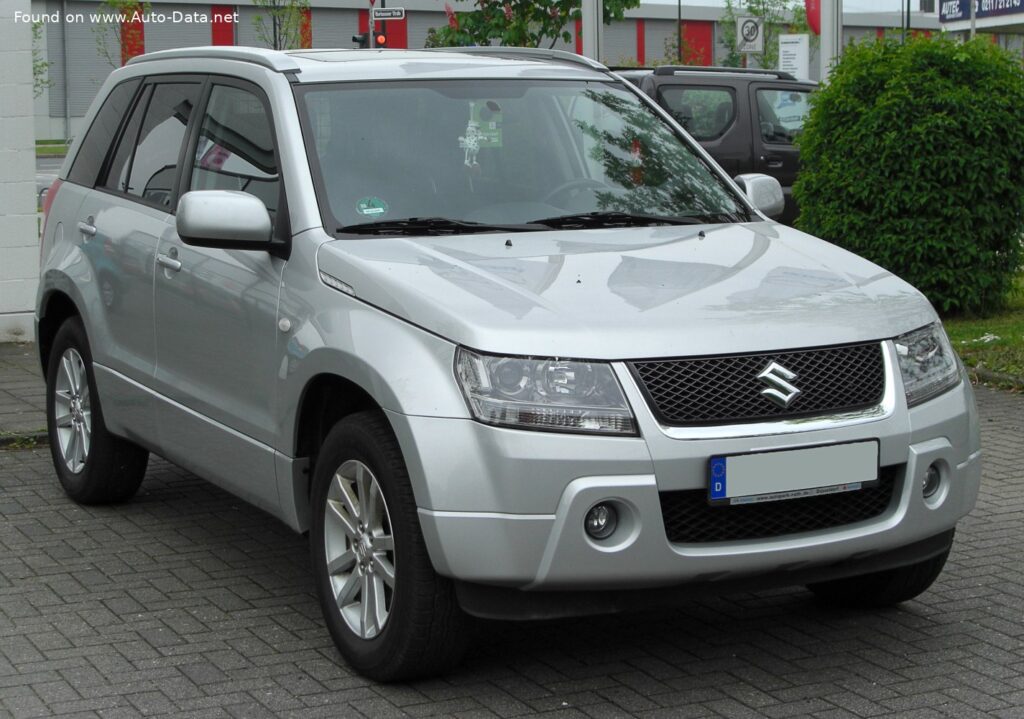
The Suzuki Grand Vitara II 5 Door 1.9 DDiS (129 Hp): A European Workhorse
The Suzuki Grand Vitara II 5 Door 1.9 DDiS (129 Hp), produced between 2005 and 2008, represents a significant chapter in Suzuki’s global automotive strategy, particularly outside the North American market. As a compact SUV, this second-generation Grand Vitara, known for its robust construction and capable all-wheel-drive system, was a popular choice in European and other international markets where diesel powertrains held considerable appeal. While its gasoline-powered siblings were familiar sights in the United States, this specific diesel variant underscored Suzuki’s commitment to offering diverse powertrain options tailored to regional demands. It carved out a niche as a practical, economical, and surprisingly capable vehicle, blending urban usability with genuine off-road credentials.
The Grand Vitara II generation marked a departure from its more utilitarian predecessors, adopting a monocoque body with an integrated ladder frame, a design choice that offered a superior balance of on-road refinement and off-road ruggedness. The 1.9 DDiS model, in particular, was positioned as an economical yet torquey option for consumers seeking efficiency without sacrificing the versatility and all-weather capability expected from a Suzuki SUV. This article delves into the technical specifications, design philosophy, and market impact of this distinctive variant, highlighting its role in Suzuki’s global portfolio.
Engine and Performance of the Suzuki Grand Vitara II 5 Door 1.9 DDiS (129 Hp)
At the heart of the Suzuki Grand Vitara II 5 Door 1.9 DDiS (129 Hp) lay a robust 1.9-liter (1870 cm3 or 114.11 cu. in.) F9Q inline-four diesel engine. This powerplant, developed in collaboration with Renault, was a common sight in various European vehicles of the era, attesting to its reliability and proven performance. Equipped with a common rail fuel injection system, a turbocharger, and an intercooler, the engine was designed to deliver a potent combination of power and efficiency. It produced a respectable 129 horsepower at 3750 RPM, providing ample motivation for daily driving and light off-road excursions.
More critically for a diesel SUV, the 1.9 DDiS engine generated a substantial 221.27 lb.-ft. of torque at a low 2000 RPM. This characteristic low-end torque was instrumental in the vehicle’s off-road prowess, enabling easier climbs and confident towing capabilities. Mated exclusively to a 5-speed manual transmission, the powertrain channeled its output through a sophisticated all-wheel-drive (4×4) system, further enhancing its versatility in varying conditions.
In terms of acceleration, the Grand Vitara II 1.9 DDiS managed a 0 to 60 mph sprint in approximately 12.5 seconds, with a top speed of 106.25 mph. While not a performance leader, these figures were competitive for its segment and purpose. Where the diesel engine truly shined was in its fuel economy. The combined fuel consumption was rated at an impressive 30.5 US mpg, with extra-urban driving yielding up to 35.1 US mpg. These figures were a significant draw for European consumers facing higher fuel prices, making the 1.9 DDiS a cost-effective choice for long-distance travel and everyday commuting. The 17.44 US gallon fuel tank provided a considerable cruising range.
Design and Features
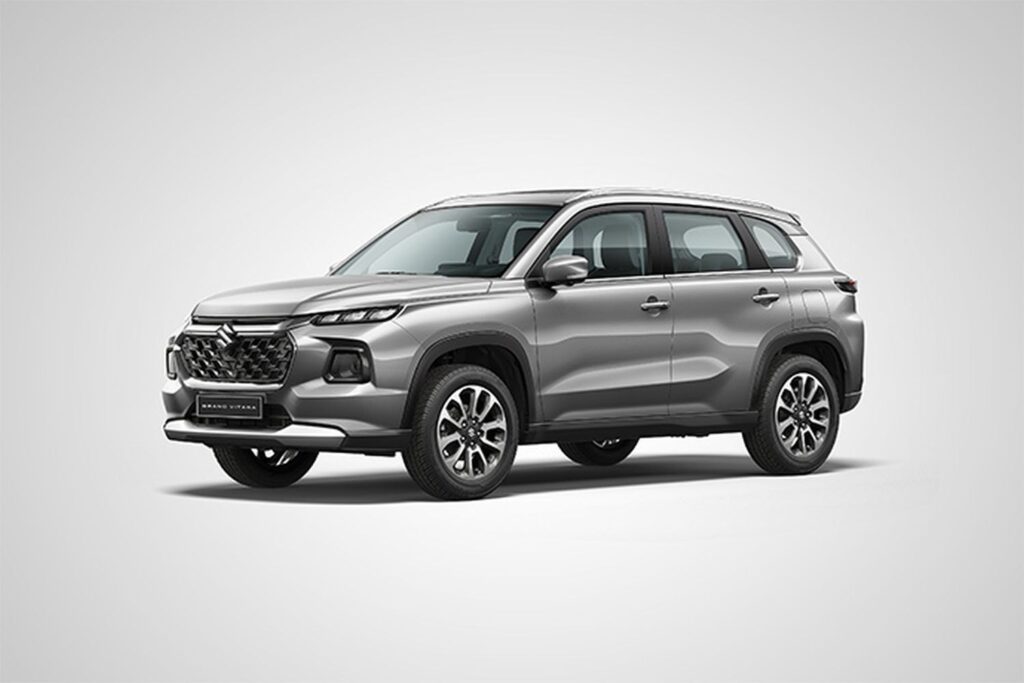
The Suzuki Grand Vitara II 5 Door featured a contemporary and purposeful design, moving away from the more boxy aesthetics of its predecessors towards a sleeker, more integrated look. As a 5-door SUV, it offered practical access to its five-seat cabin, making it suitable for families and adventurers alike. The exterior dimensions of 175.98 inches in length, 71.26 inches in width, and 66.73 inches in height provided a substantial road presence, while the 103.94-inch wheelbase contributed to a stable ride and generous interior space.
Visually, the Grand Vitara II presented a blend of ruggedness and sophistication. Its strong shoulder lines, flared wheel arches, and prominent grille conveyed an image of capability, while refined details ensured it didn’t look out of place in urban environments. The vehicle rode on 17-inch wheels, typically fitted with 225/65 R17 tires, providing a good balance between on-road comfort and off-road traction.
Underneath its appealing exterior, the Grand Vitara II was engineered for durability and competence. The suspension system comprised a spring strut setup at the front and coil springs at the rear, designed to absorb road imperfections while maintaining composure during off-road excursions. Braking duties were handled by ventilated discs at the front and drum brakes at the rear, complemented by an Anti-lock Braking System (ABS) for enhanced safety and control in emergency stopping situations. The steering system utilized a precise rack and pinion setup, offering responsive handling for an SUV of its size. The kerb weight of 3659.67 lbs. (1660 kg) and a maximum load capacity of 903.9 lbs. (410 kg) further highlighted its robust construction and utility.
Technical Specifications: Suzuki Grand Vitara II 5 Door 1.9 DDiS (129 Hp)
| Category | Specification | US Equivalent |
|---|---|---|
| General Information | ||
| Brand | Suzuki | Suzuki |
| Model | Grand Vitara | Grand Vitara |
| Generation | Grand Vitara II 5 Door | Grand Vitara II 5 Door |
| Type (Engine) | 1.9 DDiS (129 Hp) | 1.9 DDiS (129 Hp) |
| Start of Production | 2005 year | 2005 |
| End of Production | 2008 year | 2008 |
| Powertrain Architecture | Internal Combustion engine | Internal Combustion engine |
| Body type | SUV | SUV |
| Seats | 5 | 5 |
| Doors | 5 | 5 |
| Performance Specifications | ||
| Fuel consumption (urban) | 9.4 l/100 km | 25 US mpg |
| Fuel consumption (extra urban) | 6.7 l/100 km | 35.1 US mpg |
| Fuel consumption (combined) | 7.7 l/100 km | 30.5 US mpg |
| Fuel Type | Diesel | Diesel |
| Acceleration 0 – 60 mph | 12.5 sec | 12.5 sec |
| Maximum speed | 171 km/h | 106.25 mph |
| Weight-to-power ratio | 12.9 kg/Hp | 77.7 Hp/tonne |
| Weight-to-torque ratio | 5.5 kg/Nm | 180.7 Nm/tonne |
| Engine Specifications | ||
| Power | 129 Hp @ 3750 rpm. | 129 Hp @ 3750 rpm. |
| Power per liter | 69 Hp/l | 69 Hp/l |
| Torque | 300 Nm @ 2000 rpm. | 221.27 lb.-ft. @ 2000 rpm. |
| Engine layout | Front, Longitudinal | Front, Longitudinal |
| Engine Model/Code | F9Q | F9Q |
| Engine displacement | 1870 cm3 | 1.9 liters (114.11 cu. in.) |
| Number of cylinders | 4 | 4 |
| Engine configuration | Inline | Inline |
| Cylinder Bore | 80 mm | 3.15 in. |
| Piston Stroke | 93 mm | 3.66 in. |
| Compression ratio | 17:1 | 17:1 |
| Fuel injection system | Diesel Commonrail | Diesel Commonrail |
| Engine aspiration | Turbocharger, Intercooler | Turbocharger, Intercooler |
| Engine oil capacity | 5.1 l | 5.39 US qt |
| Coolant capacity | 7.5 l | 7.93 US qt |
| Space, Volume and Weights | ||
| Kerb Weight | 1660 kg | 3659.67 lbs. |
| Max. weight | 2070 kg | 4563.57 lbs. |
| Max load | 410 kg | 903.9 lbs. |
| Fuel tank capacity | 66 l | 17.44 US gal |
| Dimensions | ||
| Length | 4470 mm | 175.98 in. |
| Width | 1810 mm | 71.26 in. |
| Height | 1695 mm | 66.73 in. |
| Wheelbase | 2640 mm | 103.94 in. |
| Front track | 1540 mm | 60.63 in. |
| Rear (Back) track | 1570 mm | 61.81 in. |
| Drivetrain, Brakes and Suspension Specifications | ||
| Drive wheel | All wheel drive (4×4) | All wheel drive (4×4) |
| Number of gears and type of gearbox | 5 gears, manual transmission | 5 gears, manual transmission |
| Front suspension | Spring Strut | Spring Strut |
| Rear suspension | Coil spring | Coil spring |
| Front brakes | Ventilated discs | Ventilated discs |
| Rear brakes | Drum | Drum |
| Assisting systems | ABS (Anti-lock braking system) | ABS (Anti-lock braking system) |
| Steering type | Steering rack and pinion | Steering rack and pinion |
| Tires size | 225/65 R17 | 225/65 R17 |
| Wheel rims size | 17 | 17-inch |
Legacy and Market Impact of the Suzuki Grand Vitara II 5 Door 1.9 DDiS (129 Hp)
The Suzuki Grand Vitara II 5 Door 1.9 DDiS (129 Hp) carved out a distinct legacy in the global compact SUV market, particularly in regions where diesel power and genuine off-road capability were highly valued. While Suzuki’s presence in the North American market often focused on smaller cars and gasoline-powered SUVs, the 1.9 DDiS variant was a cornerstone of its offerings in Europe, Australia, and parts of Asia. It built upon Suzuki’s long-standing reputation for producing reliable, no-nonsense 4×4 vehicles, evolving the formula to meet modern demands for comfort, safety, and fuel efficiency.
Its primary appeal lay in its unique blend of features. Unlike many soft-roaders that prioritized on-road manners above all else, the Grand Vitara II retained a robust all-wheel-drive system and a substantial ground clearance, making it genuinely capable off the beaten path. The diesel engine further enhanced this appeal, providing the torque necessary for challenging terrain and towing, while simultaneously delivering impressive fuel economy for everyday driving. This duality made it a favorite among those who needed a versatile vehicle that could handle both city commutes and weekend adventures.
In its competitive landscape, the Grand Vitara II 1.9 DDiS faced rivals such as the Toyota RAV4, Honda CR-V, Nissan X-Trail, Land Rover Freelander, Hyundai Tucson, and Kia Sportage. However, the Suzuki often stood out due to its more traditional 4×4 architecture (albeit integrated into a monocoque), which offered greater ruggedness than some of its more car-like competitors. The availability of a powerful and economical diesel engine further differentiated it in markets where many competitors offered less compelling diesel options or none at all.
The vehicle’s solid build quality, proven powertrain, and competitive pricing contributed to its strong reputation for value and durability. Owners often praised its reliability and relatively low running costs, cementing its status as a dependable workhorse. While its interior might not have been as luxurious as some European rivals, its practicality and ergonomic design were widely appreciated.
Historically, the Grand Vitara II represented a pivotal moment for Suzuki, demonstrating its ability to adapt its core strengths in off-road engineering to the evolving compact SUV segment. The 1.9 DDiS model, though not sold in the US, was a testament to Suzuki’s global engineering prowess and its understanding of diverse market needs. It solidified Suzuki’s position as a serious contender in the SUV market, offering a compelling package that balanced traditional 4×4 virtues with modern efficiency and comfort. Its legacy endures as a practical, capable, and economical choice for drivers who sought more than just a city-bound crossover.