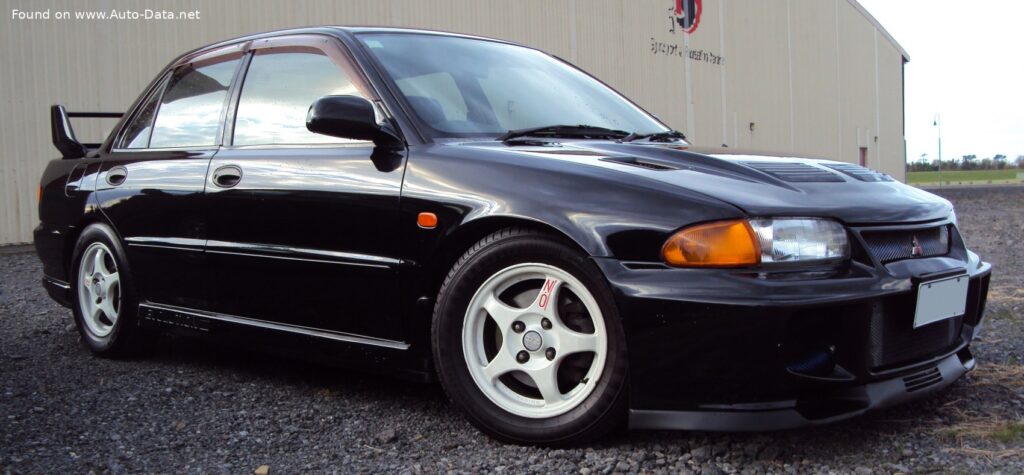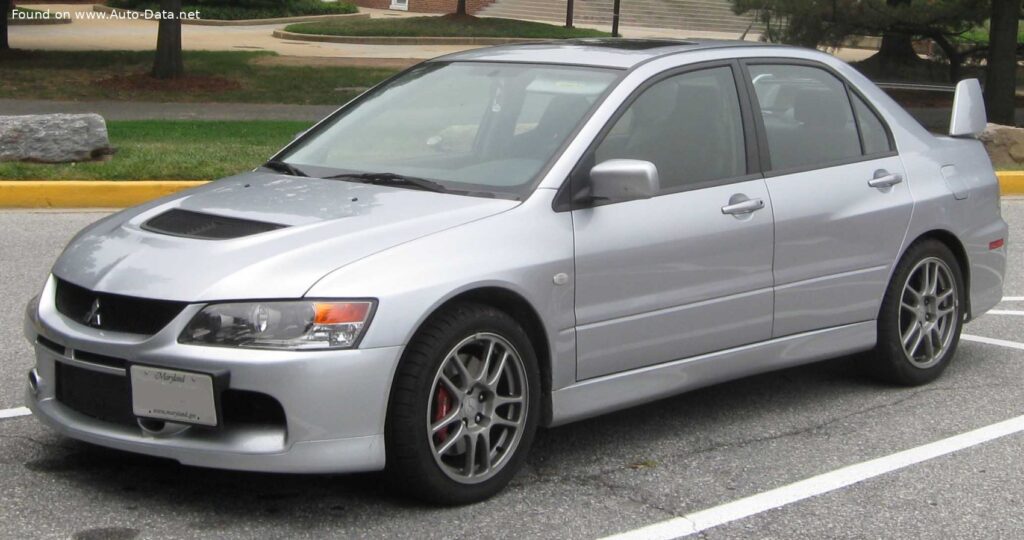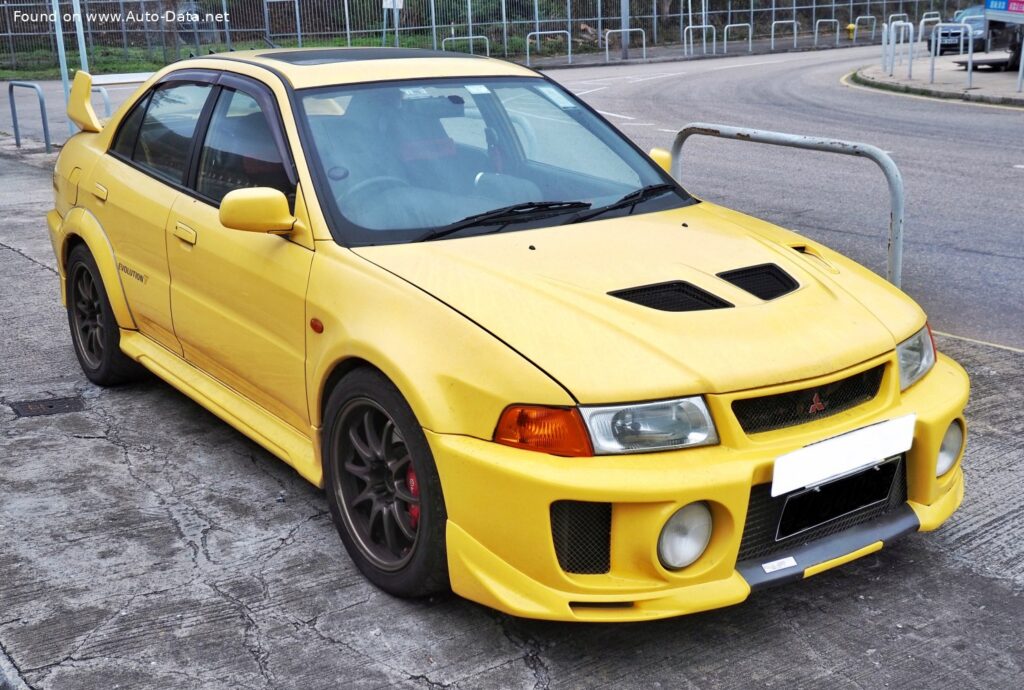
Introduction to the Mitsubishi Lancer Cedia 1.5i (105 Hp)
The Mitsubishi Lancer Cedia 1.5i (105 Hp) represents a pivotal moment in the evolution of Mitsubishi’s highly successful Lancer compact car line. Launched in 2000, the Lancer Cedia generation marked a significant departure from its predecessors, introducing a more contemporary design, enhanced safety features, and advanced powertrain technology. Primarily aimed at the Japanese Domestic Market (JDM) and various Asian markets, the Cedia, an acronym for “Century Diamond,” symbolized Mitsubishi’s vision for the new millennium: a blend of sophistication, efficiency, and practicality. This particular variant, equipped with the 1.5-liter engine producing 105 horsepower, was positioned as a sensible and economical choice within the lineup, catering to drivers seeking reliability and fuel economy without sacrificing modern amenities.
During its production run from 2000 to 2004, the Lancer Cedia showcased Mitsubishi’s engineering prowess, particularly in its focus on powertrain refinement and interior ergonomics. While not widely available in the United States under the “Cedia” moniker, its underlying platform and technological advancements influenced subsequent Lancer models that did make it to American shores. The Lancer Cedia 1.5i (105 Hp) was a testament to Mitsubishi’s commitment to delivering a well-rounded compact sedan that could meet the demands of urban commuting and family transport in its primary markets.
Engine & Performance of the Mitsubishi Lancer Cedia
Powertrain Architecture and Specifications
Under the hood, the Mitsubishi Lancer Cedia 1.5i (105 Hp) featured Mitsubishi’s renowned 4G15 engine, a naturally aspirated, inline four-cylinder unit. This engine, known for its robust construction and efficiency, was configured with a Double Overhead Camshaft (DOHC) valvetrain and four valves per cylinder, totaling 16 valves. A notable technological advancement for its class at the turn of the millennium was the implementation of a direct injection fuel system, a feature more commonly found in higher-end vehicles at the time. This system contributed to improved fuel atomization, leading to better combustion efficiency, enhanced power delivery, and reduced emissions.
With an engine displacement of 1468 cubic centimeters (approximately 1.5 liters or 89.58 cubic inches), the 4G15 engine delivered a respectable 105 horsepower at 6000 revolutions per minute (rpm). The power output per liter stood at 71.5 horsepower per liter, indicating a fairly efficient design for a naturally aspirated engine of its era. Torque production was equally competitive, peaking at 103.26 lb.-ft. (140 Nm) at a relatively low 3500 rpm. This broad torque band ensured responsive acceleration and adequate pulling power for daily driving scenarios, whether navigating city traffic or cruising on highways.
The engine was mounted in a front, transverse layout, driving the front wheels through a 5-speed manual transmission. This front-wheel-drive architecture, coupled with the manual gearbox, offered a direct and engaging driving experience, characteristic of compact Japanese sedans of the period. The combination of a lightweight chassis, efficient engine, and precise manual shifting made the Lancer Cedia 1.5i (105 Hp) a nimble and economical vehicle, well-suited to the driving conditions and fuel economy priorities of its target markets.
Design & Features
Exterior Aesthetics and Interior Comfort
The design of the Mitsubishi Lancer Cedia marked a significant departure from its more angular predecessors. Adopting a smoother, more aerodynamic silhouette, the Cedia presented a modern and understated aesthetic. The sedan body type emphasized practicality and a mature appeal, moving away from the sportier pretensions of some earlier Lancer generations (excluding the Evolution models). Its lines were cleaner, with subtle curves that contributed to a lower drag coefficient, enhancing both fuel efficiency and high-speed stability. The front fascia featured updated headlamp designs and a revised grille, giving it a more cohesive and contemporary look.
Inside, the Lancer Cedia 1.5i (105 Hp) prioritized space, comfort, and user-friendliness. The cabin was designed with practicality in mind, offering a spacious environment for both front and rear passengers, a crucial factor for a family sedan. Materials, while durable, reflected the car’s economical positioning, but fit and finish were typically high-quality, as expected from Japanese manufacturers. Standard features for the Cedia in its primary markets would have included power windows, air conditioning, a basic audio system, and comfortable cloth upholstery. Storage compartments were thoughtfully integrated throughout the cabin, enhancing everyday convenience.
Safety features for the 2000-2004 era typically included dual front airbags and anti-lock braking systems (ABS), which would have been available, possibly as options or standard depending on the trim level and market. The Cedia’s unibody construction provided a rigid platform, contributing to passive safety and improved handling dynamics. The overall design philosophy aimed to create a reliable, comfortable, and efficient vehicle that catered to the needs of the discerning compact car buyer.
Technical Specifications
| Category | Specification |
|---|---|
| General Information | |
| Brand | Mitsubishi |
| Model | Lancer |
| Generation | Lancer Cedia |
| Type (Engine) | 1.5i (105 Hp) |
| Start of Production | 2000 year |
| End of Production | 2004 year |
| Powertrain Architecture | Internal Combustion engine |
| Body type | Sedan |
| Performance Specs | |
| Fuel Type | Petrol (Gasoline) |
| Power | 105 Hp @ 6000 rpm |
| Power per liter | 71.5 Hp/l |
| Torque | 140 Nm (103.26 lb.-ft.) @ 3500 rpm |
| Engine Specs | |
| Engine layout | Front, Transverse |
| Engine Model/Code | 4G15 |
| Engine displacement | 1468 cm3 (1.5 liters / 89.58 cu. in.) |
| Number of cylinders | 4 |
| Engine configuration | Inline |
| Cylinder Bore | 75.5 mm (2.97 in.) |
| Piston Stroke | 82 mm (3.23 in.) |
| Number of valves per cylinder | 4 |
| Fuel injection system | Direct injection |
| Engine aspiration | Naturally aspirated engine |
| Valvetrain | DOHC |
| Drivetrain, Brakes and Suspension Specs | |
| Drivetrain Architecture | The Internal combustion engine (ICE) drives the front wheels of the vehicle. |
| Drive wheel | Front wheel drive |
| Number of gears and type of gearbox | 5 gears, manual transmission |
Legacy & Market Impact
The Mitsubishi Lancer Cedia 1.5i (105 Hp), along with its other variants, played a crucial role in Mitsubishi’s product strategy during the early 2000s. In the highly competitive Japanese compact sedan segment, the Lancer Cedia faced formidable rivals such as the ubiquitous Toyota Corolla, the technologically advanced Honda Civic, the reliable Nissan Sunny (Sentra in some markets), and the agile Mazda Familia (323). Despite intense competition, the Cedia carved out its niche by offering a compelling package of modern styling, a comfortable and practical interior, and, notably, advanced engine technology for its class.
Its reputation was built on Mitsubishi’s long-standing tradition of reliability and durability, making it a popular choice among families and individual commuters in Japan and other Asian markets. The direct injection 4G15 engine was a significant talking point, showcasing Mitsubishi’s commitment to efficiency and performance innovation, even in its mainstream models. This technology, while common today, was a cutting-edge feature for a compact sedan two decades ago, contributing to better fuel economy and lower emissions, which were increasingly important considerations.
While the “Cedia” nameplate did not directly reach the North American market, the generation’s underlying engineering and design philosophy influenced the subsequent Lancer models that were sold globally. The Cedia effectively bridged the gap between the rally-bred, high-performance Lancer Evolution and the more conventional, economy-focused Lancer sedans. It represented a step towards a more refined, technologically forward-thinking Lancer, setting the stage for future iterations that aimed for a broader international appeal. Its legacy lies in its blend of efficiency, reliability, and forward-thinking engine technology, solidifying its place as a significant, albeit regionally focused, chapter in the Lancer’s storied history.