
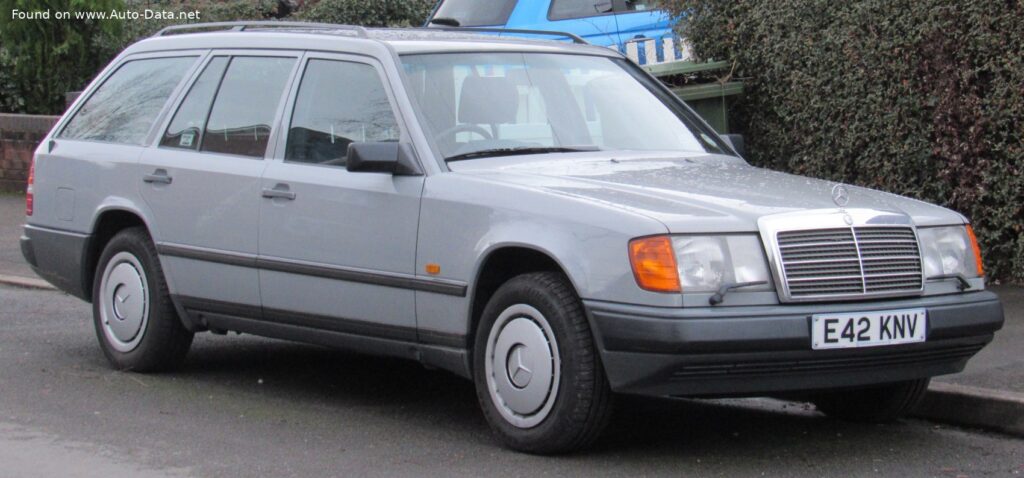
The Mercedes-Benz S124 300 TD (113 Hp) Automatic: A Pillar of German Engineering
The Mercedes-Benz S124 300 TD (113 Hp) Automatic represents a significant chapter in the history of the esteemed German automaker, embodying the brand’s commitment to engineering excellence, durability, and practical luxury. Part of the iconic W124 generation, the S124 chassis code denotes the station wagon (estate) variant, a highly regarded workhorse known for its robust construction and spacious interior. Produced for a specific, albeit brief, period in 1989, this particular model combined a naturally aspirated diesel engine with an automatic transmission, catering to a European market that valued fuel efficiency, longevity, and cargo capacity above outright speed. The Mercedes-Benz W124 series, often hailed as one of the last “over-engineered” Mercedes-Benz models, set benchmarks for build quality and reliability that continue to resonate with enthusiasts and collectors worldwide.
Engine and Performance of the Mercedes-Benz S124 300 TD
At the heart of the 1989 Mercedes-Benz S124 300 TD (113 Hp) Automatic lies a formidable 3.0-liter (2996 cm3 or 182.83 cubic inches) inline-six diesel engine, designated OM 603 D 30 (code 603.912). This naturally aspirated powerplant delivered 113 horsepower at 4600 rpm, a respectable output for a non-turbocharged diesel of its era. Torque figures stood at 191 Nm (140.87 lb-ft) available between 2800 and 3050 rpm, providing ample pulling power for the family-oriented station wagon. The engine featured a SOHC (Single Overhead Camshaft) valvetrain with two valves per cylinder and utilized a precombustion chamber injection system, a common and reliable diesel technology at the time known for its smooth operation.
Mated to a 4-speed automatic transmission, the powertrain delivered a characteristic Mercedes-Benz driving experience: smooth, refined, and reassuringly solid. While not built for blistering acceleration, the 300 TD could reach 60 mph from a standstill in a measured 14.5 seconds (0-100 km/h in 15.3 seconds), with a top speed of 108.74 mph (175 km/h). These figures underscored its role as a comfortable cruiser rather than a performance machine. Fuel economy was a strong suit for the diesel S124, achieving an impressive 25 US mpg (9.4 l/100 km) in urban driving and an even better 35.1 US mpg (6.7 l/100 km) on the highway, making it an economical choice for long-distance travel, especially in Europe where diesel fuel was often cheaper and more prevalent.
The engine’s layout was a classic front, longitudinal configuration, driving the rear wheels, a hallmark of Mercedes-Benz’s premium vehicles. With a compression ratio of 22:1, the OM 603 engine was designed for durability and efficiency, capable of accumulating hundreds of thousands of miles with proper maintenance. Its generous 7.5-liter (7.93 US quarts) engine oil capacity further contributed to its long-term reliability.
Design and Features of the Mercedes-Benz S124 300 TD
The Mercedes-Benz S124 station wagon, often referred to as an “estate” in European markets, exemplified the W124 generation’s timeless and functional design language. With a length of 187.6 inches (4765 mm), a width of 68.5 inches (1740 mm), and a height of 58.66 inches (1490 mm), the S124 presented a commanding yet elegant presence. Its five-door, five-seat configuration offered exceptional practicality, making it a favorite among families and professionals needing ample cargo space. The design, penned by Bruno Sacco, was characterized by clean lines, a low drag coefficient for its era, and a robust, understated aesthetic that has aged remarkably well.
Beyond its visual appeal, the S124 was packed with engineering innovations. The suspension system, a crucial element in Mercedes-Benz’s ride quality, featured a wishbone front suspension and an advanced independent multi-link rear suspension. This sophisticated rear setup was groundbreaking at the time, offering superior handling, ride comfort, and stability compared to many contemporary systems. Braking power was provided by disc brakes on both the front and rear wheels, complemented by an Anti-lock Braking System (ABS), a significant safety feature for 1989. Steering was handled by a hydraulic power-assisted cone worm with recirculation balls system, providing precise and effortless control.
The S124 300 TD rode on 195/65 R15 tires mounted on 6.5J x 15-inch wheel rims, a practical size that balanced ride comfort with road holding. With a curb weight of 3351.03 lbs (1520 kg) and a maximum load capacity of 1366.87 lbs (620 kg), the S124 was built to haul both passengers and cargo with ease. The 19.02 US gallon (72-liter) fuel tank provided an excellent cruising range, further cementing its credentials as a capable long-distance tourer.
Technical Specifications: Mercedes-Benz S124 300 TD (113 Hp) Automatic
| Category | Specification |
|---|---|
| Brand | Mercedes-Benz |
| Model | W124 (S124 Generation) |
| Type (Engine) | 300 TD (113 Hp) Automatic |
| Production Start | February, 1989 |
| Production End | August, 1989 |
| Powertrain Architecture | Internal Combustion Engine |
| Body Type | Station wagon (estate) |
| Seats | 5 |
| Doors | 5 |
| Performance Specs | |
| Fuel Consumption (Urban) | 9.4 l/100 km (25 US mpg) |
| Fuel Consumption (Extra Urban) | 6.7 l/100 km (35.1 US mpg) |
| Fuel Type | Diesel |
| Acceleration 0-60 mph | 14.5 seconds |
| Acceleration 0-100 km/h | 15.3 seconds |
| Maximum Speed | 175 km/h (108.74 mph) |
| Weight-to-power ratio | 13.5 kg/Hp (74.3 Hp/tonne) |
| Weight-to-torque ratio | 8 kg/Nm (125.7 Nm/tonne) |
| Engine Specs | |
| Power | 113 Hp @ 4600 rpm |
| Power per liter | 37.7 Hp/l |
| Torque | 191 Nm (140.87 lb.-ft.) @ 2800-3050 rpm |
| Engine Layout | Front, Longitudinal |
| Engine Model/Code | OM 603 D 30 / 603.912 |
| Engine Displacement | 2996 cm3 (3.0 liters / 182.83 cu. in.) |
| Number of Cylinders | 6 |
| Engine Configuration | Inline |
| Cylinder Bore | 87 mm (3.43 in.) |
| Piston Stroke | 84 mm (3.31 in.) |
| Compression Ratio | 22:1 |
| Valves per Cylinder | 2 |
| Fuel Injection System | Precombustion chamber injection |
| Engine Aspiration | Naturally aspirated engine |
| Valvetrain | SOHC |
| Engine Oil Capacity | 7.5 l (7.93 US qt) |
| Space, Volume and Weights | |
| Kerb Weight | 1520 kg (3351.03 lbs.) |
| Max. Weight (Gross Vehicle Weight) | 2140 kg (4717.89 lbs.) |
| Max Load | 620 kg (1366.87 lbs.) |
| Fuel Tank Capacity | 72 l (19.02 US gal) |
| Dimensions | |
| Length | 4765 mm (187.6 in.) |
| Width | 1740 mm (68.5 in.) |
| Height | 1490 mm (58.66 in.) |
| Wheelbase | 2800 mm (110.24 in.) |
| Front Track | 1497 mm (58.94 in.) |
| Rear Track | 1488 mm (58.58 in.) |
| Drivetrain, Brakes and Suspension Specs | |
| Drivetrain Architecture | Internal combustion engine drives the rear wheels |
| Drive Wheel | Rear wheel drive |
| Number of Gears & Type | 4 gears, automatic transmission |
| Front Suspension | Wishbone |
| Rear Suspension | Independent multi-link suspension |
| Front Brakes | Disc |
| Rear Brakes | Disc |
| Assisting Systems | ABS (Anti-lock braking system) |
| Steering Type | Cone worm with recirculation balls |
| Power Steering | Hydraulic Steering |
| Front Wheel Tires | 195/65 R15 |
| Rear Wheel Tires | 195/65 R15 |
| Front Wheel Rims | 6.5J x 15 |
| Rear Wheel Rims | 6.5J x 15 |
Legacy and Market Impact of the Mercedes-Benz S124 300 TD
The Mercedes-Benz W124 series, and particularly its S124 station wagon variant, occupies a legendary status in automotive history. Its relatively short production window for this specific naturally aspirated diesel configuration (February to August 1989) places it as a specific snapshot within the broader W124 production run, which spanned from 1984 to 1996 for sedans and up to 1997 for wagons and coupes. This generation is widely regarded as the zenith of Mercedes-Benz’s “over-engineering” philosophy, characterized by an obsessive attention to detail, robust construction, and components designed for extreme longevity.
In its primary European market, the S124 300 TD was a highly respected vehicle. It competed with rivals such as the BMW 5 Series Touring (E34 generation) and the Audi 100 Avant (C3 and later C4 generations). While BMW focused more on sporty driving dynamics, and Audi on innovative all-wheel-drive systems, the Mercedes-Benz S124 distinguished itself with unparalleled ride comfort, build quality, and a reputation for being an indestructible workhorse. It was a common sight as a taxi in Germany, a testament to its durability and low running costs over hundreds of thousands of miles.
The 3.0-liter naturally aspirated diesel engine, while not the most powerful option in the S124 lineup (which later included more potent turbocharged diesels and gasoline engines), was celebrated for its smooth operation, exceptional reliability, and outstanding fuel economy. It exemplified Mercedes-Benz’s diesel heritage, offering a compelling blend of practicality and efficiency that resonated deeply with European consumers, who often faced higher fuel prices and prioritized vehicle longevity.
Today, the Mercedes-Benz S124 300 TD remains a highly sought-after classic. Its enduring appeal lies not just in its elegant, understated design, but in its legendary mechanical integrity. These vehicles are known to accumulate vast mileages with proper maintenance, often outliving many newer cars. Its legacy is one of a meticulously engineered machine that perfectly balanced luxury, utility, and durability, setting a standard for what a premium station wagon should be. It stands as a testament to an era when Mercedes-Benz prioritized long-term quality and reliability above all else, securing its place as an automotive icon.
