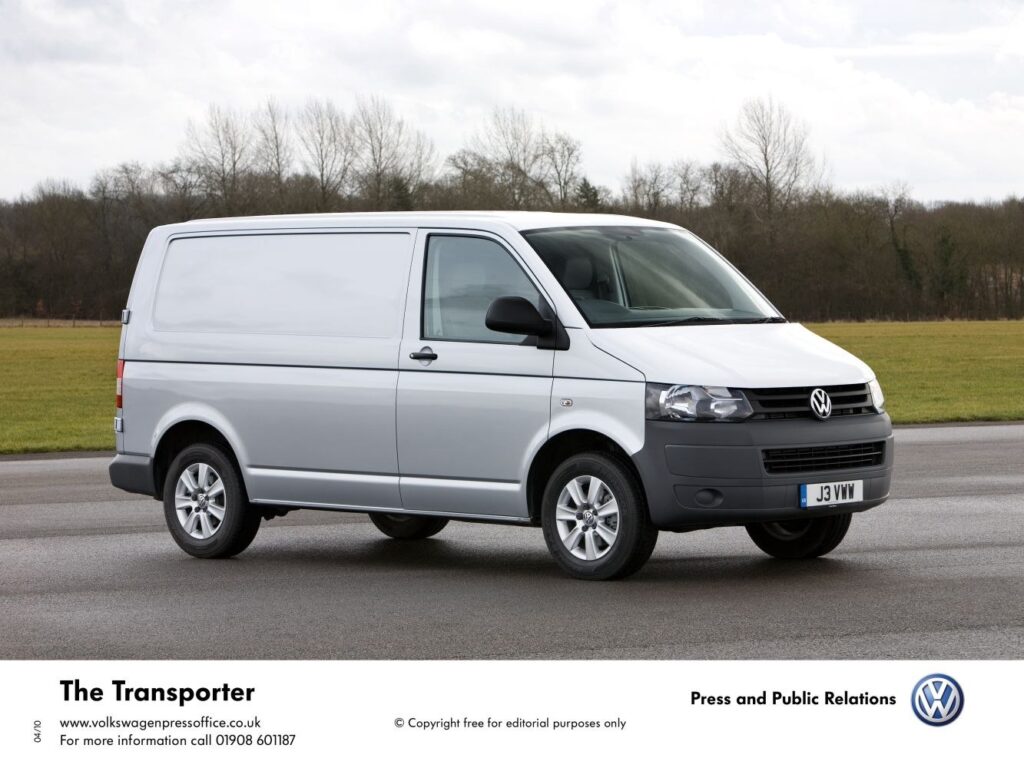
Introduction to the Volkswagen Transporter (T5, facelift 2009) Panel Van
The Volkswagen Transporter (T5, facelift 2009) Panel Van represents a significant iteration of Volkswagen’s highly successful and enduring commercial vehicle line. Launched in 2011 as part of the refreshed T5 generation, this panel van variant, specifically the 2.0 TDI BMT (114 Hp) L1H2 model, was a cornerstone of Volkswagen Commercial Vehicles’ offerings in its primary markets, predominantly Europe and parts of Asia, until its production concluded in 2015. While never officially sold in the United States, where Volkswagen’s commercial vehicle strategy diverged, the Transporter series holds a legendary status globally for its robust construction, versatile utility, and consistent evolution.
The T5 generation, which originally debuted in 2003, received a comprehensive facelift in late 2009, bringing updated styling, enhanced technology, and a new range of more efficient engines. This particular variant, the L1H2, denotes a standard length (L1) and a high roof (H2) configuration, optimizing cargo volume for a wide array of business applications. The integration of BlueMotion Technology (BMT) underscored Volkswagen’s commitment to improving fuel efficiency and reducing emissions, making this Transporter a highly competitive and environmentally conscious choice for businesses requiring a reliable workhorse.
Engine and Performance of the Volkswagen Transporter (T5, facelift 2009) Panel Van
Powering this specific Volkswagen Transporter (T5, facelift 2009) Panel Van is a 2.0-liter (1968 cm3 or 120.09 cu. in.) inline four-cylinder TDI (Turbocharged Direct Injection) diesel engine, bearing the internal code EA189 / CAAD. This engine, a hallmark of Volkswagen’s diesel prowess, delivers 114 horsepower at 3500 revolutions per minute, providing a respectable power-to-liter ratio of 57.9 Hp/l for a commercial vehicle. More critically for a van, the engine generates a substantial 250 Nm (184.39 lb.-ft.) of torque, available across a broad and usable rev range from 1500 to 2750 rpm. This low-end torque is crucial for hauling heavy loads, navigating urban environments, and maintaining momentum on varied terrains.
The powertrain architecture is front-wheel drive, with the engine mounted transversely at the front. A 5-speed manual transmission efficiently channels the engine’s power to the front wheels, providing a balanced blend of performance and fuel economy. Performance figures for this panel van include an acceleration from 0 to 60 mph in a measured 14.2 seconds (0-100 km/h in 14.9 seconds) and a top speed of 98.18 mph (158 km/h). These figures are commendable for a vehicle designed primarily for utility and cargo transport rather than outright speed.
The 2.0 TDI BMT engine is equipped with a Diesel Commonrail fuel injection system, a turbocharger, and an intercooler, ensuring optimal combustion and efficiency. Its DOHC (Double Overhead Camshaft) valvetrain with 4 valves per cylinder contributes to its smooth operation and robust power delivery. Crucially, the inclusion of BlueMotion Technology (BMT) features like a Start & Stop System and a Particulate filter significantly enhances its environmental credentials. The vehicle meets Euro 5 emission standards, reflecting its compliance with stringent European regulations for exhaust gases. Fuel economy is a strong suit, with combined NEDC figures ranging from 6.7 to 7.0 liters per 100 kilometers, translating to an impressive 35.1 to 33.6 US mpg. This efficiency was a major selling point for businesses looking to minimize operational costs.
Design and Features
The Volkswagen Transporter (T5, facelift 2009) Panel Van is characterized by its utilitarian yet refined design, typical of Volkswagen’s approach to commercial vehicles. The facelifted T5 introduced a sharper front fascia with updated headlights, a redesigned grille, and more contemporary bumper styling, aligning its aesthetics with Volkswagen’s passenger car lineup of the era. As a panel van, its primary design focus is on maximizing cargo space and durability. The L1H2 designation signifies a standard length of 192.6 inches (4892 mm) and a high roof, contributing to a total height of 85.67 inches (2176 mm). This configuration provides a substantial maximum cargo volume of 236.61 cubic feet (6700 liters), making it highly adaptable for various commercial applications, from courier services to trade professionals.
The robust body structure features 4 to 5 doors, including a large rear access and often a sliding side door, facilitating easy loading and unloading of goods. The interior is designed for functionality and durability, typically accommodating 2 to 3 occupants in comfortable, hard-wearing seats. The cockpit, though driver-focused, offers ergonomic controls and practical storage solutions essential for long working days.
Underneath its practical exterior, the Transporter features a well-engineered chassis designed for stability and handling, even under heavy loads. It boasts an independent front suspension with McPherson struts, coil springs, and an anti-roll bar, paired with an independent rear suspension featuring coil springs, a transverse stabilizer, and trailing arms. This setup ensures a relatively comfortable ride and precise handling for a vehicle of its size and purpose. Braking is handled by ventilated discs at both the front (308×29.5 mm) and rear (294×22 mm), complemented by an Anti-lock Braking System (ABS) for enhanced safety. The hydraulic power steering system provides reliable and responsive control, crucial for maneuvering in tight urban spaces. With a minimum turning circle of 39.04 feet (11.9 meters), the Transporter remains surprisingly agile.
Practical features for a commercial vehicle also include a generous fuel tank capacity of 21.13 US gallons (80 liters), providing a substantial range between refueling stops. Its robust construction allows for a maximum payload capacity ranging from 2418.47 to 2453.74 lbs (1097-1113 kg) and a maximum gross vehicle weight of 6172.94 to 7054.79 lbs (2800-3200 kg). The Transporter is also well-equipped for towing, capable of pulling a braked trailer up to 4850.17 lbs (2200 kg) and an unbraked trailer up to 1653.47 lbs (750 kg), further cementing its utility as a versatile work vehicle.
Technical Specifications: Volkswagen Transporter (T5, facelift 2009) Panel Van 2.0 TDI BMT (114 Hp) L1H2
| Category | Specification |
|---|---|
General Information |
|
| Brand | Volkswagen |
| Model | Transporter |
| Generation | Transporter (T5, facelift 2009) Panel Van |
| Type (Engine) | 2.0 TDI BMT (114 Hp) L1H2 |
| Start of Production | 2011 year |
| End of Production | 2015 year |
| Powertrain Architecture | Internal Combustion Engine, Front-Wheel Drive |
| Body Type | Van |
| Seats | 2-3 |
| Doors | 4-5 |
Performance Specifications |
|
| Fuel Consumption (Urban, NEDC) | 8.3-8.6 l/100 km (28.3 – 27.4 US mpg) |
| Fuel Consumption (Extra Urban, NEDC) | 5.8-6.1 l/100 km (40.6 – 38.6 US mpg) |
| Fuel Consumption (Combined, NEDC) | 6.7-7.0 l/100 km (35.1 – 33.6 US mpg) |
| CO2 Emissions (NEDC) | 176-184 g/km |
| Fuel Type | Diesel |
| Acceleration 0 – 60 mph | 14.2 sec |
| Acceleration 0 – 100 km/h | 14.9 sec |
| Maximum Speed | 98.18 mph (158 km/h) |
| Emission Standard | Euro 5 |
| Weight-to-Power Ratio | 14.8 kg/Hp (67.6 Hp/tonne) |
| Weight-to-Torque Ratio | 6.7 kg/Nm (148.2 Nm/tonne) |
Engine Specifications |
|
| Power | 114 Hp @ 3500 rpm |
| Power per Liter | 57.9 Hp/l |
| Torque | 250 Nm @ 1500-2750 rpm (184.39 lb.-ft.) |
| Engine Layout | Front, Transverse |
| Engine Model/Code | EA189 / CAAD |
| Engine Displacement | 1968 cm3 (120.09 cu. in.) |
| Number of Cylinders | 4 |
| Engine Configuration | Inline |
| Cylinder Bore | 3.19 in. (81 mm) |
| Piston Stroke | 3.76 in. (95.5 mm) |
| Compression Ratio | 16.5:1 |
| Valves per Cylinder | 4 |
| Fuel Injection System | Diesel Commonrail |
| Engine Aspiration | Turbocharger, Intercooler |
| Valvetrain | DOHC |
| Engine Oil Capacity | 7 l (7.4 US qt) |
| Coolant Capacity | 11 l (11.62 US qt) |
| Engine Systems | Start & Stop System, Particulate filter |
Dimensions, Volume, and Weights |
|
| Kerb Weight | 3719.2 – 4636.32 lbs (1687-2103 kg) |
| Max. Weight | 6172.94 – 7054.79 lbs (2800-3200 kg) |
| Max Load | 2418.47 – 2453.74 lbs (1097-1113 kg) |
| Trunk (Boot) Space – Maximum | 236.61 cu. ft. (6700 l) |
| Fuel Tank Capacity | 21.13 US gal (80 l) |
| Permitted Trailer Load with Brakes (12%) | 4850.17 lbs (2200 kg) |
| Permitted Trailer Load without Brakes | 1653.47 lbs (750 kg) |
| Permitted Towbar Download | 220.46 lbs (100 kg) |
| Length | 192.6 in. (4892 mm) |
| Width | 74.96 in. (1904 mm) |
| Width Including Mirrors | 89.88 in. (2283 mm) |
| Height | 85.67 in. (2176 mm) |
| Wheelbase | 118.11 in. (3000 mm) |
| Front Overhang | 35.28 in. (896 mm) |
| Rear Overhang | 39.21 in. (996 mm) |
| Ride Height (Ground Clearance) | 7.91 in. (201 mm) |
| Minimum Turning Circle (Diameter) | 39.04 ft. (11.9 m) |
| Approach Angle | 21° |
| Departure Angle | 17° |
| Ramp-over (Brakeover) Angle | 14° |
| Wading Depth | 11.81 in. (300 mm) |
Drivetrain, Brakes, and Suspension |
|
| Drivetrain Architecture | Internal combustion engine drives the front wheels. |
| Drive Wheel | Front-wheel drive |
| Number of Gears and Type of Gearbox | 5 gears, manual transmission |
| Front Suspension | Independent, McPherson type with coil spring and anti-roll bar |
| Rear Suspension | Independent coil spring, Transverse stabilizer, Trailing arm |
| Front Brakes | Ventilated discs, 308×29.5 mm |
| Rear Brakes | Ventilated discs, 294×22 mm |
| Assisting Systems | ABS (Anti-lock braking system) |
| Steering Type | Steering rack and pinion |
| Power Steering | Hydraulic Steering |
| Tires Size | 215/65 R16 |
| Wheel Rims Size | 6.5J x 16 |
Legacy and Market Impact
The Volkswagen Transporter series, often affectionately known as the “Bus” or “Microbus” in earlier generations, has an unparalleled legacy in the commercial vehicle segment. The T5 generation, and specifically the facelifted 2009 model range including the 2.0 TDI BMT (114 Hp) L1H2 Panel Van, continued this tradition of reliability and versatility. In its primary markets, particularly across Europe, the Transporter was not merely a vehicle; it was an indispensable tool for countless businesses, from small independent contractors to large logistics fleets. Its reputation as a dependable workhorse, capable of enduring demanding daily use while offering competitive running costs, was well-established.
The T5 Transporter faced stiff competition in the European commercial van market from formidable rivals such as the Ford Transit, Mercedes-Benz Vito, Renault Trafic, and Opel/Vauxhall Vivaro. What set the Transporter apart, particularly in its facelifted form, was its blend of car-like driving dynamics, robust build quality, and the perceived premium feel that Volkswagen often imbues even in its commercial offerings. The introduction of BlueMotion Technology in models like the 2.0 TDI BMT further solidified its appeal by offering improved fuel economy and reduced CO2 emissions, a significant factor for businesses mindful of both operational costs and environmental impact.
The L1H2 variant, with its optimized cargo capacity, was particularly popular among tradespeople, delivery services, and companies requiring significant internal volume without the need for an excessively long wheelbase. Its ability to navigate urban environments while still carrying substantial loads made it a versatile choice. The strong resale value of Transporters, a testament to their durability and desirability, also contributed to their market dominance.
While the Volkswagen Transporter (T5, facelift 2009) Panel Van never graced American showrooms, its influence as a global commercial vehicle icon is undeniable. It continued the rich heritage of the Transporter lineage, bridging the gap between its classic, cult-status predecessors and the more technologically advanced T6 and T6.1 generations that followed. Its robust engineering, efficient diesel powertrains, and practical design ensured its status as a benchmark in the light commercial vehicle sector, leaving a lasting impact on businesses and fleets across the continents where it operated. The T5 facelift cemented Volkswagen’s position as a leader in innovative and reliable commercial transport solutions, a legacy that continues to this day.