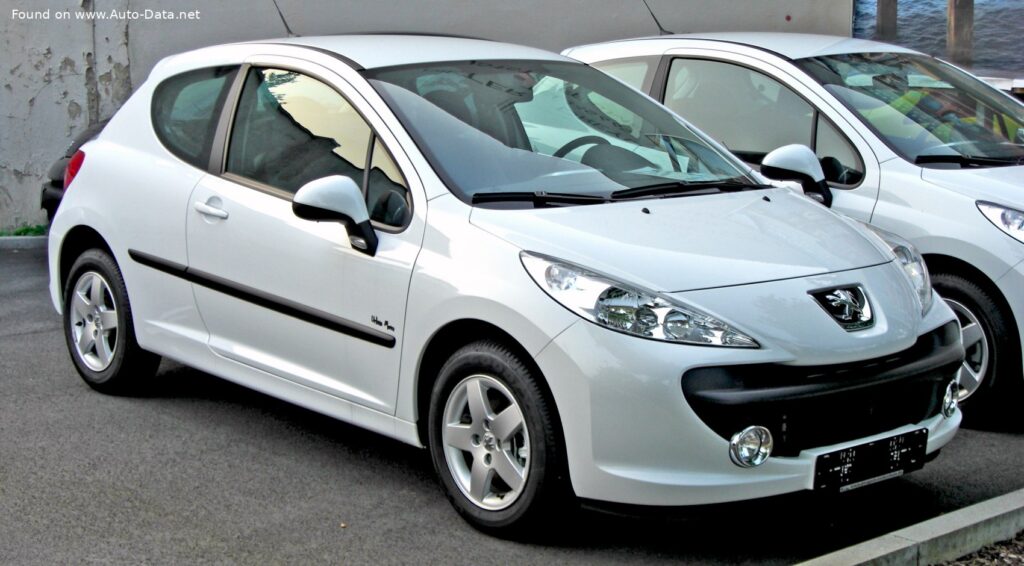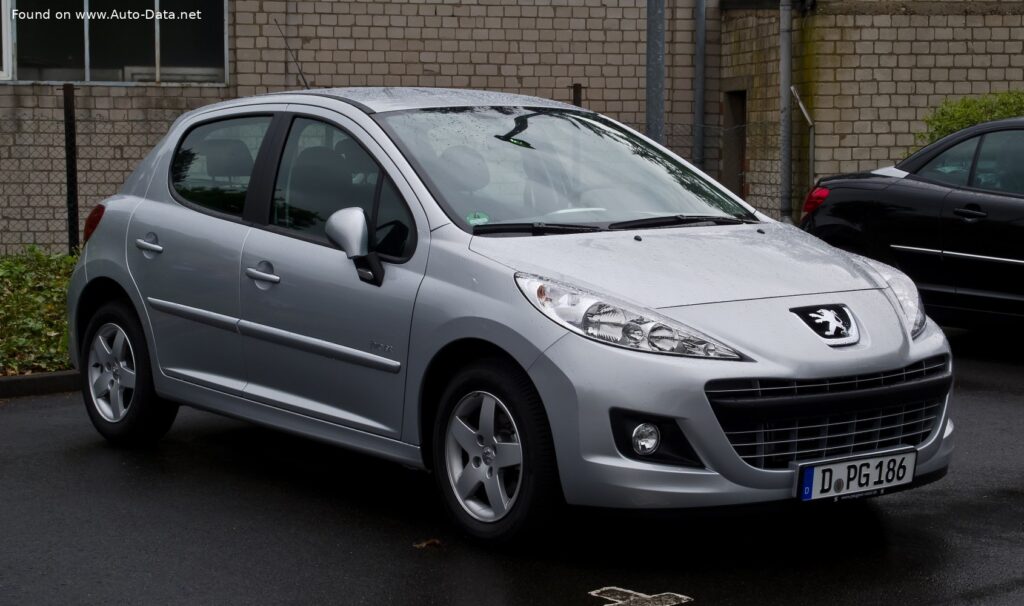
Introduction to the Peugeot 207 (facelift 2009) 1.4 (73 Hp)
The Peugeot 207, a prominent figure in the European B-segment (subcompact car market), received a significant mid-cycle refresh in 2009, aiming to bolster its appeal and maintain competitiveness against a host of formidable rivals. Launched originally in 2006 as the successor to the immensely popular Peugeot 206, the 207 built upon its predecessor’s legacy with a larger footprint, enhanced safety features, and a more refined driving experience. The Peugeot 207 (facelift 2009) 1.4 (73 Hp) variant, produced from 2009 to 2012, represented an accessible and economical entry point into the range, primarily targeting urban commuters and first-time car buyers in its core European and Asian markets.
While never officially sold in the United States, the Peugeot 207 played a crucial role in Peugeot’s global strategy, particularly in regions where subcompact vehicles dominate sales charts due to factors like fuel economy, urban maneuverability, and affordability. This facelifted generation introduced subtle yet effective styling tweaks, updated interior materials, and minor mechanical refinements, ensuring the 207 remained a compelling option for consumers seeking a practical and stylish compact hatchback. This article delves into the specifics of the 1.4-liter (73 HP) model, examining its engineering, design, performance, and its overall impact on the automotive landscape of its time.
The Peugeot 207 (facelift 2009) 1.4 (73 Hp): Engineering and Performance
Powertrain and Dynamics
At the heart of the Peugeot 207 (facelift 2009) 1.4 (73 Hp) lies a robust and proven 1.4-liter (1361 cm3 or 83.05 cu. in.) naturally aspirated inline-four gasoline engine, designated with the code KFT TU3A. This powerplant, a staple in Peugeot’s smaller offerings for decades, was engineered for reliability and efficiency rather than outright speed. It delivers a modest 73 horsepower at 5400 rpm, a figure that is perfectly adequate for city driving and moderate highway cruising. Torque output stands at 87.03 lb.-ft. (118 Nm) at a relatively low 3300 rpm, providing decent low-end grunt for navigating urban traffic and making light work of inclines.
The engine features a Single Overhead Camshaft (SOHC) valvetrain with two valves per cylinder and employs a multi-port manifold injection system for precise fuel delivery. With a compression ratio of 10.2:1, it is optimized for standard petrol (gasoline). Power is channeled to the front wheels via a five-speed manual transmission, a common and reliable setup for vehicles in this class. This drivetrain architecture, combining a transverse-mounted engine with front-wheel drive, is a hallmark of modern compact car design, offering optimal packaging efficiency and predictable handling characteristics.
In terms of acceleration, the 1.4-liter 207 is not designed to be a performance leader. It achieves 0-60 mph in a calculated 13.7 seconds, with a top speed of 103.77 mph (167 km/h). These figures underscore its role as a practical commuter car, where swift acceleration takes a backseat to fuel economy and ease of use. The weight-to-power ratio of 15.4 kg/HP (64.8 HP/tonne) further illustrates its utilitarian focus.
Fuel Efficiency and Emissions
One of the key selling points of the Peugeot 207 (facelift 2009) 1.4 (73 Hp) was its commendable fuel economy. The combined cycle consumption is rated at 37.3 US mpg (6.3 l/100 km), making it an economical choice for daily driving. In urban environments, it achieves 27.4 US mpg (8.6 l/100 km), while on extra-urban routes, it can reach an impressive 48 US mpg (4.9 l/100 km). These figures were competitive for its segment at the time and contributed to lower running costs for owners.
Environmentally, the 207 1.4 (73 Hp) met the Euro 5 emission standard, producing 145 g/km of CO2. This compliance was important for European markets, which increasingly prioritized lower emissions and offered incentives for cleaner vehicles. Its 13.21 US gallon (50-liter) fuel tank capacity provided a respectable cruising range, reducing the frequency of fuel stops.
Design and Features of the Peugeot 207 (facelift 2009)
Exterior Styling and Aerodynamics
The 2009 facelift brought a series of subtle but effective aesthetic enhancements to the Peugeot 207. The car retained its distinctive “feline” front fascia, characterized by large, swept-back headlights and a prominent grille that became a signature of Peugeot’s design language in that era. The facelift refined these elements, with updated bumper designs, new chrome accents, and revised taillight clusters that incorporated LED technology on higher trims, though perhaps not on this entry-level variant.
Available as both a 3-door and 5-door hatchback, the 207 offered flexibility to consumers, catering to those prioritizing sportier aesthetics (3-door) or greater practicality for passengers (5-door). Its overall dimensions — 159.25 inches (4045 mm) in length, 68.82 inches (1748 mm) in width, and 57.95 inches (1472 mm) in height — made it a compact yet substantial presence on the road. The wheelbase of 100 inches (2540 mm) contributed to a stable ride and reasonable interior space. An impressive drag coefficient (Cd) of 0.30 indicated a focus on aerodynamic efficiency, further aiding fuel economy and reducing wind noise.
Interior Comfort and Practicality
Inside, the Peugeot 207 (facelift 2009) offered a practical and comfortable cabin designed to accommodate five occupants. The interior materials saw minor upgrades in the facelifted model, aiming for a more premium feel within its segment. The dashboard layout was ergonomic, with controls intuitively placed for the driver.
Practicality was a strong suit for the 207 hatchback. It offered a minimum trunk (boot) space of 9.53 cu. ft. (270 liters), which could be expanded significantly to 32.6 cu. ft. (923 liters) with the rear seats folded down, making it versatile for carrying luggage or larger items. Standard features for a car of this type and era typically included power steering (rack and pinion), central locking, power windows (at least for the front), and a basic audio system.
Chassis and Safety Systems
The 207’s chassis was designed to offer a balance between comfort and handling, typical for French automobiles. It featured an independent McPherson strut setup with coil springs and an anti-roll bar at the front, providing good road holding and ride comfort. The rear utilized a semi-independent suspension with coil springs and an elastic beam, a cost-effective and space-efficient solution for compact cars.
Braking performance was handled by ventilated disc brakes at the front and drum brakes at the rear, a common configuration for vehicles in this class. Crucially, the 207 came equipped with an Anti-lock Braking System (ABS), a vital safety feature that helps maintain steering control during emergency braking by preventing wheel lock-up. While more advanced active safety systems like Electronic Stability Control (ESC) might have been optional or standard on higher trims, ABS was a foundational element in its safety suite, contributing to its generally good safety ratings in European crash tests. The steering system, a rack and pinion type, offered a minimum turning circle of 35.43 feet (10.8 meters), making the 207 quite maneuverable in tight urban spaces. The vehicle rode on 185/65 R15 tires mounted on 15-inch wheel rims.
Technical Specifications: Peugeot 207 (facelift 2009) 1.4 (73 Hp)
| Category | Specification |
|---|---|
| Brand | Peugeot |
| Model | 207 |
| Generation | 207 (facelift 2009) |
| Type (Engine) | 1.4 (73 Hp) |
| Start of Production | 2009 year |
| End of Production | 2012 year |
| Powertrain Architecture | Internal Combustion Engine, Front-Wheel Drive |
| Body Type | Hatchback |
| Seats | 5 |
| Doors | 3-5 |
| Performance Specs | |
| Fuel Consumption (Urban) | 8.6 l/100 km (27.4 US mpg) |
| Fuel Consumption (Extra Urban) | 4.9 l/100 km (48 US mpg) |
| Fuel Consumption (Combined) | 6.3 l/100 km (37.3 US mpg) |
| CO2 Emissions | 145 g/km |
| Fuel Type | Petrol (Gasoline) |
| Acceleration 0-60 mph | 13.7 sec |
| Maximum Speed | 103.77 mph (167 km/h) |
| Emission Standard | Euro 5 |
| Weight-to-Power Ratio | 15.4 kg/Hp (64.8 Hp/tonne) |
| Weight-to-Torque Ratio | 9.5 kg/Nm (104.8 Nm/tonne) |
| Engine Specs | |
| Power | 73 Hp @ 5400 rpm |
| Power per Liter | 53.6 Hp/l |
| Torque | 87.03 lb.-ft. (118 Nm) @ 3300 rpm |
| Engine Layout | Front, Transverse |
| Engine Model/Code | KFT TU3A |
| Engine Displacement | 1.4 liters (1361 cm3, 83.05 cu. in.) |
| Number of Cylinders | 4 |
| Engine Configuration | Inline |
| Cylinder Bore | 2.95 in. (75 mm) |
| Piston Stroke | 3.03 in. (77 mm) |
| Compression Ratio | 10.2:1 |
| Number of Valves per Cylinder | 2 |
| Fuel Injection System | Multi-port manifold injection |
| Engine Aspiration | Naturally aspirated engine |
| Valvetrain | SOHC |
| Engine Oil Capacity | 3 liters (3.17 US qt) |
| Coolant Capacity | 5.3 liters (5.6 US qt) |
| Space, Volume and Weights | |
| Kerb Weight | 2482.41 lbs. (1126 kg) |
| Max. Weight | 3529.6 lbs. (1601 kg) |
| Max Load | 1047.2 lbs. (475 kg) |
| Trunk (Boot) Space – Minimum | 9.53 cu. ft. (270 l) |
| Trunk (Boot) Space – Maximum | 32.6 cu. ft. (923 l) |
| Fuel Tank Capacity | 13.21 US gal (50 l) |
| Permitted Trailer Load with Brakes (12%) | 2094.39 lbs. (950 kg) |
| Permitted Trailer Load without Brakes | 1322.77 lbs. (600 kg) |
| Dimensions | |
| Length | 159.25 in. (4045 mm) |
| Width | 68.82 in. (1748 mm) |
| Width with Mirrors Folded | 71.57 in. (1818 mm) |
| Width Including Mirrors | 77.64 in. (1972 mm) |
| Height | 57.95 in. (1472 mm) |
| Wheelbase | 100 in. (2540 mm) |
| Front Track | 58.07 in. (1475 mm) |
| Rear (Back) Track | 57.8 in. (1468 mm) |
| Drag Coefficient (Cd) | 0.30 |
| Minimum Turning Circle (Turning Diameter) | 35.43 ft. (10.8 m) |
| Drivetrain, Brakes and Suspension Specs | |
| Drivetrain Architecture | The Internal combustion engine (ICE) drives the front wheels of the vehicle. |
| Drive Wheel | Front wheel drive |
| Number of Gears and Type of Gearbox | 5 gears, manual transmission |
| Front Suspension | Independent, type McPherson with coil spring and anti-roll bar |
| Rear Suspension | Semi-independent, coil spring, Elastic beam |
| Front Brakes | Ventilated discs |
| Rear Brakes | Drum |
| Assisting Systems | ABS (Anti-lock braking system) |
| Steering Type | Steering rack and pinion |
| Tires Size | 185/65 R15 |
| Wheel Rims Size | 15 inches |
Legacy and Market Impact of the Peugeot 207
The Peugeot 207, particularly its facelifted version, enjoyed a strong reputation in its primary markets as a stylish, comfortable, and practical subcompact car. Its design, while evolutionary from the 206, offered a more mature and substantial presence, which appealed to a broad demographic. The 1.4-liter (73 HP) variant, in particular, was lauded for its affordability, low running costs, and ease of use in congested urban environments, making it a popular choice for city dwellers and those on a budget.
In the fiercely competitive European B-segment, the 207 faced stiff competition from segment leaders such as the Ford Fiesta, Renault Clio, Volkswagen Polo, Opel Corsa (Vauxhall Corsa in the UK), and the Fiat Punto. Each competitor offered its unique blend of style, performance, and features, but the 207 carved out its niche with its distinctive French flair, comfortable ride quality, and robust build. While perhaps not as dynamically engaging as a Ford Fiesta or as understatedly refined as a VW Polo, the 207 offered a compelling all-around package that resonated with many buyers.
Historically, the 207 served as an important bridge in Peugeot’s supermini lineage, successfully carrying the torch from the immensely popular 206 to the subsequent 208, which launched in 2012. It cemented Peugeot’s position as a dominant force in the compact car segment, demonstrating the brand’s ability to evolve its core products to meet changing consumer demands and stricter environmental regulations. The Peugeot 207 (facelift 2009) 1.4 (73 Hp), with its blend of economy, practicality, and characteristic Peugeot style, remains a testament to the brand’s enduring success in creating accessible and appealing compact vehicles for the global market. Its legacy is one of a reliable and efficient workhorse that capably served millions of drivers across Europe and beyond.