
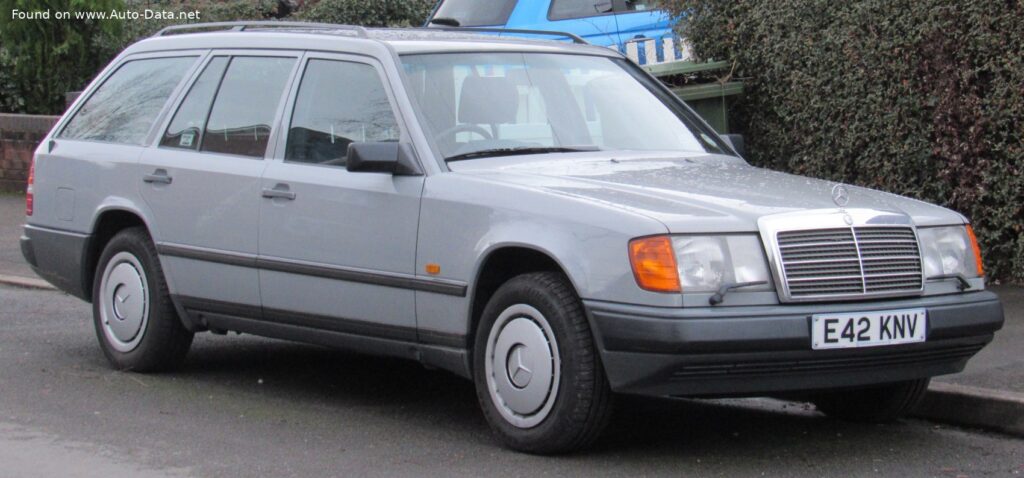
Introduction to the Mercedes-Benz S124 300 TD Turbo (143 Hp) 4MATIC Automatic
The Mercedes-Benz S124, the station wagon variant of the revered W124 generation, represents a pinnacle of automotive engineering from the late 1980s. Widely regarded as one of the last “over-engineered” Mercedes-Benz models, the W124 chassis earned a legendary reputation for its robustness, reliability, and uncompromising build quality. Within this distinguished lineup, the Mercedes-Benz S124 300 TD Turbo (143 Hp) 4MATIC Automatic, produced between September 1987 and September 1988, stood out as a technologically advanced and exceptionally capable offering. This particular model combined the practicality of a spacious five-door, five-seat station wagon with the efficiency of a turbocharged diesel engine and the pioneering traction of Mercedes-Benz’s 4MATIC all-wheel-drive system, making it a sophisticated choice for discerning buyers in its primary European market and a notable, albeit less common, presence in others.
At a time when all-wheel drive was still a relative novelty outside of dedicated off-road vehicles, the S124 300 TD Turbo 4MATIC offered a blend of luxury, utility, and all-weather performance that few competitors could match. It embodied Mercedes-Benz’s commitment to innovation and safety, setting new benchmarks for the premium segment. Its brief production window makes it a particularly interesting and sought-after classic today, a testament to its enduring design and mechanical integrity.
Engine and Performance: The Heart of the Mercedes-Benz S124
The powertrain of the Mercedes-Benz S124 300 TD Turbo 4MATIC Automatic was a sophisticated assembly designed for durability, efficiency, and capable performance. Under the hood resided the venerable OM 603 D 30 A / 603.960 engine, an inline-six-cylinder turbo-diesel powerplant. With a displacement of 2996 cm³ (182.83 cubic inches), this engine was a testament to Mercedes-Benz’s prowess in diesel technology, known for its smooth operation and impressive longevity.
The engine delivered a robust 143 horsepower at 4600 revolutions per minute (rpm), a significant output for a diesel engine of its era. More critically for a wagon designed for hauling and long-distance cruising, it produced a substantial 267 Newton-meters (196.93 lb.-ft.) of torque, peaking at a relatively low 2400 rpm. This ample torque provided excellent pulling power and effortless acceleration in everyday driving. The engine featured a single overhead camshaft (SOHC) valvetrain with two valves per cylinder and utilized a precombustion chamber injection system, a common and reliable method for diesel engines of the period, coupled with a turbocharger to boost power and efficiency.
Power was transferred through a four-speed automatic transmission, which, while not as complex as modern multi-speed units, was renowned for its smooth shifts and robustness. The crowning jewel of its drivetrain, however, was the innovative 4MATIC all-wheel-drive system. This intelligent system was designed to drive the rear wheels permanently, engaging the front wheels through an electrically or mechanically operated clutch only when necessary, such as in slippery conditions or during hard acceleration. This provided enhanced traction and stability without compromising fuel economy or driving dynamics under normal circumstances.
In terms of performance, the S124 300 TD Turbo 4MATIC could accelerate from 0 to 60 mph in a respectable 12.2 seconds, with a top speed of 116.82 mph (188 km/h). While not a performance car, these figures were impressive for a heavy, all-wheel-drive diesel station wagon of its time. Fuel economy was also a strong suit, with urban consumption rated at 23.1 US mpg (10.2 l/100 km) and extra-urban figures reaching 31.4 US mpg (7.5 l/100 km), highlighting the efficiency benefits of its diesel engine. The vehicle’s kerb weight of 3703.77 lbs (1680 kg) contributed to its solid, planted feel on the road, with a weight-to-power ratio of 11.7 kg/Hp.
Design and Features of the S124 Station Wagon
The design of the Mercedes-Benz S124 station wagon (or “estate” as it’s known in Europe) is a masterclass in functional elegance and timeless aesthetics. Penned by Bruno Sacco, the W124 series, including the S124, featured a clean, uncluttered design characterized by its aerodynamic efficiency and understated luxury. The five-door body type offered immense practicality, making it a popular choice for families and professionals alike who required significant cargo space without sacrificing comfort or prestige.
Key design elements included the iconic Mercedes-Benz grille, large windows for excellent visibility, and a subtly tapered rear end that maximized cargo volume while maintaining a cohesive profile. The build quality was legendary, with tight panel gaps, high-quality materials, and a sense of solidity that has allowed many W124 models to endure for decades. The interior, designed for five occupants, prioritized ergonomic comfort and intuitive controls, reflecting Mercedes-Benz’s philosophy of user-friendly luxury.
Beyond its robust construction, the S124 300 TD Turbo 4MATIC incorporated several advanced features for its time. The aforementioned 4MATIC all-wheel-drive system was a significant technological highlight, providing superior grip and control in adverse weather conditions, a substantial safety advantage. The vehicle was also equipped with an Anti-lock Braking System (ABS) as standard, enhancing braking safety by preventing wheel lock-up during emergency stops.
Suspension design contributed significantly to the S124’s renowned ride quality and handling. The front featured a wishbone setup, while the rear employed an independent multi-link suspension, a sophisticated arrangement that provided a remarkable balance of comfort, stability, and precise road manners. Power steering, a hydraulic cone worm system with recirculating balls, offered a reassuringly weighted and direct feel. The vehicle rode on 195/65 R15 tires mounted on 6.5J x 15-inch wheel rims, providing a comfortable ride and adequate grip. The braking system utilized ventilated discs at the front and solid discs at the rear, ensuring confident stopping power for a vehicle of its size and capability.
Technical Specifications
| Category | Specification |
|---|---|
| Brand | Mercedes-Benz |
| Model | W124 |
| Generation | S124 |
| Type (Engine) | 300 TD Turbo (143 Hp) 4MATIC Automatic |
| Start of Production | September, 1987 |
| End of Production | September, 1988 |
| Powertrain Architecture | Internal Combustion engine |
| Body type | Station wagon (estate) |
| Seats | 5 |
| Doors | 5 |
| Performance Specs | |
| Fuel Consumption (Urban) | 10.2 l/100 km (23.1 US mpg) |
| Fuel Consumption (Extra Urban) | 7.5 l/100 km (31.4 US mpg) |
| Fuel Type | Diesel |
| Acceleration 0-60 mph | 12.2 sec |
| Maximum Speed | 188 km/h (116.82 mph) |
| Weight-to-Power Ratio | 11.7 kg/Hp (85.1 Hp/tonne) |
| Weight-to-Torque Ratio | 6.3 kg/Nm (158.9 Nm/tonne) |
| Engine Specs | |
| Power | 143 Hp @ 4600 rpm |
| Power per liter | 47.7 Hp/l |
| Torque | 267 Nm @ 2400 rpm (196.93 lb.-ft. @ 2400 rpm) |
| Engine Layout | Front, Longitudinal |
| Engine Model/Code | OM 603 D 30 A / 603.960 |
| Engine Displacement | 2996 cm³ (182.83 cu. in.) |
| Number of Cylinders | 6 |
| Engine Configuration | Inline |
| Cylinder Bore | 87 mm (3.43 in.) |
| Piston Stroke | 84 mm (3.31 in.) |
| Compression Ratio | 22:1 |
| Number of Valves per Cylinder | 2 |
| Fuel Injection System | Precombustion chamber injection |
| Engine Aspiration | Turbocharger |
| Valvetrain | SOHC |
| Engine Oil Capacity | 7.5 l (7.93 US qt) |
| Coolant Capacity | 9.5 l (10.04 US qt) |
| Dimensions, Volume and Weights | |
| Kerb Weight | 1680 kg (3703.77 lbs) |
| Max. Weight | 2285 kg (5037.56 lbs) |
| Max Load | 605 kg (1333.8 lbs) |
| Fuel Tank Capacity | 72 l (19.02 US gal) |
| Length | 4765 mm (187.6 in.) |
| Width | 1740 mm (68.5 in.) |
| Height | 1498 mm (58.98 in.) |
| Wheelbase | 2800 mm (110.24 in.) |
| Front Track | 1497 mm (58.94 in.) |
| Rear Track | 1488 mm (58.58 in.) |
| Drivetrain, Brakes and Suspension Specs | |
| Drivetrain Architecture | ICE drives rear wheels permanently, front wheels driven via electrically/mechanically operated clutch if necessary. |
| Drive Wheel | All-wheel drive (4×4) |
| Number of Gears & Type | 4 gears, automatic transmission |
| Front Suspension | Wishbone |
| Rear Suspension | Independent multi-link suspension |
| Front Brakes | Ventilated discs |
| Rear Brakes | Disc |
| Assisting Systems | ABS (Anti-lock braking system) |
| Steering Type | Cone worm with recirculation balls |
| Power Steering | Hydraulic Steering |
| Tires Size (Front/Rear) | 195/65 R15 |
| Wheel Rims Size (Front/Rear) | 6.5J x 15 |
Legacy and Market Impact of the Mercedes-Benz S124
The Mercedes-Benz W124 series, and specifically its S124 station wagon variant, occupies a hallowed place in automotive history. Its reputation for engineering excellence, durability, and a driving experience that blended comfort with confidence is virtually unparalleled. The Mercedes-Benz S124 300 TD Turbo (143 Hp) 4MATIC Automatic, while a niche model due to its specific engine and drivetrain combination, significantly contributed to this legacy, particularly in markets where diesel power and all-wheel drive were highly valued.
In the late 1980s, the premium station wagon segment, especially with a diesel engine and all-wheel drive, was not crowded. Competitors were few and far between. Volvo offered robust wagons like the 740 and 760, known for their safety and practicality, but generally lacked the sophisticated all-wheel-drive system and the refined diesel performance of the Mercedes. Audi, with its Avant models, was an early adopter of quattro all-wheel drive, but its diesel offerings at the time were typically less powerful and less refined than Mercedes-Benz’s inline-six. BMW’s E34 5-Series Touring, a direct competitor in the premium segment, would arrive later, and diesel AWD options were not as prevalent.
The S124 300 TD Turbo 4MATIC carved out a unique position. It appealed to buyers who needed the space and versatility of a wagon, the long-distance economy and torque of a diesel, and the enhanced safety and traction of all-wheel drive. This made it an ideal vehicle for navigating varying European climates, from snowy alpine passes to rainy highways, all while transporting families or business equipment in comfort and style. Its relatively short production run of just one year for this specific powertrain variant suggests it was either a testbed for technology or a very specific market offering that was quickly updated in subsequent years of the W124’s long life cycle.
Today, the Mercedes-Benz S124 is highly sought after by enthusiasts and collectors who appreciate its build quality and classic design. The 300 TD Turbo 4MATIC Automatic models are particularly prized for their combination of advanced technology, robust diesel engine, and all-weather capability. They represent a significant milestone in Mercedes-Benz’s history, showcasing the brand’s pioneering spirit in integrating sophisticated technologies like electronically controlled all-wheel drive into their mainstream luxury vehicles. The enduring appeal of the S124 lies in its ability to offer a tangible connection to an era when automotive engineering was characterized by meticulous attention to detail and a commitment to longevity, making it a true classic in every sense of the word.
