The Renault Megane II Coupe 1.6 16V (112 Hp): A European Compact with Distinctive Flair
The Renault Megane II Coupe 1.6 16V (112 Hp) represents a compelling chapter in the history of compact European automobiles, specifically within the C-segment. Launched in 2005 as part of the critically acclaimed second-generation Megane lineup, this particular variant offered a blend of distinctive styling, practical performance, and commendable efficiency for its time. While Renault is a globally recognized brand, the Megane II Coupe was primarily a fixture in European and select international markets, where its unique design language and competitive feature set helped it stand out in a crowded field. It built upon the success of its predecessor by pushing boundaries in design and safety, embodying Renault’s commitment to innovation in the early 2000s.
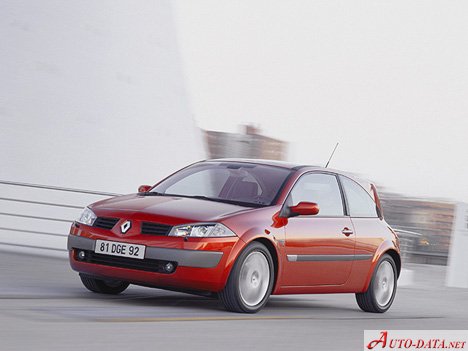
The second-generation Megane, which debuted in 2002, was a significant departure from the more conservative styling of the first generation. It introduced a bold, often polarizing, design characterized by sharp angles and a distinctive rear treatment that became a hallmark of Renault’s design philosophy under Patrick le Quément. The Coupe variant, produced from 2005 to 2006, distilled this adventurous spirit into a sportier, three-door body style, appealing to buyers seeking a more dynamic aesthetic without sacrificing everyday usability. This specific model, equipped with the 1.6-liter 16-valve engine, aimed to strike a balance between spirited driving and economical operation.
Engine and Performance: The K4M 1.6-Liter Powerplant
At the heart of the Renault Megane II Coupe 1.6 16V (112 Hp) lies Renault’s venerable K4M engine, a 1.6-liter (1598 cm³ or 97.52 cu. in.) naturally aspirated inline-four cylinder unit. Known for its robust design and widespread use across various Renault and Nissan models, the K4M engine in this application produced a respectable 112 horsepower at 6000 rpm. This output translated to a power per liter figure of 70.1 horsepower per liter, a competitive metric for a naturally aspirated engine of its displacement in the mid-2000s.
Torque delivery was equally practical, with 152 Nm (112.11 lb.-ft.) available at 4200 rpm. This mid-range torque characteristic, combined with the engine’s multi-port manifold injection and DOHC (Double Overhead Camshaft) valvetrain with 4 valves per cylinder, ensured a smooth and responsive driving experience suitable for both urban commuting and highway cruising. The engine’s compression ratio of 10:1 was standard for the era, contributing to its efficiency and performance. Power was sent to the front wheels via a 5-speed manual transmission, offering direct engagement and control.
In terms of outright performance, the Megane II Coupe 1.6 16V was capable of accelerating from 0 to 60 mph in an estimated 10.4 seconds (0-100 km/h in 10.9 seconds), with a top speed of 119.3 mph (192 km/h). While not a performance leader, these figures positioned it as a capable and enjoyable car for its segment. Fuel economy was a strong point, reflecting Renault’s focus on efficiency. The combined fuel consumption was rated at 34.6 US mpg (6.8 l/100 km), with extra-urban figures reaching 41.3 US mpg (5.7 l/100 km). With CO2 emissions of 164 g/km and adherence to Euro 4 emission standards, it was a relatively clean vehicle for its time, aligning with European environmental regulations.
Design and Features: A Bold Statement
The Megane II Coupe’s design was arguably its most defining characteristic. Measuring 165.71 inches (4209 mm) in length, 69.96 inches (1777 mm) in width, and 57.4 inches (1458 mm) in height, the three-door body offered a more dynamic and compact profile compared to its five-door hatchback sibling. The distinctive “bustle-back” design, more pronounced on the hatchback, was subtly integrated into the Coupe, giving it a unique rear end that stood out from its competitors. The 103.35-inch (2625 mm) wheelbase contributed to a stable ride and a surprisingly spacious interior for a compact coupe.
Inside, the Megane II Coupe offered a modern and ergonomic cabin. While specific trim levels are not detailed, Renault vehicles of this era typically featured innovative elements such as keyless entry and start systems (Renault Card), digital instrument clusters, and a focus on soft-touch materials. The five-seat configuration, though a coupe, provided reasonable space for rear passengers, especially for shorter journeys. The trunk capacity was practical for a car of its class, offering 11.65 cu. ft. (330 liters) of space with the rear seats up, expandable to a generous 42.02 cu. ft. (1190 liters) when folded, making it surprisingly versatile.
Safety was a paramount concern for Renault, and the Megane II was a recipient of a groundbreaking five-star Euro NCAP safety rating, a significant achievement at the time. While the data specifically mentions ABS (Anti-lock Braking System) as an assisting system, it’s safe to assume that a range of airbags (front, side, and curtain) and advanced seatbelt systems were standard or widely available. The car featured ventilated disc brakes at the front and disc brakes at the rear, ensuring effective stopping power. The suspension setup, with independent McPherson struts at the front and a torsion beam at the rear, provided a comfortable yet composed ride, characteristic of European compact cars.
Technical Specifications
| Category | Specification |
|---|---|
| Brand | Renault |
| Model | Megane II Coupe |
| Type (Engine) | 1.6 16V (112 Hp) |
| Production Years | 2005 – 2006 |
| Body Type | Coupe, 3 Doors, 5 Seats |
| Powertrain Architecture | Internal Combustion engine, Front-wheel drive |
| Fuel Type | Gasoline (Petrol) |
| Fuel Consumption (Combined) | 34.6 US mpg (6.8 l/100 km) |
| Fuel Consumption (Urban) | 26.7 US mpg (8.8 l/100 km) |
| Fuel Consumption (Extra Urban) | 41.3 US mpg (5.7 l/100 km) |
| CO2 Emissions | 164 g/km |
| Emission Standard | Euro 4 |
| Acceleration 0-60 mph | 10.4 seconds |
| Maximum Speed | 119.3 mph (192 km/h) |
| Power | 112 Hp @ 6000 rpm |
| Torque | 112.11 lb.-ft. (152 Nm) @ 4200 rpm |
| Engine Displacement | 1.6 Liters (1598 cm³ / 97.52 cu. in.) |
| Number of Cylinders | 4, Inline |
| Valvetrain | DOHC, 4 valves per cylinder |
| Engine Aspiration | Naturally Aspirated |
| Engine Layout | Front, Transverse |
| Compression Ratio | 10:1 |
| Transmission | 5-speed manual |
| Kerb Weight | 2546.34 lbs. (1155 kg) |
| Max. Weight | 3758.88 lbs. (1705 kg) |
| Fuel Tank Capacity | 15.85 US gal (60 liters) |
| Trunk (Boot) Space (Min) | 11.65 cu. ft. (330 liters) |
| Trunk (Boot) Space (Max) | 42.02 cu. ft. (1190 liters) |
| Length | 165.71 in. (4209 mm) |
| Width | 69.96 in. (1777 mm) |
| Height | 57.4 in. (1458 mm) |
| Wheelbase | 103.35 in. (2625 mm) |
| Front Track | 59.76 in. (1518 mm) |
| Rear Track | 59.61 in. (1514 mm) |
| Drag Coefficient (Cd) | 0.35 |
| Minimum Turning Circle | 34.45 ft. (10.5 m) |
| Front Suspension | Independent type McPherson |
| Rear Suspension | Torsion beam |
| Front Brakes | Ventilated discs |
| Rear Brakes | Disc |
| Assisting Systems | ABS (Anti-lock braking system) |
| Steering Type | Steering rack and pinion, Electric Power Steering |
| Tires Size | 195/65 R15 |
| Wheel Rims Size | 6.5J x 15 |
Legacy and Market Impact: The Renault Megane II Coupe in Europe
The Renault Megane II Coupe, particularly the 1.6 16V (112 Hp) variant, carved out a distinct niche in the highly competitive European C-segment. Its bold design was a significant talking point, distinguishing it from more conventionally styled rivals such as the Volkswagen Golf, Ford Focus, Opel Astra, and Peugeot 307. While the Megane II hatchback was the volume seller, the Coupe offered a sportier, more emotionally charged alternative that appealed to younger buyers or those seeking a more individualistic statement.
Renault’s reputation for safety, bolstered by the Megane II’s five-star Euro NCAP rating, was a major selling point. This commitment to occupant protection, combined with features like electric power steering and ABS, positioned the Megane II Coupe as a modern and secure choice. The K4M engine, known for its reliability and efficiency, further enhanced its appeal as a practical daily driver.
Despite its relatively short production run as a distinct coupe variant (2005-2006, before later iterations evolved into more of a three-door hatchback), the Megane II Coupe contributed significantly to Renault’s image as an innovator in design and safety. It demonstrated that a mainstream compact car could offer avant-garde styling without compromising on practicality or safety. Its impact was primarily felt within the European market, where it provided a compelling French alternative to German and other European competitors. Today, the Megane II Coupe is remembered for its distinctive aesthetics and its role in an era when Renault was pushing design boundaries in the compact car segment, offering a unique blend of flair, safety, and everyday performance.