The Opel Rekord E Caravan (facelift 1982) 2.2i (115 Hp): A European Workhorse
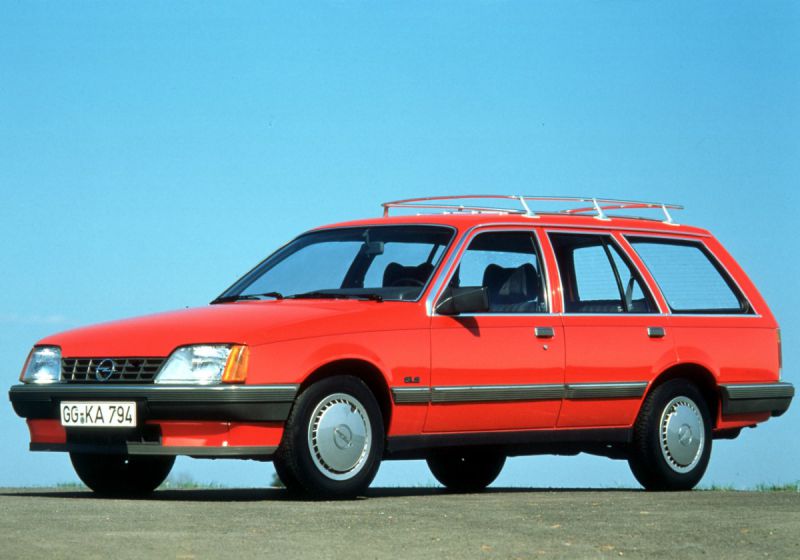
The Opel Rekord E Caravan (facelift 1982) 2.2i (115 Hp) represents a significant chapter in European automotive history, serving as a pillar of the family car segment during the mid-1980s. Produced by German automaker Opel, a subsidiary of General Motors, the Rekord E generation was renowned for its robust construction, practicality, and no-nonsense approach to transportation. This particular variant, a station wagon (known as ‘Caravan’ in Opel parlance), featured a facelift introduced in 1982, though this specific 2.2i engine option commenced production in September 1984 and ran until August 1986. While never officially imported or sold in the United States, the Rekord E Caravan was a ubiquitous sight on European roads, embodying the quintessential family hauler of its era. It offered a compelling blend of space, reliability, and sufficient performance for the demands of daily life, making it a highly respected and recognizable vehicle across the continent.
Engine and Performance of the Opel Rekord E Caravan (facelift 1982) 2.2i (115 Hp)
Powertrain Configuration and Output
Under the hood of the Opel Rekord E Caravan (facelift 1982) 2.2i (115 Hp) lay a naturally aspirated 2.2-liter (2197 cm³) inline four-cylinder engine, designated by the code 22E. This powerplant was a notable offering for its time, featuring a Single Overhead Camshaft (SOHC) valvetrain with two valves per cylinder and a multi-port manifold injection fuel system. This setup was a step up from carbureted versions, offering improved fuel atomization and efficiency. It produced a respectable 115 horsepower at 4800 rpm, translating to a power-per-liter ratio of 52.3 Hp/l. Torque figures were equally impressive for a non-turbocharged engine of its displacement, peaking at 134.24 lb.-ft. (182 Nm) at a relatively low 2800 rpm. This low-end torque was crucial for a family-oriented station wagon, ensuring good pulling power even when fully loaded.
Driving Dynamics and Fuel Economy
Power was delivered to the rear wheels via a 5-speed manual transmission, a common and reliable drivetrain architecture for Opel models of this period. This combination allowed the Rekord E Caravan to achieve a 0 to 60 mph acceleration in a decent 10.5 seconds, with a top speed of approximately 115 mph (185 km/h). These figures positioned it as a capable performer within its segment, neither sluggish nor overly sporty, but perfectly adequate for highway cruising and city driving. The vehicle’s weight-to-power ratio stood at 10.5 kg/Hp, or roughly 95.4 Hp per tonne, further underscoring its balanced performance. In terms of fuel efficiency, the 2.2i engine delivered a combined economy of around 25.3 US mpg (9.3 l/100 km), which was competitive for a large gasoline-powered station wagon in the mid-1980s. Its 18.49 US gallon (70-liter) fuel tank provided a substantial cruising range, a practical advantage for long family trips.
Design and Features
Exterior and Interior Practicality
The Opel Rekord E Caravan, particularly the facelifted version from 1982, embodied a functional and understated design philosophy. Its body type, a 5-door station wagon (estate), was designed with practicality as the paramount concern. With a length of 184.17 inches (4678 mm), a width of 67.72 inches (1720 mm), and a height of 58.07 inches (1475 mm), the Rekord Caravan offered substantial interior volume. The generous wheelbase of 105.04 inches (2668 mm) contributed to a stable ride and ample passenger space for five occupants. The facelift introduced subtle styling revisions, primarily to the front fascia, giving it a more modern and aerodynamic appearance compared to the earlier Rekord E models. These changes included updated headlights, grille, and bumper designs, aligning it with contemporary automotive aesthetics while retaining its characteristic robust presence.
Chassis and Safety
The Rekord E Caravan’s chassis featured a conventional but effective setup for its era. It employed ventilated disc brakes at the front, providing reliable stopping power, complemented by drum brakes at the rear. This combination was standard for many mainstream vehicles of the period and offered adequate braking performance for a car of its size and weight. The rear-wheel-drive architecture, a hallmark of many Opel models, contributed to a predictable and engaging driving experience, especially for drivers accustomed to traditional vehicle dynamics. With a curb weight of 2656.57 lbs (1205 kg) and a maximum permissible weight of 3968.32 lbs (1800 kg), allowing for a maximum load of 1311.75 lbs (595 kg), the Rekord Caravan was built to handle significant cargo. While advanced safety features by modern standards were non-existent, the Rekord’s sturdy construction and predictable handling characteristics offered a basic level of occupant protection. Its 5.51-inch (140 mm) ground clearance and 35.43 ft (10.8 m) turning circle further underscored its practical design for varied driving conditions and maneuverability.
Technical Specifications: Opel Rekord E Caravan (facelift 1982) 2.2i (115 Hp)
| General Information | |
|---|---|
| Brand | Opel |
| Model | Rekord |
| Generation | Rekord E Caravan (facelift 1982) |
| Type (Engine) | 2.2i (115 Hp) |
| Start of Production | September, 1984 |
| End of Production | August, 1986 |
| Powertrain Architecture | Internal Combustion engine |
| Body type | Station wagon (estate) |
| Seats | 5 |
| Doors | 5 |
| Performance Specs | |
| Fuel Consumption (combined) | 25.3 US mpg (9.3 l/100 km) |
| Fuel Type | Petrol (Gasoline) |
| Acceleration 0 – 60 mph | 10.5 sec |
| Acceleration 0 – 100 km/h | 11 sec |
| Maximum Speed | 114.95 mph (185 km/h) |
| Weight-to-power ratio | 10.5 kg/Hp (95.4 Hp/tonne) |
| Weight-to-torque ratio | 6.6 kg/Nm (151 Nm/tonne) |
| Engine Specs | |
| Power | 115 Hp @ 4800 rpm |
| Power per liter | 52.3 Hp/l |
| Torque | 134.24 lb.-ft. (182 Nm) @ 2800 rpm |
| Engine Model/Code | 22E |
| Engine Displacement | 134.07 cu. in. (2197 cm³) |
| Number of Cylinders | 4 |
| Engine Configuration | Inline |
| Cylinder Bore | 3.74 in. (95 mm) |
| Piston Stroke | 3.05 in. (77.5 mm) |
| Compression Ratio | 9.4:1 |
| Number of Valves per Cylinder | 2 |
| Fuel Injection System | Multi-port manifold injection |
| Engine Aspiration | Naturally aspirated engine |
| Valvetrain | SOHC |
| Space, Volume and Weights | |
| Kerb Weight | 2656.57 lbs (1205 kg) |
| Max. Weight | 3968.32 lbs (1800 kg) |
| Max Load | 1311.75 lbs (595 kg) |
| Fuel Tank Capacity | 18.49 US gal (70 l) |
| Dimensions | |
| Length | 184.17 in. (4678 mm) |
| Width | 67.72 in. (1720 mm) |
| Height | 58.07 in. (1475 mm) |
| Wheelbase | 105.04 in. (2668 mm) |
| Front Track | 56.5 in. (1435 mm) |
| Rear Track | 56.38 in. (1432 mm) |
| Ride Height (Ground Clearance) | 5.51 in. (140 mm) |
| Minimum Turning Circle | 35.43 ft (10.8 m) |
| Drivetrain, Brakes and Suspension Specs | |
| Drivetrain Architecture | The Internal combustion engine (ICE) drives the rear wheels of the vehicle. |
| Drive Wheel | Rear wheel drive |
| Number of Gears and Type of Gearbox | 5 gears, manual transmission |
| Front Brakes | Ventilated discs |
| Rear Brakes | Drum |
Legacy and Market Impact
A Pillar of the European Mid-Size Segment
The Opel Rekord E, and particularly its Caravan variant, held a pivotal position in the European automotive landscape throughout the 1980s. It was a direct competitor to other popular family cars like the Ford Sierra, Volkswagen Passat, and Renault 21, often outperforming many in terms of interior space and perceived durability. The Rekord E Caravan (facelift 1982) 2.2i (115 Hp) specifically, with its relatively powerful and efficient fuel-injected engine, represented a premium offering within the Rekord lineup, providing a comfortable and capable option for families or businesses requiring significant cargo capacity without compromising on driving refinement. Its rear-wheel-drive layout, while becoming less common in mainstream cars towards the end of its production, offered a traditional driving feel that many enthusiasts appreciated.
Reputation and Historical Significance
The Rekord’s reputation was built on its reliability, spaciousness, and straightforward engineering. It was not a car that pursued cutting-edge technology or radical design, but rather perfected the formula of a dependable and practical family vehicle. Its robust construction meant many Rekords endured for decades, becoming common sights even into the 2000s, especially in certain parts of Europe. As a significant volume seller for Opel, the Rekord E helped maintain the brand’s strong market share in the mid-size segment. It bridged the gap between smaller, more economical cars and larger, more luxurious executive sedans. The Rekord nameplate itself had a long and storied history, and the E generation was one of its final iterations before being succeeded by the Opel Omega in 1986. The Opel Rekord E Caravan (facelift 1982) 2.2i (115 Hp), therefore, stands as a testament to an era of pragmatic automotive design, a true workhorse that faithfully served millions of European families and businesses, cementing its place as an enduring classic in the continent’s automotive heritage.