The Seat Ibiza IV (facelift 2015): A European Subcompact Powerhouse
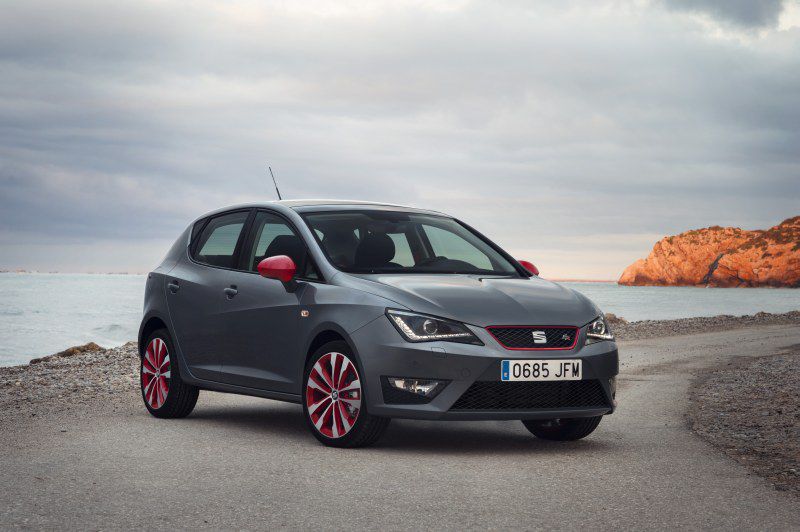
The Seat Ibiza IV (facelift 2015) 1.2 TSI (90 Hp) represents a crucial iteration of SEAT’s long-standing contender in the highly competitive European B-segment, often referred to as the supermini or subcompact class. Launched in May 2015, this refreshed fourth-generation model aimed to keep the Spanish automaker’s popular hatchback sharp and relevant against a slew of formidable rivals. While never officially sold in the United States, the Ibiza has been a cornerstone of SEAT’s brand identity across Europe and other international markets, embodying a sporty, youthful, and design-forward approach within the Volkswagen Group’s diverse portfolio. This particular variant, powered by the efficient 1.2-liter TSI engine producing 90 horsepower, was positioned as a sensible yet spirited choice for urban dwellers and those seeking an economical daily driver with a touch of Mediterranean flair. The facelift brought subtle but significant updates in terms of aesthetics, technology, and powertrain refinements, ensuring the Ibiza remained a compelling option until its eventual replacement in 2017.
Engine and Performance: The Efficient 1.2 TSI
At the heart of the Seat Ibiza IV (facelift 2015) 1.2 TSI (90 Hp) lies a modern, turbocharged gasoline engine that exemplifies the trend of downsizing for efficiency without sacrificing performance. This 1.2-liter (1197 cm³ or 73.05 cu. in.) inline four-cylinder unit, identified by the engine code CJZC, is a prime example of Volkswagen Group’s widely acclaimed TSI technology. Featuring direct fuel injection, a turbocharger, and an intercooler, this engine delivers a respectable 90 horsepower, peaking between 4400 and 5400 revolutions per minute (rpm). More impressively for a car of its size, it generates a robust 160 Nm (118.01 lb.-ft.) of torque, available across a broad and accessible range from just 1400 to 3500 rpm. This wide torque band is key to the car’s lively feel in everyday driving, providing ample pulling power from low engine speeds, which is particularly beneficial in city traffic.
Mated to a precise 5-speed manual transmission, the 1.2 TSI engine directs its power to the front wheels, a standard layout for this segment. This powertrain combination allows the Ibiza to accelerate from 0 to 60 mph in a competitive 10.2 seconds (0-100 km/h in 10.7 seconds), and reach a maximum speed of 114.33 mph (184 km/h). These figures underscore its capability to handle both urban commutes and occasional highway journeys with ease. Fuel efficiency is another strong suit, with a combined consumption rating of 48 US mpg (4.9 liters per 100 km). This economy is complemented by low CO2 emissions of 116 g/km, enabling the vehicle to comply with the stringent Euro 6 emission standard, a testament to its environmentally conscious design. The engine oil capacity is 4 liters (4.23 US quarts), and the cooling system holds 8 liters (8.45 US quarts), indicating a well-engineered thermal management system.
Design and Features: Style Meets Practicality
The Seat Ibiza IV (facelift 2015) retains the distinctive and dynamic design language that SEAT is known for, presenting itself as a stylish 5-door hatchback. With a length of 159.88 inches (4061 mm), a width of 66.65 inches (1693 mm), and a height of 56.89 inches (1445 mm), the Ibiza strikes a balanced silhouette that is both compact for urban maneuverability and substantial enough for comfortable passenger accommodation. The 2015 facelift introduced subtle enhancements to the exterior, including revised headlights, updated grille designs, and new wheel options, further sharpening its already appealing aesthetics.
Inside, the Ibiza offers seating for five occupants, making it a practical choice for small families or groups. The interior, while typical for a European subcompact, benefited from material upgrades and improved infotainment options during the facelift, enhancing the user experience. Cargo capacity is a respectable 10.31 cubic feet (292 liters) with the rear seats in place, providing ample space for groceries or weekend luggage. The vehicle’s kerb weight of 2235.49 lbs (1014 kg) contributes to its nimble handling and efficient performance. Its maximum weight capacity is 3483.3 lbs (1580 kg), allowing for a maximum load of 1247.82 lbs (566 kg).
Underneath, the Ibiza employs an independent McPherson strut front suspension with coil springs and an anti-roll bar, a setup widely praised for its balance of comfort and responsive handling. The rear utilizes a semi-independent suspension with coil springs, a cost-effective and space-efficient solution common in this segment. Braking performance is handled by ventilated discs at the front and drum brakes at the rear, complemented by an Anti-lock Braking System (ABS) for enhanced safety. Steering is managed by a rack and pinion system, offering direct and communicative feedback to the driver. The vehicle supports a range of tire sizes, from 175/70 R14 up to 215/40 R17, indicating various trim levels and performance options. The fuel tank capacity is 11.89 US gallons (45 liters), providing a decent range given its excellent fuel economy.
Technical Specifications
| Category | Specification | Metric (as provided) | US/Imperial Conversion |
|---|---|---|---|
| Brand | Seat | ||
| Model | Ibiza IV (facelift 2015) | ||
| Engine Type | 1.2 TSI (90 Hp) | ||
| Production Start | May, 2015 | ||
| Production End | 2017 | ||
| Body Type | Hatchback | ||
| Seats | 5 | ||
| Doors | 5 | ||
| Performance Specifications | |||
| Fuel Consumption (Combined) | 4.9 l/100 km | 48 US mpg | |
| CO2 Emissions | 116 g/km | ||
| Fuel Type | Petrol (Gasoline) | ||
| Acceleration 0-60 mph | 10.2 sec | 0-100 km/h: 10.7 sec | |
| Maximum Speed | 184 km/h | 114.33 mph | |
| Emission Standard | Euro 6 | ||
| Weight-to-Power Ratio | 11.3 kg/Hp | 88.8 Hp/tonne | |
| Weight-to-Torque Ratio | 6.3 kg/Nm | 157.8 Nm/tonne | |
| Engine Specifications | |||
| Power | 90 Hp @ 4400-5400 rpm | ||
| Power per Liter | 75.2 Hp/l | ||
| Torque | 160 Nm @ 1400-3500 rpm | 118.01 lb.-ft. @ 1400-3500 rpm | |
| Engine Layout | Front, Transverse | ||
| Engine Model/Code | CJZC | ||
| Engine Displacement | 1197 cm³ | 1.2 Liters / 73.05 cu. in. | |
| Number of Cylinders | 4 | ||
| Engine Configuration | Inline | ||
| Cylinder Bore | 71 mm | 2.8 in. | |
| Piston Stroke | 75.6 mm | 2.98 in. | |
| Compression Ratio | 10.5:1 | ||
| Valves per Cylinder | 4 | ||
| Fuel Injection System | Direct Injection | ||
| Engine Aspiration | Turbocharger, Intercooler | ||
| Engine Oil Capacity | 4 l | 4.23 US qt | |
| Coolant Capacity | 8 l | 8.45 US qt | |
| Space, Volume and Weights | |||
| Kerb Weight | 1014 kg | 2235.49 lbs. | |
| Max. Weight | 1580 kg | 3483.3 lbs. | |
| Max Load | 566 kg | 1247.82 lbs. | |
| Trunk (Boot) Space – Minimum | 292 l | 10.31 cu. ft. | |
| Fuel Tank Capacity | 45 l | 11.89 US gal | |
| Dimensions | |||
| Length | 4061 mm | 159.88 in. | |
| Width | 1693 mm | 66.65 in. | |
| Height | 1445 mm | 56.89 in. | |
| Wheelbase | 2469 mm | 97.2 in. | |
| Front Track | 1465 mm | 57.68 in. | |
| Rear Track | 1457 mm | 57.36 in. | |
| Minimum Turning Circle | 10 m | 32.81 ft. | |
| Drivetrain, Brakes and Suspension | |||
| Drivetrain Architecture | Front wheel drive, Internal Combustion Engine | ||
| Drive Wheel | Front wheel drive | ||
| Gearbox Type | 5 gears, manual transmission | ||
| Front Suspension | Independent, McPherson with coil spring and anti-roll bar | ||
| Rear Suspension | Semi-independent, coil spring | ||
| Front Brakes | Ventilated discs | ||
| Rear Brakes | Drum | ||
| Assisting Systems | ABS (Anti-lock braking system) | ||
| Steering Type | Steering rack and pinion | ||
| Tire Sizes | 175/70 R14; 185/60 R15; 215/45 R16; 215/40 R17 | ||
| Wheel Rims Size | 14; 15; 16; 17 | ||
Legacy and Market Impact in the European Landscape
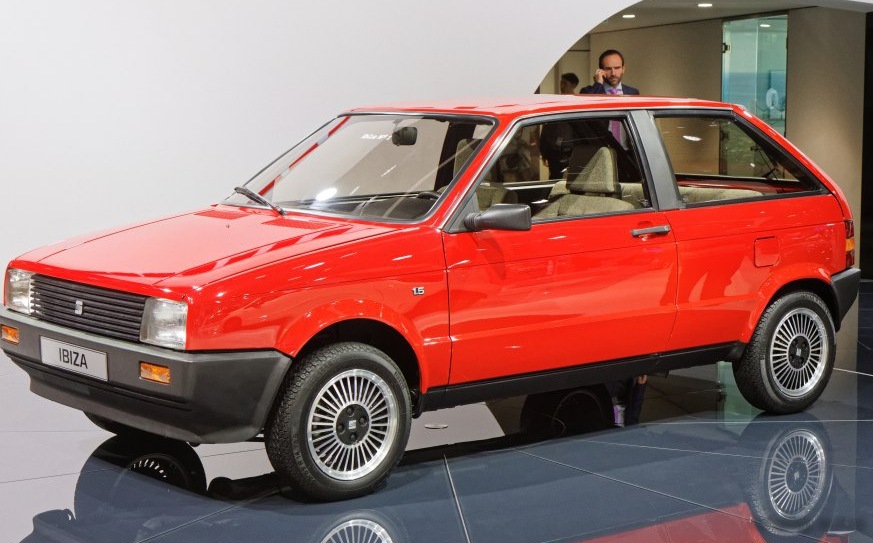
The Seat Ibiza has consistently been one of SEAT’s most important and best-selling models since its inception in 1984. The fourth generation, particularly after its 2015 facelift, continued this legacy, reaffirming SEAT’s position as a vibrant, design-led brand within the highly competitive European subcompact segment. While its absence from the North American market means it lacks direct recognition there, its impact in Europe cannot be overstated.
In its primary markets, the Seat Ibiza IV (facelift 2015) 1.2 TSI (90 Hp) was lauded for its blend of sharp styling, engaging driving dynamics, and overall value. It consistently offered a sportier alternative to its platform-mates, the Volkswagen Polo and Skoda Fabia, appealing to a younger demographic or those who desired a more passionate driving experience without compromising on practicality or efficiency. Its reputation was built on reliability, thanks to its shared VW Group underpinnings, and a perceived higher level of driving enjoyment compared to some rivals.
The Ibiza faced stiff competition from a host of established players, including the ever-popular Volkswagen Polo, the agile Ford Fiesta, the stylish Renault Clio, the chic Peugeot 208, and the practical Opel Corsa. Despite this crowded field, the Ibiza managed to carve out a significant niche, thanks to its distinctive personality and competitive pricing. The 1.2 TSI (90 Hp) engine, in particular, was a popular choice, striking an excellent balance between performance and running costs, making it an attractive proposition for a wide range of buyers, from first-time car owners to small families.
Historically, the Ibiza has been a cornerstone of SEAT’s success and a symbol of its Spanish heritage and design prowess. The 2015 facelift ensured that the fourth generation remained fresh and technologically relevant in the latter part of its lifecycle, bridging the gap to the all-new fifth-generation model. Its continued strong sales performance during this period highlighted the enduring appeal of its formula: a well-built, efficient, and enjoyable-to-drive subcompact that offered a compelling blend of style and substance. The Seat Ibiza IV (facelift 2015) stands as a testament to SEAT’s ability to create desirable vehicles that resonate deeply with European consumers, solidifying its place as a key player in the continent’s automotive landscape.