The Renault Clio IV Grandtour (Phase I) 1.5 dCi (75 Hp): A European B-Segment Contender
The Renault Clio IV Grandtour (Phase I) 1.5 dCi (75 Hp), produced between 2013 and 2016, represents a significant chapter in the history of Renault’s immensely popular Clio line. While the Clio nameplate is a household name across Europe and other international markets, this particular iteration – especially in its Grandtour (station wagon) guise – was never officially sold in the United States. Instead, it carved out a strong niche in the highly competitive European B-segment (subcompact) market, offering a compelling blend of practicality, style, and exceptional fuel efficiency. This model, part of the fourth generation of the Clio, aimed to deliver a more spacious and versatile option for families and individuals who needed more cargo capacity than the standard hatchback, without the footprint or cost of a larger vehicle.
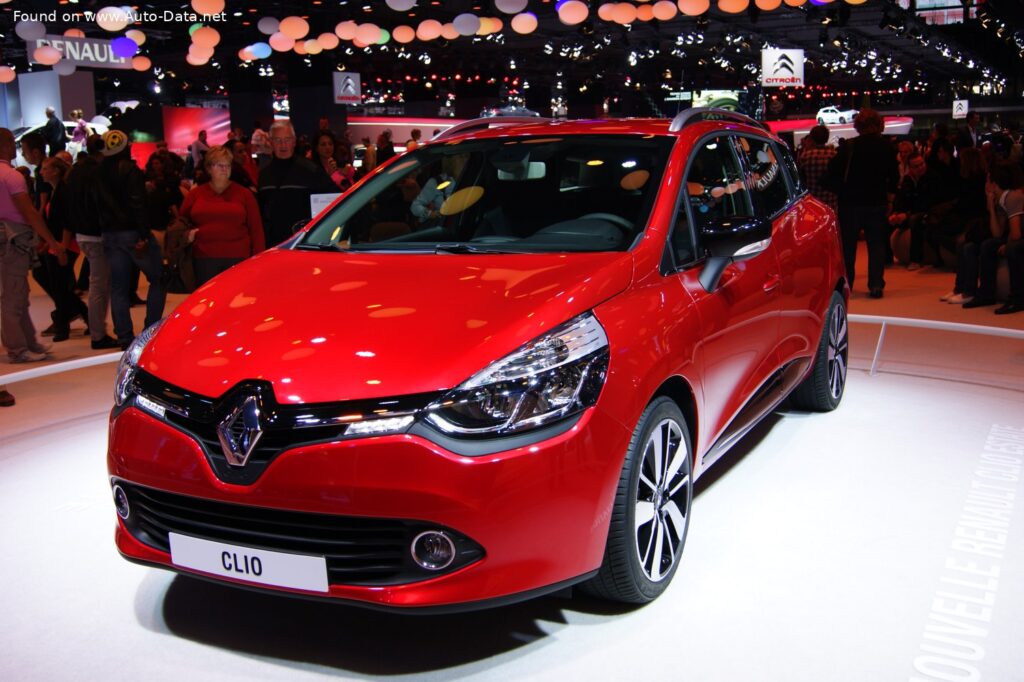
The Clio IV marked a bold new design direction for Renault, spearheaded by Laurens van den Acker. It introduced a more emotional and dynamic aesthetic, moving away from the more conservative lines of its predecessors. The Grandtour variant extended this design philosophy, seamlessly integrating a larger rear section to create a stylish yet highly functional estate car. Under the hood, the 1.5 dCi engine, a well-regarded diesel unit from Renault, provided the necessary motivation, prioritizing economy and low emissions – critical factors for European consumers.
Engine and Performance of the Renault Clio IV Grandtour (Phase I) 1.5 dCi (75 Hp)
At the heart of the Renault Clio IV Grandtour (Phase I) 1.5 dCi (75 Hp) was the K9K 628 engine, a 1.5-liter (1461 cm³ or 89.16 cu. in.) inline four-cylinder diesel unit. This engine, a staple in Renault’s powertrain lineup for decades, was renowned for its robustness and parsimonious fuel consumption. In this particular tune, it delivered 75 horsepower at 4000 rpm, which, while not a figure to ignite the drag strip, was more than adequate for urban commuting and relaxed highway cruising, especially given the car’s intended purpose.
More impressive than the horsepower was the torque output: 200 Nm (147.51 lb.-ft.) available at a low 1750 rpm. This healthy dose of low-end torque was crucial for the car’s drivability, allowing for effortless acceleration from a standstill and strong pulling power even when the vehicle was loaded with passengers and cargo. The engine’s configuration included a turbocharger and intercooler, which not only boosted performance but also contributed to its efficiency by optimizing air intake. The common rail fuel injection system further enhanced fuel atomization, leading to cleaner combustion and better economy.
Power was delivered to the front wheels via a smooth-shifting 5-speed manual transmission, a common setup for B-segment vehicles of its era. This drivetrain architecture was chosen for its simplicity, reliability, and efficiency. Performance figures, while modest by American standards, were perfectly acceptable for its class in Europe: 0 to 60 mph was achieved in a calculated 13.6 seconds, with a top speed of 104.39 mph (168 km/h). However, the true strength of this powertrain lay in its fuel economy. The Clio IV Grandtour 1.5 dCi boasted an impressive combined fuel consumption of 3.6 liters per 100 km, translating to an outstanding 65.3 US mpg. Its CO2 emissions were also remarkably low at just 95 g/km, making it an environmentally conscious choice and often qualifying for tax benefits in European countries.
Design and Features
The Renault Clio IV Grandtour represented a significant step forward in design for the Clio range. Its exterior was characterized by a sleek, fluid profile, a departure from the more angular designs of previous generations. The front fascia featured a prominent Renault diamond badge, flanked by distinctive headlights that flowed seamlessly into the grille. The Grandtour variant extended the roofline gracefully to the rear, creating a harmonious and well-proportioned station wagon without compromising the Clio’s inherent dynamism.
Measuring 167.99 inches (4267 mm) in length, 68.19 inches (1732 mm) in width, and 56.89 inches (1445 mm) in height, with a wheelbase of 101.93 inches (2589 mm), the Grandtour offered a surprisingly spacious interior for its class. The key selling point of the Grandtour body style was its enhanced cargo capacity. With the rear seats in place, it provided a generous 15.64 cubic feet (443 liters) of trunk space. Folding the rear seats down expanded this to an impressive 48.73 cubic feet (1380 liters), transforming the compact wagon into a highly capable load-hauler, ideal for families, small businesses, or active lifestyles.
Inside, the Clio IV featured a modern and ergonomic cabin. While specific trim levels would dictate the exact amenities, standard features typically included power windows, central locking, and a basic audio system. Safety was addressed with the inclusion of ABS (Anti-lock Braking System), a fundamental active safety feature. The car rode on 185/65 R15 tires mounted on 15-inch wheels, a setup that prioritized ride comfort and fuel efficiency over aggressive handling, aligning with its family-friendly persona. The steering was a rack and pinion type, offering predictable and light steering feel, well-suited for urban maneuvering, further aided by a tight minimum turning circle of 34.78 feet (10.6 meters).
Technical Specifications
| Category | Specification | Value (US Units) |
|---|---|---|
| Brand | Renault | |
| Model | Clio IV Grandtour (Phase I) | |
| Type (Engine) | 1.5 dCi (75 Hp) | |
| Production Start | 2013 | |
| Production End | 2016 | |
| Body Type | Station wagon (estate) | |
| Seats | 5 | |
| Doors | 5 | |
| Performance Specs | ||
| Fuel Consumption (Urban) | 4.3 l/100 km | 54.7 US mpg |
| Fuel Consumption (Extra Urban) | 3.2 l/100 km | 73.5 US mpg |
| Fuel Consumption (Combined) | 3.6 l/100 km | 65.3 US mpg |
| CO2 Emissions | 95 g/km | |
| Fuel Type | Diesel | |
| Acceleration 0 – 60 mph | 13.6 sec | |
| Maximum Speed | 168 km/h | 104.39 mph |
| Weight-to-Power Ratio | 15.1 kg/Hp | 66.1 Hp/tonne |
| Weight-to-Torque Ratio | 5.7 kg/Nm | 176.4 Nm/tonne |
| Engine Specs | ||
| Power | 75 Hp @ 4000 rpm | |
| Power per liter | 51.3 Hp/l | |
| Torque | 200 Nm @ 1750 rpm | 147.51 lb.-ft. @ 1750 rpm |
| Engine Layout | Front, Transverse | |
| Engine Model/Code | K9K 628 | |
| Engine Displacement | 1461 cm³ | 89.16 cu. in. |
| Number of Cylinders | 4 | |
| Engine Configuration | Inline | |
| Valves per Cylinder | 2 | |
| Fuel Injection System | Diesel Commonrail | |
| Engine Aspiration | Turbocharger, Intercooler | |
| Engine Oil Capacity | 4.5 l | 4.76 US qt |
| Coolant Capacity | 5 l | 5.28 US qt |
| Space, Volume and Weights | ||
| Kerb Weight | 1134 kg | 2500.04 lbs |
| Max. Weight | 1651 kg | 3639.83 lbs |
| Max Load | 517 kg | 1139.79 lbs |
| Trunk Space (Minimum) | 443 l | 15.64 cu. ft. |
| Trunk Space (Maximum) | 1380 l | 48.73 cu. ft. |
| Fuel Tank Capacity | 45 l | 11.89 US gal |
| Dimensions | ||
| Length | 4267 mm | 167.99 in. |
| Width | 1732 mm | 68.19 in. |
| Height | 1445 mm | 56.89 in. |
| Wheelbase | 2589 mm | 101.93 in. |
| Minimum Turning Circle | 10.6 m | 34.78 ft. |
| Drivetrain, Brakes and Suspension Specs | ||
| Drivetrain Architecture | Internal combustion engine (ICE) drives the front wheels | |
| Drive Wheel | Front wheel drive | |
| Gearbox | 5 gears, manual transmission | |
| Assisting Systems | ABS (Anti-lock braking system) | |
| Steering Type | Steering rack and pinion | |
| Tires Size | 185/65 R15 88T | |
| Wheel Rims Size | 15 inches | |
Legacy and Market Impact
The Renault Clio IV Grandtour (Phase I) 1.5 dCi (75 Hp) played a significant role in Renault’s strategy to dominate the competitive European B-segment. The Clio IV generation as a whole was a commercial success, and the Grandtour variant extended its appeal to a broader demographic, particularly those prioritizing space and versatility without wanting to move up to the C-segment (compact) or SUV categories. Its stylish design, a major departure from previous Clio models, resonated well with consumers, helping to re-establish Renault as a design leader.
In its primary markets, the Clio Grandtour faced stiff competition from other European manufacturers offering similar compact station wagons or estates. Key rivals included the Skoda Fabia Combi, SEAT Ibiza ST, and occasionally the Dacia Logan MCV, which offered even greater value. However, the Clio distinguished itself with its more upscale design, comfortable ride, and refined diesel powertrain. Its exceptional fuel economy and low CO2 emissions were major selling points, particularly in countries with high fuel prices and emission-based taxation schemes, making it an attractive option for both private buyers and fleet operators.
The 1.5 dCi (75 Hp) engine, in particular, solidified the Clio’s reputation for low running costs. This engine was widely praised for its reliability and efficiency, contributing to the car’s overall appeal. While not a performance machine, its strong torque delivery made it feel responsive in everyday driving conditions, especially in urban environments where its compact dimensions and tight turning circle were also assets. The Grandtour’s generous cargo volume, ranging from 15.64 to 48.73 cubic feet, provided a practical solution for small families or individuals who frequently transported bulky items, offering a compelling alternative to larger, more expensive vehicles.
Ultimately, the Renault Clio IV Grandtour (Phase I) 1.5 dCi (75 Hp) was a testament to Renault’s understanding of the European market’s demands for efficient, practical, and stylish compact cars. It successfully married the Clio’s traditional strengths with enhanced utility, cementing its place as a popular and well-regarded option in its segment during its production run.