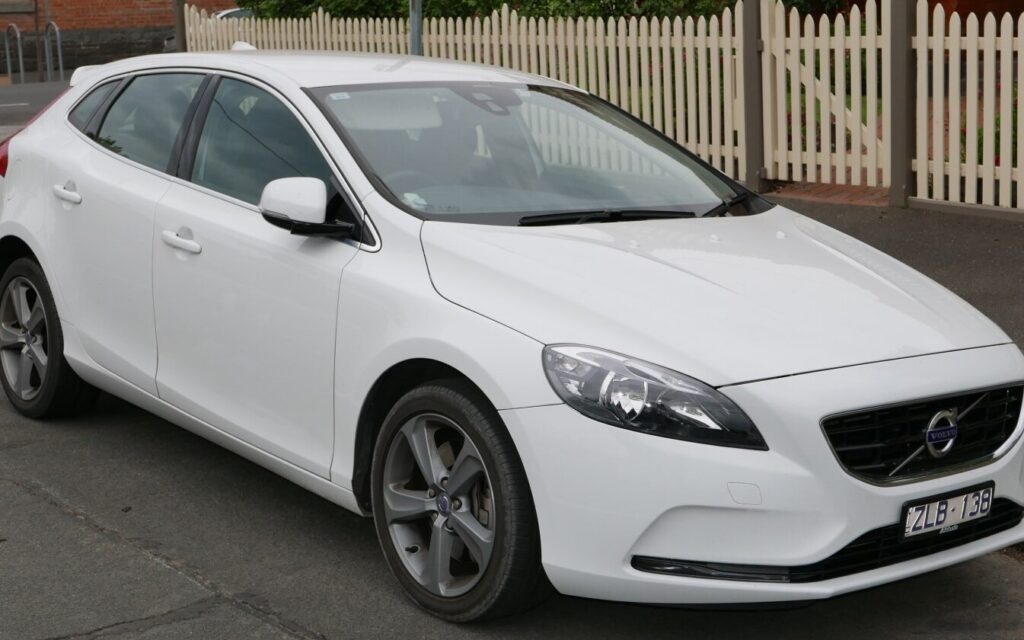
The Volvo V40 (facelift 2016) 2.0 T5 Geartronic: A Premium European Compact
The Volvo V40, particularly the 2016 facelift of its second generation, represented Volvo’s strong contender in the highly competitive European premium compact hatchback segment. Produced from 2016 to 2018, this iteration of the V40, specifically the potent 2.0 T5 (245 Hp) Geartronic variant, offered a compelling blend of Scandinavian design, robust performance, and Volvo’s renowned commitment to safety. While the V40 was never officially sold in the United States, it played a crucial role in Volvo’s global strategy, aiming to attract a younger, more dynamic clientele in its primary markets, predominantly across Europe and parts of Asia, who sought a sophisticated yet practical urban vehicle.
The 2016 facelift introduced several key updates, aligning the V40’s aesthetic with Volvo’s then-new design language, first seen on the larger XC90 SUV. These enhancements helped to refresh its appeal and keep it competitive against established German rivals like the Audi A3, BMW 1 Series, and Mercedes-Benz A-Class. The Volvo V40 (facelift 2016) embodied a youthful spirit for the brand, combining a sleek, five-door hatchback body style with advanced powertrain technology and a driver-focused experience.
Engine & Performance: The 2.0 T5 Powertrain
At the heart of the V40 (facelift 2016) 2.0 T5 Geartronic model was Volvo’s highly efficient and powerful Drive-E powertrain. This variant featured a 2.0-liter (120.16 cubic inches) turbocharged inline-four gasoline engine, code-named B4204T11. This sophisticated unit incorporated direct fuel injection and an intercooler, allowing it to produce a robust 245 horsepower at 5500 rpm. The engine’s power-per-liter output stood at an impressive 124.4 horsepower per liter, demonstrating its advanced engineering.
Crucially, the 2.0 T5 engine delivered a substantial 258.15 lb.-ft. of torque across a broad rev range, from 1500 to 4800 rpm. This wide torque band ensured excellent responsiveness and flexibility in various driving conditions, from city commuting to highway cruising. Power was seamlessly transferred to the front wheels via an 8-speed Geartronic automatic transmission, known for its smooth shifts and efficiency. This combination allowed the V40 T5 to accelerate from 0 to 60 mph in a brisk 6 seconds, with a top speed electronically limited to 149.13 mph (240 km/h).
Despite its spirited performance, the V40 T5 maintained respectable fuel efficiency for its class. The combined fuel economy was rated at an estimated 39.9 US miles per gallon (5.9 l/100 km), with urban consumption at 29.8 US mpg (7.9 l/100 km) and extra-urban figures reaching 49 US mpg (4.8 l/100 km). This efficiency was further complemented by its Euro 6 emission standard compliance, reflecting Volvo’s commitment to environmental responsibility.
Design & Features of the Volvo V40 (facelift 2016)
The Volvo V40 (facelift 2016) retained its distinctive five-door hatchback body, blending practicality with a sleek, dynamic profile. The most significant exterior update for the facelift was the introduction of Volvo’s signature “Thor’s Hammer” LED daytime running lights, which gave the V40 a more modern and assertive front fascia, drawing a clear lineage to its larger siblings. The grille was also updated with a new Volvo Iron Mark logo, and new wheel designs further enhanced its contemporary appeal.
Measuring 172.01 inches in length, 70.2 inches in width (80.35 inches including mirrors), and 56.65 inches in height, the V40 was perfectly sized for urban maneuverability while offering a comfortable interior for five occupants. Its wheelbase of 104.21 inches contributed to a stable ride, and the minimum turning circle of 35.43 feet made it agile in tight spaces. The trunk space was practical, ranging from 11.44 cubic feet with all seats up to a generous 52.97 cubic feet with the rear seats folded down, making it versatile for daily use and weekend trips.
Inside, the V40 exemplified Scandinavian design principles: minimalist, ergonomic, and crafted with high-quality materials. Although not explicitly detailed in the provided data, a Volvo of this era would typically feature supportive and comfortable seats, a user-friendly Sensus infotainment system, and a focus on intuitive controls. Safety, a cornerstone of the Volvo brand, was paramount. Standard features included an Anti-lock Braking System (ABS), and advanced driver-assistance systems such as City Safety, which could automatically brake to avoid collisions at lower speeds, were often available, underscoring Volvo’s leadership in automotive safety technology.
The chassis featured an independent McPherson strut front suspension with coil springs and an anti-roll bar, paired with an independent coil spring rear suspension, providing a balanced ride quality and competent handling. Braking power came from ventilated discs at the front and disc brakes at the rear, ensuring strong and consistent stopping performance. Electric power steering offered precise control and ease of maneuverability.
Technical Specifications
| Category | Specification |
|---|---|
| General Information | |
| Brand | Volvo |
| Model | V40 |
| Generation | V40 (facelift 2016) |
| Type (Engine) | 2.0 T5 (245 Hp) Geartronic |
| Start of Production | 2016 |
| End of Production | 2018 |
| Powertrain Architecture | Internal Combustion Engine |
| Body Type | Hatchback |
| Seats | 5 |
| Doors | 5 |
| Performance Specs | |
| Fuel Consumption (Urban) | 29.8 US mpg (7.9 l/100 km) |
| Fuel Consumption (Extra Urban) | 49 US mpg (4.8 l/100 km) |
| Fuel Consumption (Combined) | 39.9 US mpg (5.9 l/100 km) |
| CO2 Emissions | 137 g/km |
| Fuel Type | Gasoline (Petrol) |
| Acceleration 0-60 mph | 6 seconds |
| Maximum Speed | 149.13 mph (240 km/h) |
| Emission Standard | Euro 6 |
| Engine Specs | |
| Power | 245 Hp @ 5500 rpm |
| Power per liter | 124.4 Hp/l |
| Torque | 258.15 lb.-ft. @ 1500-4800 rpm (350 Nm) |
| Engine Layout | Front, Transverse |
| Engine Model/Code | B4204T11 |
| Engine Displacement | 2.0 Liters (120.16 cu. in. / 1969 cm3) |
| Number of Cylinders | 4 |
| Engine Configuration | Inline |
| Cylinder Bore | 3.23 in. (82 mm) |
| Piston Stroke | 3.67 in. (93.2 mm) |
| Compression Ratio | 10.8:1 |
| Number of Valves per Cylinder | 4 |
| Fuel Injection System | Direct injection |
| Engine Aspiration | Turbocharger, Intercooler |
| Engine Oil Capacity | 6.23 US qt. (5.9 l) |
| Coolant Capacity | 7.93 US qt. (7.5 l) |
| Space, Volume and Weights | |
| Trunk Space (minimum) | 11.44 cu. ft. (324 l) |
| Trunk Space (maximum) | 52.97 cu. ft. (1500 l) |
| Fuel Tank Capacity | 16.38 US gal. (62 l) |
| Max. Roof Load | 165.35 lbs. (75 kg) |
| Permitted Trailer Load with Brakes (12%) | 3306.93 lbs. (1500 kg) |
| Dimensions | |
| Length | 172.01 in. (4369 mm) |
| Width | 70.2 in. (1783 mm) |
| Width (including mirrors) | 80.35 in. (2041 mm) |
| Height | 56.65 in. (1439 mm) |
| Wheelbase | 104.21 in. (2647 mm) |
| Front Track | 61.38 in. (1559 mm) |
| Rear Track | 60.87 in. (1546 mm) |
| Ride Height (Ground Clearance) | 5.24 – 5.67 in. (133-144 mm) |
| Drag Coefficient (Cd) | 0.32 |
| Minimum Turning Circle | 35.43 ft. (10.8 m) |
| Drivetrain, Brakes and Suspension Specs | |
| Drivetrain Architecture | Front-Wheel Drive (Internal Combustion Engine) |
| Drive Wheel | Front wheel drive |
| Number of Gears and Type of Gearbox | 8 gears, automatic transmission Geartronic |
| Front Suspension | Independent, type McPherson with coil spring and anti-roll bar |
| Rear Suspension | Independent coil spring |
| Front Brakes | Ventilated discs |
| Rear Brakes | Disc |
| Assisting Systems | ABS (Anti-lock Braking System) |
| Steering Type | Steering rack and pinion |
| Power Steering | Electric Steering |
Legacy & Market Impact
The Volvo V40 (facelift 2016) 2.0 T5 Geartronic carved out a distinct niche in the European premium compact segment. While not as overtly sporty as some of its German rivals, it offered a unique proposition centered on elegant Scandinavian design, exceptional safety credentials, and a refined driving experience. Its powerful T5 engine ensured that it could hold its own in terms of performance, providing a spirited alternative to the more common diesel or less powerful gasoline options in the market.
For Volvo, the V40 was a crucial model for attracting a younger demographic and expanding its market reach beyond its traditional stronghold of larger sedans and wagons. It helped to modernize Volvo’s image, showcasing that the brand could deliver stylish, compact, and engaging vehicles without compromising on its core values of safety and quality. Competitors in its primary European market included the Audi A3 Sportback, BMW 1 Series, Mercedes-Benz A-Class, and potentially the Volkswagen Golf in its higher trims, all of which offered a premium compact experience.
The V40’s reputation for being a safe, well-built, and comfortable car resonated strongly with consumers seeking a premium feel without the aggressive styling often associated with its competitors. Its absence from the North American market meant that American consumers missed out on a compelling premium compact option, a segment that has seen limited offerings in the U.S. market compared to Europe.
Ultimately, the V40’s production concluded in 2018, as Volvo shifted its focus towards SUVs and crossovers, with the highly successful XC40 taking over as the brand’s entry-level premium offering in many markets. However, the Volvo V40 (facelift 2016) remains a significant chapter in Volvo’s history, demonstrating its capability to produce a competitive and desirable compact car that perfectly encapsulated the brand’s evolving identity: safe, sophisticated, and surprisingly spirited.