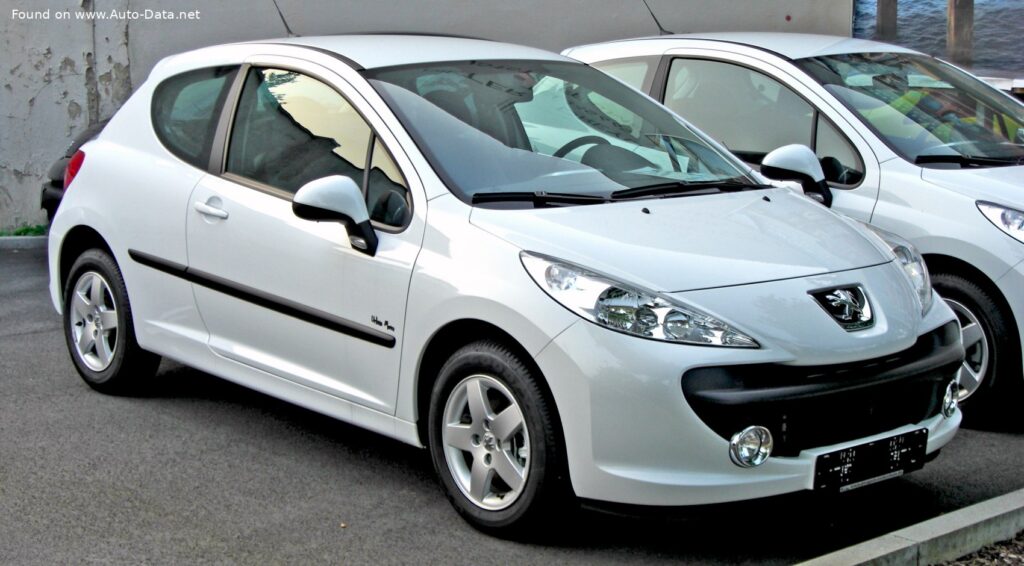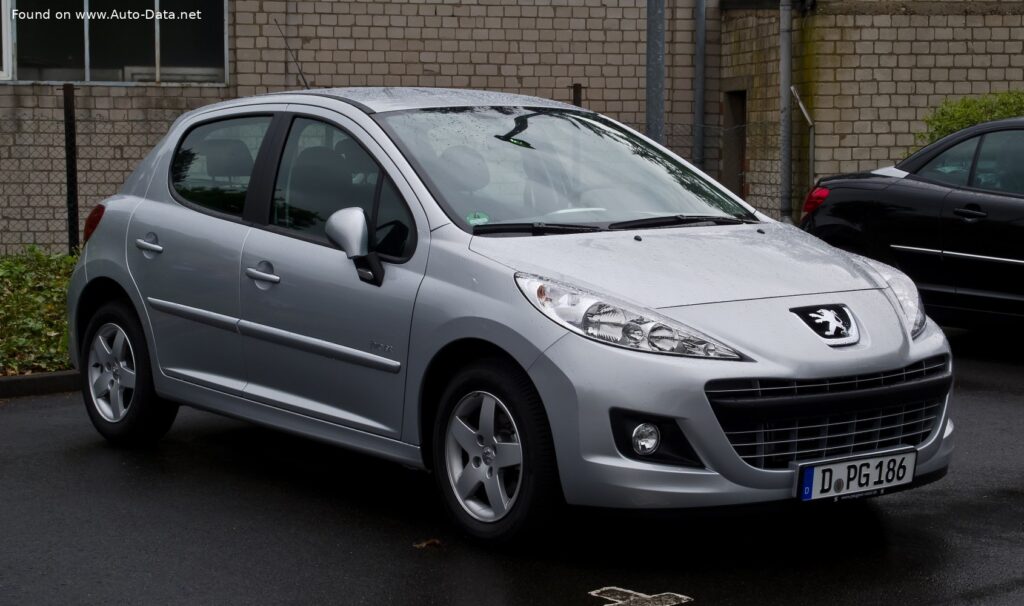
The Peugeot 207 (facelift 2009) 1.6 HDi (92 Hp): A European B-Segment Stalwart
The Peugeot 207, particularly its facelifted iteration from 2009, represented a significant chapter in the French automaker’s long history of producing popular supermini vehicles. The specific variant, the Peugeot 207 (facelift 2009) 1.6 HDi (92 Hp), was a prime example of a practical, efficient, and well-equipped B-segment hatchback designed primarily for the discerning European market. Launched in 2006 as the successor to the immensely successful Peugeot 206, the 207 aimed to build upon its predecessor’s strengths while offering improved refinement, safety, and technological advancements. The 2009 facelift introduced subtle but impactful revisions, keeping the model competitive against a crowded field of rivals. This generation of the 207, produced from 2009 to 2012, was never officially sold in the United States, making it a distinctly European proposition where small, fuel-efficient diesel hatchbacks were, and largely remain, a cornerstone of the automotive landscape.
Positioned as a versatile compact car, the 207 (facelift 2009) was available in various body styles, but the 3-door and 5-door hatchback versions were its bread and butter. The 1.6 HDi (92 Hp) engine variant, a common choice for its balance of performance and economy, epitomized the practicality and cost-effectiveness that buyers in this segment prioritized. It offered a compelling package for urban commuting, longer highway journeys, and everything in between, all while adhering to the increasingly stringent Euro 5 emission standards of its time.
Engine and Performance of the Peugeot 207 (facelift 2009)
At the heart of this particular Peugeot 207 (facelift 2009) was the efficient 1.6-liter (1560 cm3 or 95.2 cu. in.) HDi diesel engine, internally designated as the 9HP DV6DTED. This inline-four, single overhead camshaft (SOHC) unit was a testament to Peugeot’s expertise in diesel powertrain development. Generating 92 horsepower at 4000 rpm, the engine provided a respectable power output for a vehicle of its size and segment. More importantly for a diesel, it delivered a robust 169.64 lb.-ft. (230 Nm) of torque from a low 1750 rpm. This characteristic low-end torque was crucial for sprightly acceleration in city traffic and effortless cruising on highways, making the car feel more responsive than its horsepower figure might suggest.
The 1.6 HDi engine was equipped with a turbocharger and intercooler, enhancing both power delivery and efficiency. Its Diesel Commonrail fuel injection system ensured precise fuel delivery, contributing to both performance and fuel economy. A compression ratio of 18:1 was typical for a modern diesel engine of its era. With two valves per cylinder, the engine design balanced simplicity with effective combustion. A key environmental feature for this generation was the inclusion of a particulate filter, which helped the vehicle meet the Euro 5 emission standard, a significant achievement for a diesel engine in the late 2000s.
In terms of performance, the Peugeot 207 (facelift 2009) 1.6 HDi (92 Hp) offered a balanced driving experience. It could accelerate from 0 to 60 mph in a respectable 11.3 seconds, with a maximum speed of 113.71 mph (183 km/h). These figures were competitive within its class, providing enough grunt for safe overtaking maneuvers while remaining highly economical. The powertrain architecture featured a front, transverse engine layout, driving the front wheels through a 5-speed manual transmission. This setup was standard for the segment, offering reliable and predictable handling characteristics.
Fuel efficiency was a major highlight of this diesel variant. The combined fuel economy was an impressive 56 US mpg (4.2 l/100 km), demonstrating its capability for long-distance cruising without frequent fuel stops. Urban driving yielded 45.2 US mpg (5.2 l/100 km), while extra-urban (highway) driving pushed efficiency to an outstanding 67.2 US mpg (3.5 l/100 km). These figures, coupled with CO2 emissions of 110 g/km, underscored the 207 HDi’s credentials as an environmentally conscious and economical choice for the period.
Design and Features
The 2009 facelift of the Peugeot 207 introduced subtle yet effective styling revisions that refreshed its appearance without altering its fundamental character. The exterior design maintained the 207’s distinctive “cat-like” headlights and prominent grille, which were softened slightly for a more contemporary look. Updates typically included revised front bumpers, new fog light surrounds, and refreshed taillight designs, giving the car a more modern and cohesive aesthetic. The hatchback body, available in both 3-door and 5-door configurations, offered excellent practicality, a hallmark of the supermini segment.
Measuring 159.25 inches (4045 mm) in length, 68.82 inches (1748 mm) in width, and 57.95 inches (1472 mm) in height, the 207 was perfectly sized for navigating crowded European city streets and tight parking spaces. Its 100-inch (2540 mm) wheelbase contributed to a stable ride and a surprisingly spacious interior for its class. The minimum turning circle of 36.09 feet (11.0 m) further enhanced its maneuverability.
Inside, the Peugeot 207 (facelift 2009) 1.6 HDi (92 Hp) offered a comfortable and well-appointed cabin. The interior design was functional and ergonomic, with controls logically placed for ease of use. Seating for five passengers was standard, though the rear seats were more suitable for children or short journeys for adults. The trunk space was practical, offering a minimum of 9.53 cu. ft. (270 liters), which could be expanded significantly to 32.6 cu. ft. (923 liters) with the rear seats folded down, making it versatile for carrying groceries or luggage.
Standard features for a car of this era and segment typically included power windows, remote central locking, an audio system, and air conditioning. Safety was also a strong consideration, with the 207 coming equipped with an Anti-lock Braking System (ABS) as standard, ensuring stable braking performance. The front suspension utilized an independent McPherson strut setup with coil springs and an anti-roll bar, while the rear featured a semi-independent arrangement with coil springs and an elastic beam, providing a good balance between ride comfort and handling agility. The front brakes were ventilated discs, complemented by solid disc brakes at the rear, offering confident stopping power. The car rode on 195/55 R16 tires, mounted on 16-inch wheel rims, contributing to both grip and ride quality.
Technical Specifications
| General Information | |
|---|---|
| Brand | Peugeot |
| Model | 207 |
| Generation | 207 (facelift 2009) |
| Type (Engine) | 1.6 HDi (92 Hp) |
| Start of production | 2009 year |
| End of production | 2012 year |
| Powertrain Architecture | Internal Combustion engine |
| Body type | Hatchback |
| Seats | 5 |
| Doors | 3-5 |
| Performance Specs | |
| Fuel consumption (economy) – urban | 5.2 l/100 km (45.2 US mpg) |
| Fuel consumption (economy) – extra urban | 3.5 l/100 km (67.2 US mpg) |
| Fuel consumption (economy) – combined | 4.2 l/100 km (56 US mpg) |
| CO2 emissions | 110 g/km |
| Fuel Type | Diesel |
| Acceleration 0 – 60 mph | 11.3 sec |
| Maximum speed | 113.71 mph (183 km/h) |
| Emission standard | Euro 5 |
| Weight-to-power ratio | 12.9 kg/Hp, 77.4 Hp/tonne |
| Weight-to-torque ratio | 5.2 kg/Nm, 193.4 Nm/tonne |
| Engine Specs | |
| Power | 92 Hp @ 4000 rpm |
| Power per liter | 59 Hp/l |
| Torque | 169.64 lb.-ft. (230 Nm) @ 1750 rpm |
| Engine layout | Front, Transverse |
| Engine Model/Code | 9HP DV6DTED |
| Engine displacement | 1560 cm3 (95.2 cu. in.) |
| Number of cylinders | 4 |
| Engine configuration | Inline |
| Cylinder Bore | 75 mm (2.95 in.) |
| Piston Stroke | 88.3 mm (3.48 in.) |
| Compression ratio | 18:1 |
| Number of valves per cylinder | 2 |
| Fuel injection system | Diesel Commonrail |
| Engine aspiration | Turbocharger, Intercooler |
| Valvetrain | SOHC |
| Engine oil capacity | 3.75 l (3.96 US qt) |
| Engine oil specification | Not specified |
| Coolant | 5.6 l (5.92 US qt) |
| Engine systems | Particulate filter |
| Space, Volume and Weights | |
| Kerb Weight | 2621.3 lbs. (1189 kg) |
| Max. weight | 3754.47 lbs. (1703 kg) |
| Max load | 1133.18 lbs. (514 kg) |
| Trunk (boot) space – minimum | 9.53 cu. ft. (270 l) |
| Trunk (boot) space – maximum | 32.6 cu. ft. (923 l) |
| Fuel tank capacity | 13.21 US gal (50 l) |
| Permitted trailer load with brakes (12%) | 2535.32 lbs. (1150 kg) |
| Permitted trailer load without brakes | 1322.77 lbs. (600 kg) |
| Dimensions | |
| Length | 159.25 in. (4045 mm) |
| Width | 68.82 in. (1748 mm) |
| Width with mirrors folded | 71.57 in. (1818 mm) |
| Width including mirrors | 77.64 in. (1972 mm) |
| Height | 57.95 in. (1472 mm) |
| Wheelbase | 100 in. (2540 mm) |
| Front track | 58.07 in. (1475 mm) |
| Rear (Back) track | 57.8 in. (1468 mm) |
| Drag coefficient (Cd) | 0.30 |
| Minimum turning circle (turning diameter) | 36.09 ft. (11.0 m) |
| Drivetrain, Brakes and Suspension Specs | |
| Drivetrain Architecture | The Internal combustion engine (ICE) drives the front wheels of the vehicle. |
| Drive wheel | Front wheel drive |
| Number of gears and type of gearbox | 5 gears, manual transmission |
| Front suspension | Independent, type McPherson with coil spring and anti-roll bar |
| Rear suspension | Semi-independent, coil spring, Elastic beam |
| Front brakes | Ventilated discs |
| Rear brakes | Disc |
| Assisting systems | ABS (Anti-lock braking system) |
| Steering type | Steering rack and pinion |
| Tires size | 195/55 R16 |
| Wheel rims size | 16 |
Legacy and Market Impact
The Peugeot 207, including the facelifted 2009 model with the 1.6 HDi (92 Hp) engine, played a crucial role in Peugeot’s strategy to maintain its dominance in the highly competitive European B-segment. This segment was, and still is, a battleground for major automakers, with fierce rivals such as the Volkswagen Polo, Ford Fiesta, Renault Clio, and Opel Corsa. The 207’s primary market was undoubtedly Europe, where its compact dimensions, practical hatchback body, and, crucially, its fuel-efficient diesel engines, resonated strongly with consumers facing high fuel prices and dense urban environments.
The 1.6 HDi (92 Hp) variant specifically earned a reputation for its excellent fuel economy and robust, albeit not overtly sporty, performance. It was a common choice for both private buyers seeking low running costs and fleet operators valuing reliability and efficiency. Peugeot’s HDi engines, known for their refinement and durability, contributed significantly to the 207’s appeal. The inclusion of a particulate filter and compliance with Euro 5 emissions standards demonstrated Peugeot’s commitment to environmental responsibility, a growing concern in the European automotive landscape of the late 2000s.
While the 207 may not have achieved the same iconic status or sales volume as its predecessor, the 206, it was a competent and well-engineered vehicle for its time. It offered a more mature and refined driving experience than the 206, with improved safety features and interior quality. Its legacy is one of a dependable workhorse, a car that perfectly understood the needs of its target audience: a practical, economical, and comfortable compact vehicle for everyday use. It served as an important bridge between the 206 and its eventual successor, the 208, demonstrating Peugeot’s continuous evolution in the supermini segment and solidifying its position as a key player in the European automotive industry.