The Seat Ibiza IV (facelift 2015) 1.4 TDI (105 Hp): A European Subcompact Icon
The Seat Ibiza IV (facelift 2015) represents a significant refresh for SEAT’s highly successful fourth-generation subcompact hatchback. Originating from Spain, SEAT, a member of the Volkswagen Group, positioned the Ibiza as its key player in the fiercely competitive European B-segment. This particular iteration, produced from May 2015 to 2017, featured a potent yet remarkably efficient 1.4-liter TDI diesel engine producing 105 horsepower. While never officially sold in the United States, the Ibiza is a quintessential European urban car, celebrated for its blend of sporty driving dynamics, practicality, and fuel economy. The 2015 facelift aimed to keep the model fresh against newer rivals, introducing subtle styling tweaks, enhanced interior materials, and updated technology, all while maintaining its core appeal as a stylish and accessible daily driver across the continent.
Engine and Performance of the Seat Ibiza IV (facelift 2015)
At the heart of this particular Seat Ibiza IV (facelift 2015) variant was a sophisticated 1.4-liter (1422 cm³ or 86.78 cu. in.) inline three-cylinder TDI diesel engine, internally designated CUTA. This powerplant was a testament to the Volkswagen Group’s expertise in diesel technology, delivering a robust 105 horsepower at 3500 rpm. Crucially for a car designed for both city driving and longer commutes, it generated an impressive 230 Nm (169.64 lb.-ft.) of torque, available across a broad rev range from 1750 to 2500 rpm. This ample torque, combined with a relatively low curb weight of 2394.22 pounds, provided responsive acceleration for its class.
The engine’s architecture included a turbocharger and an intercooler, optimizing air intake for enhanced power and efficiency. A common rail direct fuel injection system ensured precise fuel delivery, contributing to both performance and the model’s outstanding fuel economy. Mated to a precise five-speed manual transmission, the Ibiza 1.4 TDI could accelerate from 0 to 60 mph in a respectable 9.4 seconds, with a top speed of 119.3 mph. These figures made it one of the more engaging options in its segment. Beyond performance, the engine was a paragon of efficiency, achieving a combined fuel consumption of 3.6 liters per 100 km (equivalent to 65.3 US mpg). Its CO2 emissions of just 95 g/km meant it comfortably met the stringent Euro 6 emission standards, making it an environmentally conscious choice for European buyers.
Design and Features
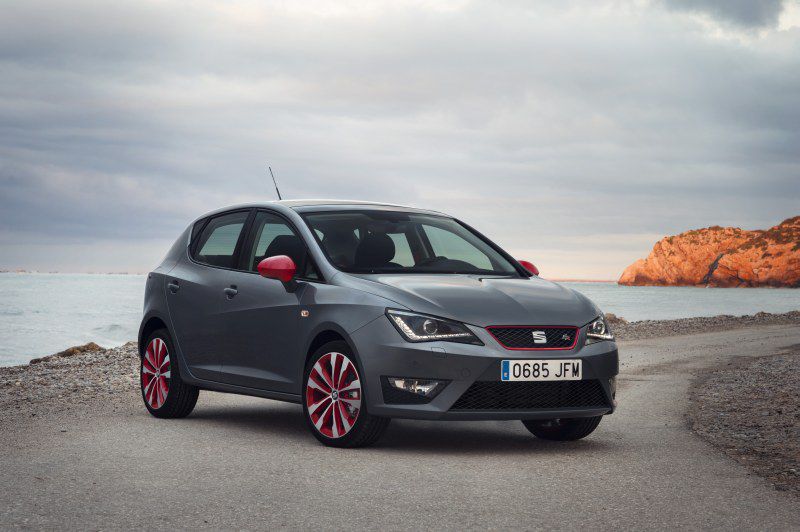
The Seat Ibiza IV (facelift 2015) maintained the sporty, dynamic styling that had defined the fourth generation since its initial launch. As a five-door hatchback, it offered a practical configuration popular among urban dwellers and small families. The 2015 facelift brought subtle yet effective revisions, including a redesigned front bumper, updated grille, and new headlamp designs that incorporated LED daytime running lights, giving the car a sharper, more contemporary face. At the rear, updated taillight graphics reinforced its modern appeal.
Inside, SEAT focused on enhancing the tactile experience and perceived quality. The facelift introduced higher-quality materials, particularly on the dashboard and door panels, along with improved ergonomics. The cabin was designed to accommodate five occupants, offering a functional and comfortable space for its segment. The trunk space, at 10.31 cubic feet (292 liters), was competitive, providing adequate room for groceries or weekend luggage. Standard features included an Anti-lock Braking System (ABS) for enhanced safety, while the chassis featured an independent McPherson strut front suspension with a coil spring and anti-roll bar, paired with a semi-independent rear suspension with coil springs. This setup contributed to the Ibiza’s reputation for agile handling and a comfortable ride. The car was equipped with ventilated disc brakes at the front and solid discs at the rear, ensuring confident stopping power. Various tire and wheel options were available, ranging from 185/60 R15 to sportier 215/40 R17 configurations, allowing buyers to customize their Ibiza’s appearance and handling characteristics.
Technical Specifications
The following table details the comprehensive technical specifications for the Seat Ibiza IV (facelift 2015) 1.4 TDI (105 Hp):
| Category | Specification | Metric Value | US Equivalent |
|---|---|---|---|
| General Information | |||
| Brand | Seat | ||
| Model | Ibiza | ||
| Generation | Ibiza IV (facelift 2015) | ||
| Type (Engine) | 1.4 TDI (105 Hp) | ||
| Production Start | May, 2015 | ||
| Production End | 2017 | ||
| Powertrain Architecture | Internal Combustion engine | ||
| Body type | Hatchback | ||
| Seats | 5 | ||
| Doors | 5 | ||
| Performance Specifications | |||
| Fuel consumption (combined) | 3.6 l/100 km | 65.3 US mpg | |
| CO2 emissions | 95 g/km | ||
| Fuel Type | Diesel | ||
| Acceleration 0 – 60 mph | 9.4 sec | ||
| Maximum speed | 192 km/h | 119.3 mph | |
| Emission standard | Euro 6 | ||
| Weight-to-power ratio | 10.3 kg/Hp | 96.7 Hp/tonne | |
| Engine Specifications | |||
| Power | 105 Hp @ 3500 rpm | ||
| Power per liter | 73.8 Hp/l | ||
| Torque | 230 Nm @ 1750-2500 rpm | 169.64 lb.-ft. @ 1750-2500 rpm | |
| Engine layout | Front, Transverse | ||
| Engine Model/Code | CUTA | ||
| Engine displacement | 1422 cm³ | 86.78 cu. in. | |
| Number of cylinders | 3 | ||
| Engine configuration | Inline | ||
| Cylinder Bore | 79.5 mm | 3.13 in. | |
| Piston Stroke | 95.5 mm | 3.76 in. | |
| Compression ratio | 16.2:1 | ||
| Valves per cylinder | 4 | ||
| Fuel injection system | Diesel Commonrail | ||
| Engine aspiration | Turbocharger, Intercooler | ||
| Engine oil capacity | 4.1 l | 4.33 US qt | |
| Coolant capacity | 8 l | 8.45 US qt | |
| Engine systems | Particulate filter | ||
| Space, Volume and Weights | |||
| Kerb Weight | 1086 kg | 2394.22 lbs. | |
| Max. weight | 1650 kg | 3637.63 lbs. | |
| Max load | 564 kg | 1243.41 lbs. | |
| Trunk (boot) space – minimum | 292 l | 10.31 cu. ft. | |
| Fuel tank capacity | 45 l | 11.89 US gal | |
| Dimensions | |||
| Length | 4061 mm | 159.88 in. | |
| Width | 1693 mm | 66.65 in. | |
| Height | 1445 mm | 56.89 in. | |
| Wheelbase | 2469 mm | 97.2 in. | |
| Front track | 1465 mm | 57.68 in. | |
| Rear (Back) track | 1457 mm | 57.36 in. | |
| Minimum turning circle | 10 m | 32.81 ft. | |
| Drivetrain, Brakes and Suspension | |||
| Drivetrain Architecture | The Internal combustion engine (ICE) drives the front wheels of the vehicle. | ||
| Drive wheel | Front wheel drive | ||
| Number of gears / Gearbox | 5 gears, manual transmission | ||
| Front suspension | Independent, type McPherson with coil spring and anti-roll bar | ||
| Rear suspension | Semi-independent, coil spring | ||
| Front brakes | Ventilated discs | ||
| Rear brakes | Disc | ||
| Assisting systems | ABS (Anti-lock braking system) | ||
| Steering type | Steering rack and pinion | ||
| Tires size | 185/60 R15; 215/45 R16; 215/40 R17 | ||
| Wheel rims size | 15; 16; 17 | ||
Legacy and Market Impact
The Seat Ibiza IV (facelift 2015), and indeed the entire Ibiza lineage, holds a significant place in the European automotive landscape. As SEAT’s perennial best-seller, the Ibiza has long been the cornerstone of the brand’s identity, embodying its ethos of “auto emoción” – a blend of passionate design, dynamic driving, and practical functionality. For the 2015 facelift, the 1.4 TDI (105 Hp) variant was particularly impactful, appealing to a broad segment of European buyers who prioritized low running costs and strong performance in a compact package.
In its primary markets, the Ibiza competed fiercely against established rivals like the Volkswagen Polo (with which it shared many underpinnings), Ford Fiesta, Renault Clio, Peugeot 208, and its sister model, the Skoda Fabia. What set the Ibiza apart was its distinctly sportier character and more expressive design, often appealing to younger demographics or those seeking a more spirited driving experience than its VW Group stablemates. Its reputation for reliability, derived from its robust Volkswagen Group engineering, combined with its sharp handling and efficient powertrains, ensured its continued popularity.
The 2015 facelift played a crucial role in maintaining the Ibiza’s competitiveness during its final years before the introduction of the fifth generation. By refining its aesthetic and improving interior quality, SEAT ensured the Ibiza remained a compelling choice in a segment constantly evolving. The 1.4 TDI engine, in particular, highlighted the efficiency and practicality of modern diesel technology for subcompact cars in Europe, providing impressive fuel economy without sacrificing everyday usability. Its success underscored SEAT’s ability to carve out a unique niche within the crowded B-segment, confirming the Ibiza’s status not just as a successful model for SEAT, but as a significant and enduring icon of European motoring.