
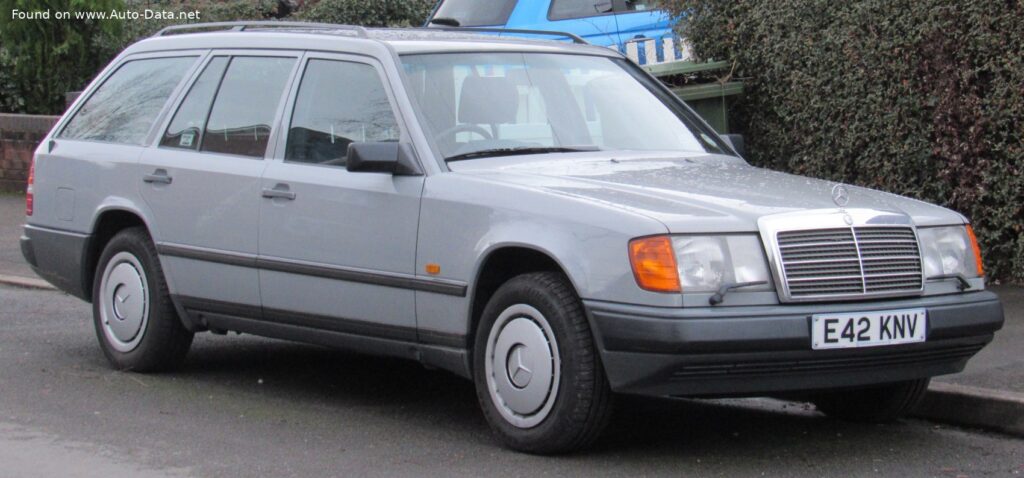
Mercedes-Benz S124 300 TE (180 Hp) 4MATIC: A Paragon of Engineering and Practicality
The Mercedes-Benz S124 300 TE (180 Hp) 4MATIC represents a significant chapter in the history of premium executive automobiles, particularly within the highly acclaimed W124 generation. Produced between August 1986 and August 1989, this station wagon variant of the W124 series embodied Mercedes-Benz’s unwavering commitment to engineering excellence, durability, and a sophisticated blend of luxury and utility. The S124, in its 300 TE 4MATIC guise, was a technological showcase for its era, introducing Mercedes-Benz’s advanced all-wheel-drive system to a family-friendly estate car, setting new benchmarks for safety, stability, and all-weather capability in the European market. While not officially sold in the United States in this specific 4MATIC configuration, its underlying W124 platform and design language significantly influenced the perception of luxury and reliability for American consumers, who appreciated the sedan and rear-wheel-drive wagon variants.
The W124 chassis, often referred to as “over-engineered,” was renowned for its robust construction, timeless design, and exceptional longevity. The S124 station wagon, or “T-Modell” as it was known in Germany, added immense practicality to this formidable package, offering cavernous cargo space without compromising the refined driving dynamics or the prestigious image associated with the three-pointed star. The 300 TE 4MATIC specifically catered to discerning European buyers who required superior traction and performance in diverse conditions, from snowy alpine roads to demanding rural routes, making it a highly desirable and capable vehicle in its primary market.
Engine and Performance of the Mercedes-Benz S124 300 TE (180 Hp) 4MATIC
At the heart of the Mercedes-Benz S124 300 TE (180 Hp) 4MATIC lies the legendary M 103 E 30 / 103.985 engine, a 3.0-liter inline-six cylinder unit that epitomized the smooth, reliable power delivery characteristic of Mercedes-Benz engines of the period. This naturally aspirated powerplant featured a SOHC (Single Overhead Camshaft) valvetrain and a multi-port manifold injection system, delivering a robust 180 horsepower at 5700 rpm. Torque output was equally impressive for its time, peaking at 188.08 lb.-ft. at 4400 rpm, providing ample thrust for both daily driving and highway cruising. With a bore of 3.48 inches and a piston stroke of 3.16 inches, the engine’s design favored a balance of smooth operation and responsiveness.
Power was channeled through a 5-speed manual transmission, a choice that appealed to enthusiasts seeking a more direct and engaging driving experience. What truly set the 300 TE 4MATIC apart, however, was its innovative all-wheel-drive architecture. The 4MATIC system, in its early iteration, was a sophisticated, electronically and mechanically operated clutch-based system that primarily drove the rear wheels but could instantaneously engage the front wheels when traction loss was detected. This intelligent system provided superior grip and stability, particularly in adverse weather conditions, without the fuel economy penalties or mechanical complexity of permanent all-wheel-drive systems of the era. This groundbreaking technology significantly enhanced the vehicle’s safety and versatility.
Performance figures for the S124 300 TE 4MATIC were respectable for a luxury station wagon of its size and weight. It could accelerate from 0 to 60 mph in a brisk 9.1 seconds, and its top speed reached an impressive 126.76 mph. While fuel economy was not its primary selling point, the vehicle achieved an estimated 15.7 US mpg in urban driving and a more efficient 27.7 US mpg on the extra-urban cycle, thanks in part to its advanced fuel injection and efficient drivetrain. The engine’s reputation for durability and smooth operation contributed significantly to the W124’s overall appeal and its lasting legacy.
Design and Features
The design of the Mercedes-Benz S124 300 TE (180 Hp) 4MATIC is a masterclass in functional elegance, reflecting the brand’s commitment to understated luxury and aerodynamic efficiency. With its clean lines, expansive glasshouse, and perfectly proportioned silhouette, the S124 station wagon exuded a timeless aesthetic that continues to be admired today. The body type is a 5-door, 5-seat station wagon (or estate), providing exceptional versatility and cargo capacity. Measuring 187.6 inches in length, 68.5 inches in width, and 58.98 inches in height, with a generous 110.24-inch wheelbase, the S124 offered a spacious and comfortable interior for all occupants.
Inside, the cabin was a sanctuary of high-quality materials, meticulous craftsmanship, and ergonomic design. Plush seating, often upholstered in durable fabrics or supple leather, provided excellent support for long journeys. The dashboard layout was logical and driver-focused, with clear instrumentation and intuitive controls. A key feature of the S124 wagon was its practical load-carrying capability, featuring a large, flat cargo area that could be expanded by folding down the rear seats, making it ideal for families, professionals, or anyone requiring significant hauling capacity without sacrificing luxury.
In terms of chassis and safety, the S124 was ahead of its time. It featured an independent multi-link rear suspension, a Mercedes-Benz innovation that provided a superb balance of ride comfort and handling precision. The front suspension utilized a wishbone design, further contributing to its refined road manners. Braking power was supplied by ventilated discs at the front and solid discs at the rear, complemented by an Anti-lock Braking System (ABS), a significant safety feature in the 1980s that helped prevent wheel lock-up during hard braking. The hydraulic power steering, utilizing a cone worm with recirculation balls, offered precise and communicative feedback, enhancing the overall driving experience. The vehicle rode on 195/65 R15 tires mounted on 6.5J x 15-inch wheel rims, providing a comfortable ride and adequate grip for its intended purpose.
Technical Specifications
| Category | Specification | US Equivalent |
|---|---|---|
| General Information | ||
| Brand | Mercedes-Benz | |
| Model | W124 | |
| Generation | S124 | |
| Type (Engine) | 300 TE (180 Hp) 4MATIC | |
| Start of Production | August, 1986 year | |
| End of Production | August, 1989 year | |
| Powertrain Architecture | Internal Combustion engine | |
| Body type | Station wagon (estate) | |
| Seats | 5 | |
| Doors | 5 | |
| Performance Specs | ||
| Fuel consumption (economy) – urban | 15 l/100 km | 15.7 US mpg |
| Fuel consumption (economy) – extra urban | 8.5 l/100 km | 27.7 US mpg |
| Fuel Type | Petrol (Gasoline) | |
| Acceleration 0 – 60 mph | 9.1 sec | |
| Maximum speed | 204 km/h | 126.76 mph |
| Weight-to-power ratio | 8.9 kg/Hp | 19.6 lbs/Hp |
| Weight-to-torque ratio | 6.3 kg/Nm | 13.9 lbs/lb.-ft. |
| Engine Specs | ||
| Power | 180 Hp @ 5700 rpm | |
| Power per liter | 60.8 Hp/l | |
| Torque | 255 Nm @ 4400 rpm | 188.08 lb.-ft. @ 4400 rpm |
| Engine layout | Front, Longitudinal | |
| Engine Model/Code | M 103 E 30 / 103.985 | |
| Engine displacement | 2962 cm3 | 3.0 liters (180.75 cu. in.) |
| Number of cylinders | 6 | |
| Engine configuration | Inline | |
| Cylinder Bore | 88.5 mm | 3.48 in. |
| Piston Stroke | 80.25 mm | 3.16 in. |
| Compression ratio | 9.2:1 | |
| Number of valves per cylinder | 2 | |
| Fuel injection system | Multi-port manifold injection | |
| Engine aspiration | Naturally aspirated engine | |
| Valvetrain | SOHC | |
| Engine oil capacity | 6.5 l | 6.87 US qt |
| Coolant capacity | 9 l | 9.51 US qt |
| Space, Volume and Weights | ||
| Kerb Weight | 1600 kg | 3527.4 lbs. |
| Max. weight | 2180 kg | 4806.08 lbs. |
| Max load | 580 kg | 1278.68 lbs. |
| Fuel tank capacity | 72 l | 19.02 US gal |
| Dimensions | ||
| Length | 4765 mm | 187.6 in. |
| Width | 1740 mm | 68.5 in. |
| Height | 1498 mm | 58.98 in. |
| Wheelbase | 2800 mm | 110.24 in. |
| Front track | 1497 mm | 58.94 in. |
| Rear (Back) track | 1485 mm | 58.46 in. |
| Drivetrain, Brakes and Suspension Specs | ||
| Drivetrain Architecture | ICE drives rear wheels permanently, front wheels driven via clutch if necessary. | |
| Drive wheel | All wheel drive (4×4) | |
| Number of gears and type of gearbox | 5 gears, manual transmission | |
| Front suspension | Wishbone | |
| Rear suspension | Independent multi-link suspension | |
| Front brakes | Ventilated discs | |
| Rear brakes | Disc | |
| Assisting systems | ABS (Anti-lock braking system) | |
| Steering type | Cone worm with recirculation balls | |
| Power steering | Hydraulic Steering | |
| Tires size Front/Rear | 195/65 R15 | |
| Wheel rims size Front/Rear | 6.5J x 15 |
Legacy and Market Impact
The Mercedes-Benz S124 300 TE (180 Hp) 4MATIC, and indeed the entire W124 series, left an indelible mark on the automotive landscape, particularly in Europe. It cemented Mercedes-Benz’s reputation for building cars of unparalleled quality, durability, and engineering integrity. The term “over-engineered” became a badge of honor for the W124, signifying a vehicle built to last for decades, often covering hundreds of thousands of miles with minimal issues if properly maintained. This specific 4MATIC variant further enhanced the W124’s legend by offering cutting-edge all-weather capability in a practical and luxurious package, appealing to buyers who needed both prestige and utility.
In its primary European market, the S124 300 TE 4MATIC competed with other premium wagons like the BMW 5-Series Touring (E34), the Audi 100/A6 Avant, and the Volvo 700/900 series wagons. While each had its strengths, the Mercedes-Benz stood out for its unique blend of ride comfort, perceived build quality, and the sophisticated 4MATIC system. The 4MATIC technology, in particular, was a significant differentiator, offering a level of traction and stability that few competitors could match at the time, especially in a vehicle that retained the rear-wheel-drive feel for everyday driving.
Today, the S124 300 TE 4MATIC is highly regarded by classic car enthusiasts and collectors. Its timeless design, robust mechanicals, and the rarity of the 4MATIC system make it a sought-after model. It represents an era when Mercedes-Benz prioritized engineering robustness and long-term ownership over flashy technology or rapid model cycles. The car’s enduring appeal lies in its combination of classic Mercedes-Benz aesthetics, a smooth and reliable inline-six engine, the practicality of a station wagon, and the advanced all-wheel-drive system that was ahead of its time. Its historical significance is rooted in its contribution to setting the standard for executive cars, demonstrating that luxury, performance, and family utility could coexist harmoniously within a single, remarkably well-built vehicle.
