
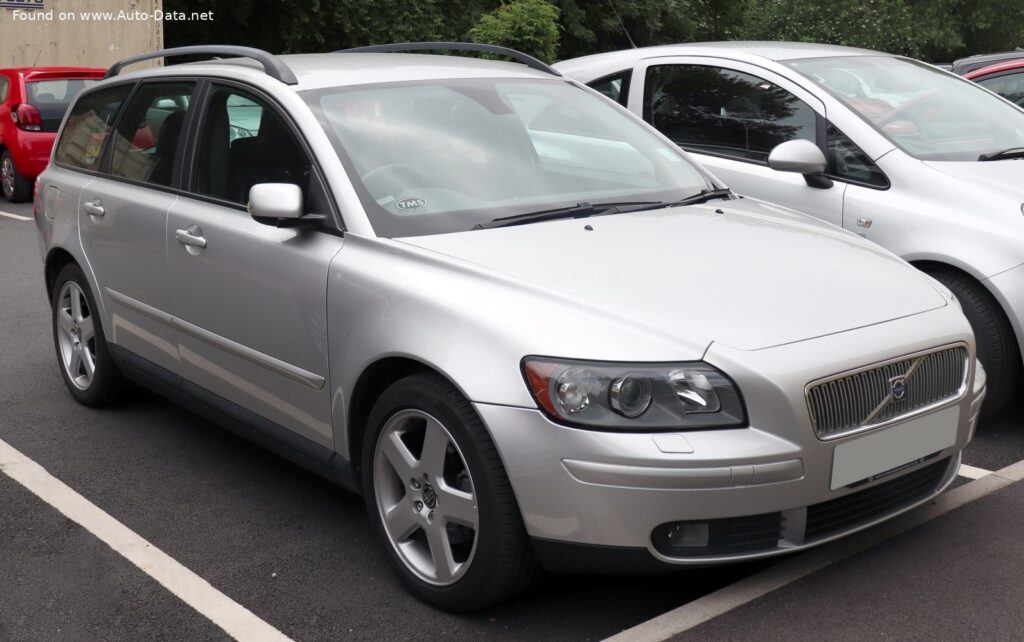
The Volvo V50 1.6 D (110 Hp): A European Workhorse of Practicality and Efficiency
The Volvo V50 1.6 D (110 Hp) represents a significant chapter in the Swedish automaker’s history, a compact executive station wagon that offered a compelling blend of practicality, safety, and fuel efficiency. Launched in 2005 as part of the V50’s first generation, this specific diesel variant was primarily targeted at the discerning European market, where diesel powertrains held a substantial share due to their superior fuel economy and lower CO2 emissions compared to their gasoline counterparts. Based on Volvo’s P1 platform, shared with the Ford Focus and Mazda 3, the V50 was designed to inject a more dynamic driving experience into the Volvo lineup while retaining the brand’s core values of safety and Scandinavian design. The 1.6 D (110 Hp) model, produced between 2005 and 2007, quickly established itself as a popular choice for families and business users seeking a refined, versatile, and economical vehicle in the competitive compact premium segment.
Engine and Performance of the Volvo V50 1.6 D (110 Hp)
At the heart of the Volvo V50 1.6 D (110 Hp) lies a robust and efficient 1.6-liter (1560 cm3 or 95.2 cu. in.) inline four-cylinder turbodiesel engine, identified by its D4164T engine code. This powerplant was a product of a collaboration between Ford and PSA Peugeot Citroën, widely utilized across various European models for its proven reliability and impressive fuel economy. Generating a respectable 110 horsepower at 4000 rpm, the engine delivered its power smoothly, making it well-suited for both urban commuting and long-distance highway cruising. More notably, the engine produced a healthy 177.01 lb.-ft. (240 Nm) of torque, available at a low 1750 rpm. This characteristic low-end torque was crucial for effortless acceleration and strong pulling power, especially when the vehicle was loaded with passengers or cargo.
The powertrain architecture featured a front, transverse engine layout, driving the front wheels through a precise and durable 5-speed manual transmission. This setup contributed to the vehicle’s balanced handling and efficient power delivery. Performance figures for the Volvo V50 1.6 D (110 Hp) were competitive for its class, with an acceleration time of 0 to 60 mph in 11.5 seconds (0-100 km/h in 12.1 seconds) and a top speed of 118.06 mph (190 km/h). While not a performance-oriented variant, these figures underscore its capability as a competent and practical everyday driver.
Where this particular V50 truly shined was in its fuel efficiency. With a combined fuel consumption rating of 47 US mpg (5 liters per 100 km), it offered exceptional economy for its segment. Urban driving yielded 37.3 US mpg (6.3 l/100 km), while extra-urban conditions saw an impressive 54.7 US mpg (4.3 l/100 km). These figures, combined with CO2 emissions of 132 g/km, made it an environmentally conscious choice for European consumers facing increasingly stringent emissions regulations and higher fuel prices. The engine’s advanced common-rail fuel injection system, coupled with a turbocharger and intercooler, ensured optimal combustion and performance.
Design and Features: The Volvo V50’s Practical Elegance
The Volvo V50, often marketed as a “Sportswagon,” represented a more youthful and dynamic design direction for Volvo compared to its predecessors. While sharing its underpinnings with the C30 hatchback and S40 sedan, the V50 carved out its own niche with its elegant and practical station wagon body type. Measuring 177.72 inches (4514 mm) in length, 69.69 inches (1770 mm) in width, and 57.17 inches (1452 mm) in height, the V50 maintained a compact footprint for European city driving while offering ample interior space.
The exterior design featured Volvo’s signature strong shoulder lines, a distinctive grille, and vertically oriented taillights that flowed into the D-pillars, a classic Volvo wagon trait. The overall aesthetic was sleek and modern, appealing to a demographic that valued both style and utility. Inside, the V50 boasted a typically Scandinavian interior design, characterized by clean lines, high-quality materials, and exceptional ergonomics. The hallmark “floating” center console, a design innovation first introduced in the S40/V50 generation, was a standout feature, creating a sense of spaciousness and modern sophistication. Seating for five adults was comfortable, and the 5-door configuration ensured easy access for all occupants.
As a Volvo, safety was paramount. The V50 came equipped with a comprehensive suite of safety features for its era, including multiple airbags, a robust body structure, and advanced driver-assist systems. The standard Anti-lock Braking System (ABS) with ventilated discs at the front and solid discs at the rear provided confident stopping power. The suspension system, featuring transverse stabilizers at both front and rear, contributed to a comfortable ride and stable handling. The steering rack and pinion system offered precise control, while the 195/65 R15 tires mounted on 15-inch wheel rims provided a good balance of grip and ride comfort. The practicality of the station wagon body was evident in its cargo capacity: a generous 14.73 cu. ft. (417 liters) of trunk space with the rear seats up, expanding to a cavernous 46.16 cu. ft. (1307 liters) when the rear seats were folded down, making it highly versatile for various cargo needs.
Technical Specifications
| General Information | |
|---|---|
| Brand | Volvo |
| Model | V50 |
| Generation | V50 |
| Type (Engine) | 1.6 D (110 Hp) |
| Start of Production | 2005 year |
| End of Production | 2007 year |
| Powertrain Architecture | Internal Combustion engine |
| Body Type | Station wagon (estate) |
| Seats | 5 |
| Doors | 5 |
| Performance Specifications | |
| Fuel Consumption (economy) – Urban | 6.3 l/100 km (37.3 US mpg) |
| Fuel Consumption (economy) – Extra Urban | 4.3 l/100 km (54.7 US mpg) |
| Fuel Consumption (economy) – Combined | 5 l/100 km (47 US mpg) |
| CO2 Emissions | 132 g/km |
| Fuel Type | Diesel |
| Acceleration 0 – 60 mph | 11.5 sec |
| Acceleration 0 – 100 km/h | 12.1 sec |
| Maximum Speed | 118.06 mph (190 km/h) |
| Weight-to-Power Ratio | 12.2 kg/Hp (82.1 Hp/tonne) |
| Weight-to-Torque Ratio | 5.6 kg/Nm (179.1 Nm/tonne) |
| Engine Specifications | |
| Power | 110 Hp @ 4000 rpm |
| Power per Liter | 70.5 Hp/l |
| Torque | 177.01 lb.-ft. (240 Nm) @ 1750 rpm |
| Engine Layout | Front, Transverse |
| Engine Model/Code | D4164T |
| Engine Displacement | 1.6 liters (1560 cm3 / 95.2 cu. in.) |
| Number of Cylinders | 4 |
| Engine Configuration | Inline |
| Cylinder Bore | 2.95 in. (75 mm) |
| Piston Stroke | 3.48 in. (88.3 mm) |
| Compression Ratio | 18.3:1 |
| Number of Valves per Cylinder | 4 |
| Fuel Injection System | Diesel Commonrail |
| Engine Aspiration | Turbocharger, Intercooler |
| Valvetrain | DOHC |
| Engine Oil Capacity | 3.91 US qt (3.7 l) |
| Coolant Capacity | 7.61 US qt (7.2 l) |
| Space, Volume and Weights | |
| Kerb Weight | 2954.19 lbs. (1340 kg) |
| Max. Weight | 4188.78 lbs. (1900 kg) |
| Max Load | 1234.59 lbs. (560 kg) |
| Trunk (boot) Space – Minimum | 14.73 cu. ft. (417 l) |
| Trunk (boot) Space – Maximum | 46.16 cu. ft. (1307 l) |
| Fuel Tank Capacity | 16.38 US gal (62 l) |
| Dimensions | |
| Length | 177.72 in. (4514 mm) |
| Width | 69.69 in. (1770 mm) |
| Height | 57.17 in. (1452 mm) |
| Wheelbase | 103.94 in. (2640 mm) |
| Front Track | 60.43 in. (1535 mm) |
| Rear (Back) Track | 60.28 in. (1531 mm) |
| Drivetrain, Brakes, and Suspension Specifications | |
| Drivetrain Architecture | The Internal combustion engine (ICE) drives the front wheels of the vehicle. |
| Drive Wheel | Front wheel drive |
| Number of Gears and Type of Gearbox | 5 gears, manual transmission |
| Front Suspension | Transverse stabilizer |
| Rear Suspension | Transverse stabilizer |
| Front Brakes | Ventilated discs |
| Rear Brakes | Ventilated discs |
| Assisting Systems | ABS (Anti-lock braking system) |
| Steering Type | Steering rack and pinion |
| Tires Size | 195/65 R15 |
| Wheel Rims Size | 15 |
Legacy and Market Impact of the Volvo V50
The Volvo V50 1.6 D (110 Hp) carved out a significant niche in the highly competitive European compact premium segment during its production run from 2005 to 2007. While the V50 itself was available globally, including in North America with gasoline engines, this specific diesel variant underscored Volvo’s commitment to meeting the unique demands of the European market. In Europe, diesel engines were highly favored for their superior fuel economy and torque characteristics, especially for long-distance driving and commercial fleets. The V50 1.6 D offered a compelling package that balanced premium aspirations with practical running costs, positioning it as a strong contender against established rivals.
Its primary competitors in the European market included the BMW 3-Series Touring, Audi A4 Avant, and Mercedes-Benz C-Class Estate. While these German rivals often offered more powerful engine options and sportier driving dynamics, the V50 distinguished itself with its distinctive Scandinavian design, renowned safety features, and a slightly more understated, family-oriented appeal. The 1.6 D engine, though not the most powerful in the V50 lineup, was highly regarded for its refinement and exceptional fuel economy, making it an attractive option for budget-conscious premium buyers and company car drivers.
The V50, and particularly its efficient diesel variants, played a crucial role in Volvo’s product strategy during its ownership by Ford. It helped broaden Volvo’s appeal to a younger demographic and solidified its presence in the compact premium segment, a market increasingly demanding versatile and efficient vehicles. The car’s reputation for robust build quality, comfortable ride, and class-leading safety features ensured its enduring appeal. Even after production of this specific variant ceased in 2007, the V50 continued to be a popular choice in the used car market, testament to its reliability and practical design.
Ultimately, the Volvo V50 1.6 D (110 Hp) stands as an example of Volvo’s successful adaptation to regional market demands, offering a blend of efficiency, practicality, and safety that was highly valued in its primary European market. It reinforced Volvo’s identity as a manufacturer of sophisticated, family-friendly vehicles that did not compromise on environmental responsibility or the well-being of its occupants.
