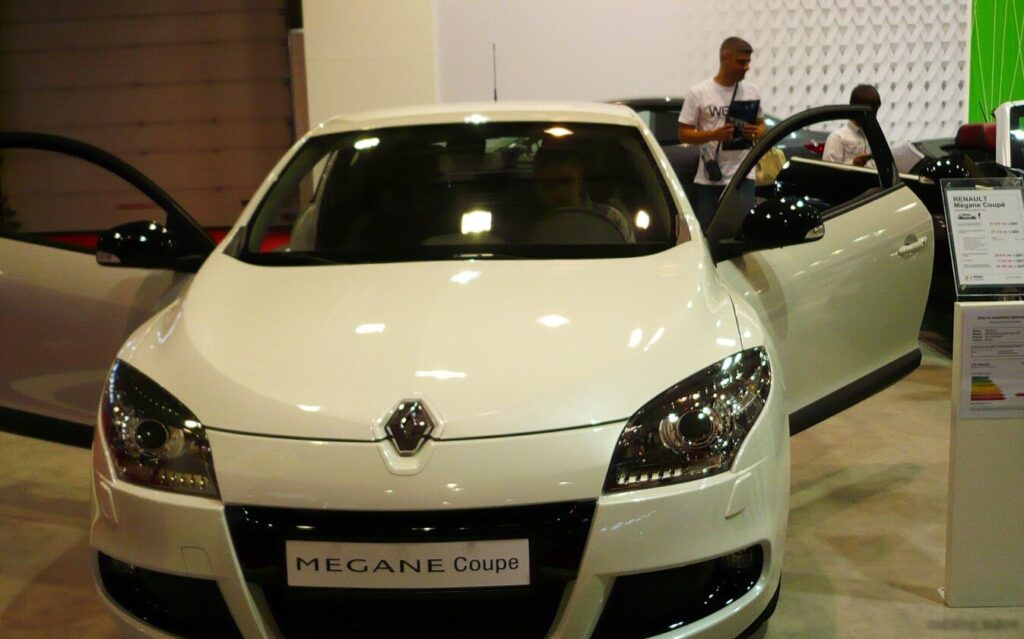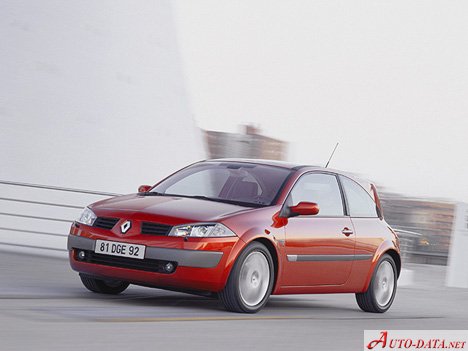
Renault Megane II Coupe 1.9 dCi (90 Hp): A Distinctive European Compact
The Renault Megane II Coupe 1.9 dCi (90 Hp) represents a significant and visually striking chapter in the history of Renault’s highly successful compact car line. Produced for a short but impactful period between 2004 and 2005, this specific variant of the second-generation Megane Coupe carved out a niche in the fiercely competitive European C-segment. While never officially sold in the United States, the Megane II was a household name across Europe, lauded for its bold design, innovative features, and a strong emphasis on safety. The 1.9 dCi (90 Hp) model, in particular, highlighted Renault’s commitment to offering efficient, torquey diesel powertrains, a common and popular choice among European consumers seeking a balance of performance and fuel economy for both urban commuting and long-distance travel.
The Megane II generation, introduced in 2002, was a radical departure from its predecessor, characterized by a distinctive “bustle-back” rear design that garnered both praise and controversy. The Coupe variant, with its three-door configuration, aimed to inject a sportier appeal into the practical Megane lineup, offering a more dynamic aesthetic while retaining much of the hatchback’s functionality. This model’s diesel engine, a staple in the European market, provided ample low-end torque for confident driving, making it a pragmatic yet stylish option for a broad range of buyers.
Engine and Performance of the Renault Megane II Coupe 1.9 dCi (90 Hp)
At the heart of the Renault Megane II Coupe 1.9 dCi (90 Hp) lies a robust 1.9-liter (1870 cm3, or 114.11 cu. in.) inline four-cylinder diesel engine, designated with the F9Q engine code. This powertrain was engineered for efficiency and everyday usability, delivering 90 horsepower at 4000 rpm. While 90 horsepower might seem modest by contemporary American standards, it was perfectly suited to the European market’s emphasis on fuel economy and accessible torque.
The engine’s true strength lay in its impressive torque output: 230 Nm (169.64 lb.-ft.) available at a low 2000 rpm. This characteristic low-end torque is typical of common rail direct injection diesel engines and provided the Megane Coupe with a responsive feel in city driving and effortless cruising on highways. Mated to a precise 6-speed manual transmission, this front-wheel-drive setup allowed drivers to optimize the engine’s power band for various driving conditions. The turbocharger and intercooler significantly enhanced performance, ensuring a good balance of power delivery and thermal efficiency.
Performance figures for the 1.9 dCi (90 Hp) model reflect its practical orientation. The car could accelerate from 0 to 60 mph in 12.3 seconds (0-100 km/h in 12.9 seconds) and reach a top speed of 106.88 mph (172 km/h). More critically for its target market, fuel economy was a standout feature. The combined fuel consumption was an impressive 5.4 l/100 km, translating to approximately 43.6 US mpg. Urban consumption stood at 7.3 l/100 km (32.2 US mpg), while extra-urban driving saw figures as low as 4.4 l/100 km (53.5 US mpg). These numbers underscored the diesel variant’s economic advantage, especially in an era of rising fuel prices in Europe. The engine met the Euro 3 emission standard, reflecting the environmental regulations of its time.
Design and Features
The design of the Renault Megane II Coupe was undeniably avant-garde for its time. Sharing the distinctive “bustle-back” or “derrière” styling with its hatchback sibling, the Coupe version presented a more athletic and streamlined profile with its three-door body. The vehicle measured 165.71 inches (4209 mm) in length, 69.96 inches (1777 mm) in width, and 57.4 inches (1458 mm) in height, with a wheelbase of 103.35 inches (2625 mm). This compact footprint, combined with a relatively low drag coefficient (Cd) of 0.35, contributed to both its visual appeal and aerodynamic efficiency.
Inside, the Megane II Coupe offered seating for five, though the rear seats, typical of a coupe, were better suited for two adults on shorter journeys or children. The interior emphasized a blend of modern aesthetics and practical ergonomics. Key features for its era included an intuitive dashboard layout and a focus on occupant comfort. Safety was a paramount concern for Renault, and the Megane II was a pioneer in its class, often achieving top ratings in European crash tests. The 1.9 dCi (90 Hp) variant came equipped with an Anti-lock Braking System (ABS) as standard, a crucial active safety feature.
The vehicle featured a front-wheel-drive architecture with an independent coil spring front suspension and a torsion beam rear suspension, a common and effective setup for compact cars balancing ride comfort and handling. Stopping power was provided by ventilated disc brakes at the front and disc brakes at the rear. Steering was managed by an electric power-assisted rack and pinion system, offering ease of maneuverability, particularly in urban environments with a minimum turning circle of 34.45 feet (10.5 m). The car rode on 195/65 R15 tires mounted on 6J x 15-inch wheel rims.
Practicality was not entirely sacrificed for style. The trunk space ranged from 11.65 cubic feet (330 liters) with all seats in place, expanding to a generous 42.02 cubic feet (1190 liters) when the rear seats were folded, offering surprising versatility for a coupe. A 15.85 US gallon (60 liter) fuel tank provided an excellent cruising range, especially with the efficient diesel engine.
Technical Specifications
| Category | Specification |
|---|---|
| General Information | |
| Brand | Renault |
| Model | Megane |
| Generation | Megane II Coupe |
| Type (Engine) | 1.9 dCi (90 Hp) |
| Start of Production | 2004 |
| End of Production | 2005 |
| Powertrain Architecture | Internal Combustion Engine |
| Body type | Coupe, 3 Doors |
| Seats | 5 |
| Performance Specs | |
| Fuel consumption (economy) – urban | 32.2 US mpg (7.3 l/100 km) |
| Fuel consumption (economy) – extra urban | 53.5 US mpg (4.4 l/100 km) |
| Fuel consumption (economy) – combined | 43.6 US mpg (5.4 l/100 km) |
| CO2 emissions | 145 g/km |
| Fuel Type | Diesel |
| Acceleration 0 – 60 mph | 12.3 sec |
| Acceleration 0 – 100 km/h | 12.9 sec |
| Maximum speed | 106.88 mph (172 km/h) |
| Emission standard | Euro 3 |
| Weight-to-power ratio | 13.9 kg/Hp, 72 Hp/tonne |
| Weight-to-torque ratio | 5.4 kg/Nm, 184 Nm/tonne |
| Engine Specs | |
| Power | 90 Hp @ 4000 rpm |
| Power per liter | 48.1 Hp/l |
| Torque | 169.64 lb.-ft. (230 Nm) @ 2000 rpm |
| Engine layout | Front, Transverse |
| Engine Model/Code | F9Q |
| Engine displacement | 1.9 Liters (1870 cm3 / 114.11 cu. in.) |
| Number of cylinders | 4 |
| Engine configuration | Inline |
| Cylinder Bore | 3.15 in. (80 mm) |
| Piston Stroke | 3.66 in. (93 mm) |
| Compression ratio | 19:1 |
| Number of valves per cylinder | 2 |
| Fuel injection system | Diesel Commonrail |
| Engine aspiration | Turbocharger, Intercooler |
| Valvetrain | OHC |
| Engine oil capacity | 4.86 US qt (4.6 l) |
| Coolant capacity | 7.61 US qt (7.2 l) |
| Space, Volume and Weights | |
| Kerb Weight | 2755.78 lbs. (1250 kg) |
| Max. weight | 3968.32 lbs. (1800 kg) |
| Max load | 1212.54 lbs. (550 kg) |
| Trunk (boot) space – minimum | 11.65 cu. ft. (330 l) |
| Trunk (boot) space – maximum | 42.02 cu. ft. (1190 l) |
| Fuel tank capacity | 15.85 US gal (60 l) |
| Max. roof load | 176.37 lbs. (80 kg) |
| Permitted trailer load with brakes (12%) | 2866.01 lbs. (1300 kg) |
| Permitted trailer load without brakes | 1433 lbs. (650 kg) |
| Permitted towbar download | 165.35 lbs. (75 kg) |
| Dimensions | |
| Length | 165.71 in. (4209 mm) |
| Width | 69.96 in. (1777 mm) |
| Height | 57.4 in. (1458 mm) |
| Wheelbase | 103.35 in. (2625 mm) |
| Front track | 59.76 in. (1518 mm) |
| Rear (Back) track | 59.61 in. (1514 mm) |
| Drag coefficient (Cd) | 0.35 |
| Minimum turning circle (turning diameter) | 34.45 ft. (10.5 m) |
| Drivetrain, Brakes and Suspension Specs | |
| Drivetrain Architecture | Internal Combustion Engine (ICE) drives the front wheels |
| Drive wheel | Front wheel drive |
| Number of gears and type of gearbox | 6 gears, manual transmission |
| Front suspension | Independent coil spring |
| Rear suspension | Torsion |
| Front brakes | Ventilated discs |
| Rear brakes | Disc |
| Assisting systems | ABS (Anti-lock braking system) |
| Steering type | Steering rack and pinion |
| Power steering | Electric Steering |
| Tires size | 195/65 R15 |
| Wheel rims size | 6J x 15 |
Legacy and Market Impact
The Renault Megane II, and particularly its distinctive Coupe variant like the 1.9 dCi (90 Hp) model, left a significant mark on the European automotive landscape. Its launch was part of a broader design revolution at Renault under chief designer Patrick le Quément, which aimed to inject bold, unconventional styling into its mainstream models. This approach, while polarizing to some, ensured the Megane II stood out in a crowded market segment. The car’s unique “bustle-back” design became an instant identifier, challenging the more conservative aesthetics of competitors.
In the European market, the Megane II competed fiercely with established rivals such as the Volkswagen Golf, Opel Astra, Ford Focus, and Peugeot 307. What set the Megane II apart was not just its design but also its pioneering approach to safety, earning it the prestigious European Car of the Year award in 2003. This recognition underscored Renault’s commitment to developing safe and innovative vehicles for the mass market.
The 1.9 dCi (90 Hp) model played a crucial role in the Megane II’s success, particularly in markets where diesel engines dominated. Its blend of respectable performance, excellent fuel economy, and lower CO2 emissions made it an attractive proposition for both private buyers and fleet operators. This variant exemplified the European preference for torquey, efficient diesel powerplants, offering a practical and cost-effective alternative to gasoline engines. The 6-speed manual transmission was also a key selling point, offering better fuel economy and a more engaging driving experience compared to the 5-speed manuals common in many competitors.
While the Renault Megane II Coupe 1.9 dCi (90 Hp) may be unfamiliar to American audiences, its legacy in Europe is one of innovation, bold design, and a strong emphasis on real-world usability and efficiency. It helped solidify Renault’s reputation as a leader in safety and design within the compact segment, paving the way for future generations of the Megane and influencing automotive design trends across the continent. Its short production run as a coupe variant (2004-2005) makes it a noteworthy example of a niche model within a highly successful mainstream platform.